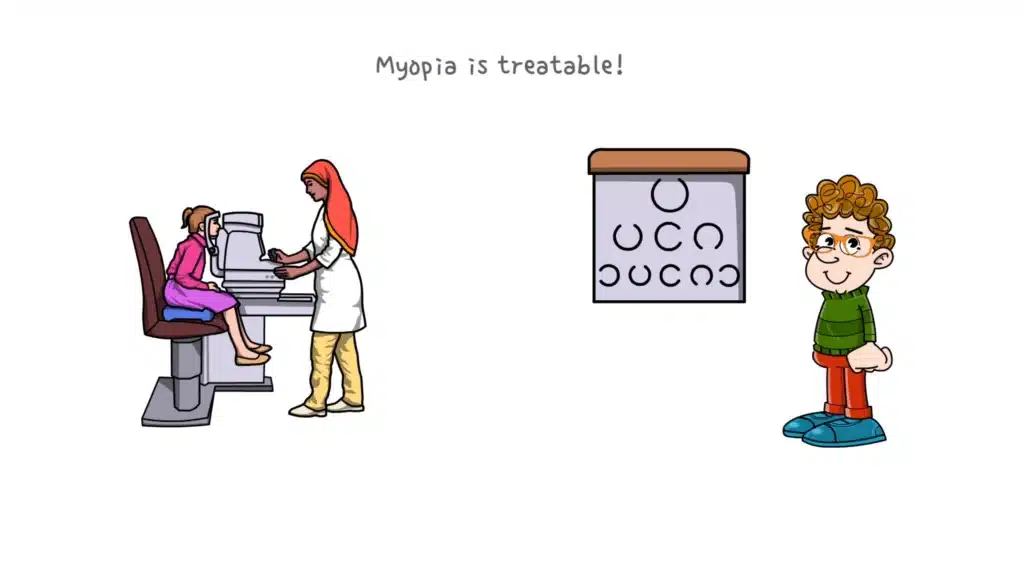
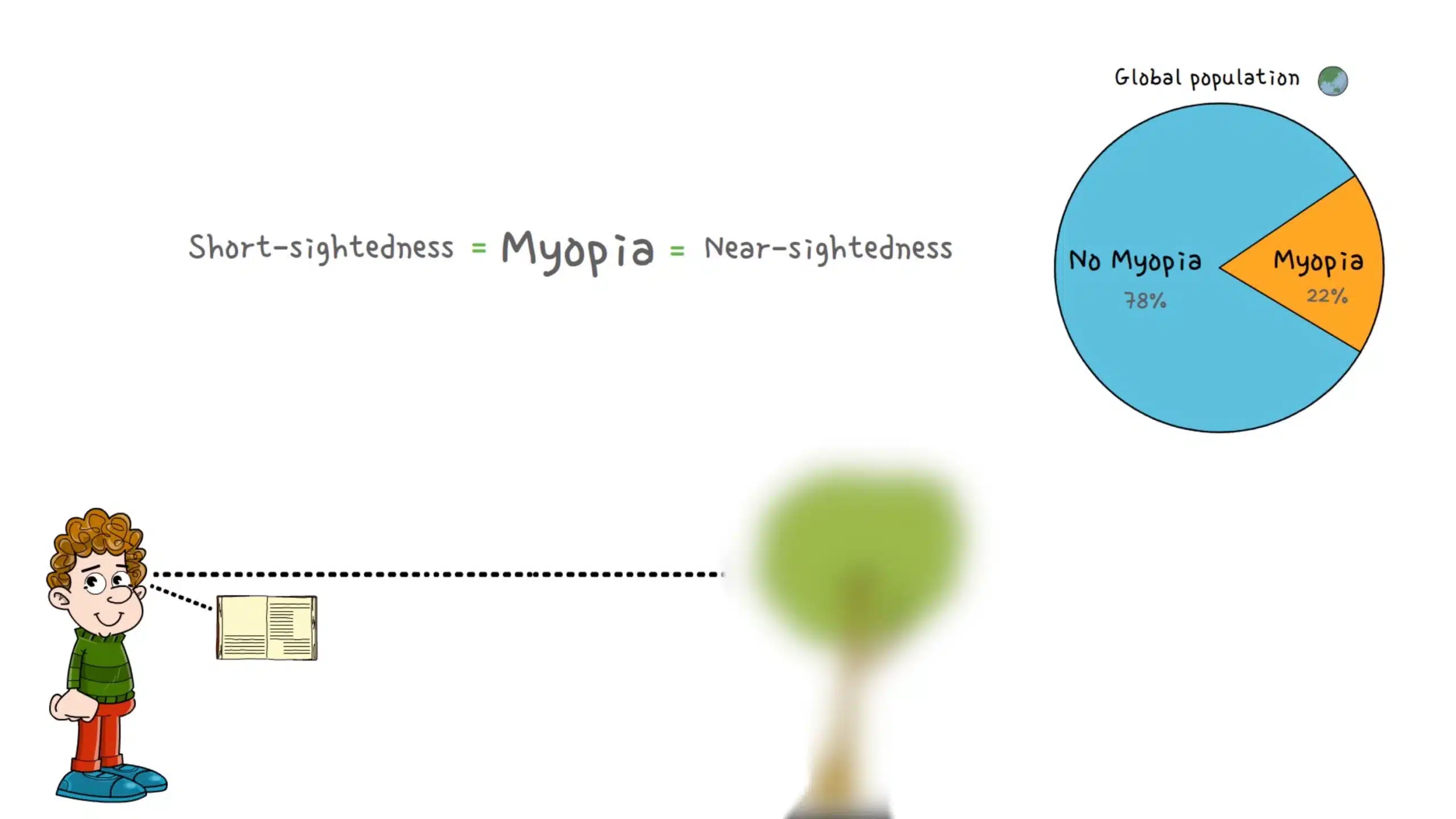
Myopia is a refractive condition where distant objects appear blurry while near objects remain clear, and it is extremely common worldwide, affecting an estimated 1.5 billion people (about 22% of the global population).
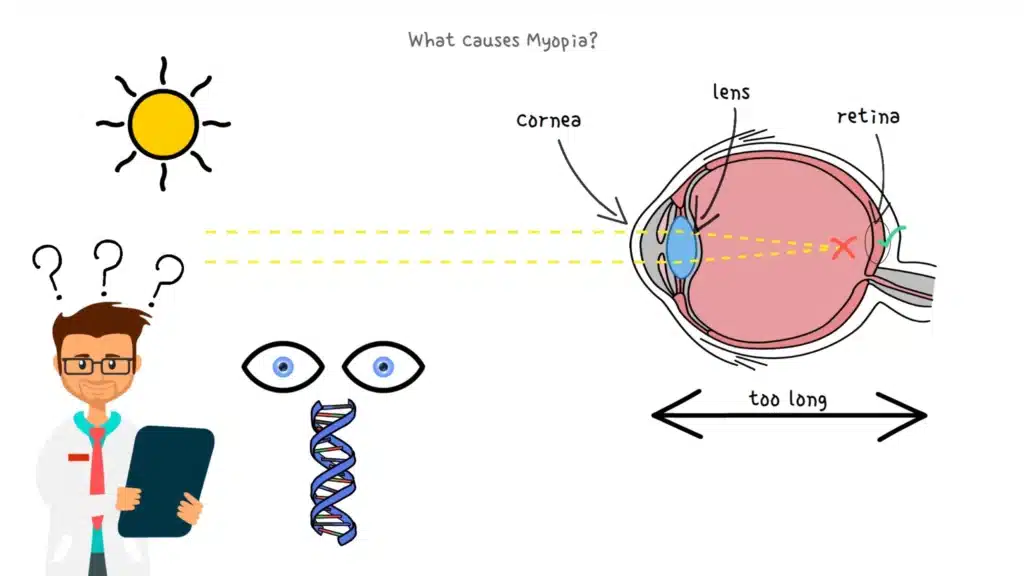
Myopia (short-sightedness or near-sightedness) occurs when the eye’s focusing system brings light to a focus in front of the retina instead of directly on it, causing blur for distance vision. This usually happens because the eyeball is too long or the cornea or lens is too powerful for the length of the eye.
Signs and symptoms
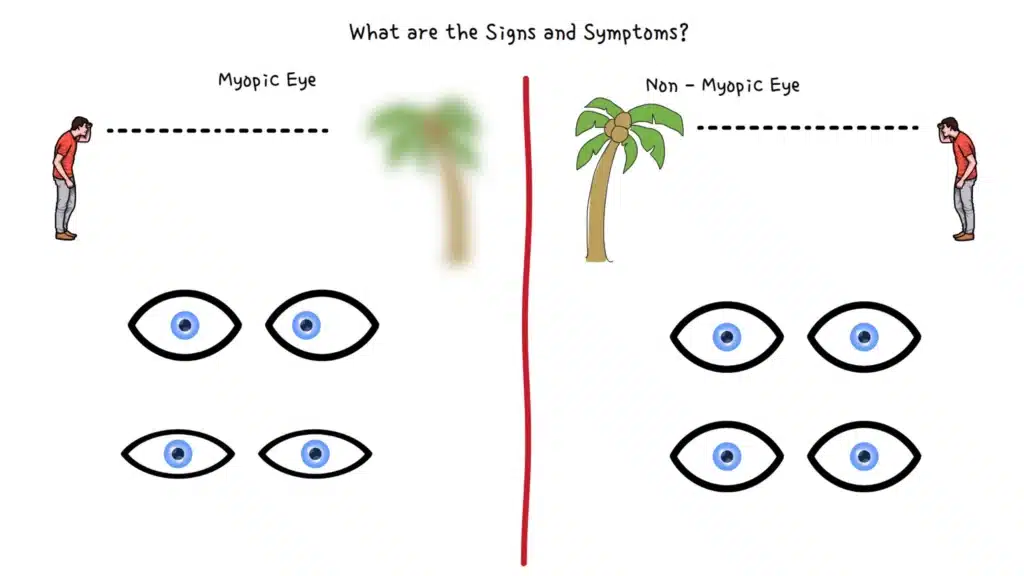
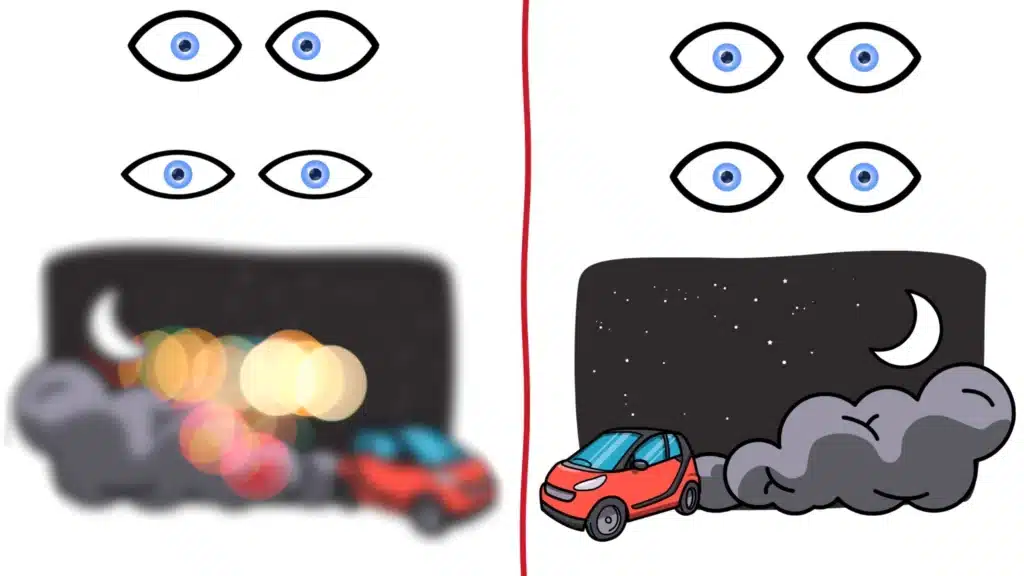
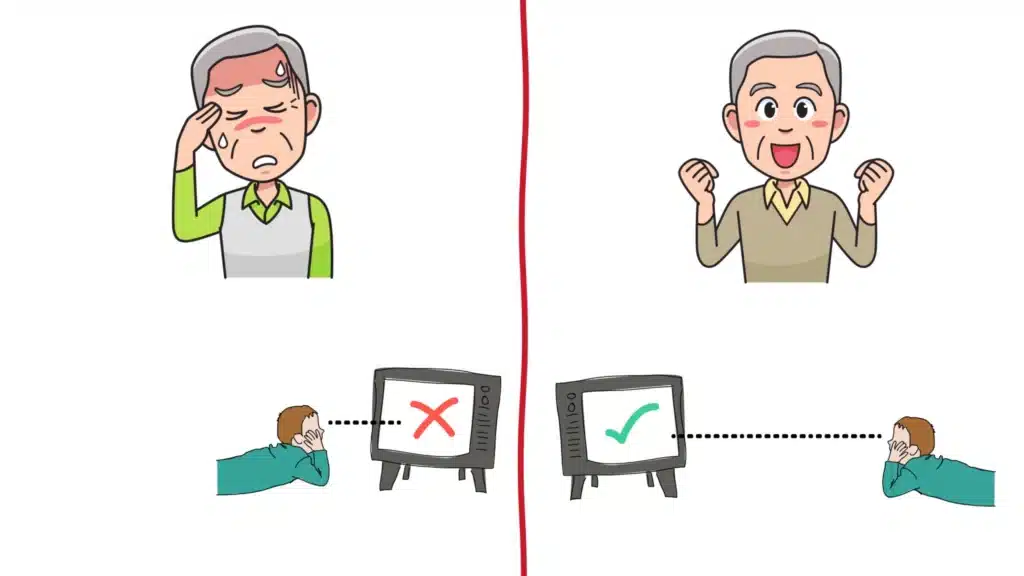
People with myopia typically see distant objects as blurred while reading or using a phone remains comfortable and clear. Many need to squint, experience eye strain or headaches, or have difficulty driving, especially at night; children may move closer to the TV, hold books close, or sit at the front of the classroom to see the board.
What causes myopia?
In a myopic eye, incoming light rays are focused in front of the retina rather than precisely on its surface, leading to blurred distance vision. This can be due to an eye that is longer than average, an overly curved cornea, or a lens with increased optical power, and genetics and environmental factors (such as prolonged near work and limited outdoor time) are known to increase the risk of developing myopia.
Treatment options
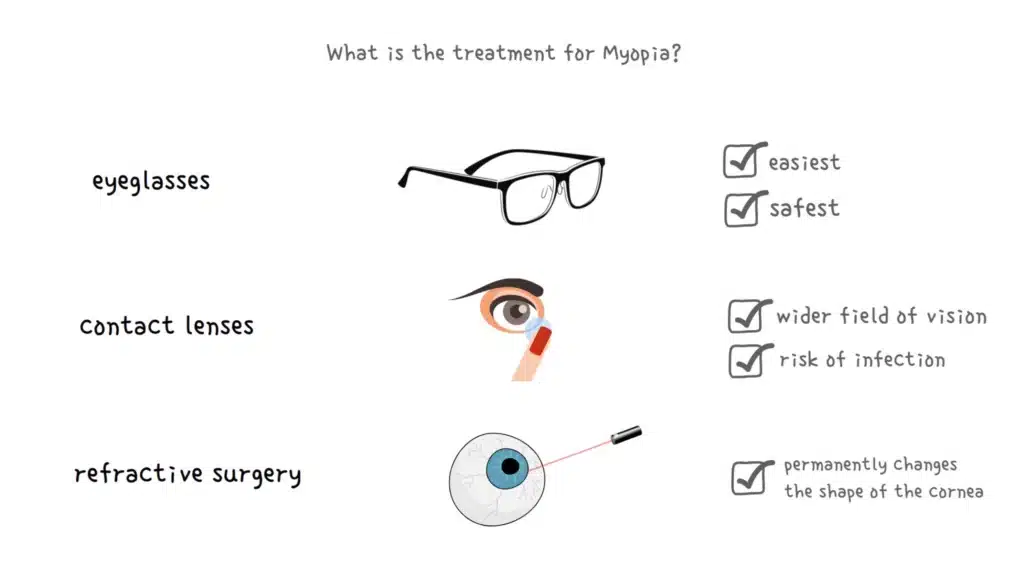
Myopia is usually corrected with eyeglasses, contact lenses, or refractive surgery, all of which aim to shift the focus of light back onto the retina for clear vision. Eyeglasses are a simple, safe option; contact lenses provide a wider field of vision but require careful hygiene to reduce the risk of infection, while laser procedures such as LASIK permanently reshape the cornea to correct the refractive error.
Myopia control and prevention
For many people, myopia is mild and does not cause additional eye health problems when properly corrected, allowing them to function normally in daily life. In children and in people with high myopia, regular eye examinations are important because certain treatments (such as special glasses or contact lenses and lifestyle advice) can help slow progression, and monitoring helps reduce the risk of complications and potential vision loss later in life.