
Imagine looking at the world through a dirty window. Everything appears blurry, colors seem faded, and bright lights create annoying halos around objects. This is exactly what millions of people experience every day due to cataracts. But here’s the incredible part: in just twenty minutes, surgeons can completely restore crystal-clear vision using one of the most fascinating procedures in modern medicine.

Today, we’re taking you on an amazing journey inside the human eye to discover how cataract surgery works. You’ll witness cutting-edge technology in action, understand why this procedure has a mind-blowing ninety-nine percent success rate, and see exactly how surgeons replace your cloudy natural lens with a perfect artificial one.
Understanding Your Eye Anatomy
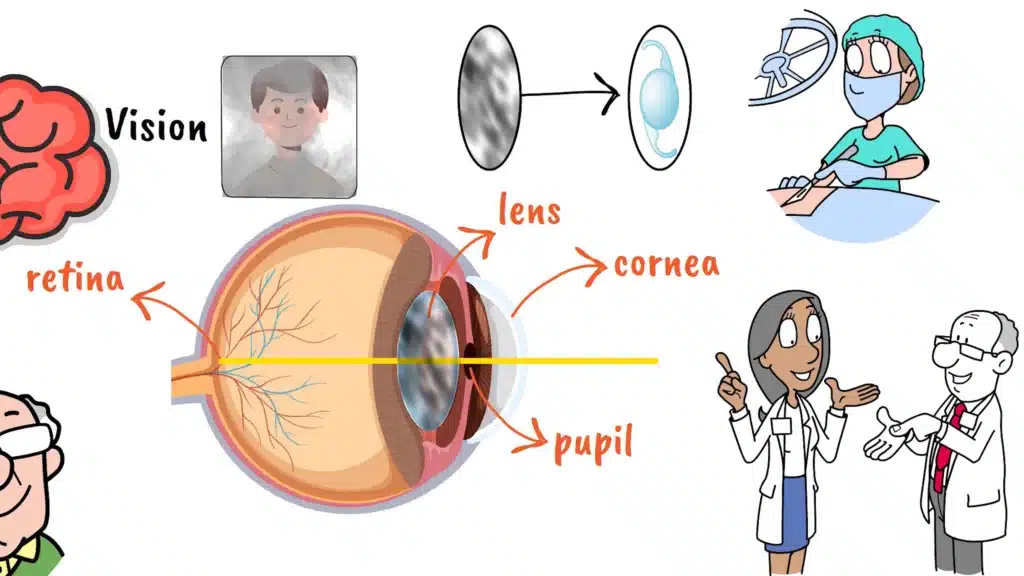
Let’s start with understanding your eye. Your eye works remarkably like a camera. Light enters through the cornea, passes through the pupil, and hits your natural lens. This lens, about the size of a small button, focuses light perfectly onto your retina, creating sharp images that your brain interprets as vision.
But here’s where things go wrong: as we age, proteins in this lens start clumping together, creating cloudy patches we call cataracts. Think of your natural lens as a clear piece of glass that gradually becomes frosted over time. Eventually, this cloudiness becomes so severe that it’s like trying to see through a fogged-up bathroom mirror after a hot shower.
The Modern Solution: Minimally Invasive Surgery
Now here’s where modern medicine becomes absolutely incredible. Surgeons have developed a way to remove your cloudy lens and replace it with a crystal-clear artificial one, all through an opening smaller than the tip of a ballpoint pen. This isn’t science fiction, it’s happening in operating rooms around the world every single day, with over four million procedures performed annually in the United States alone.
Before the Surgery: Preparation
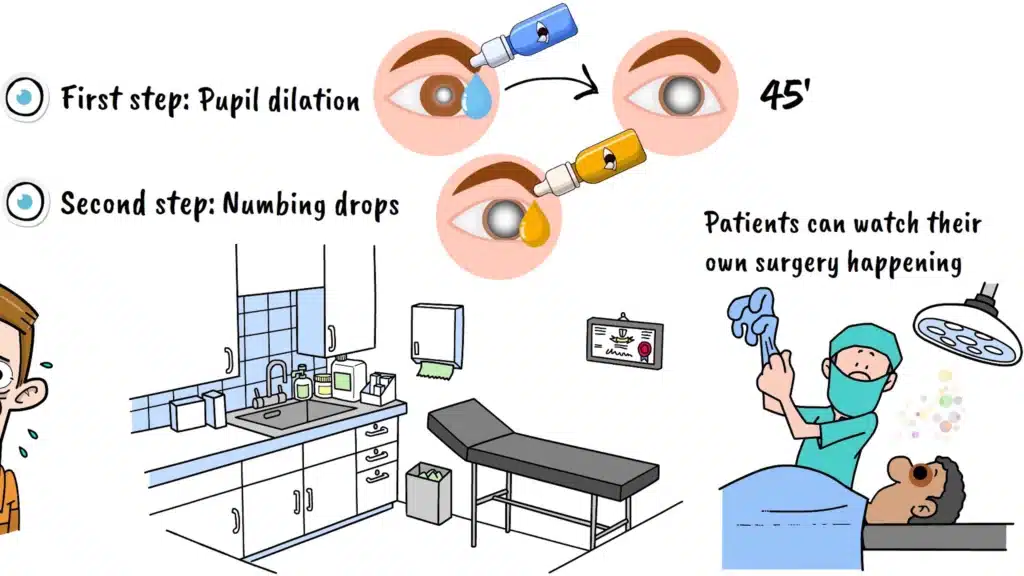
On the morning of your procedure, you arrive at the surgical center feeling a mix of excitement and nervousness. The first step might surprise you. Instead of immediately going to surgery, you spend time getting your eye prepared with special drops that make your pupil grow larger, like opening a camera aperture to let in more light. This dilation process takes up to forty-five minutes, giving you time to relax and chat with the surgical team.
When it’s time for surgery, you receive numbing drops that completely eliminate any pain while keeping you awake and comfortable throughout the entire procedure. Many patients are amazed to discover that they can actually watch their own surgery happening, seeing beautiful colors and light patterns that create an almost magical experience.
The Surgical Procedure: Step by Step
Creating the Incision
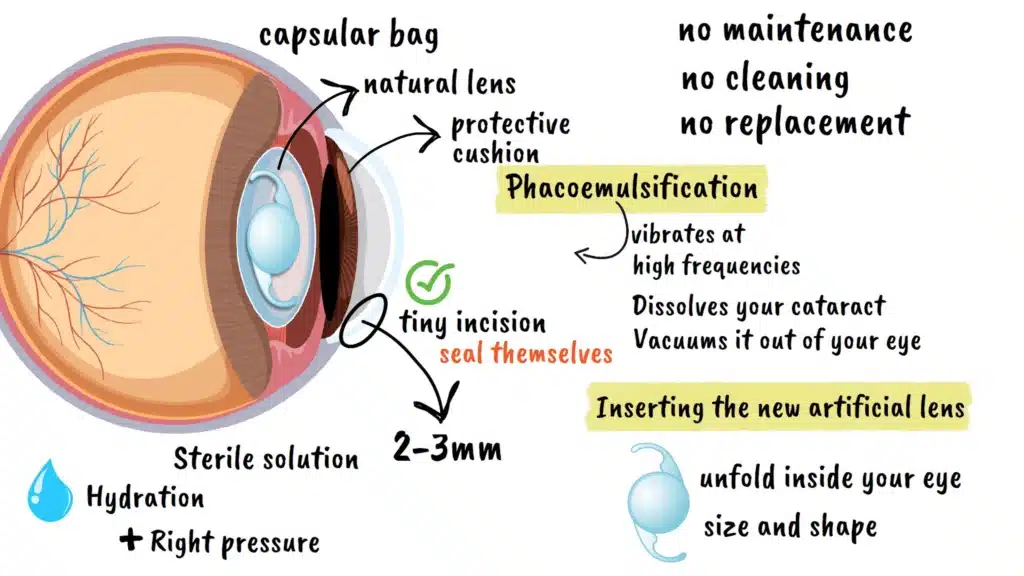
Now let’s dive into the surgical magic itself. Your surgeon begins by creating the tiniest possible incision at the edge of your cornea. We’re talking about an opening that’s only two to three millimeters wide, so small it’s barely visible to the naked eye. The precision required here is extraordinary, like threading a needle while looking through a microscope.
Accessing the Cataract
Here’s where things get really fascinating. To access your cataract, the surgeon needs to create a perfectly circular opening in the capsular bag that holds your lens. Your natural lens sits inside what looks like a clear plastic bag. The surgeon carefully cuts a round window in this bag while leaving the rest intact. This preserved bag will later hold your new artificial lens in perfect position.
Protective Measures
Before removing your cataract, the surgeon injects a special gel-like substance into your eye that acts like a protective cushion. This is like inflating a tiny airbag inside your eye to protect delicate tissues during the procedure.
Phacoemulsification: The Main Event
Now comes the most amazing part: phacoemulsification. Your surgeon inserts an ultrasonic probe that vibrates at incredibly high frequencies, with movements so fast and precise that they’re measured in micrometers. This probe literally dissolves your cataract into microscopic pieces while simultaneously vacuuming them out of your eye.
It’s like having a tiny jackhammer working at the molecular level, breaking down your cloudy lens into fragments smaller than grains of sand, while a miniature vacuum cleaner removes every particle. Meanwhile, a continuous flow of sterile solution keeps your eye perfectly hydrated and maintains just the right pressure inside.
Implanting the Artificial Lens
Once every trace of your cataract has been removed, it’s time for the grand finale: inserting your new artificial lens. These intraocular lenses are marvels of engineering. They’re designed to unfold inside your eye like a tiny origami masterpiece, expanding to exactly the right size and shape to restore perfect focus.
The most incredible part? This artificial lens is folded up so small that it can fit through the same tiny incision used to remove your cataract. Once inside your eye, it unfolds and locks into position where it will remain for the rest of your life, requiring no maintenance, no cleaning, and no replacement.
Self-Sealing Incisions
Here’s something that might blow your mind: those tiny incisions are so precisely made that they actually seal themselves without requiring a single stitch. Your eye’s natural healing ability takes over, and within hours, the incision begins closing on its own.
What Patients Experience During Surgery
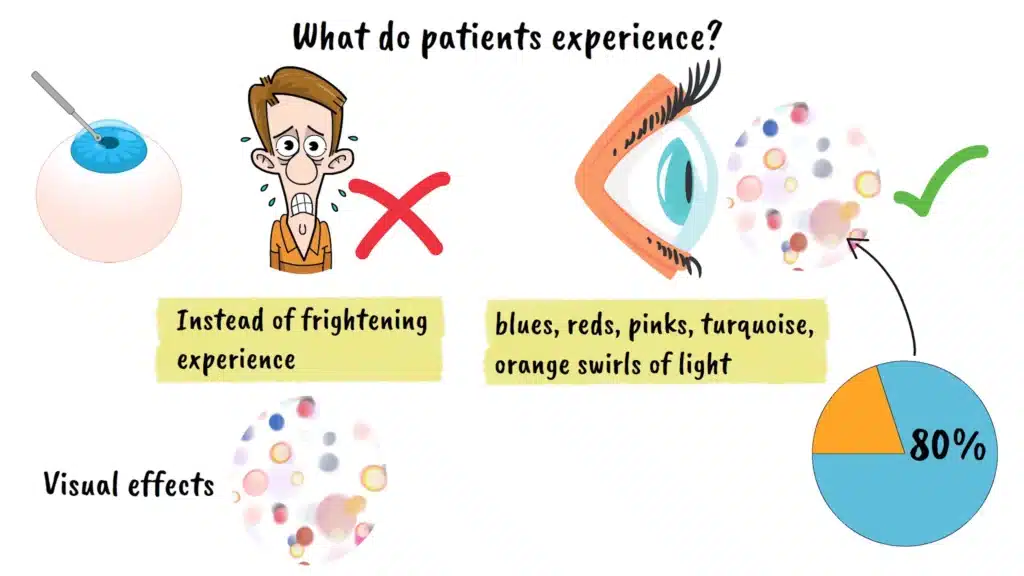
So what do patients actually experience during this remarkable procedure? The answer might surprise you. Instead of the frightening experience many people imagine, most patients describe seeing beautiful, colorful light shows. Research reveals that about eighty percent of patients see vibrant colors during their surgery, including blues, reds, pinks, and even turquoise or orange swirls of light. Many patients are so mesmerized by these visual effects that they completely forget they’re having surgery.
Immediate Post-Surgery Transformation
The transformation that happens next is nothing short of miraculous. Within minutes of completing the surgery, many patients notice that colors appear more vibrant and vivid than they’ve seen in years. It’s like someone just cleaned the windows of their soul, removing a filter they didn’t even realize was there.
Recovery Process and Timeline

The recovery process is equally impressive. While your eye might feel scratchy or sensitive for the first day or two, most patients are amazed by how quickly their vision improves. Within a week, the initial healing is largely complete, and many people find themselves rediscovering activities they had given up due to poor vision.
Consider this for a moment: in just twenty minutes, using technology that fits through an opening smaller than a pencil tip, surgeons can completely restore vision that may have been deteriorating for years or even decades. The precision, the technology, the artistry involved, it’s genuinely one of the most remarkable achievements in all of medicine.
Success Rates and Life-Changing Results
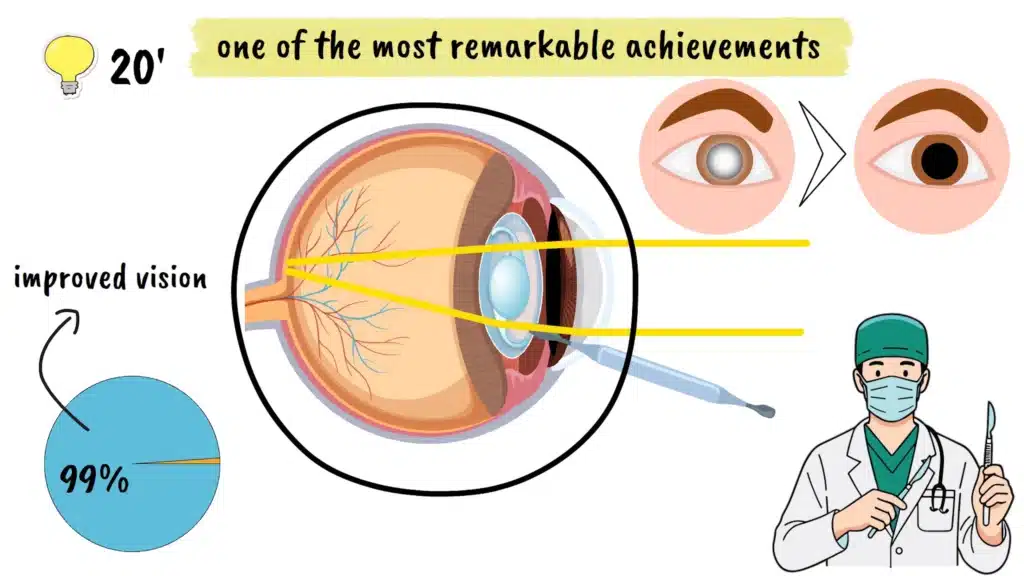
The success statistics are equally staggering. Over ninety-nine percent of cataract surgeries result in improved vision. That’s a success rate that would be impressive for any medical procedure, but for surgery involving something as delicate and complex as the human eye, it’s absolutely extraordinary.
Perhaps most importantly, cataract surgery doesn’t just restore vision, it transforms lives. Patients frequently describe feeling like they’ve gotten their independence back, their confidence back, their joy back. Simple pleasures like reading a book, seeing a grandchild’s face clearly, or driving safely at night become possible again.
The combination of advanced technology, surgical skill, and your body’s natural healing ability makes cataract surgery not just a medical procedure, but a genuine miracle of modern science. Every day, thousands of people walk into surgical centers with cloudy vision and walk out with the promise of crystal-clear sight for years to come.
From the microscopic precision of the incisions to the high-tech ultrasonic removal of cataracts, from the engineering marvel of artificial lenses to the remarkable self-healing properties of human tissue, cataract surgery represents the very best of what medical science can achieve. It’s a testament to human ingenuity, a celebration of technological advancement, and most importantly, a life-changing gift of sight for millions of people worldwide.
