
Imagine looking in the mirror one morning and noticing your eyes appear different. Maybe they seem to bulge forward more than usual, or perhaps you’re seeing double when trying to read the morning newspaper. For many seniors, these changes might be dismissed as just another part of getting older. But here’s what might shock you: these symptoms could be signs of a serious autoimmune condition that affects the delicate tissues around your eyes.
This comprehensive guide explains thyroid eye disease (TED) in seniors using clear language and real-world examples that everyone can understand. We’re diving deep into how this condition goes far beyond just bulging eyes and can significantly impact quality of life if left untreated.
Understanding Thyroid Eye Disease
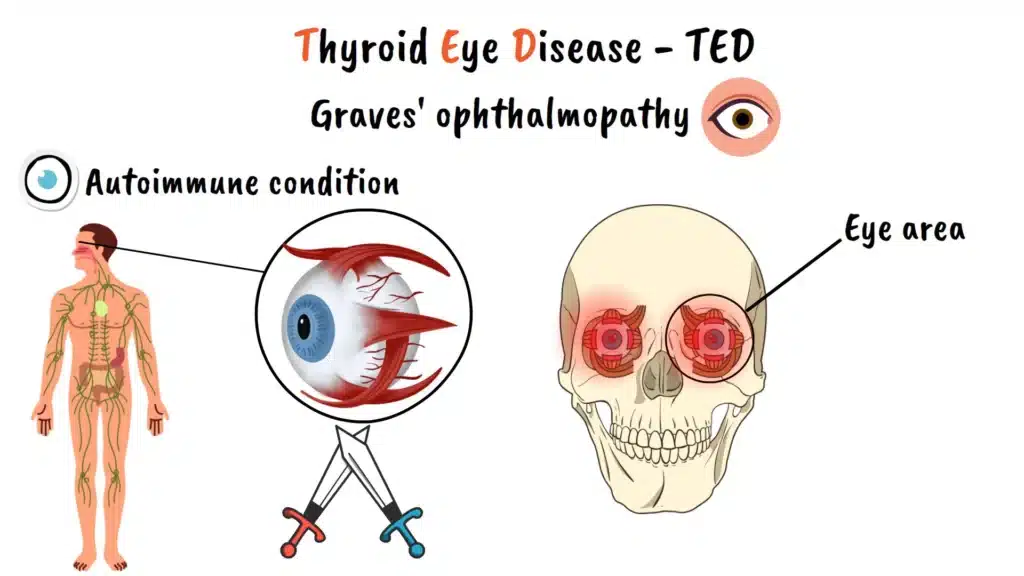
Thyroid Eye Disease, also known as TED or Graves’ ophthalmopathy, is an autoimmune condition where your body’s immune system mistakenly attacks the muscles and fatty tissue surrounding your eyes. Think of it like friendly fire in your immune system, where your body’s defense mechanism turns against healthy tissue in the eye area, causing inflammation and swelling within the bony socket that houses your eye.
Research shows that age plays a crucial role in how this disease presents and progresses. This statistic might surprise you: studies involving thousands of patients have revealed that people over fifty years old experience more severe forms of Thyroid Eye Disease compared to younger individuals.
What Happens Inside Your Eye Socket
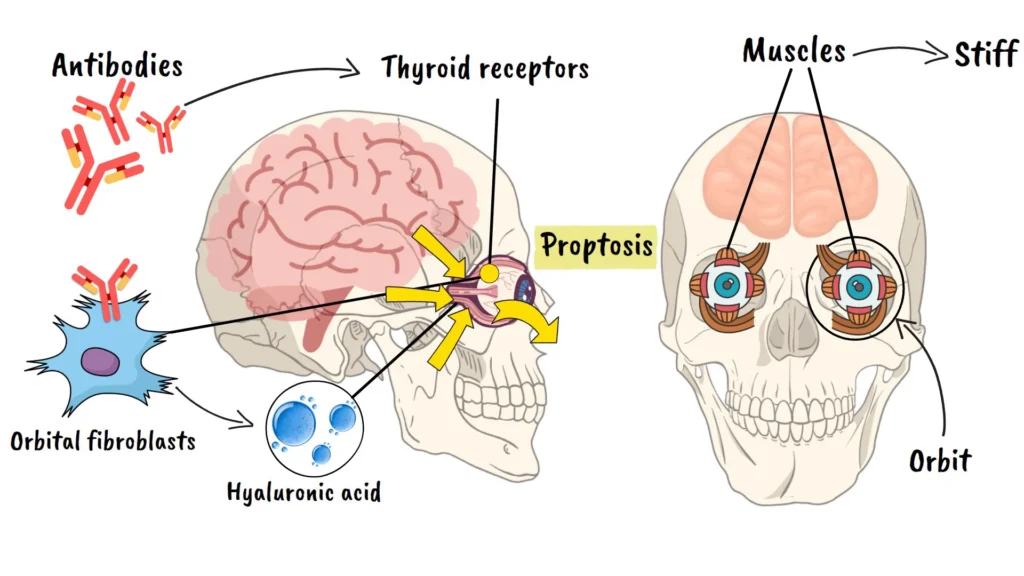
Let’s start by understanding what actually happens inside your eye socket when Thyroid Eye Disease develops. Your eye sits within a bony cavity called the orbit, surrounded by muscles that control eye movement, fatty tissue that cushions the eye, and connective tissues that provide support. When TED occurs, your immune system produces antibodies that were originally meant to target thyroid receptors, but these same receptors exist in the tissues around your eyes.
These antibodies bind to receptors on special cells called orbital fibroblasts. When activated, these cells begin producing excessive amounts of a substance called hyaluronic acid, which acts like a sponge that absorbs water. Imagine trying to fit more and more sponges soaked with water into a rigid box. As these tissues swell with fluid, they have nowhere to expand except forward, pushing your eyeball outward and creating that characteristic bulging appearance we call proptosis.
The Hidden Complications: Muscle Swelling and Double Vision
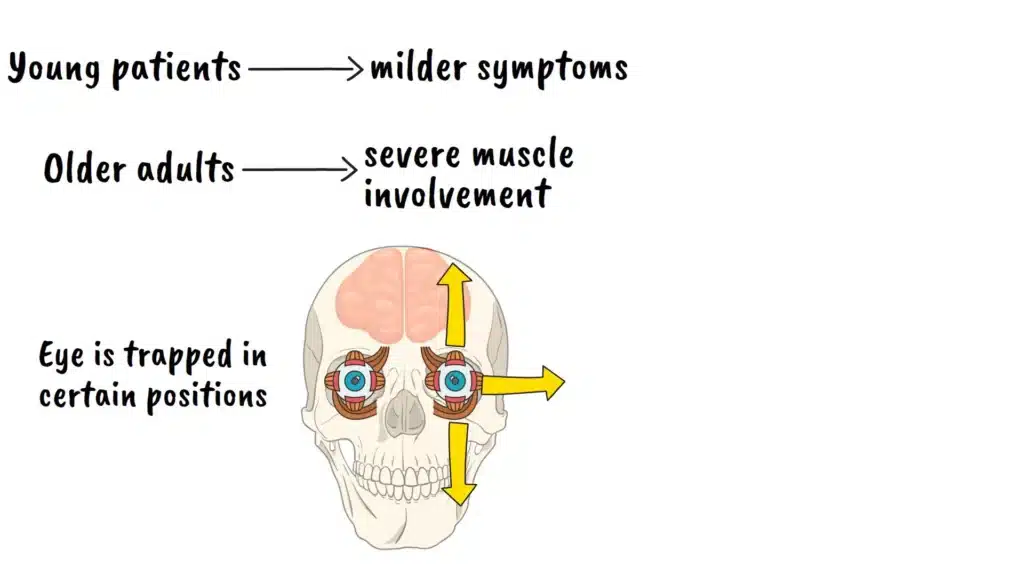
But wait, there’s more you need to know: the swelling doesn’t stop there. The muscles that control your eye movements also become enlarged and stiff, like rubber bands that have lost their flexibility. This muscle stiffness leads to one of the most common complaints in seniors with TED: double vision, medically known as diplopia. Research shows that diplopia is actually the most common presenting symptom in patients over eighty years old, occurring more frequently than the classic bulging eyes we typically associate with this condition.
Here’s where it gets particularly concerning for seniors. Unlike younger patients who often present with milder symptoms, older adults tend to have more severe muscle involvement from the very beginning. The muscles become so enlarged and inflexible that they can trap the eye in certain positions, making it difficult or impossible to look up, down, or to the sides normally. This creates a mechanical restriction, like trying to move a joint that has become locked in place.
The Most Serious Complication: Dysthyroid Optic Neuropathy
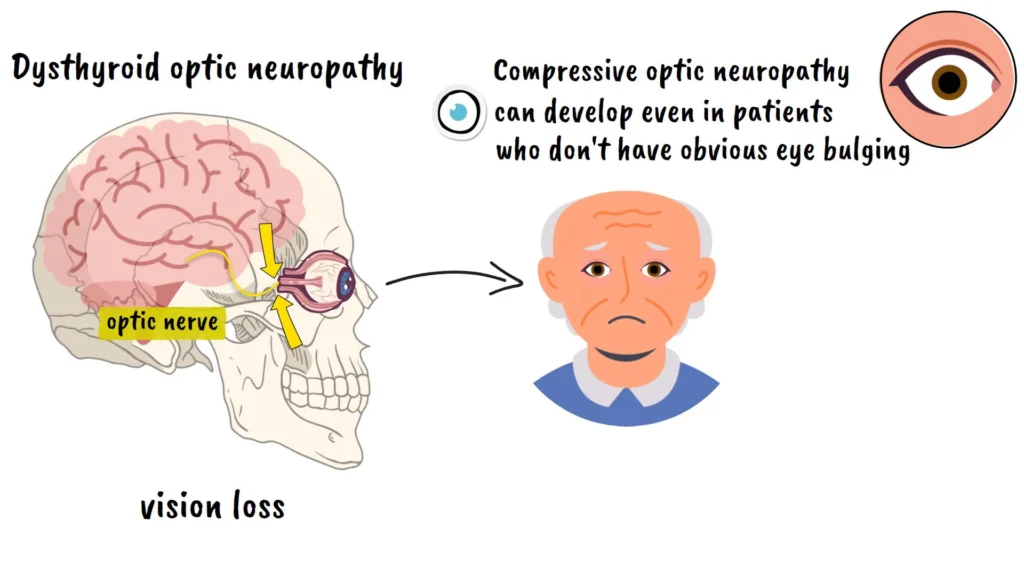
The most serious complication that can occur, especially in seniors, is something called dysthyroid optic neuropathy, and this is where you need to pay very close attention. This happens when the swollen muscles and tissues put pressure on the optic nerve, which is the cable that carries visual information from your eye to your brain. Think of it like a garden hose being pinched: the flow of information becomes restricted, leading to vision loss that can become permanent if not treated promptly.
What makes this particularly dangerous is that compressive optic neuropathy can develop even in patients who don’t have obvious eye bulging. Some seniors may have what appears to be relatively normal-looking eyes but still develop this sight-threatening complication because the swelling is occurring deeper within the eye socket where it’s not immediately visible.
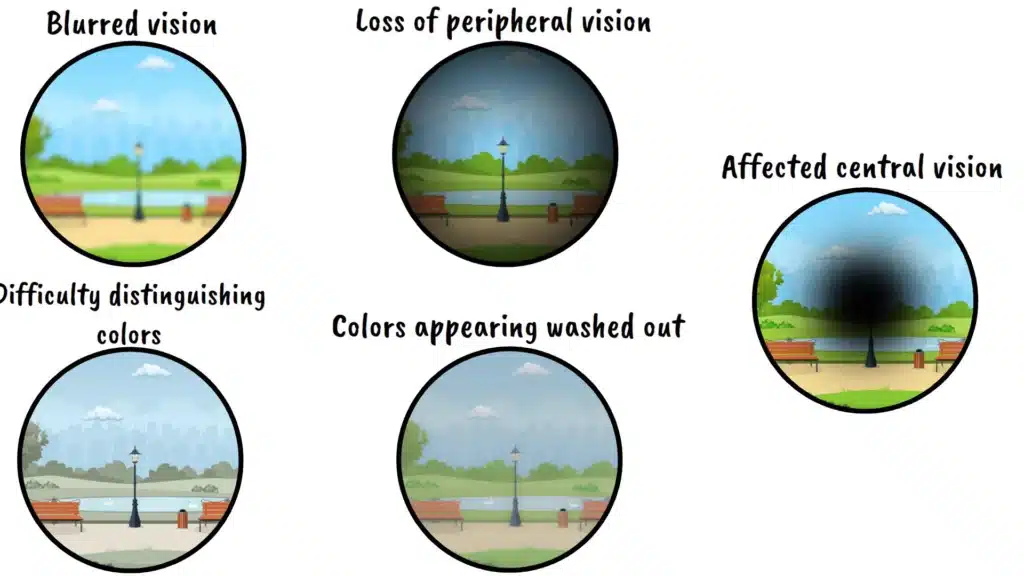
The symptoms of compressive optic neuropathy include blurred vision, difficulty distinguishing colors especially blues and greens, and loss of peripheral or side vision. Patients often describe colors appearing washed out or less vibrant than before. In severe cases, central vision can be affected, making it difficult to read, drive, or perform daily activities safely.
Age-Related Treatment Challenges
Age also influences how Thyroid Eye Disease is treated and how well patients respond to various therapies. Older patients are more likely to require multiple types of treatment including medications, radiation therapy, and surgical interventions. Studies show that seniors have higher rates of needing orbital decompression surgery, where surgeons remove portions of the bone around the eye socket to create more space for the swollen tissues.
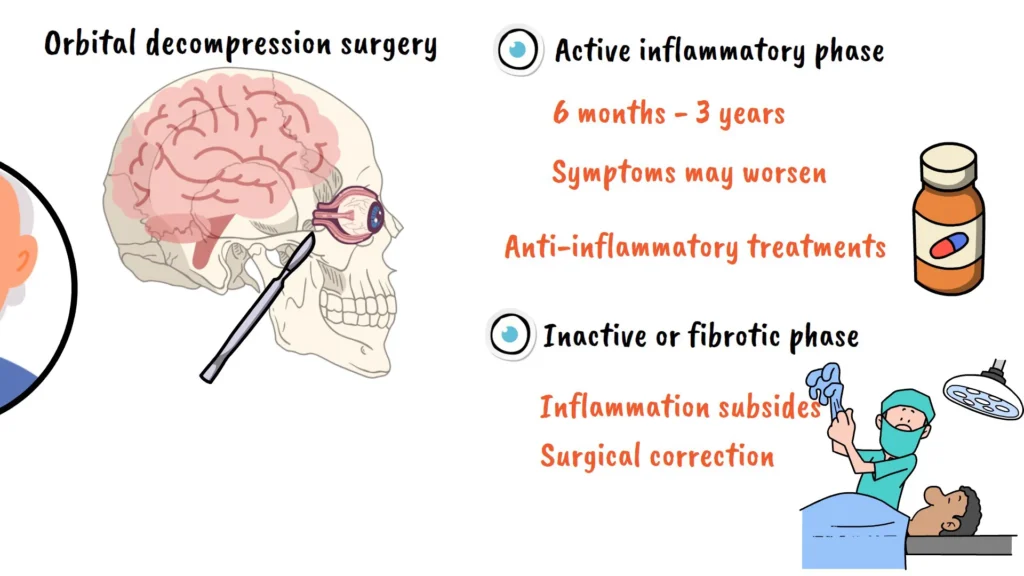
Here’s something important to understand: the disease follows a typical pattern. There’s an active inflammatory phase that can last anywhere from six months to three years, during which symptoms may worsen or fluctuate. This is followed by an inactive or fibrotic phase where the inflammation subsides but structural changes remain. During the active phase, anti-inflammatory treatments can be effective, but once the disease becomes inactive, surgical correction may be the only option to restore function and appearance.
The Critical Role of Smoking in Thyroid Eye Disease
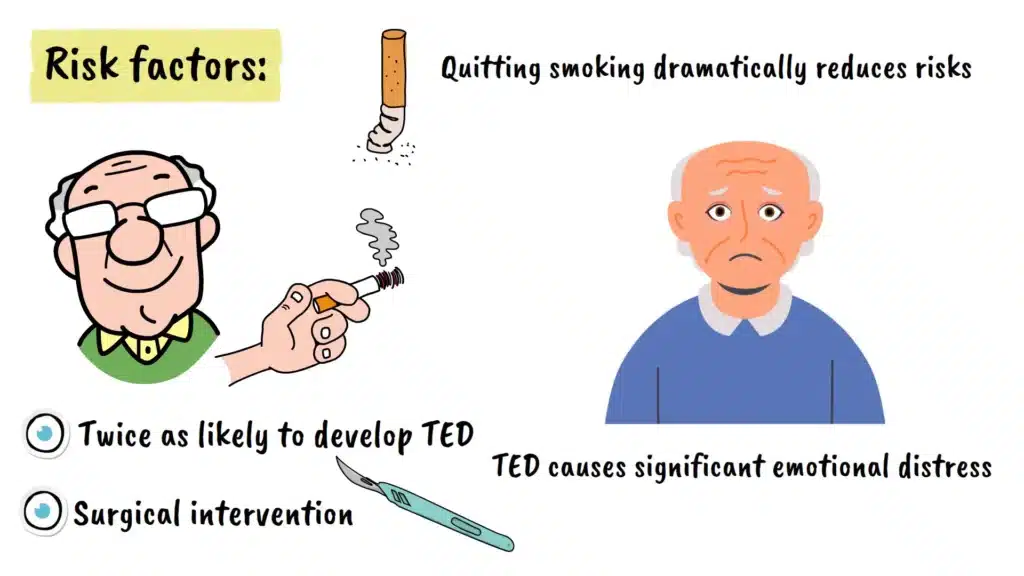
One of the most significant risk factors that particularly affects seniors is smoking. Research demonstrates that current smokers are twice as likely to develop Thyroid Eye Disease and experience more severe symptoms. Even more concerning, smokers require surgical interventions at much higher rates. The good news is that quitting smoking can dramatically reduce these risks, with former smokers showing significantly better outcomes than current smokers.
The Emotional and Psychological Impact
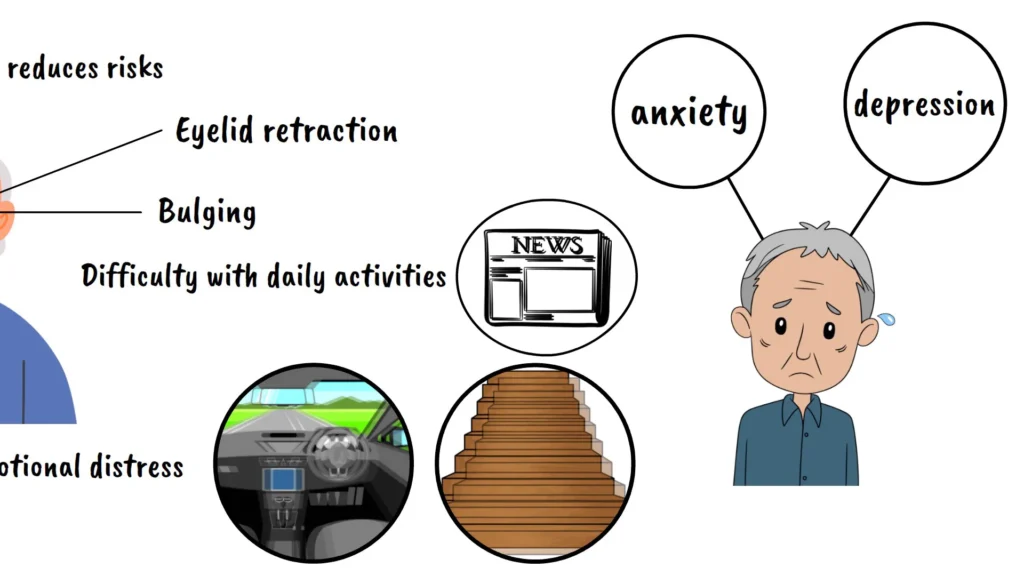
The emotional impact of Thyroid Eye Disease on seniors cannot be overlooked and represents a significant concern requiring attention. Changes in appearance, including eyelid retraction and bulging, can severely affect self-esteem and confidence, particularly for older adults already dealing with age-related changes. Difficulty with daily activities due to double vision becomes especially problematic for seniors, interfering with reading, driving, stairs navigation, and cherished hobbies that maintain their independence and quality of life.
Concerns about vision loss create persistent anxiety about maintaining autonomy and requiring increased assistance. Studies show that patients with TED have higher rates of anxiety and depression, with up to forty-two percent experiencing clinically significant emotional distress.
New Hope: Recent Treatment Advances
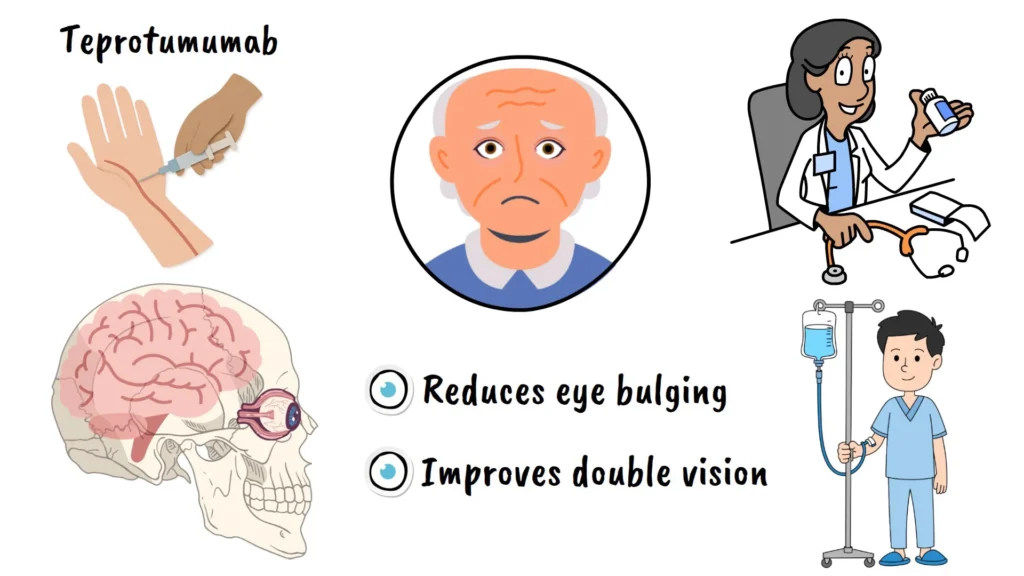
Here’s something hopeful: recent advances in treatment have brought new hope for seniors with Thyroid Eye Disease. A medication called teprotumumab, which targets the specific receptors involved in the disease process, has shown remarkable results in reducing eye bulging and improving double vision. While most clinical trials included younger patients, real-world experience suggests that seniors can also benefit from this targeted therapy, though they may need closer monitoring for side effects.
When to Seek Medical Attention
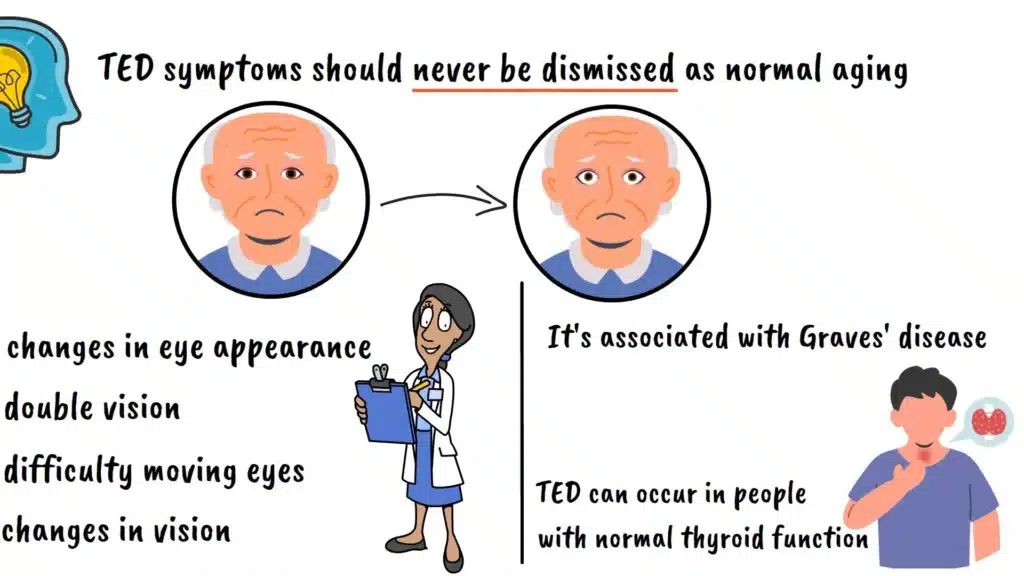
This is the key message to remember: Thyroid Eye Disease symptoms should never be dismissed as normal aging. If you notice changes in your eye appearance, new onset of double vision, difficulty moving your eyes, or any changes in vision quality, it’s essential to seek medical evaluation promptly. Early diagnosis and treatment can prevent permanent complications and significantly improve quality of life.
Remember that Thyroid Eye Disease can occur even in people with normal thyroid function, though it’s most commonly associated with an overactive thyroid condition called Graves’ disease. The eye disease can appear before, during, or after thyroid problems develop, so don’t assume you’re safe if your thyroid levels are normal.
Conclusion
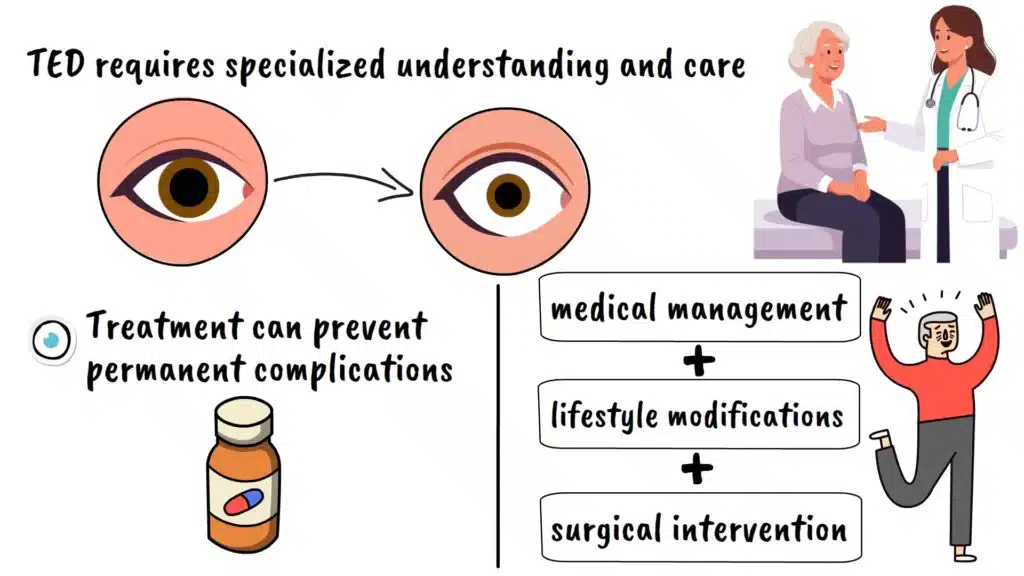
Thyroid Eye Disease in seniors presents unique challenges that require specialized understanding and care. While the condition can be serious, especially when it affects vision, prompt recognition and appropriate treatment can prevent permanent complications. The combination of medical management, lifestyle modifications, and when necessary, surgical intervention can help seniors maintain their vision, comfort, and quality of life.
