
Glaucoma is one of the leading causes of irreversible blindness worldwide. The most worrying part is that it usually develops silently, without noticeable symptoms until significant vision loss has already occurred. Understanding the major risk factors for glaucoma is essential if you want to protect your eyesight and catch the disease early, when treatment is most effective.
This article explains what glaucoma is, how intraocular pressure works, which risk factors matter most, which groups of people are at highest risk, and what you can do to protect your vision.
What Is Glaucoma?
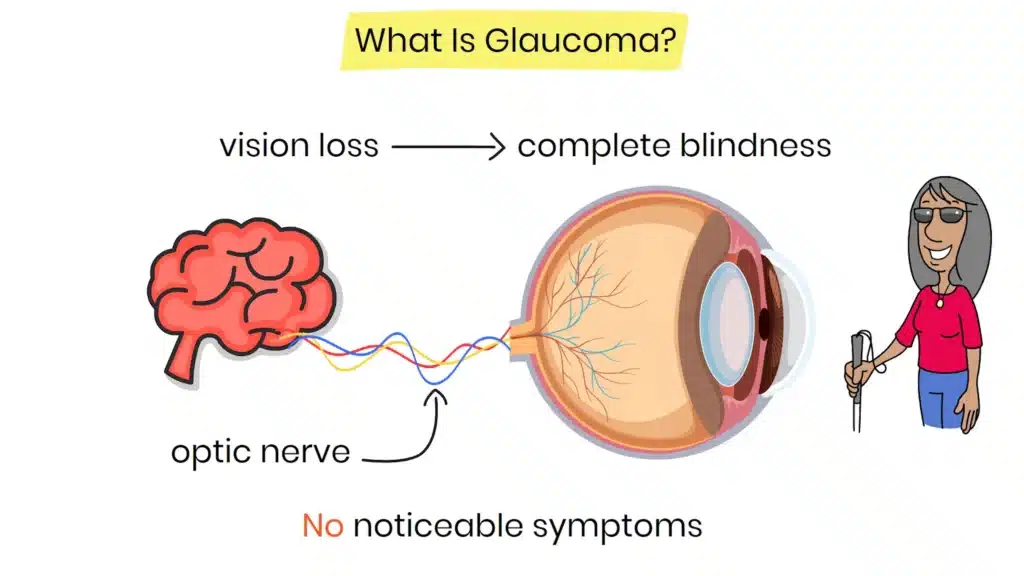
Glaucoma is a serious eye disease that damages the optic nerve. The optic nerve is like a cable that connects your eye to your brain and carries all the visual information you see. When the optic nerve becomes damaged, it leads to vision loss and can eventually cause complete blindness if left untreated.
Most people do not realize they have glaucoma until significant damage has already occurred, because the disease usually develops without any noticeable symptoms. This is why glaucoma is often called the “silent thief of sight.”
Understanding Intraocular Pressure (IOP)
Before looking at the risk factors, it is important to understand one key measurement that doctors use when evaluating glaucoma – intraocular pressure.
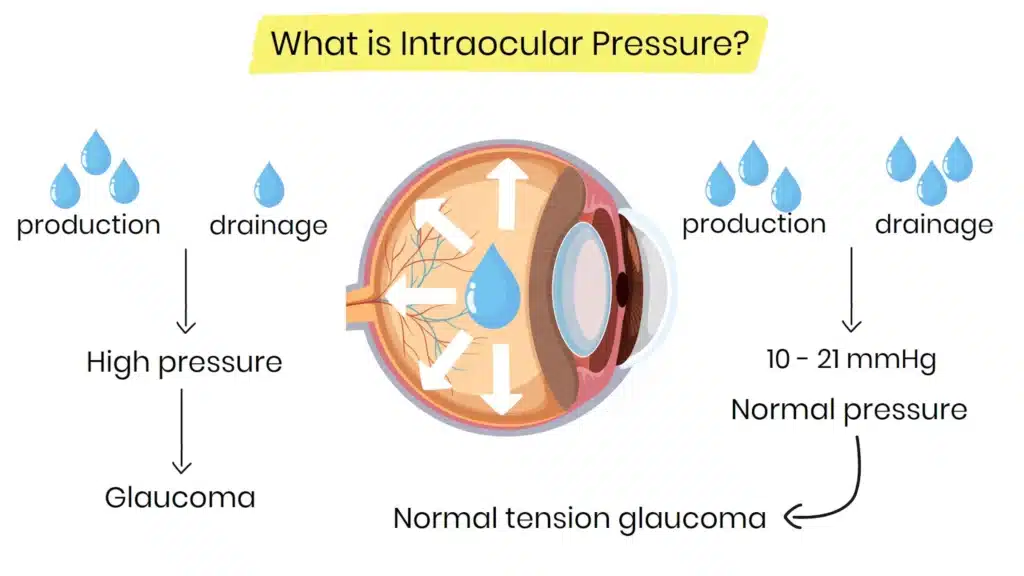
Intraocular pressure is simply the amount of fluid pressure inside your eye. You can think of it like the air pressure inside a tire. Your eye is constantly producing and draining fluid, and the balance between production and drainage determines the pressure inside your eye.
In most people, normal intraocular pressure falls between 10 and 21 millimeters of mercury. This is the unit doctors use to measure eye pressure.
When the pressure becomes too high, it can damage the delicate optic nerve tissue and lead to glaucoma. However, some people can develop glaucoma even with normal eye pressure. This condition is called normal tension glaucoma.
Major Risk Factors for Glaucoma
Glaucoma does not have a single cause. Instead, several factors can increase your risk. Some of these can be controlled or treated, while others cannot be changed but can alert you to the need for regular eye exams.
1. Elevated Intraocular Pressure (IOP)
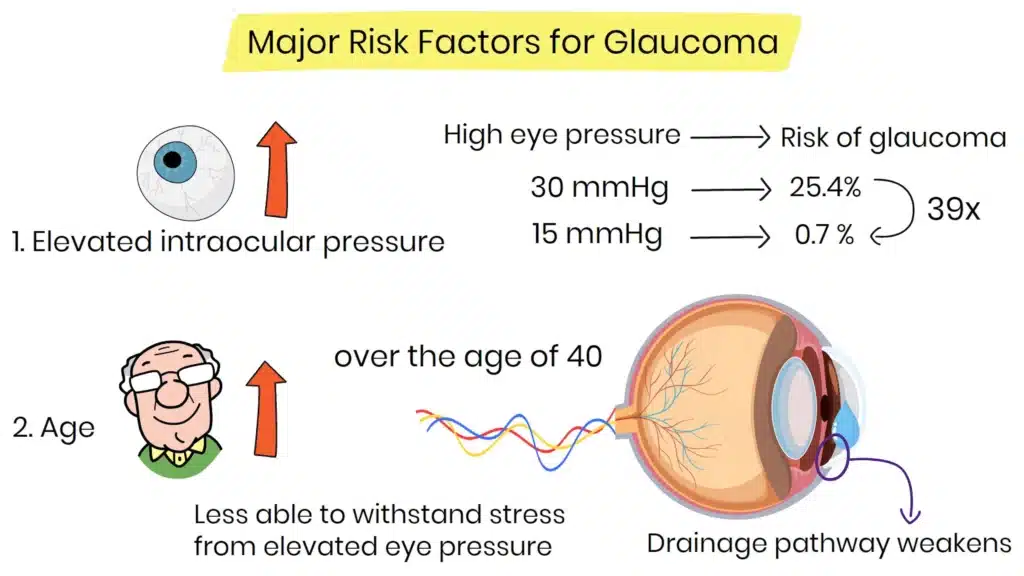
The first major risk factor is elevated intraocular pressure. Elevated IOP is the most important modifiable risk factor for glaucoma. This means it is something that doctors can actually treat and manage.
The higher your eye pressure, the greater your risk of developing glaucoma. For example:
- If your intraocular pressure reaches 30 millimeters of mercury, your risk of having glaucoma jumps to 25.4 percent.
- If your pressure is below 15 millimeters of mercury, your risk drops to just 0.7 percent.
This means having an IOP of 30 mmHg gives you about 39 times higher risk than having an IOP below 15 mmHg. Because of this, regular eye exams to check your eye pressure are extremely important.
2. Age
Age is another significant risk factor for glaucoma. The risk of developing glaucoma increases dramatically as you get older.
- Glaucoma is far more common in people over the age of 40.
- The risk continues to increase with each passing year.
As we age, the optic nerve becomes less able to withstand stress from elevated eye pressure. In addition, the drainage pathway in the eye that allows fluid to flow out gradually weakens over time. When this drainage pathway weakens, the eye pressure gradually begins to increase, further raising the risk of glaucoma.
3. Family History of Glaucoma
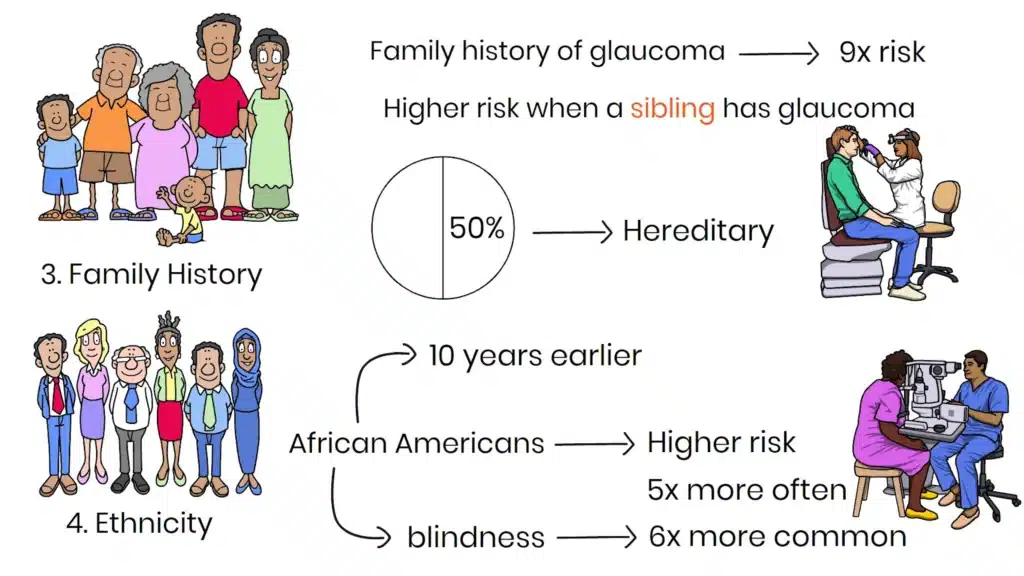
Family history is a very important risk factor. If someone in your family has glaucoma, your own risk increases significantly.
- Research shows that having a family history of glaucoma increases your risk by about 9 times compared to people without any family history.
- The risk is even higher if it is a sibling who has glaucoma rather than a more distant relative.
- Some studies suggest that more than 50 percent of glaucoma cases are actually hereditary, which means they run in families.
This strong genetic component means that if your parents, siblings, or grandparents have glaucoma, you should be monitored closely by an eye doctor.
4. Ethnicity
Your ethnicity is another important factor to consider.
- African Americans have significantly higher rates of glaucoma compared to other populations.
- Glaucoma occurs about 5 times more often in African Americans.
- Blindness from glaucoma is about 6 times more common in this population.
- Glaucoma also tends to develop earlier in life in African Americans, typically about 10 years earlier than in other ethnic groups.
Because of this elevated risk, African Americans should receive a thorough screening for glaucoma every one to two years after age 35 to catch the disease early.
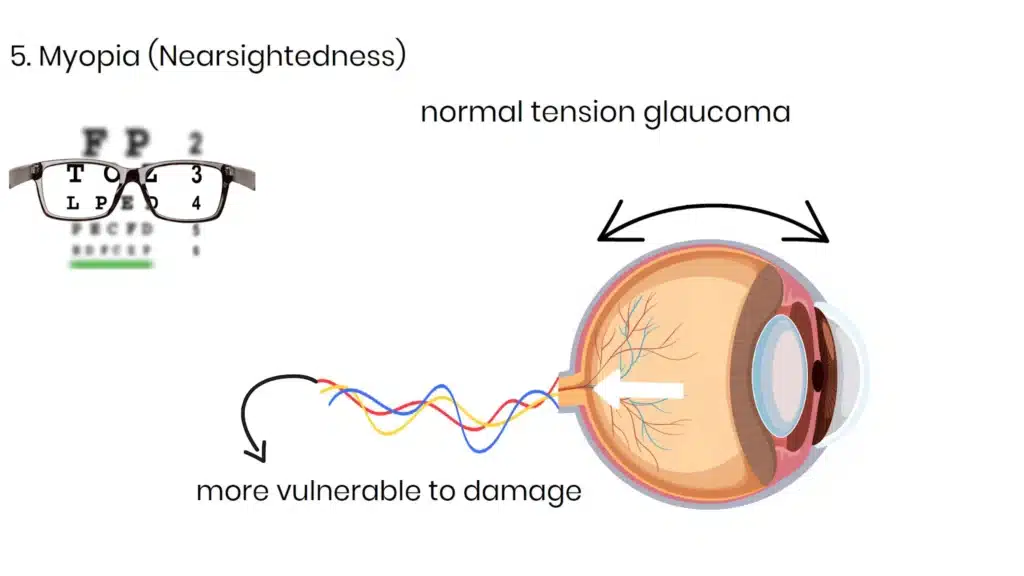
5. Myopia (Nearsightedness)
Myopia, also called nearsightedness, is another notable risk factor.
The reason for this increased risk relates to the structure of the eye. Myopic eyes tend to be larger than average in size. This makes the optic nerve at the back of the eye more vulnerable to damage from pressure changes.
Many people with myopia who develop glaucoma have what is called normal tension glaucoma. In this condition, the eye pressure is not particularly elevated, yet damage still occurs because the optic nerve is weaker and more susceptible to injury.
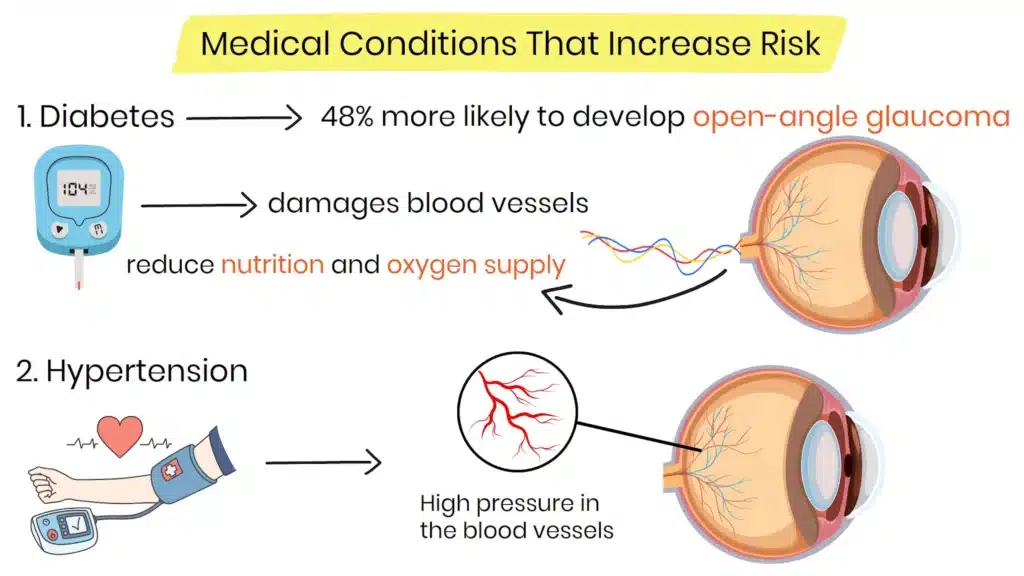
6. Medical Conditions That Increase Glaucoma Risk
Certain medical conditions can significantly increase the risk of developing glaucoma.
Diabetes
Diabetes is one of the most significant medical conditions linked to glaucoma development.
- People with diabetes are 48 percent more likely to develop open-angle glaucoma over a 20 year period compared to people without diabetes.
- The risk increases the longer you have had diabetes.
Diabetes damages blood vessels throughout the body. In the eye, this altered blood flow can reduce the nutrition and oxygen supply to the optic nerve, making it more vulnerable to damage.
Hypertension (High Blood Pressure)
Hypertension, which is high blood pressure, is another medical condition that increases glaucoma risk.
Elevated blood pressure increases the pressure in the blood vessels around the eye. This can affect eye pressure and reduce fluid drainage from the eye, which in turn can contribute to glaucoma development.
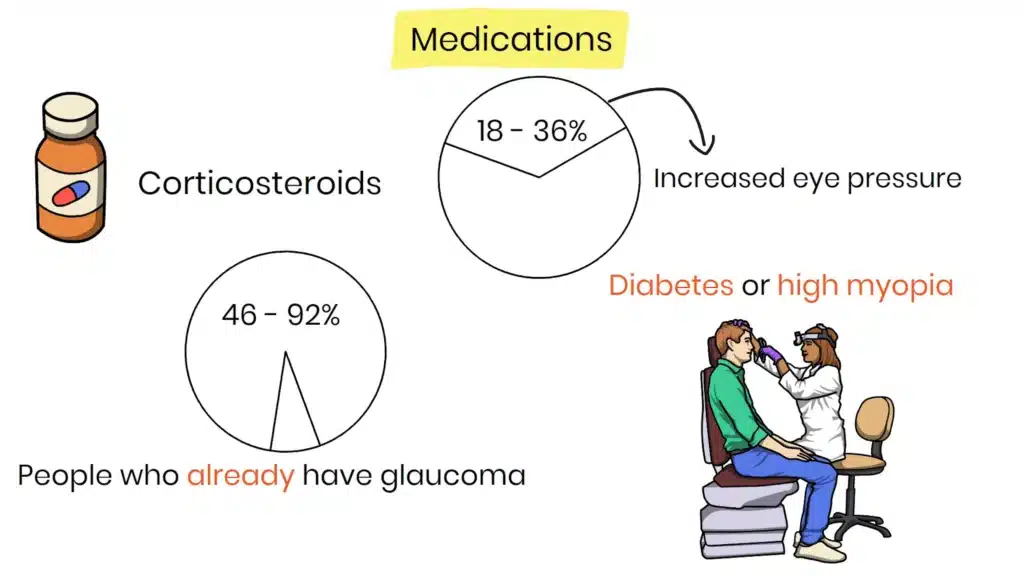
7. Medications That Affect Eye Pressure
Certain medications can also increase your risk of developing glaucoma, especially if you already have some of the other risk factors mentioned above.
Corticosteroids are anti inflammatory medications that are commonly prescribed for various conditions, including asthma, autoimmune diseases, allergies, and skin disorders. They can be taken as eye drops, pills, inhalers, injections, or creams.
- About 18 to 36 percent of the general population will experience an increase in eye pressure when taking corticosteroids.
- This response is much more common in people who already have glaucoma, affecting 46 to 92 percent of those patients.
- Patients over 40 years old and people with diabetes or high myopia are even more vulnerable to corticosteroid induced eye pressure elevation.
Because of these risks, doctors carefully monitor patients taking these medications, especially if they are used for a long period or applied directly to the eyes.
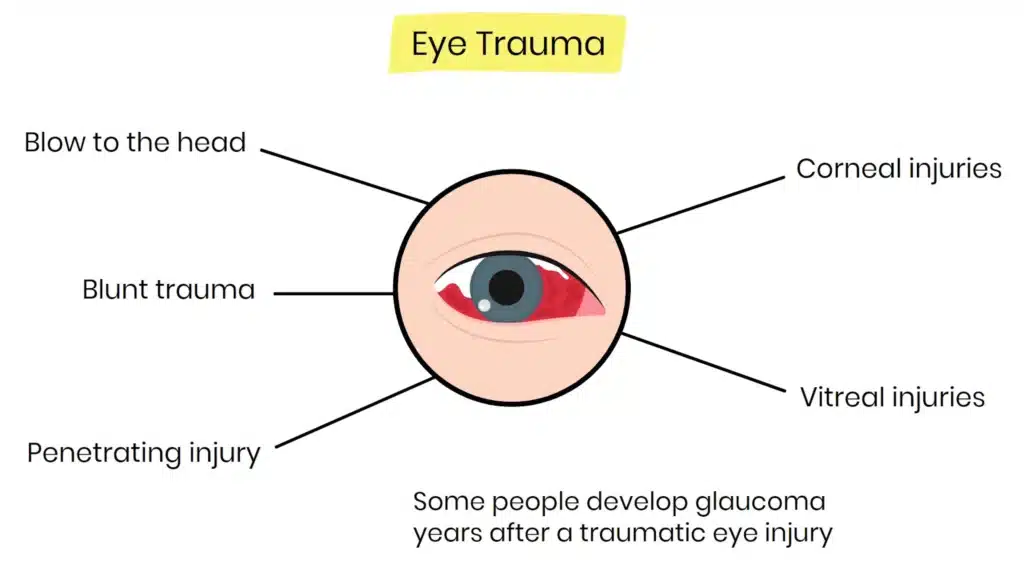
8. Eye Trauma and Injury
Eye trauma or injury is another important risk factor for glaucoma.
If you have experienced an injury to your eye from a blow to the head, blunt trauma, or a penetrating injury, you have an increased risk of developing glaucoma.
- Corneal injuries and vitreal injuries, which involve the clear gel inside the eye, have been shown to significantly increase the risk of early glaucoma development.
- Some people develop glaucoma years after a traumatic eye injury, so ongoing monitoring is essential.
Anyone with a history of serious eye trauma should have regular eye examinations to check for signs of glaucoma.
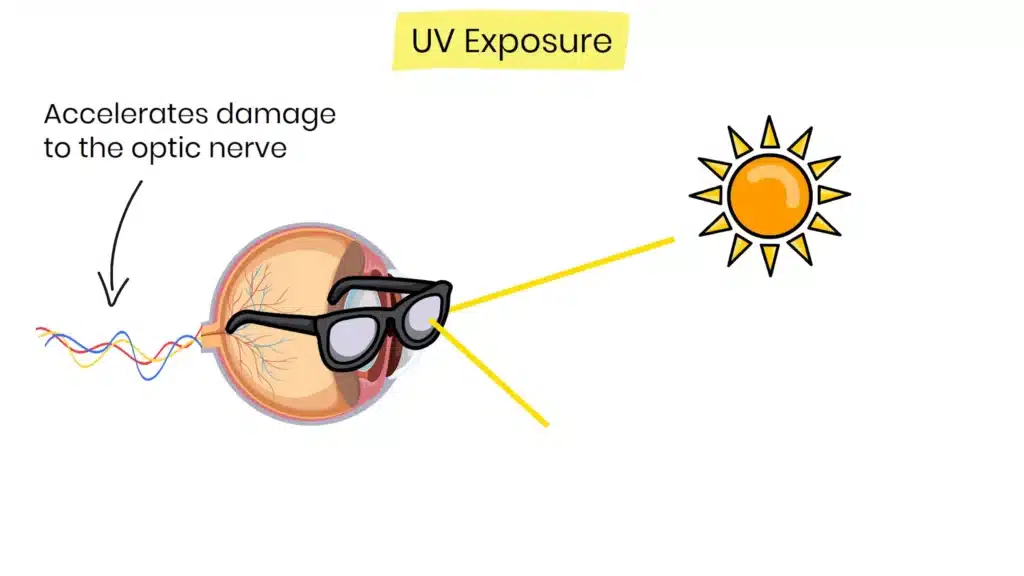
9. UV Exposure
Prolonged exposure to ultraviolet (UV) radiation from the sun is also a recognized risk factor for glaucoma.
UV exposure can accelerate damage to the optic nerve tissue over time, especially when combined with other risk factors. This is why wearing sunglasses that block UV radiation when you are outside is a smart protective measure.
Choosing sunglasses that provide 100 percent UVA and UVB protection and wearing a hat with a brim can help reduce the amount of UV radiation reaching your eyes.
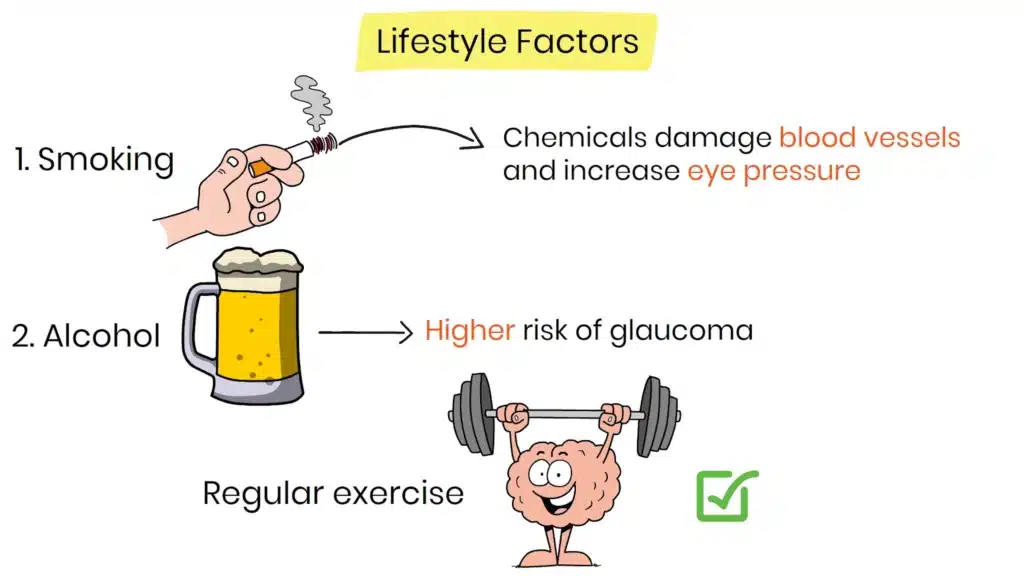
10. Lifestyle Factors
Lifestyle choices can also influence glaucoma risk. While they may not be the sole cause, they can add to your overall risk profile.
Smoking
Smoking significantly increases your risk of developing glaucoma. The chemicals in tobacco smoke can damage blood vessels and increase eye pressure over time. Smoking also worsens blood flow to the optic nerve, which may accelerate damage.
Excessive Alcohol Consumption
Excessive alcohol consumption is another lifestyle factor that can increase glaucoma risk. People who drink heavily have higher rates of glaucoma compared to moderate drinkers or non drinkers.
Maintaining a healthy lifestyle with regular exercise, not smoking, and limiting alcohol consumption can help protect your vision and may reduce your risk of developing glaucoma or slow its progression.
Importance of Early Detection
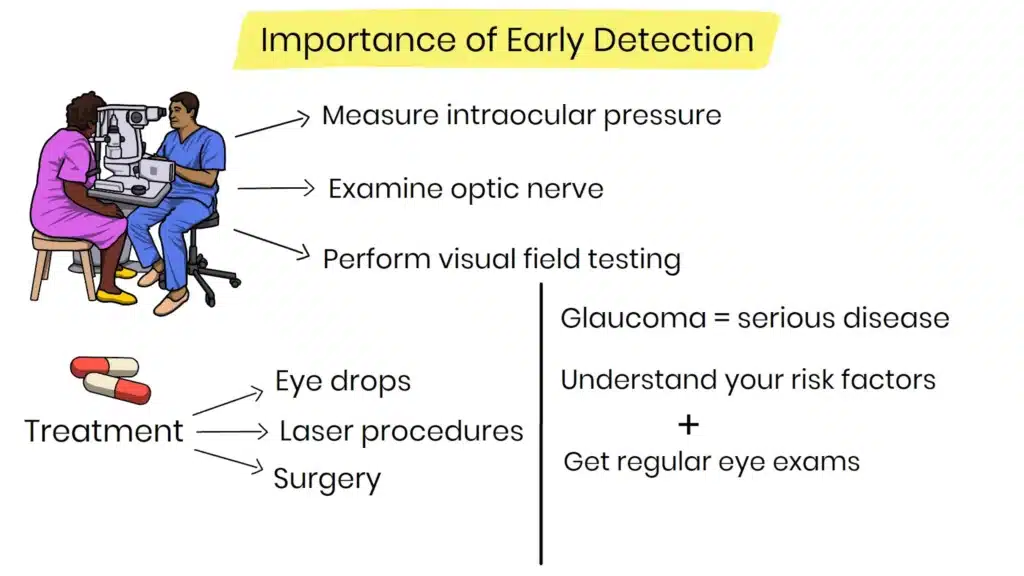
Early detection is absolutely critical for glaucoma management.
During a comprehensive eye exam, your eye doctor can:
- Measure your intraocular pressure
- Examine your optic nerve
- Perform visual field testing to check for blind spots or vision loss
- Evaluate the drainage angle of your eye
If you are diagnosed with glaucoma or are at high risk, treatment options may include:
- Eye drops that reduce eye pressure
- Laser procedures to improve fluid drainage
- Surgery in more advanced or difficult cases
These treatments can slow or prevent further vision loss if started early. However, they cannot restore vision that has already been lost. This is why regular eye exams are essential, especially if you have one or more risk factors.
How to Protect Your Vision If You Are at Risk
If you recognize yourself in any of the risk factors above, there are several practical steps you can take:
- Schedule regular comprehensive eye exams, especially after age 40 or earlier if you have strong risk factors such as family history, African ancestry, high myopia, diabetes, or previous eye trauma.
- Follow your eye doctor’s recommendations closely if you are prescribed eye drops or other treatments to lower eye pressure.
- Tell your doctor about all medications you are taking, especially corticosteroids, so your eye pressure can be monitored.
- Protect your eyes from UV radiation by wearing high quality sunglasses and hats when outdoors.
- Maintain a healthy lifestyle – do not smoke, limit alcohol, manage blood pressure and blood sugar, and exercise regularly.
Conclusion
The key takeaway is that glaucoma is a serious disease that can steal your sight without warning. However, by understanding your risk factors and getting regular eye exams, you can catch glaucoma in its early stages when treatment is most effective.
Knowing about elevated intraocular pressure, age, family history, ethnicity, myopia, medical conditions such as diabetes and hypertension, certain medications, eye trauma, UV exposure, and lifestyle choices gives you the power to act early and protect your vision.
If you found this information helpful, share it with friends and family who may be at risk, and make sure to schedule your next comprehensive eye exam. Early detection and proper management are the best tools available to prevent vision loss from glaucoma.
