
Cholesterol is a fatty substance that plays an important role in your body. It helps build cell membranes, which are the protective barriers around your cells, and it helps produce hormones, which are chemical messengers that control many bodily functions. However, when cholesterol levels get too high, especially the bad type called LDL cholesterol (low density lipoprotein), it can start causing problems throughout your body, including your eyes.
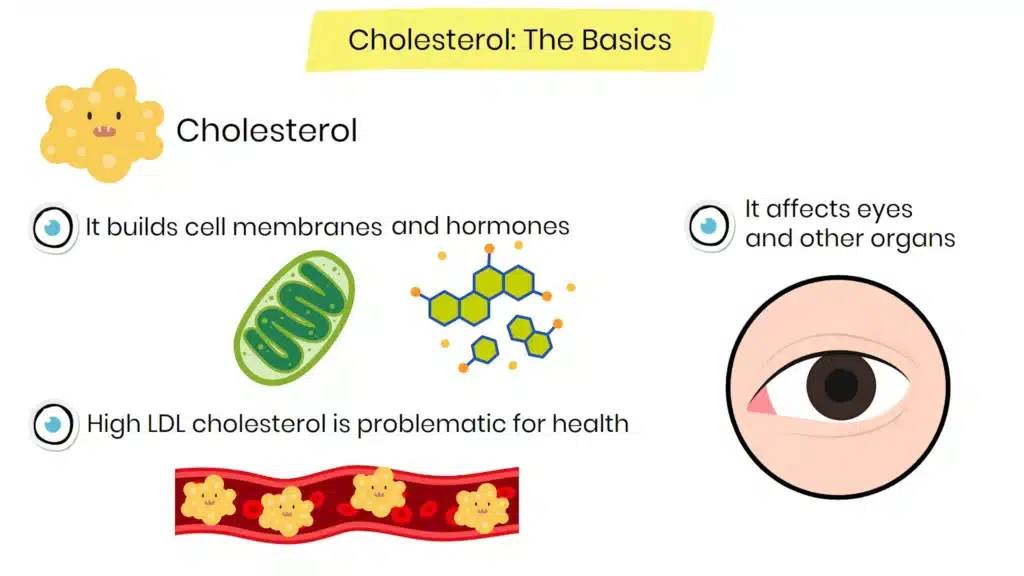
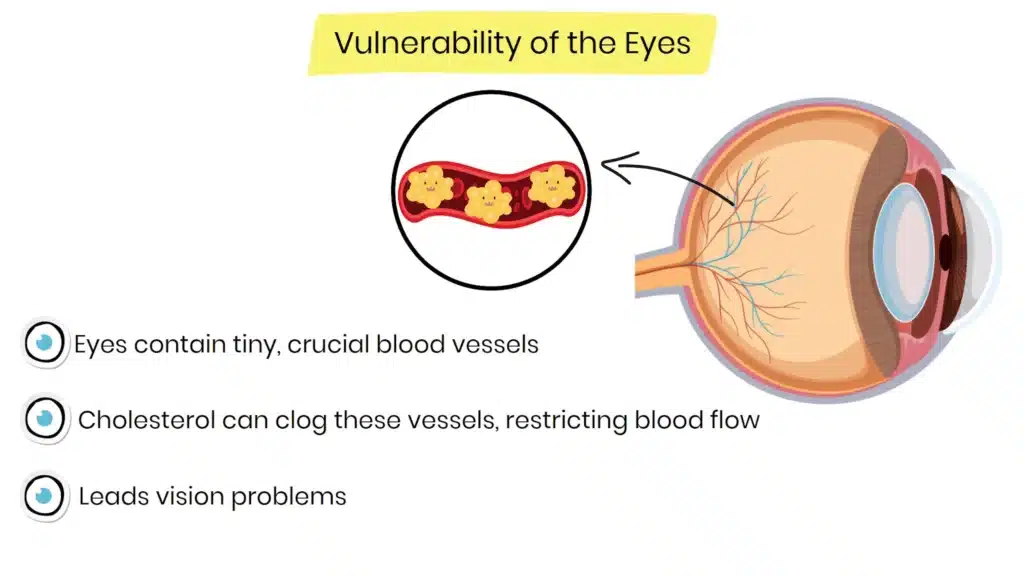
The eyes are particularly vulnerable to high cholesterol because they contain many tiny blood vessels that supply oxygen and nutrients to the delicate tissues. When cholesterol builds up, it can clog these small vessels, restrict blood flow, and lead to vision problems. Think of it like a garden hose that gets blocked: the water can’t flow properly to where it needs to go.
Visible Signs of High Cholesterol in Your Eyes
Xanthelasma
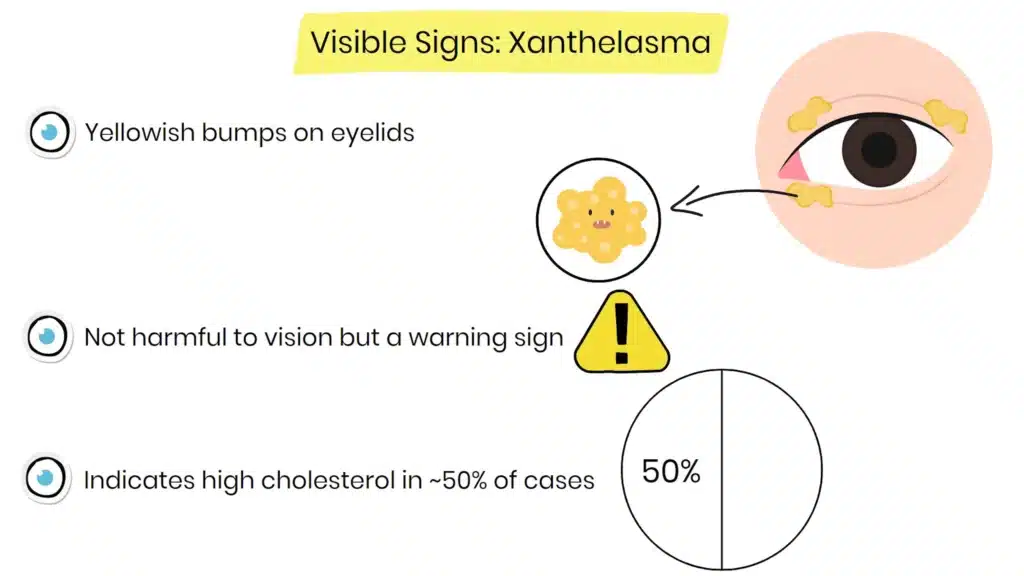
One of the most common signs is something called xanthelasma. These are small yellowish bumps or patches that appear on the eyelids, usually near the nose on the upper or lower lids. They’re made of cholesterol deposits that have accumulated under the skin. While xanthelasma doesn’t hurt or affect your vision directly, it can be a warning sign that your cholesterol levels are elevated. About half of people who develop xanthelasma have high cholesterol.
Corneal Arcus
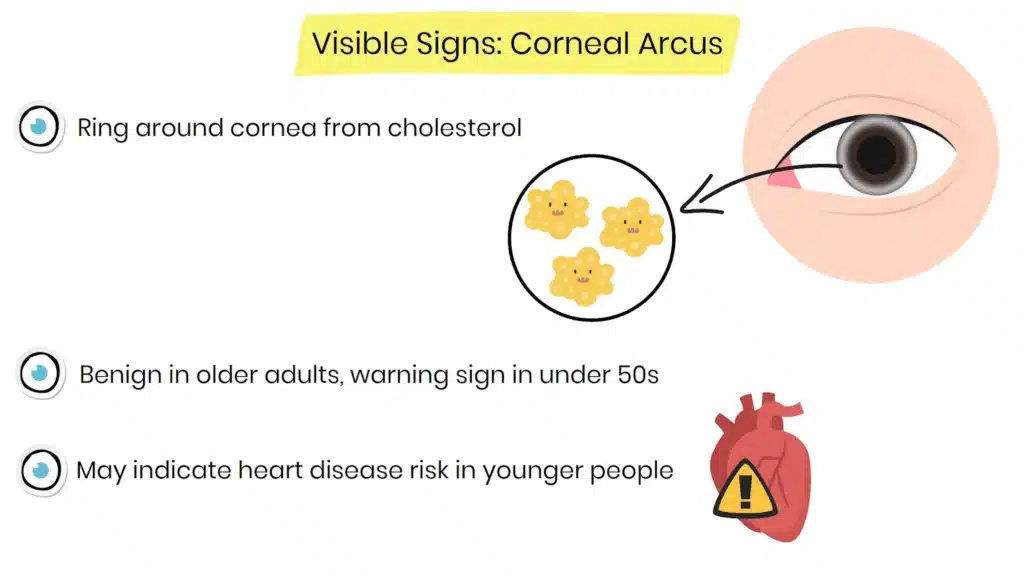
Another visible sign is corneal arcus, also called arcus senilis. This appears as a white, gray, or bluish ring that forms around the outer edge of the cornea, which is the clear front window of your eye. The ring is caused by cholesterol deposits in the cornea. While this condition is common in older adults and doesn’t usually affect vision, when it appears in younger people under fifty years old, it’s often a strong indicator of high cholesterol and potential heart disease risk.
Serious Complications of High Cholesterol
High cholesterol can lead to several dangerous conditions that directly threaten your vision.
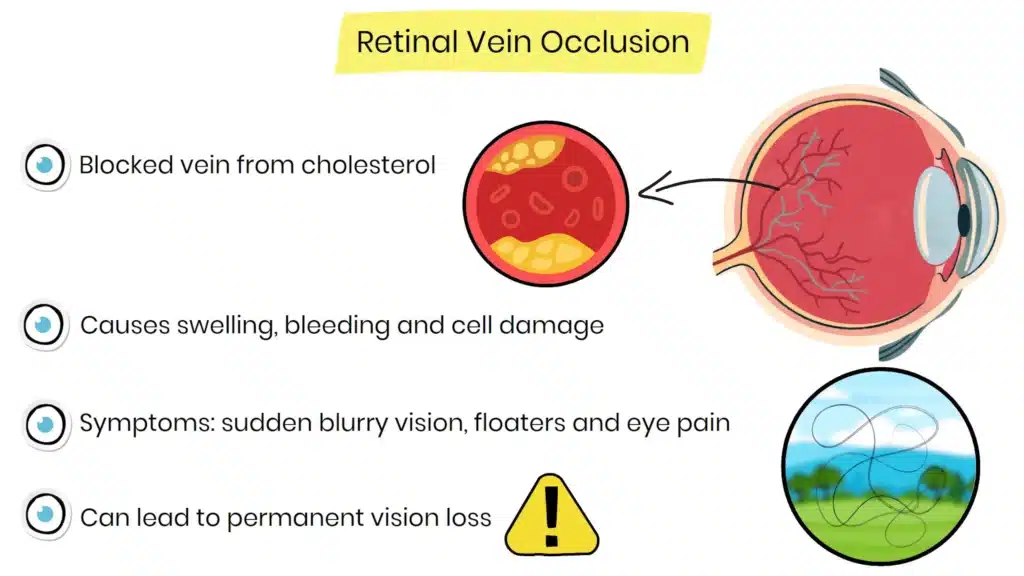
Retinal Vein Occlusion
One of these is retinal vein occlusion. This happens when the small veins that carry blood away from the retina, which is the light sensitive tissue at the back of your eye, become blocked by cholesterol buildup. When these veins get clogged, blood can’t drain properly, causing swelling, bleeding, and damage to the retinal cells. Symptoms include sudden blurry vision, dark spots or floaters in your vision, and sometimes eye pain. If not treated quickly, retinal vein occlusion can cause permanent vision loss.
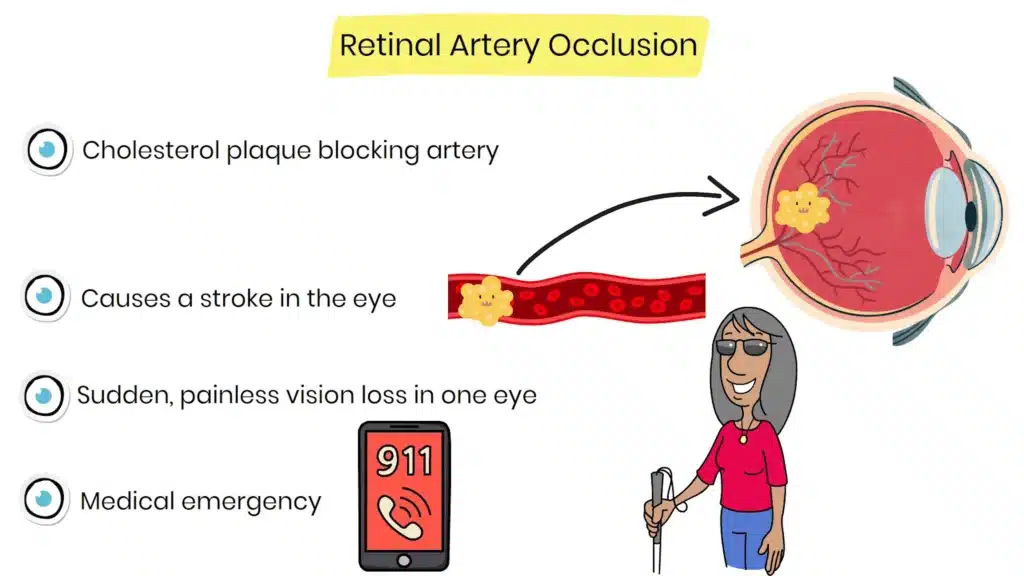
Retinal Artery Occlusion
Even more serious is retinal artery occlusion. This occurs when a piece of cholesterol plaque breaks off from a larger artery, travels through the bloodstream, and gets stuck in one of the tiny arteries in your retina. This blocks oxygen from reaching the retinal tissue, essentially causing a stroke in your eye. The main symptom is sudden, painless vision loss in one eye. This is a medical emergency that requires immediate attention because the retinal cells can die within hours without oxygen, leading to permanent blindness in the affected area.
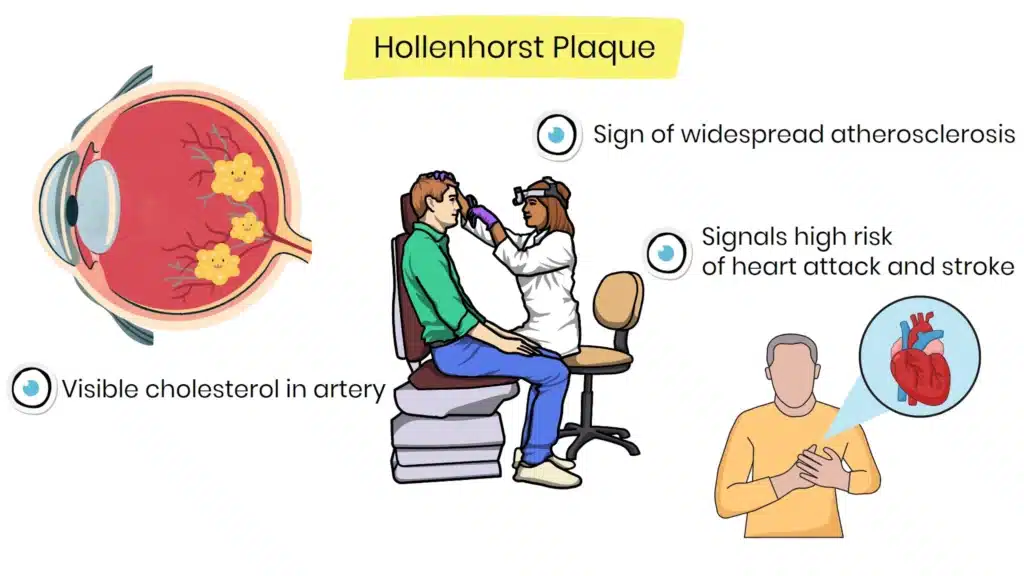
Sometimes doctors can see a cholesterol plaque lodged in the retinal artery during an eye exam. This is called a Hollenhorst plaque. The presence of this plaque is very concerning because it indicates widespread atherosclerosis, which means cholesterol is building up in arteries throughout your body, significantly increasing your risk of heart attack and stroke.
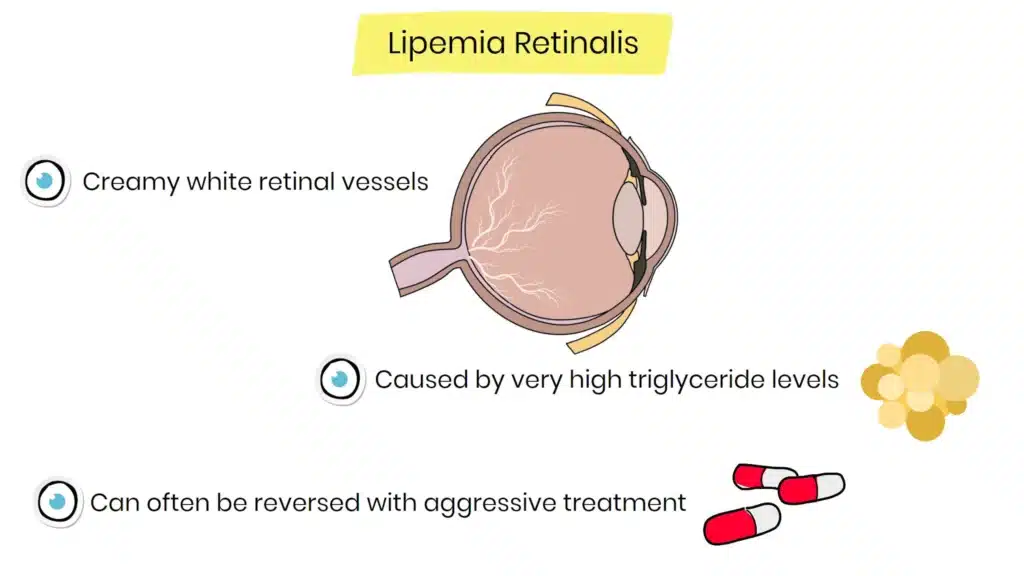
Lipemia Retinalis
Another condition linked to high cholesterol is lipemia retinalis. This is a rare but striking condition where the blood vessels in the retina appear creamy white instead of their normal red color. This happens when triglyceride levels, which are another type of fat in the blood, become extremely elevated. While the appearance is dramatic, the good news is that lipemia retinalis can often be reversed with aggressive cholesterol and triglyceride lowering treatment.
How to Protect Your Eyes from Cholesterol Damage
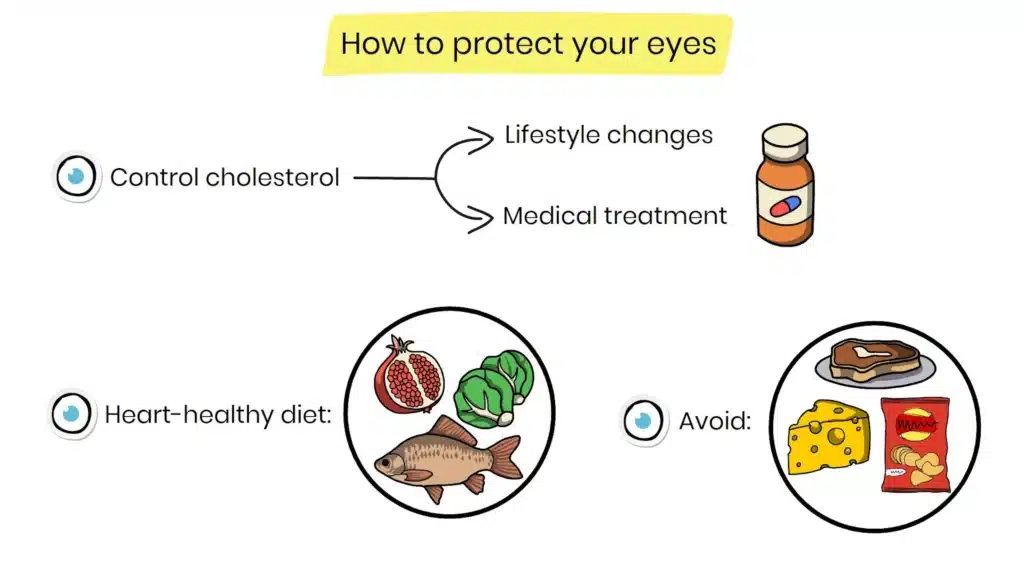
The most important step is managing your cholesterol levels through lifestyle changes and medical treatment.
Adopt a Heart-Healthy Diet
Start by adopting a heart healthy diet. This means eating plenty of fruits, vegetables, whole grains, and lean proteins while limiting saturated fats found in red meat and full fat dairy products, and avoiding trans fats found in many processed foods.
Get Regular Exercise
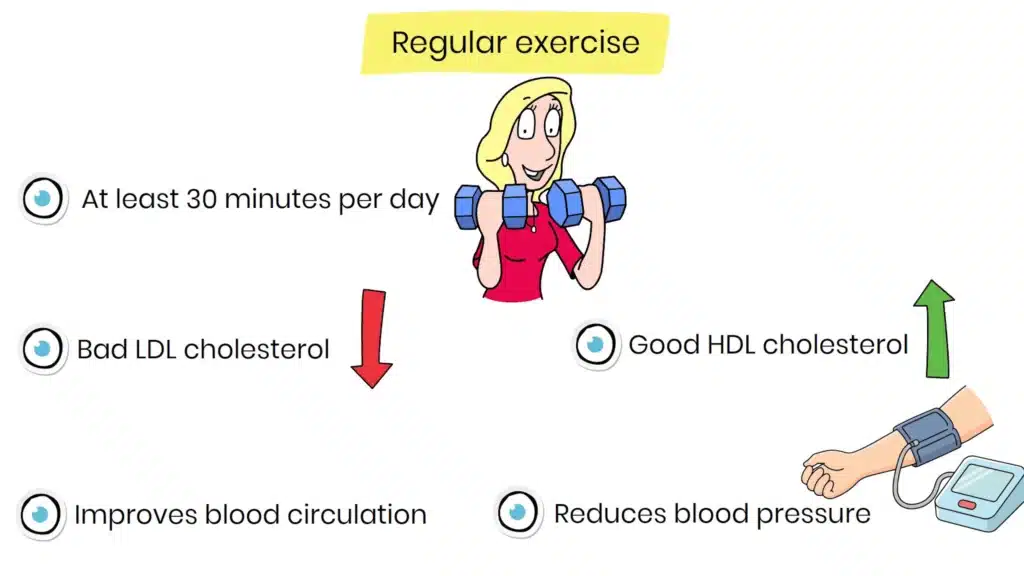
Regular exercise is also crucial. Aim for at least thirty minutes of moderate physical activity most days of the week. Exercise helps lower bad LDL cholesterol, raise good HDL cholesterol, improve blood circulation, and reduce blood pressure. All of these benefits protect the delicate blood vessels in your eyes.
Consider Medication
If lifestyle changes aren’t enough to control your cholesterol, your doctor may prescribe medications called statins. These drugs work by blocking the production of cholesterol in your liver.
Schedule Regular Eye Exams
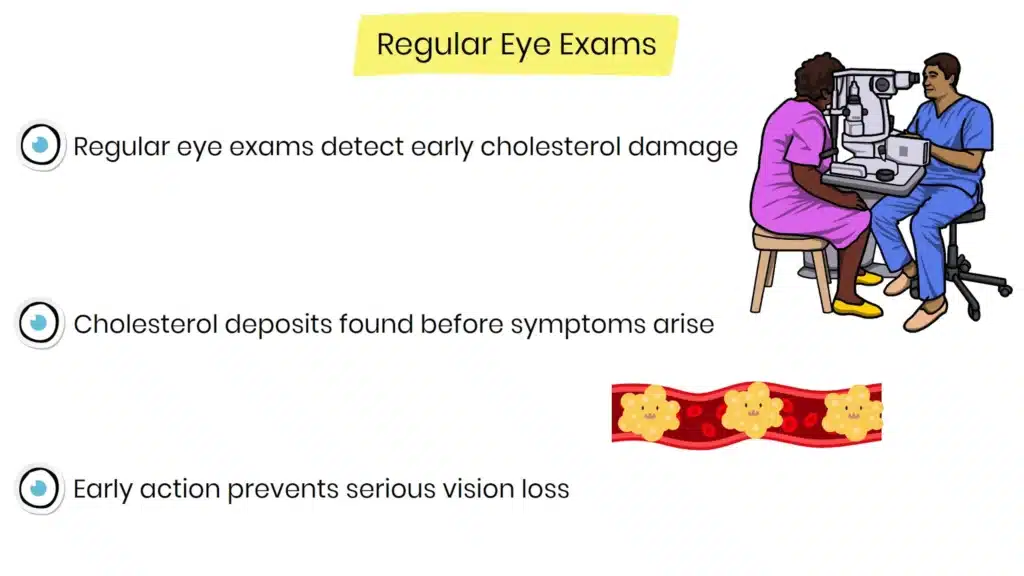
Finally, don’t skip your regular eye exams. An eye doctor can detect early signs of cholesterol related damage during a comprehensive eye examination, often before you notice any symptoms. They can see cholesterol deposits, blood vessel changes, and blockages that might not be causing vision problems yet but indicate you need to take action. Early detection gives you the best chance of preventing serious vision loss.
