
Do you worry about your vision as you get older? By the end of this article, you will understand five common eye conditions that develop after age 65, what causes them, and what you can do about each one. Let’s begin!
1. Presbyopia: Trouble Focusing Up Close
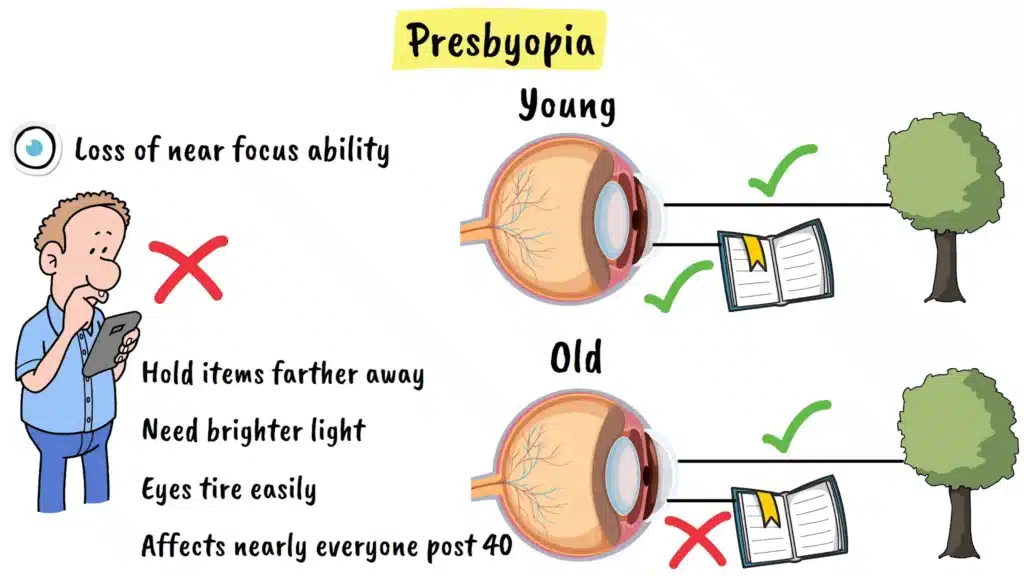
The first condition is presbyopia. Presbyopia is the gradual loss of your eye’s ability to focus on objects that are close to you. Think of your eye’s lens like a camera lens. When you’re young, it can shift and adjust easily to help you see things clearly at any distance. As you get older, that lens becomes less flexible, making it harder to focus up close.
You might notice that you need to hold your phone or a book farther away to read it clearly. You may need brighter light for reading, and your eyes might feel tired after doing close work. Presbyopia is a natural part of aging and affects almost everyone after age 40, but it becomes very noticeable after 65.
2. Cataracts: Cloudy or Blurry Vision
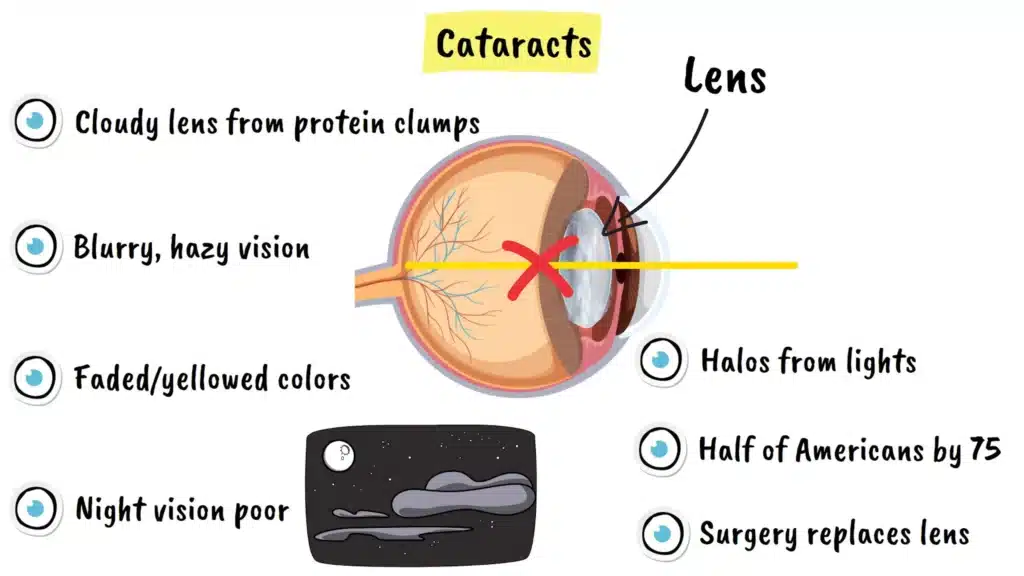
The second condition is cataracts. A cataract is a clouding of the lens in your eye. Remember, the lens is supposed to be clear, like glass. Over time, the proteins in your lens can break down and clump together, making the lens cloudy. When this happens, light cannot pass through clearly, and your vision becomes blurry or hazy.
You might notice that colors look faded or yellowed. Seeing at night becomes difficult, and bright lights might create halos around them. About half of all Americans will develop cataracts by age 75. The good news is that cataracts can be removed with a simple surgical procedure where your cloudy lens is replaced with an artificial lens.
3. Glaucoma: The Silent Thief of Sight
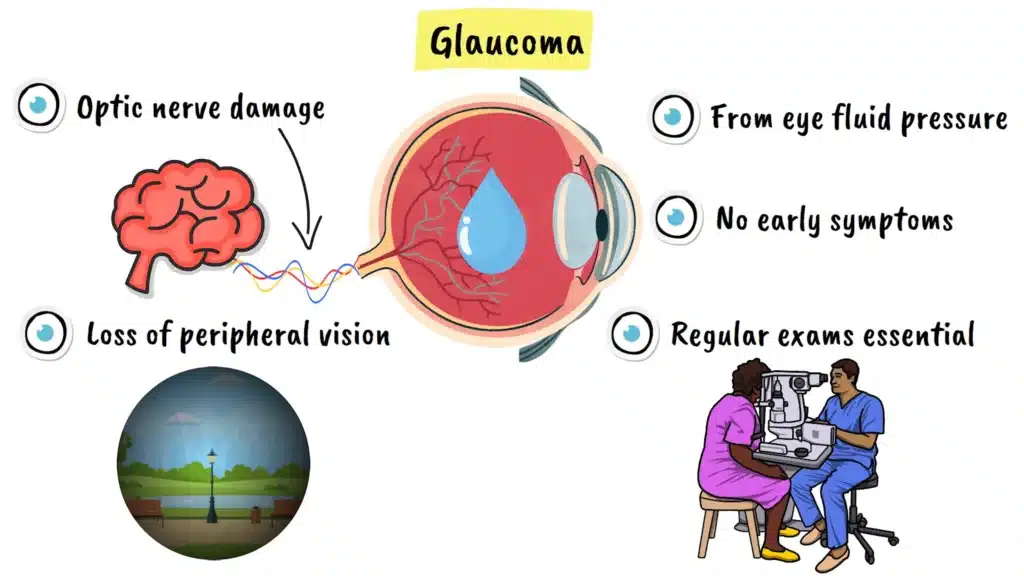
The third condition is glaucoma. Glaucoma is damage to the optic nerve, which is the nerve that sends images to your brain. This damage is usually caused by fluid buildup inside your eye, which increases pressure. The tricky part about glaucoma is that it often has no early symptoms. Many people don’t realize they have it until they’ve already lost some vision.
You might start to lose your peripheral vision, which means you can’t see things to the sides of your visual field. This is why regular eye exams are critical for seniors.
4. Age-Related Macular Degeneration (AMD): Central Vision Loss
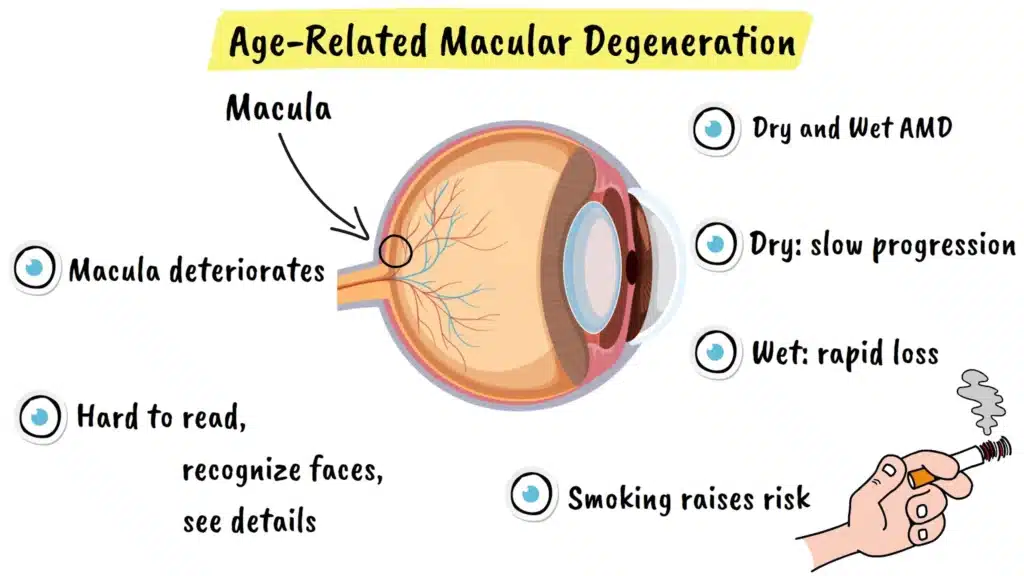
The fourth condition is age-related macular degeneration, or AMD. The macula is the center part of the retina at the back of your eye, and it’s responsible for your sharp central vision. AMD causes this area to deteriorate over time. If you have AMD, you might have difficulty reading, recognizing faces, or seeing fine details. Your central vision might look blurry, wavy, or distorted.
AMD comes in two forms: dry AMD and wet AMD. Dry AMD is more common and develops slowly. Wet AMD is more serious and can cause rapid vision loss. Smoking significantly increases your risk of developing AMD.
5. Dry Eye Syndrome: Gritty, Uncomfortable Eyes
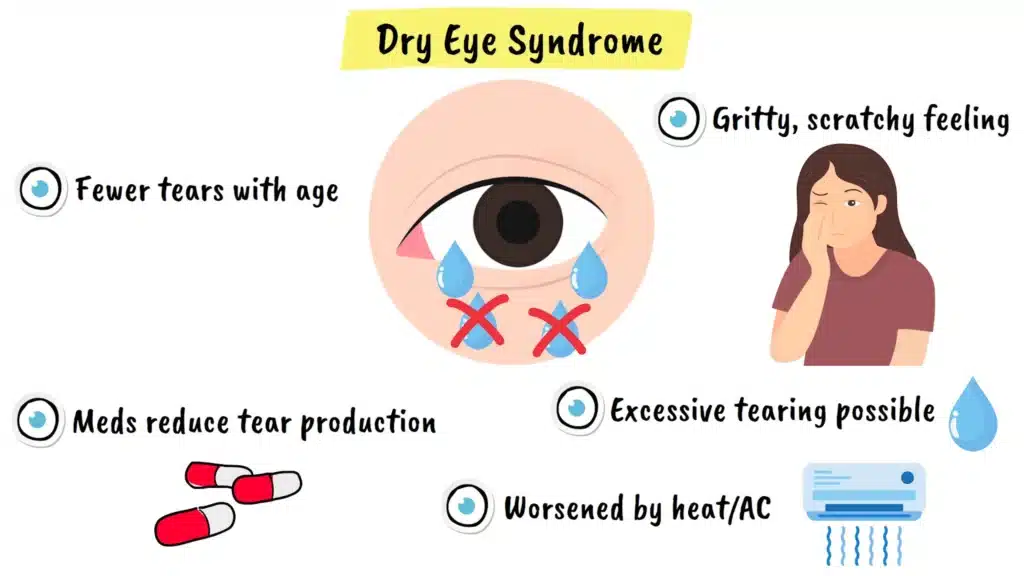
The fifth condition is dry eye syndrome. Your eyes produce tears continuously to keep them moist and healthy. As you age, your tear glands may not produce as many tears. Additionally, some medications that seniors commonly take, like blood pressure medications, can reduce tear production.
When you have dry eye syndrome, your eyes feel uncomfortable, gritty, or scratchy. Ironically, sometimes dry eyes produce excessive tearing as your body tries to compensate. Environmental factors like indoor heating and air conditioning can make dry eye worse.
How to Protect Your Eyes After 65
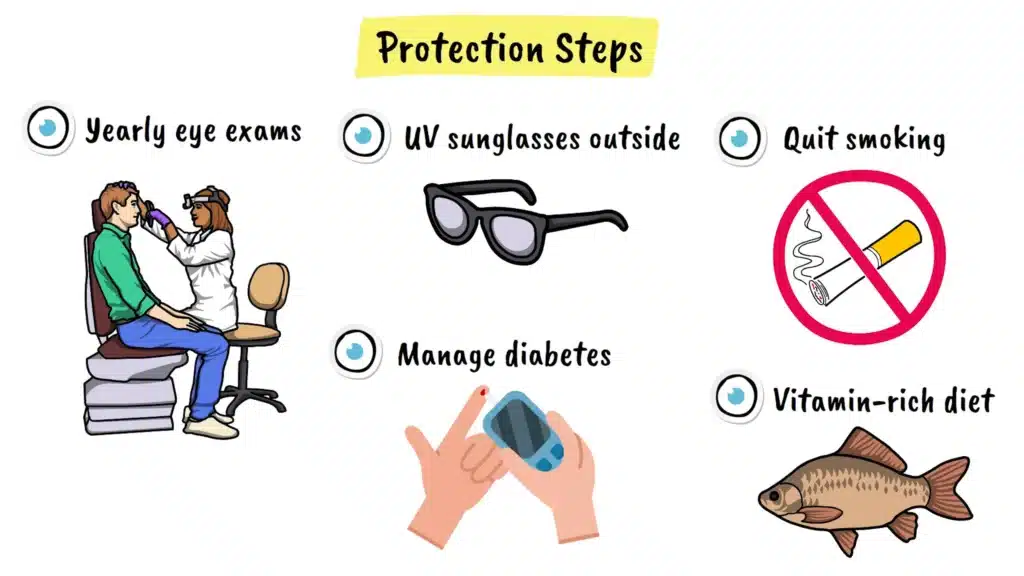
Now that you understand these five conditions, here’s what you should do. First, schedule regular eye exams with an eye doctor, at least once a year. Early detection is your best tool for managing these conditions. Second, protect your eyes from UV radiation by wearing sunglasses when you’re outside. Third, manage any health conditions like diabetes carefully, as they can affect your eye health. Fourth, quit smoking if you do smoke, as it increases your risk of several eye diseases. Fifth, maintain a healthy diet rich in vitamins and minerals that support eye health.
Final Thoughts: Early Detection Saves Vision
Your vision is precious, and these five conditions are manageable when caught early. Thanks for reading. If you found this article helpful, don’t forget to share it with others and check out more resources on eye health.
