
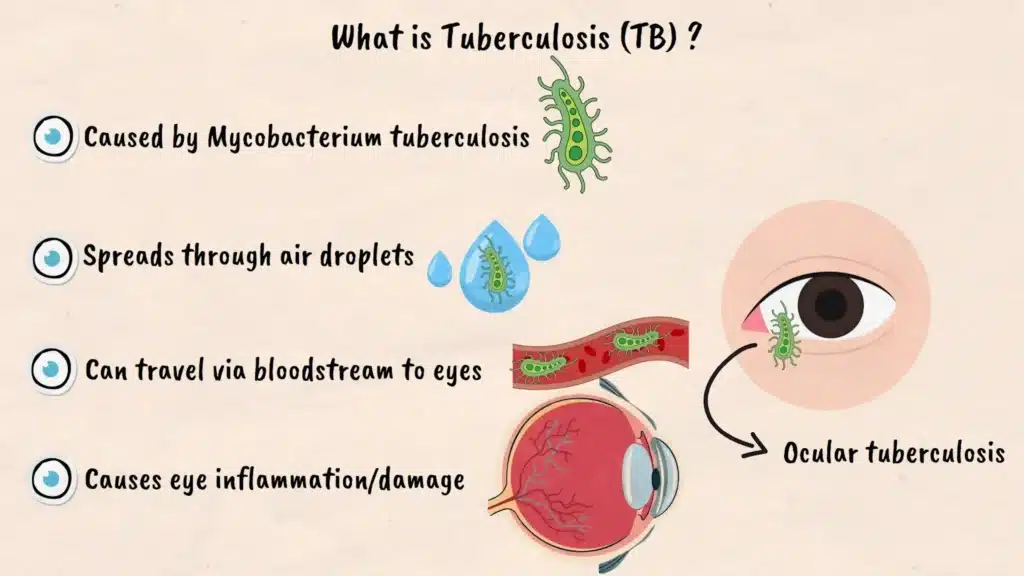
Tuberculosis, or TB, is an infection caused by a bacterium called Mycobacterium tuberculosis. Most people think of TB as a lung disease because it is usually spread through tiny droplets in the air when someone with active TB coughs or sneezes. However, this germ can travel through the bloodstream and reach almost any organ in the body, including the eyes.
When TB affects the eye, we call it ocular tuberculosis. In simple terms, it means the TB germ is causing inflammation or damage somewhere inside or around the eye.
Basic Eye Structure and the Uvea
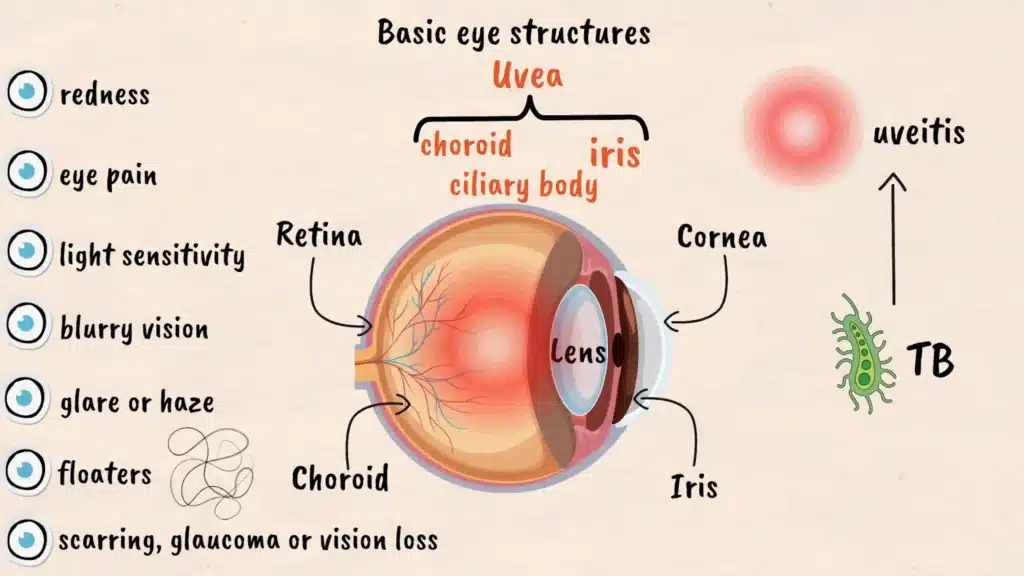
To understand what TB does to the eyes, it helps to quickly review the basic eye structures. At the front, you have the cornea and the clear fluid behind it. Behind that sits the iris, the colored part of the eye that controls how much light goes in, and the lens, which focuses the light.
At the very back is the retina, the light-sensitive film that sends images to your brain. Underneath the retina is the choroid, a rich layer of blood vessels that feeds the retina. The middle layer of the eye, which includes the iris, ciliary body, and choroid, is called the uvea. When this layer gets inflamed, we call it uveitis.
TB-Related Uveitis: Symptoms and Complications
One of the most common ways TB shows up in the eye is as uveitis. TB-related uveitis can cause redness, eye pain, light sensitivity, and blurry vision. Some people describe it as feeling like they have a constant glare or haze in front of their eyes.
In more severe cases, floaters can appear, which look like small dark spots or cobwebs drifting in the field of vision. If this inflammation is not treated, it can lead to scarring, glaucoma, or even permanent loss of vision.
Choroiditis: TB Infection of the Choroid Layer
Another important way TB affects the eye is through a condition called choroiditis. Remember, the choroid is the layer of blood vessels under the retina that nourishes it. When TB bacteria reach this layer, they can cause small areas of infection and inflammation called choroidal lesions or tubercles.
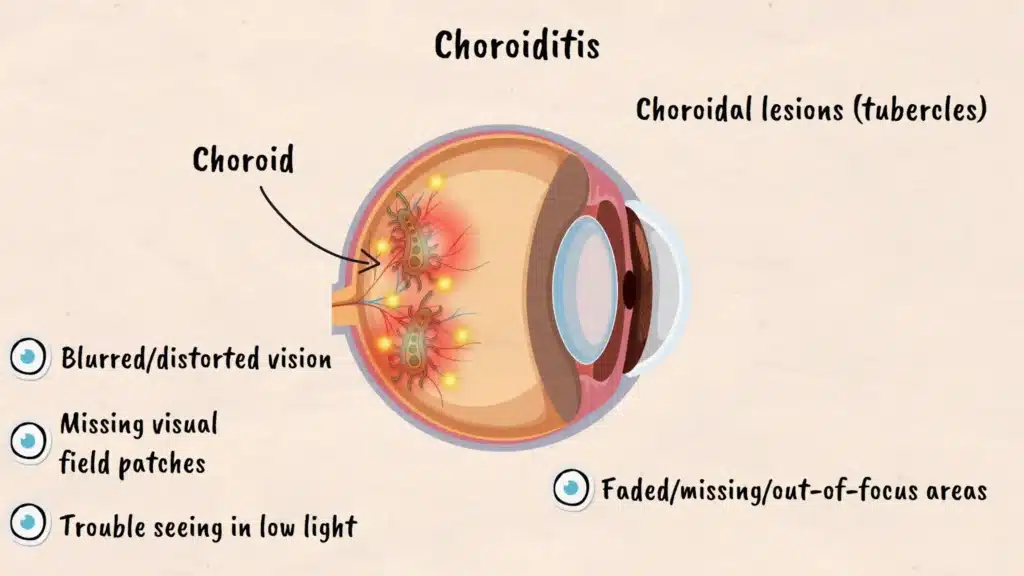
On an eye exam, these can look like yellowish spots at the back of the eye. For the patient, choroiditis may show up as blurred or distorted vision, missing patches in the visual field, or trouble seeing in low light. In everyday terms, it can feel like parts of the picture are faded, missing, or out of focus.
Other Ways TB Affects the Eye
TB can also affect the front of the eye and surrounding structures. It may cause inflammation of the eyelids, the white part of the eye, or the optic nerve, which is the cable that connects the eye to the brain.
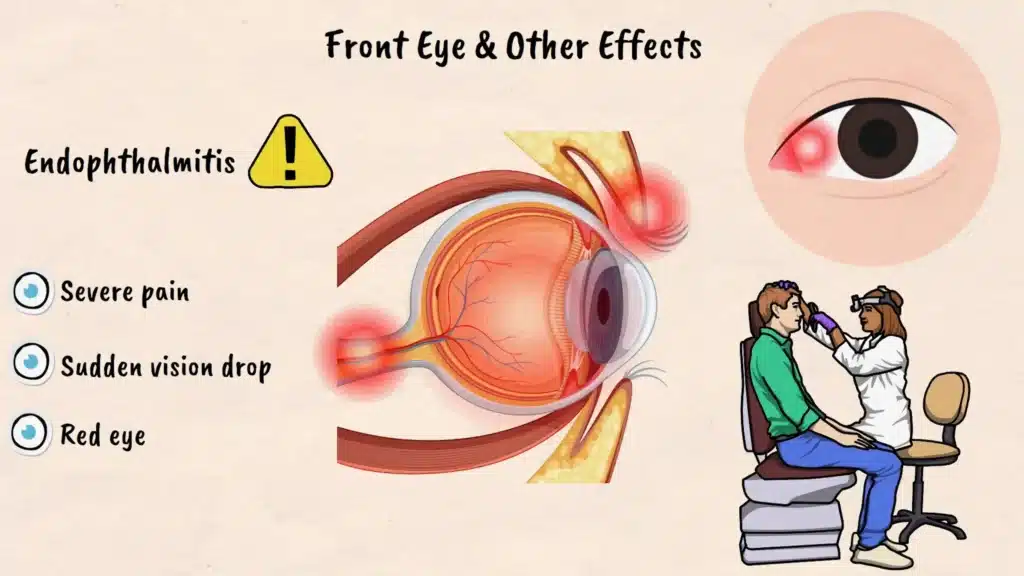
In rare cases, TB can cause a severe infection inside the entire eye, called endophthalmitis, which is a true emergency. Symptoms in these situations can include severe eye pain, sudden drop in vision, and a very red eye. This is why any sudden change in vision, especially in someone with known TB or risk factors for TB, should be taken seriously and checked by an eye specialist as soon as possible.
Who is at Risk for Ocular TB?
Now you might be wondering who is at risk of TB in the eye. Ocular TB is more likely in people who already have tuberculosis somewhere else in the body, such as the lungs, lymph nodes, or bones. It is also more common in people with a weakened immune system, for example due to HIV infection, certain medications that suppress the immune system, or other chronic illnesses.
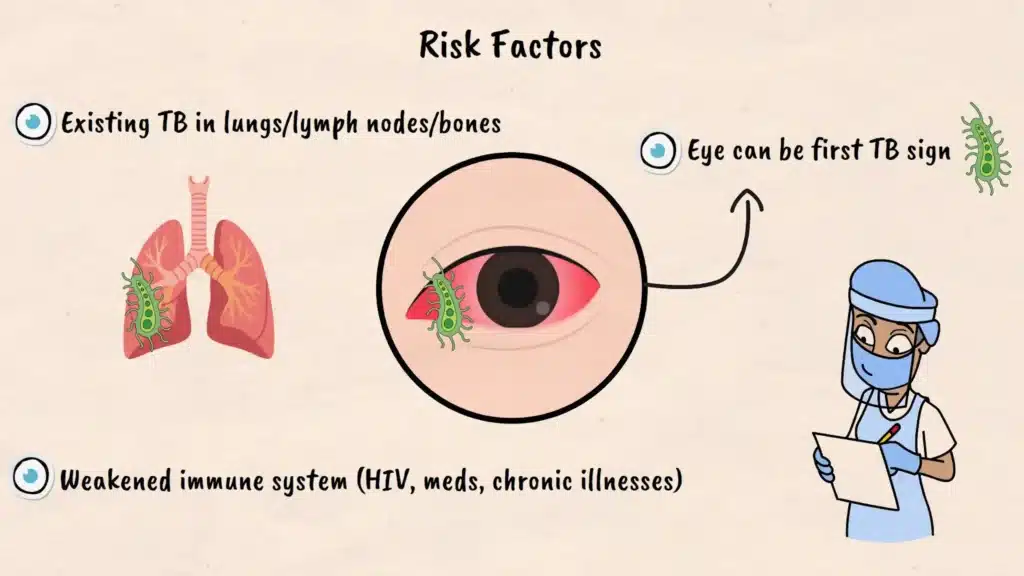
However, sometimes the eye can be the first place where TB shows itself, before the person even knows they have TB anywhere else. That is why eye doctors must keep TB in mind when they see unexplained uveitis or choroiditis.
Diagnosis: How Eye Doctors Identify TB
Diagnosing TB in the eye can be challenging. There is usually no simple one-step test that says yes or no. Eye doctors rely on a combination of the patient’s medical history, a detailed eye examination, imaging tests of the back of the eye, and systemic tests for TB. These may include a skin test, a blood test, and chest imaging to look for TB in the lungs.
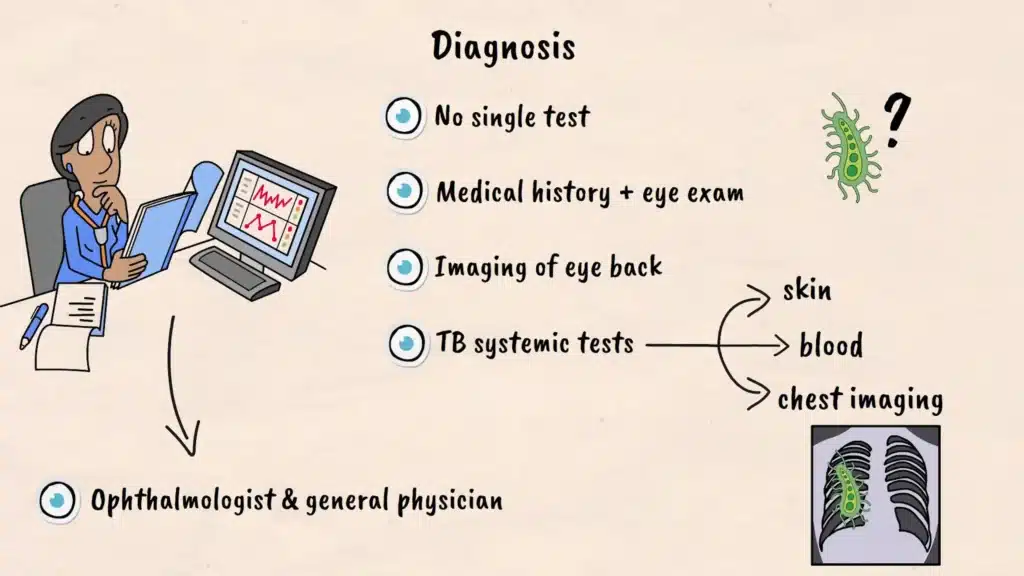
In most cases, the doctor puts together all the pieces, like a puzzle, to decide whether TB is the most likely cause of the eye inflammation. This process can take time and often involves both an ophthalmologist and a general physician or infectious disease specialist.
Treatment: Fighting TB and Controlling Inflammation
Treatment of ocular tuberculosis has two main goals. The first goal is to kill the TB bacteria throughout the body using standard anti-TB medications. This is usually a combination of several antibiotics taken for many months, often six months or longer, depending on the case.
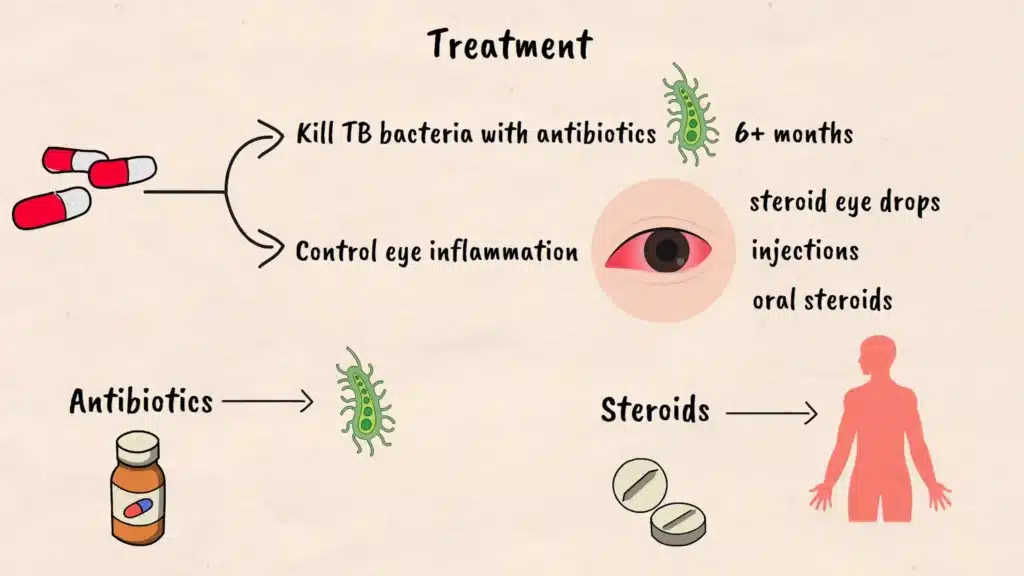
The second goal is to control the inflammation inside the eye. To do this, doctors may prescribe steroid eye drops, injections around the eye, or even oral steroids, always while closely monitoring the infection. In simple terms, the antibiotics attack the germ, and the steroids calm down the body’s overactive inflammatory response that is damaging the eye.
With proper treatment, many patients experience significant improvement in their eye inflammation and vision.
Conclusion
If you found this explanation helpful, make sure to share it with someone who cares about eye health. Early detection and proper treatment are essential for protecting your vision from ocular tuberculosis. Thanks for reading, and keep learning about eye health.
