
Introduction to Keratitis
Keratitis is one of those eye conditions that might sound complicated at first, but once you understand the basics, it becomes much clearer. The key to understanding keratitis is first understanding what the cornea is and why it is so important to your vision. By the end of this comprehensive guide, you will have a thorough understanding of what keratitis is, how it develops, the different types you should know about, and what you can do if you think you have it.
What is the Cornea and Why Does It Matter?
Your cornea is the clear, dome-shaped front surface of your eye. Think of it like the windshield of a car. Just like a car’s windshield protects everything inside and lets light through so you can see the road, your cornea protects the inside of your eye and lets light enter so you can see the world.
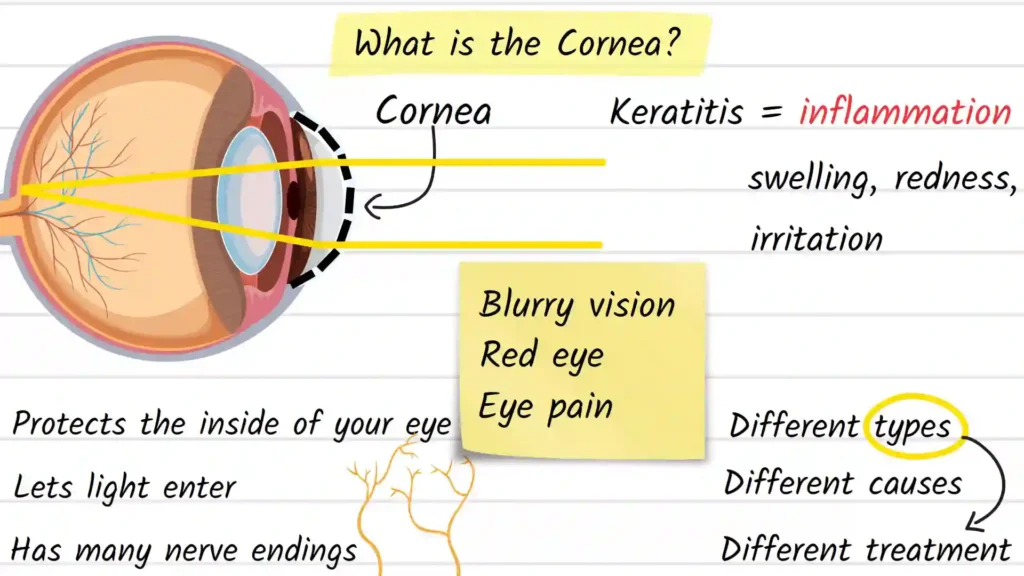
The cornea is incredibly important because it does most of the focusing work for your vision. Without a healthy cornea, your visual clarity suffers significantly. But here’s what makes the cornea particularly vulnerable: it is incredibly sensitive because it has more nerve endings packed into it than almost any other part of your body. This is why even a tiny speck of dust feels like a boulder in your eye.
What is Keratitis?
Keratitis is inflammation of the cornea. When we say inflammation, we mean swelling, redness, and irritation. When your cornea becomes inflamed, your vision gets blurry, your eye becomes red, and the pain can be quite intense. This is your body’s way of signaling that something is wrong and needs attention.
Now here is where it gets interesting. There are actually several different types of keratitis, and they are caused by very different things. Understanding the type of keratitis you have is crucial because the treatment is completely different depending on what is causing the inflammation.
Types of Keratitis
Bacterial Keratitis: The Contact Lens Risk
Let’s talk about bacterial keratitis first. This is when bacteria infect your cornea. Bacteria are tiny organisms that are everywhere around us. Most of the time, your eye’s natural defenses keep them out, but sometimes they find a way in.
The most common cause of bacterial keratitis is wearing contact lenses incorrectly. For example, if you sleep in contact lenses that are not designed for sleeping, you create a low oxygen environment on your cornea. This weakens your natural defenses and makes it easier for bacteria to invade. Another common cause is improper contact lens hygiene. If you don’t clean your contact lens case regularly or you use old solution instead of fresh solution, you are basically inviting bacteria to colonize your eye.
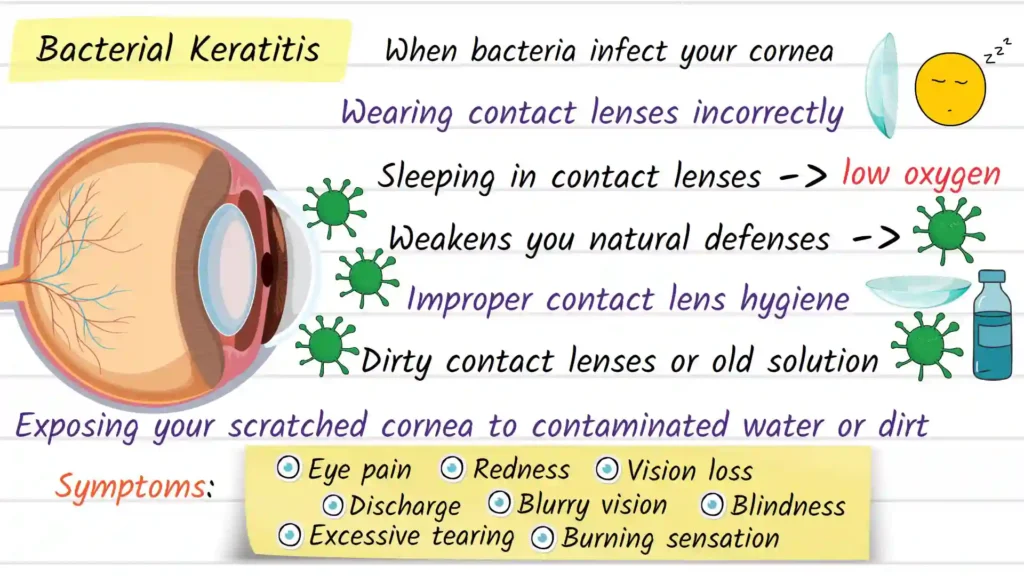
Bacterial keratitis can also happen if you scratch your cornea and then expose that scratch to contaminated water or dirt. Even a tiny scratch is an open door for bacteria to enter and establish infection.
The symptoms of bacterial keratitis include eye pain that feels like something is poking your eye, excessive tearing, redness, and a discharge that might be yellowish or greenish. Your vision becomes blurry, and you might feel like your eye is on fire. This is not something to ignore because bacterial keratitis can actually lead to permanent vision loss or even blindness if it is not treated quickly with antibiotics.
Viral Keratitis: The Herpes Connection
Next, we have viral keratitis, which is typically caused by the herpes simplex virus. Yes, the same virus that causes cold sores on your lips can also infect your cornea. When the virus infects your cornea, it creates a unique branching pattern that looks like a tree branch. Eye doctors actually call this a dendrite, and it is one of the most recognizable signs of viral keratitis.
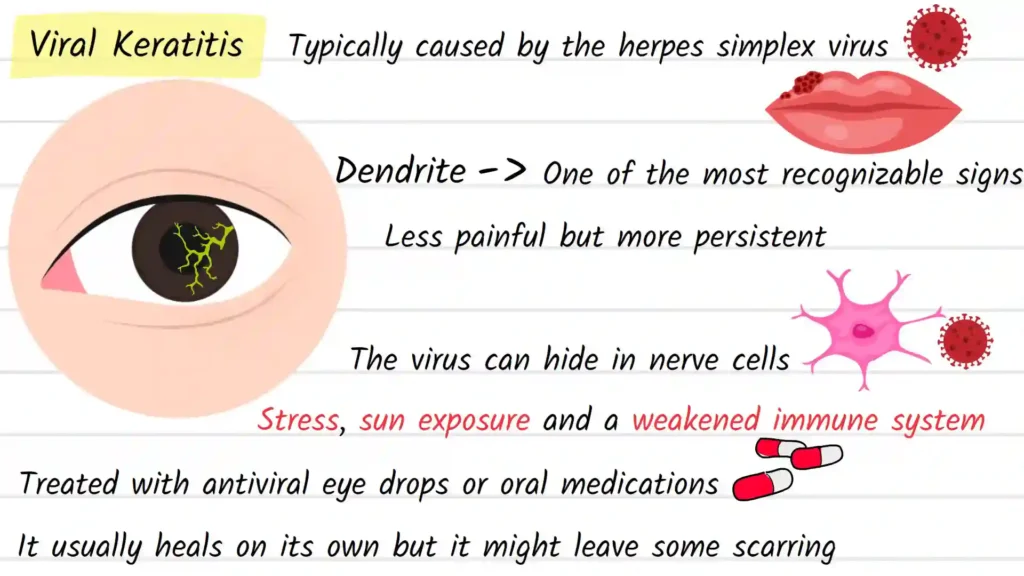
Unlike bacterial keratitis, viral keratitis tends to be less painful initially, but it can be more persistent and more likely to come back. The virus can hide in nerve cells around your eye and reactivate later, causing recurring episodes of keratitis. Stress, sun exposure, and a weakened immune system can trigger these flare-ups.
Viral keratitis is often treated with antiviral eye drops or oral medications. The good news is that it usually heals on its own, though it might leave some scarring on the cornea that could affect your vision.
Fungal Keratitis: The Environmental Threat
Now let’s talk about fungal keratitis. This is less common in the United States, but it is becoming more frequent, and it is particularly nasty. Fungal keratitis is typically caused by exposure to fungi in the environment, often through contaminated water, soil, or plant material. If you get poked in the eye with a plant or a stick, you could introduce fungal spores into your cornea.
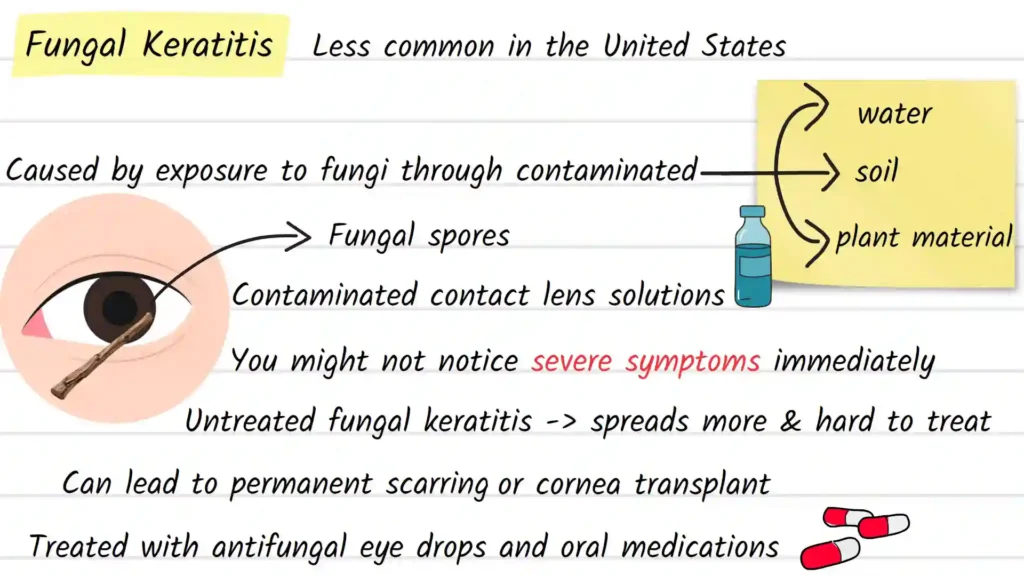
There have actually been outbreaks of fungal keratitis associated with contaminated contact lens solutions. This is why using proper contact lens care solutions is so critical. Fungal keratitis is slow-growing and sneaky. You might not notice severe symptoms immediately, which means people often wait too long to get treatment.
The longer fungal keratitis sits untreated, the more it spreads and the harder it becomes to treat. In severe cases, fungal keratitis can lead to permanent scarring or even require a cornea transplant. Fungal keratitis is treated with antifungal eye drops, and sometimes oral medications, but the treatment process is much longer than for bacterial keratitis.
Acanthamoeba Keratitis: The Parasite Problem
We also have acanthamoeba keratitis, which is caused by a tiny parasite-like organism called acanthamoeba. This is typically associated with contact lens wear, particularly in people who use tap water or non-sterile water to clean their contact lenses. Some people even swim while wearing contact lenses, which is basically asking for trouble.
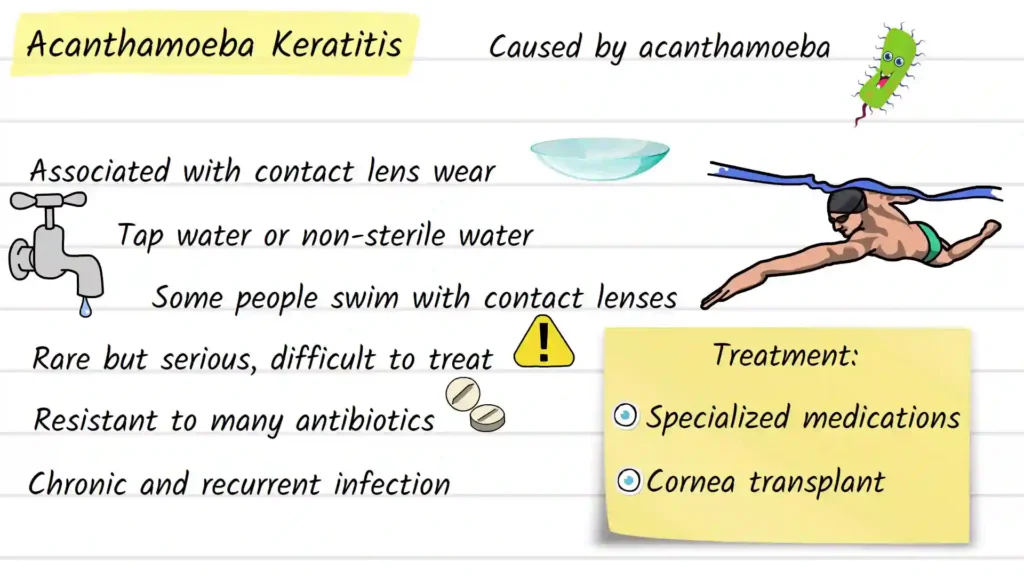
Acanthamoeba keratitis is rare, but it is serious and can be incredibly difficult to treat. The organism is resistant to many common antibiotics, and the infection can be chronic and recurrent. Treatment involves using specialized medications, and sometimes the inflammation is so severe that a cornea transplant becomes necessary.
Non-Infectious Keratitis: Chemical and Physical Causes
Now let’s talk about non-infectious keratitis. This type is not caused by germs at all. Instead, it is caused by physical or chemical irritation to your cornea. For example, if your eyes are very dry, your cornea lacks the protective tear film it needs, and this can lead to a condition called dry eye keratitis.
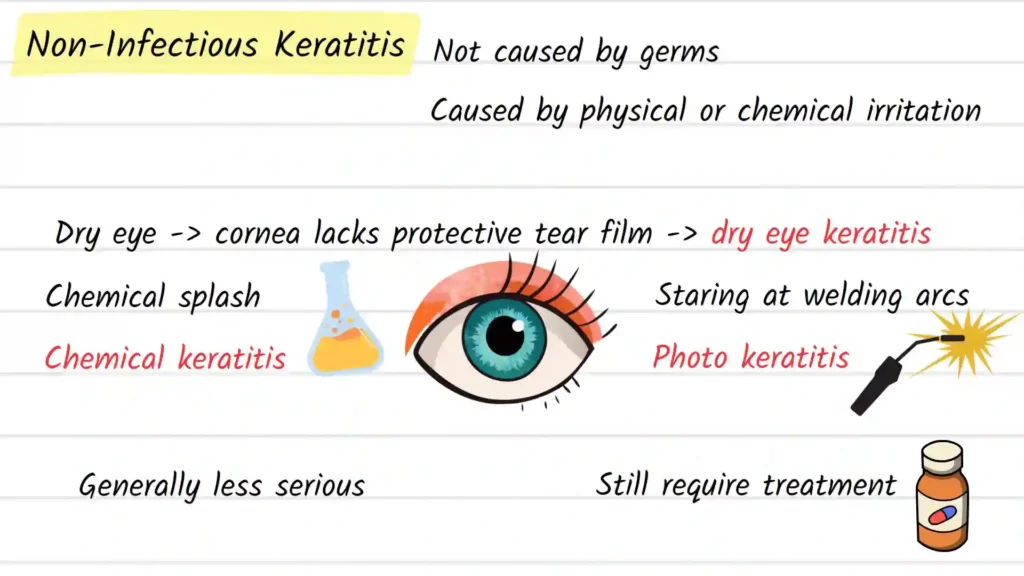
If you get a chemical splash in your eye, that can cause chemical keratitis. If you stare at welding arcs without proper eye protection, the ultraviolet light can cause photo keratitis, which is like a sunburn for your cornea. These non-infectious types of keratitis are generally less serious than infectious keratitis, but they still require treatment to prevent complications and permanent damage.
Recognizing the Symptoms of Keratitis
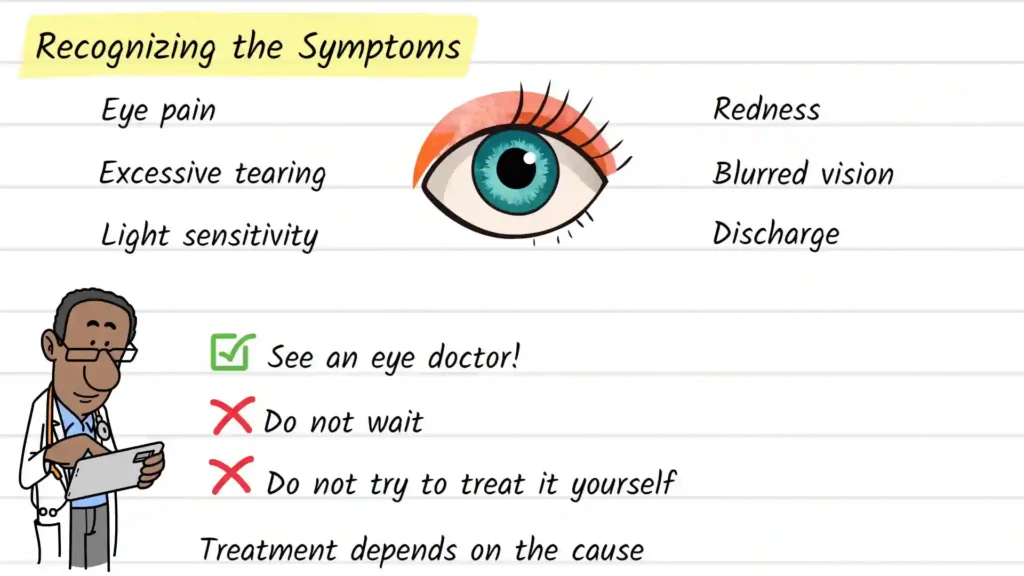
So how do you know if you have keratitis? The main symptoms to watch for include:
- Eye pain or discomfort
- Excessive tearing
- Redness of the eye
- Blurred vision
- Light sensitivity (photophobia)
- Discharge from your eye
- Foreign body sensation
If you have any of these symptoms, you should see an eye doctor as soon as possible. Do not wait. Do not try to treat it yourself with over-the-counter eye drops. Keratitis requires professional diagnosis because the treatment is completely different depending on the cause.
Diagnosis: How Eye Doctors Identify Keratitis
When you visit an eye doctor with suspected keratitis, they will examine your eye using a microscope called a slit lamp. This device allows them to see your cornea in great detail. They might put some numbing drops in your eye and then put a special dye on your cornea to see if there are any ulcers or defects.
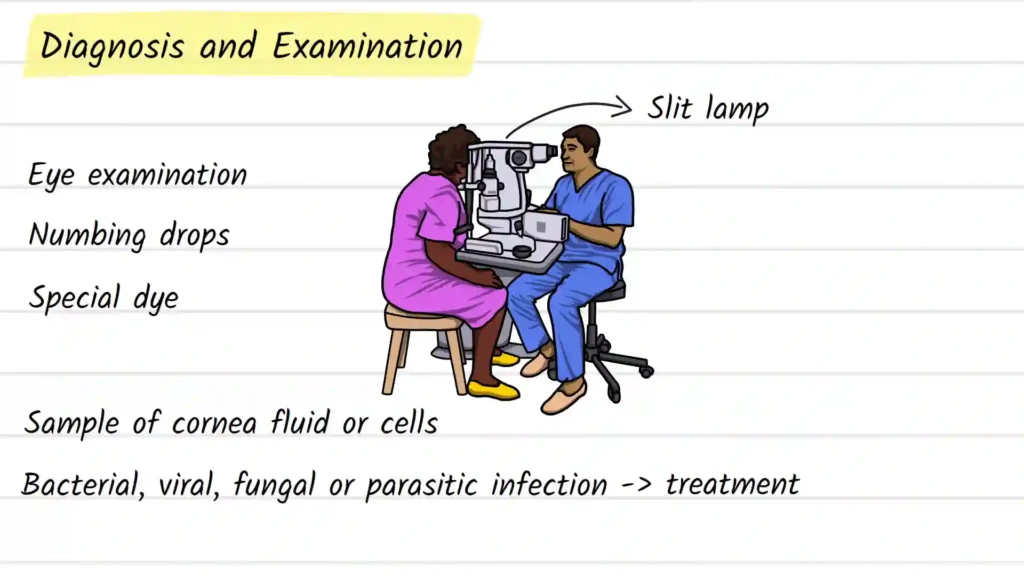
If they suspect an infection, they might take a sample of the fluid or cells from your cornea for testing. This testing helps determine whether you have a bacterial, viral, fungal, or parasitic infection, and this determines your treatment plan.
Treatment Options for Keratitis
The treatment for keratitis depends entirely on the cause:
Bacterial Keratitis: Requires antibiotic eye drops, and in some cases, oral antibiotics. Your doctor will likely prescribe broad-spectrum antibiotics initially and may adjust them based on culture results.
Viral Keratitis: Treated with antiviral eye drops or oral antivirals. Management focuses on keeping the eye comfortable while the virus runs its course.
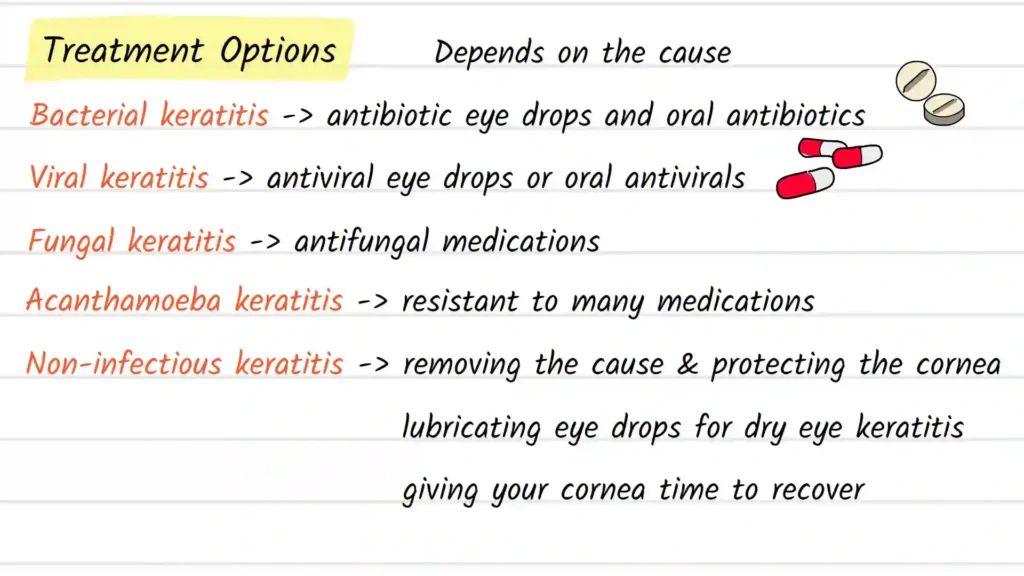
Fungal Keratitis: Requires antifungal medications and a longer treatment period. These medications are often more expensive and less readily available than antibiotics.
Acanthamoeba Keratitis: The most challenging to treat because the organism is resistant to many medications. Your eye doctor may need to consult specialists for the most effective treatment approach.
Non-Infectious Keratitis: The treatment focuses on removing the cause and protecting the cornea while it heals. This might mean using lubricating eye drops for dry eye keratitis or simply giving your cornea time to recover from a chemical or ultraviolet injury.
Prevention: The Best Medicine
One of the most important things to remember about keratitis is that it is largely preventable. If you wear contact lenses, follow the rules. Clean your contacts every single day with fresh solution, not water. Do not sleep in contacts unless they are specifically designed for extended wear. Do not swim or shower while wearing contacts, as this exposes your eyes to contaminated water sources.
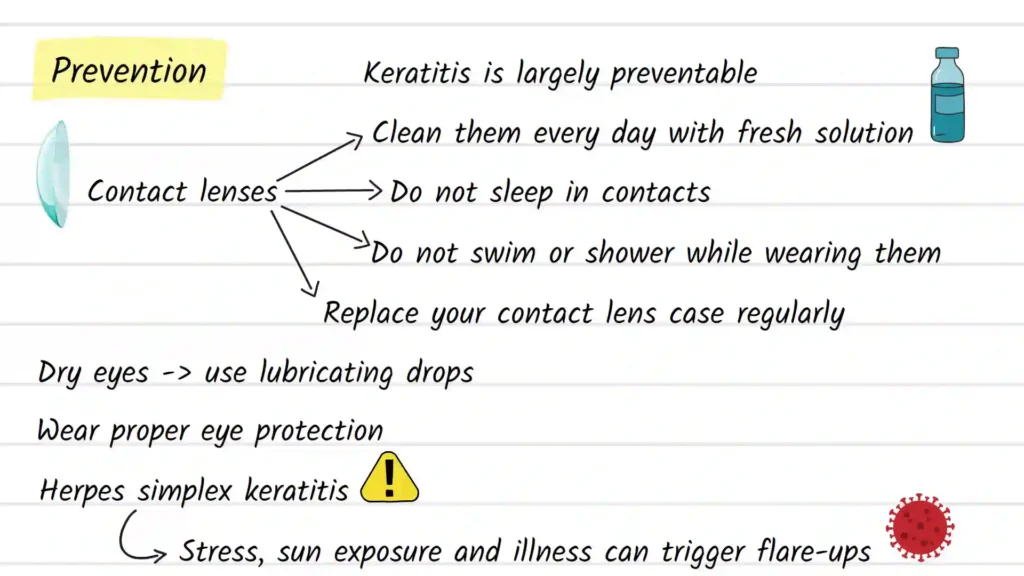
Replace your contact lens case regularly, typically every three months, and do not ignore any signs of eye discomfort. If you have dry eyes, use lubricating drops regularly and address the underlying cause of your dryness.
If you work in an environment with flying debris or chemicals, wear proper eye protection. A simple pair of safety glasses can prevent serious eye injuries that could lead to keratitis.
If you have had herpes simplex keratitis before, be aware that it can recur. Stress, sun exposure, and illness can trigger flare-ups, so take these factors seriously and consider wearing sunglasses regularly.
Conclusion
Keratitis is a serious eye condition that deserves your attention and care. Whether infectious or non-infectious, viral or bacterial, this inflammation of the cornea can significantly impact your vision if left untreated. By understanding the different types, recognizing the symptoms, and taking preventive measures, you can protect your eye health and maintain clear vision for years to come. If you experience any symptoms of keratitis, don’t hesitate to contact your eye care professional immediately. Your vision is worth it.
