
Imagine this: you wake up, stretch out your arms, and before you even realize, your eyes are locked onto your smartphone’s bright screen. Notifications, messages, and that endless scroll of news or social media. Does it sound familiar? Smartphones have become our loyal companions. But behind all this convenience there’s a hidden cost that’s quietly targeting our eyesight.
Understanding How Your Eyes Work
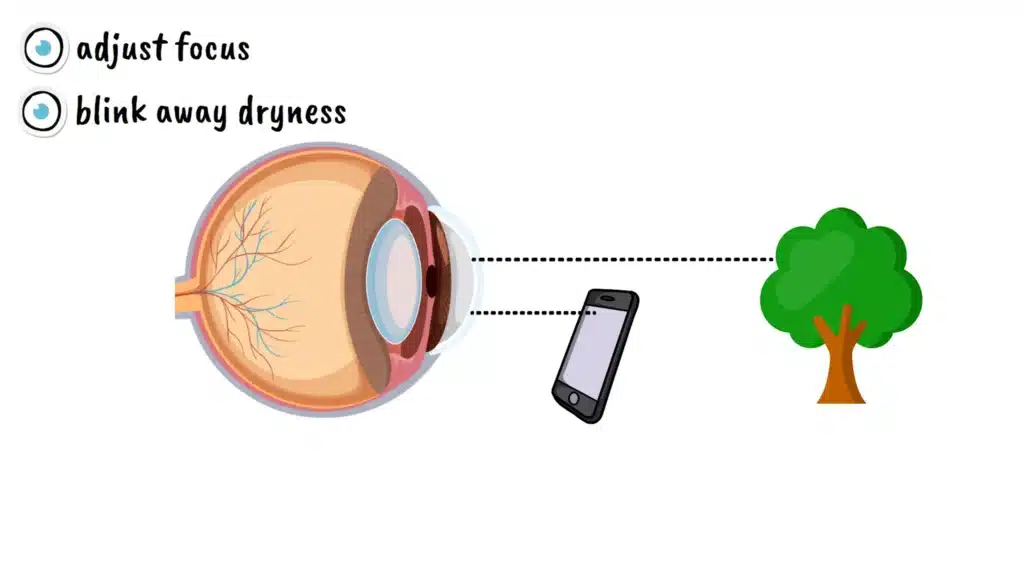
Let’s start simple. Our eyes are like tiny camera lenses. They’re built to constantly adjust focus and to blink away dryness, protecting the delicate surface. When you stare at a smartphone, especially up close, it’s like asking that camera to work overtime for hours without a pause.
Digital Eye Strain: The New Normal
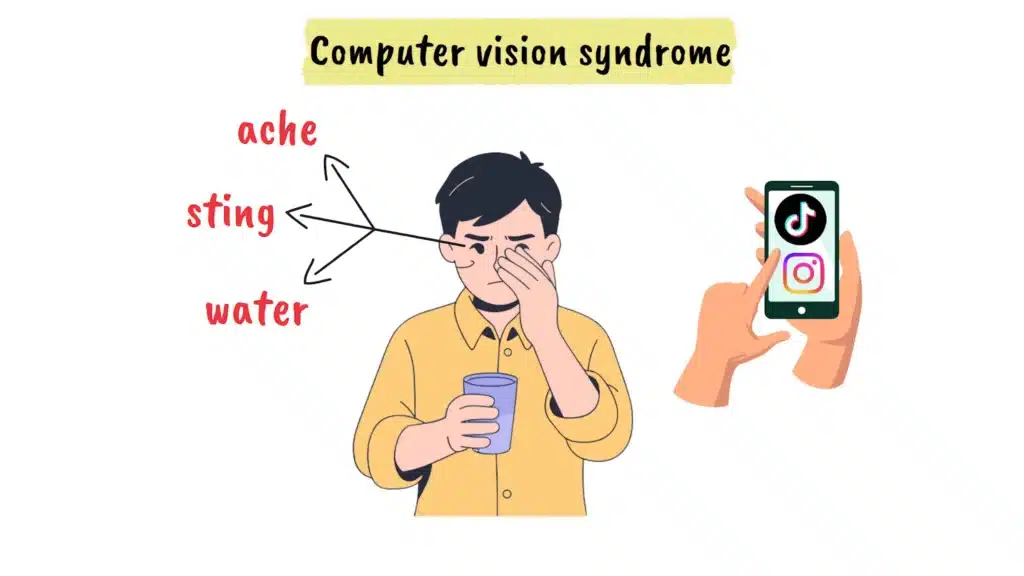
Have you ever felt your eyes ache, sting, or even water after a long scroll through TikTok or Instagram? That’s called digital eye strain, or computer vision syndrome and it’s become a new normal. Here’s what happens: the intense focus on a bright, close screen makes your eye muscles strain, similar to how your hand muscles would hurt if you squeezed a ball too long.
Not only that, but you blink less, sometimes only half as much as normal. Blinking is like your eye’s windshield wiper, spreading tears to keep things clear and comfy. But when you’re focused on a phone, the “wiper” slows down, leading to dryness, burning, and blurry vision.
Screen Distance and the Rise of Myopia
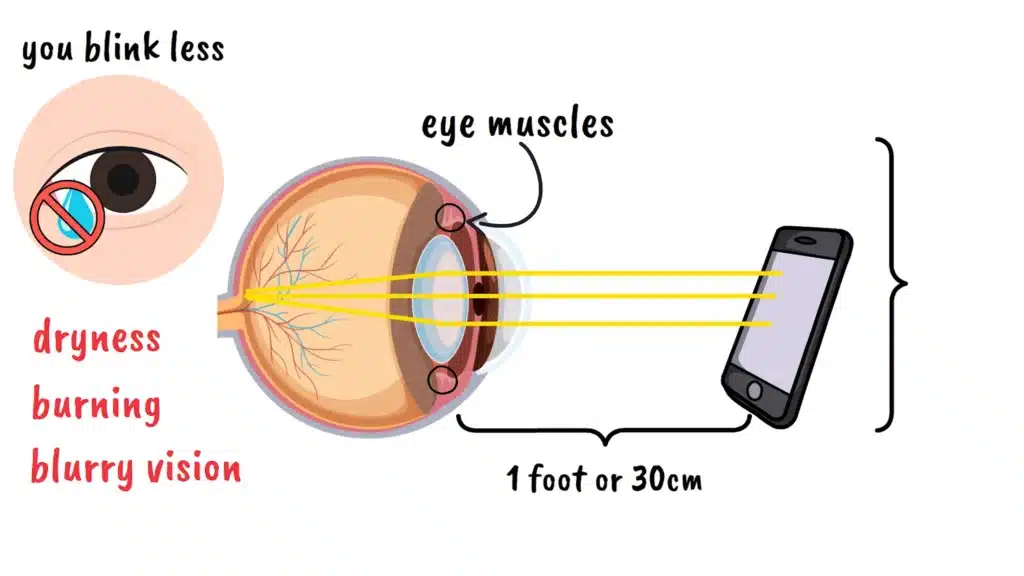
Now, let’s talk about screen distance. Think about when you look at objects far away, your eyes are relaxed. But with a smartphone, you usually hold it barely a foot from your face. This constant close-up work “trains” your eyes to favor nearby objects. Over time, this can contribute to myopia, also known as nearsightedness, especially in kids and teenagers.
In simple terms, myopia means that distant objects start looking blurry, so you end up squinting just to read road signs or see your friends across the room. The number of people becoming nearsighted has exploded worldwide and excessive smartphone and screen time is a big player in that trend.
The Blue Light Problem
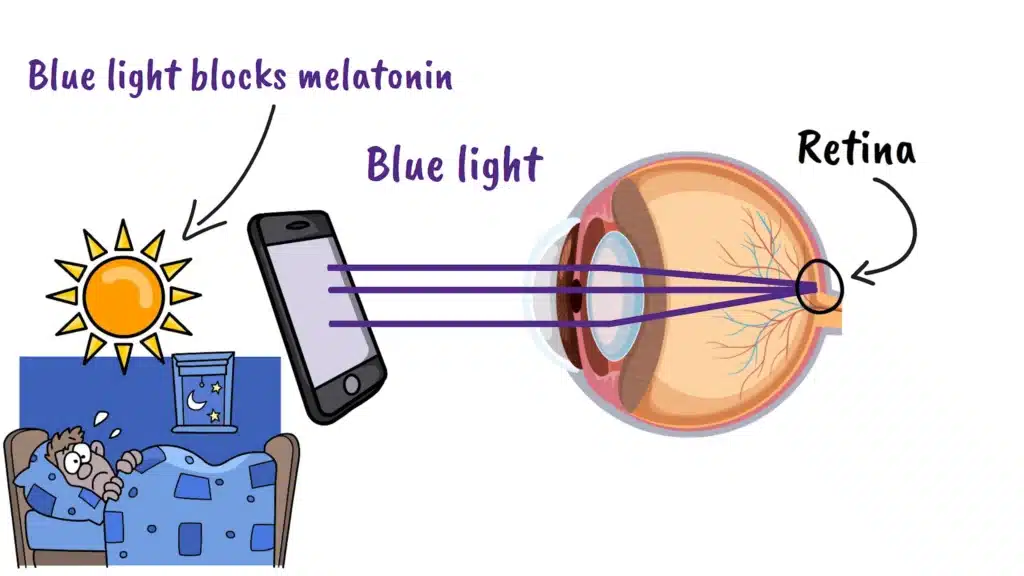
But that’s not where it ends. Smartphones also blast out a type of light called blue light. A high-energy, visible part of the spectrum, which goes deeper into the eye than other colors. The long-term effects are still being studied but there’s growing evidence that too much blue light, especially late at night, can mess with our eye’s internal rhythms and potentially harm the very back of our eye, the retina.
If you’ve ever lain awake after scrolling at night, unable to sleep, you’ve been hit by blue light’s sneaky side effect: it blocks a sleep hormone called melatonin, tricking your brain into thinking it’s still daytime. Speaking of protecting your eyes from these hidden dangers, if you’re finding this information helpful, a quick subscribe to the channel and a like to the video would mean a lot and helps us create more eye-opening health content like this.
The Reality of Modern Screen Addiction
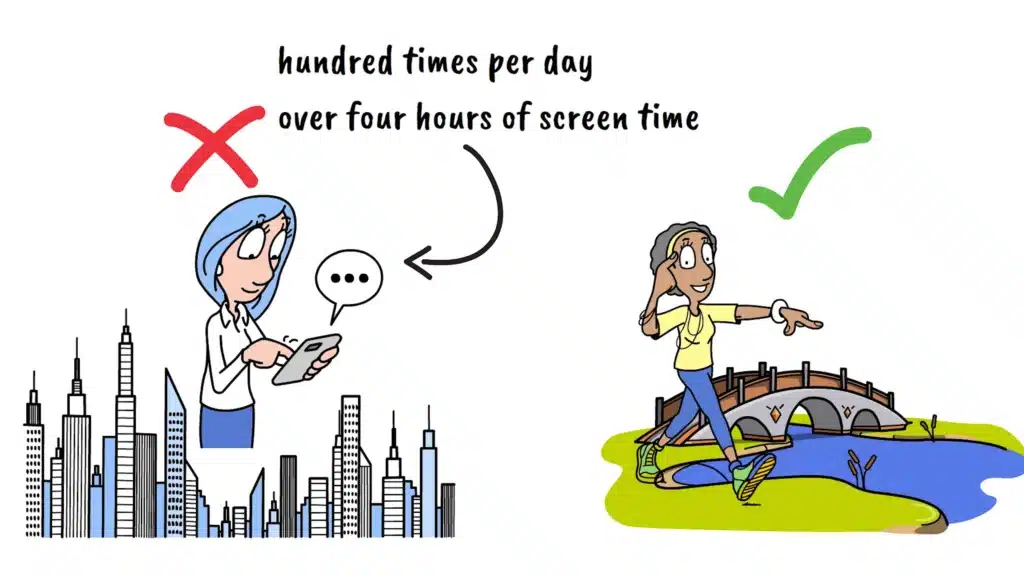
The root problem is that our modern lives weren’t designed for constant, up-close screen time. Our eyes evolved to scan horizons, not to stare at glowing rectangles inches from our noses. The typical smartphone user checks their phone more than a hundred times per day and often racks up over four hours of screen time. Multiply that across days, weeks, and years, and it paints a worrying picture for eyesight around the world.
Solutions: Take Back Control of Your Eye Health
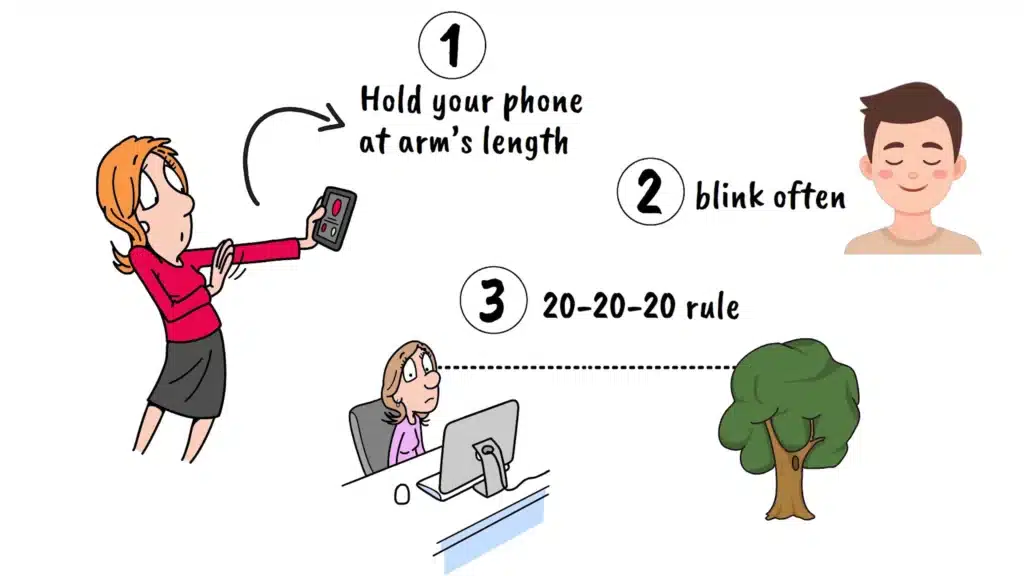
If this sounds alarming, there’s a bit of good news. You can take back control before the damage becomes permanent. Start by holding your phone at arm’s length and in good light, to avoid squinting. Try to blink consciously and often, and use the “20-20-20 rule”: every 20 minutes, look at something 20 feet away for 20 seconds.
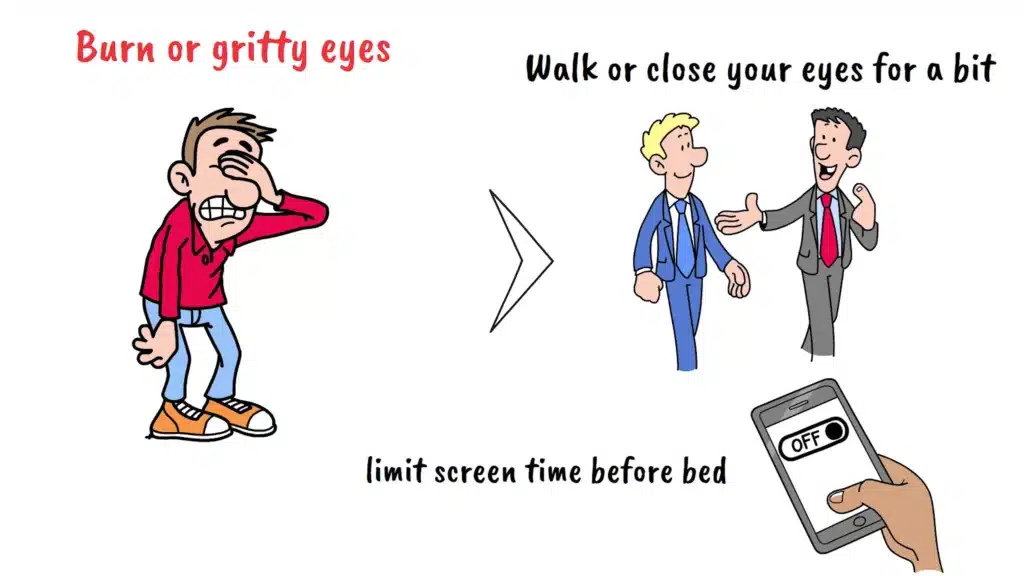
If your eyes burn or feel gritty, take a solid break, a walk or just closing your eyes for a bit does wonders. And consider limiting screen time before bed to let your brain settle and pave the way for natural, restful sleep.
