
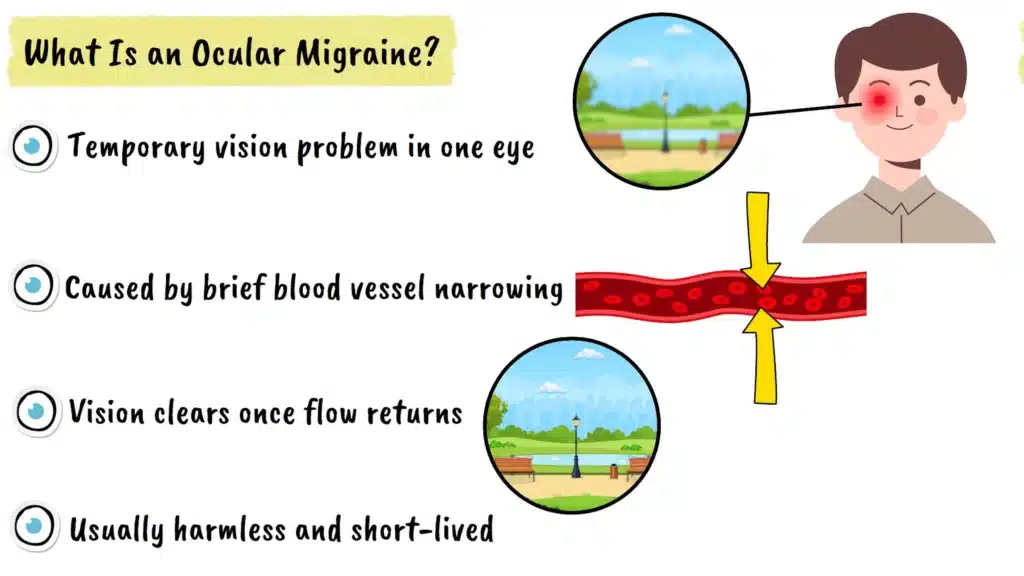
An ocular migraine is a temporary vision problem that affects one eye. The condition causes your vision to become disrupted or blurry for a short period of time. This is different from a regular migraine that causes head pain. When you have an ocular migraine, the blood flow to your eye becomes restricted because your blood vessels suddenly narrow. Once these vessels relax and open back up, your normal vision returns. Most ocular migraines are not serious and usually resolve on their own.
Understanding the Anatomy Behind It
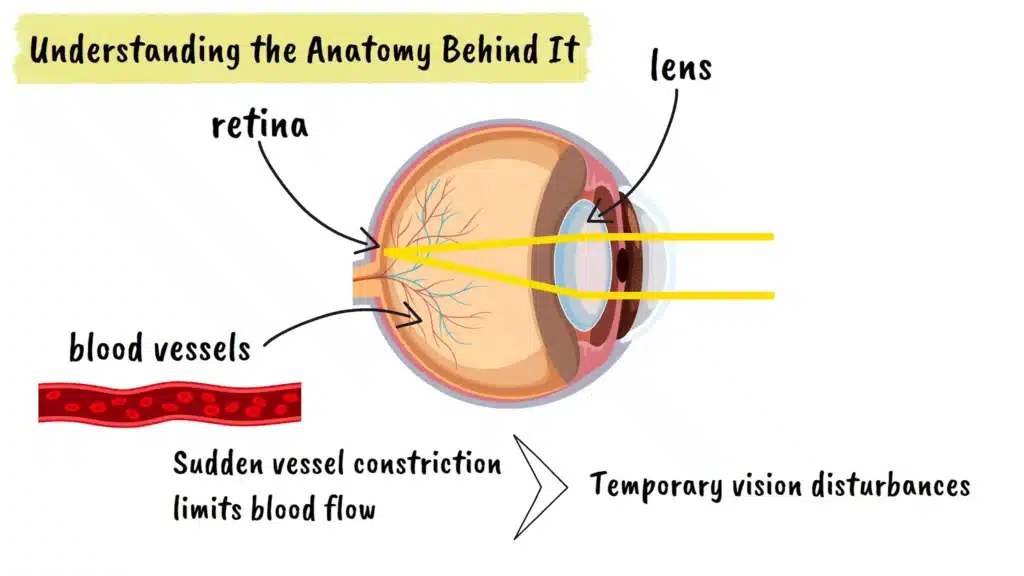
Let’s talk about the anatomy to understand this better. Your eye has a lens in the front that focuses light onto the retina at the back of your eye. Your eye also has a complex network of blood vessels that deliver oxygen and nutrients to your eyes so they can function properly. When these blood vessels suddenly tighten or constrict, it reduces the amount of blood flowing to your eye. This reduced blood flow is what causes the temporary vision disturbances you experience during an ocular migraine.
Common Symptoms of Ocular Migraine
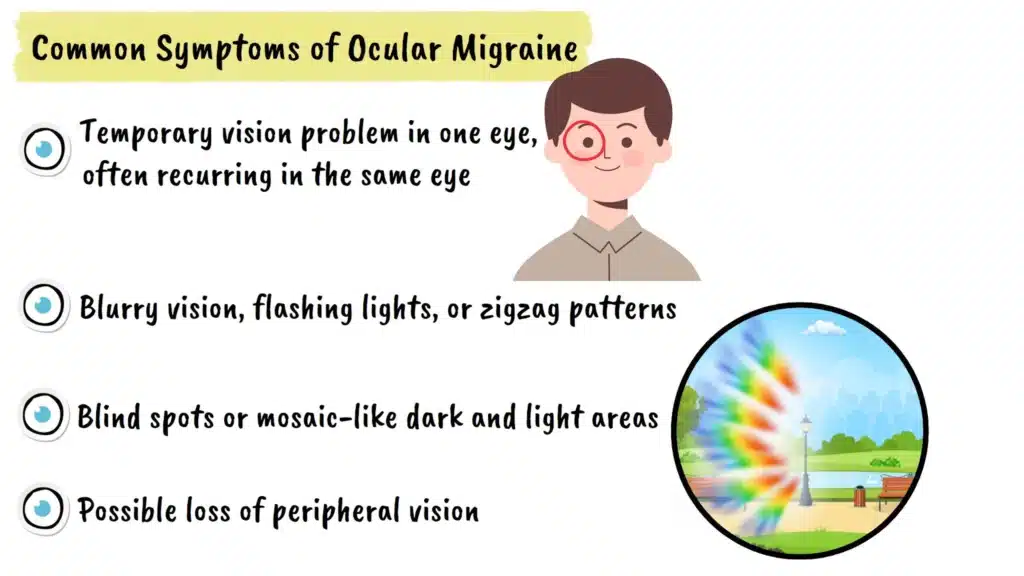
Now let’s see some common symptoms of an ocular migraine. The most typical symptom is temporary loss of vision in one eye, usually the same eye each time. You might experience blurry vision in just that one eye. Some people see flashing lights or bright flashes that look like sparks. Others describe seeing squiggly patterns or zigzag lines in their vision. You might notice blind spots, which are areas where you cannot see. These blind spots might form mosaic-like patterns that look like scattered dark or light spots across your field of vision. You could also experience loss of peripheral vision, which means you lose sight at the edges of your visual field. A headache may occur before, during, or after the vision loss happens. These vision symptoms typically last between ten to twenty minutes, though sometimes they can last longer. It is rare for symptoms to persist beyond an hour.
Causes and Triggers of Ocular Migraine
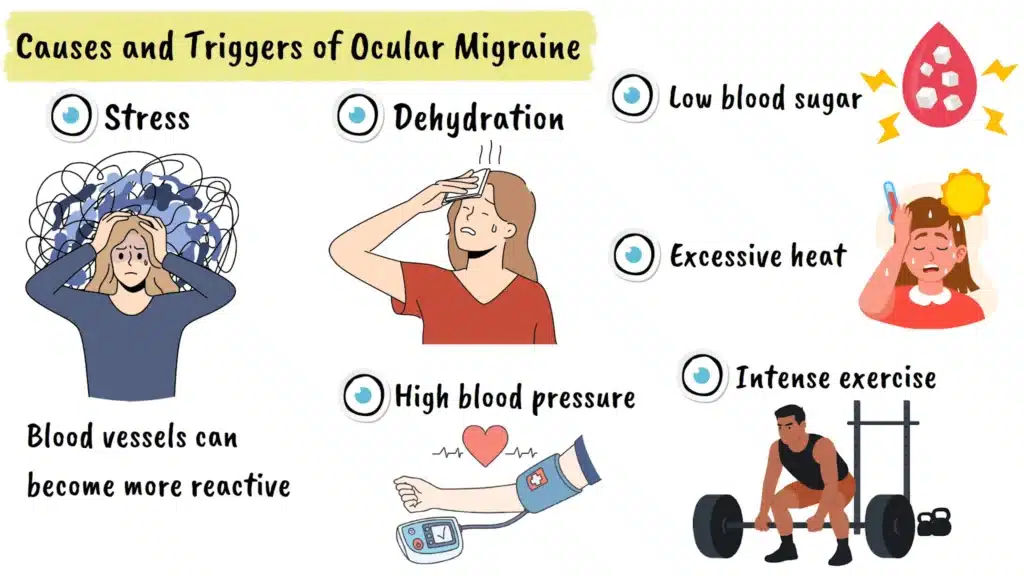
Let’s talk about what causes an ocular migraine. One major trigger is stress. When you are under emotional or mental stress, your blood vessels can become more reactive. Another common cause is dehydration, meaning you are not drinking enough water. High blood pressure can also trigger these migraines. Low blood sugar is another trigger, which is why skipping meals can be dangerous if you are prone to ocular migraines. Excessive heat can cause your blood vessels to react unpredictably. Intense exercise or physical exertion can trigger these episodes. Bending over for long periods of time can sometimes provoke symptoms. Smoking is a significant risk factor because it affects your cardiovascular system. Certain types of contraceptive medications can increase your risk.

It is important to note that ocular migraines are more common in women than in men. They are also more common in people over the age of forty. If you have a family history of migraines or headaches, your risk is higher.
How to Manage and Prevent Ocular Migraines
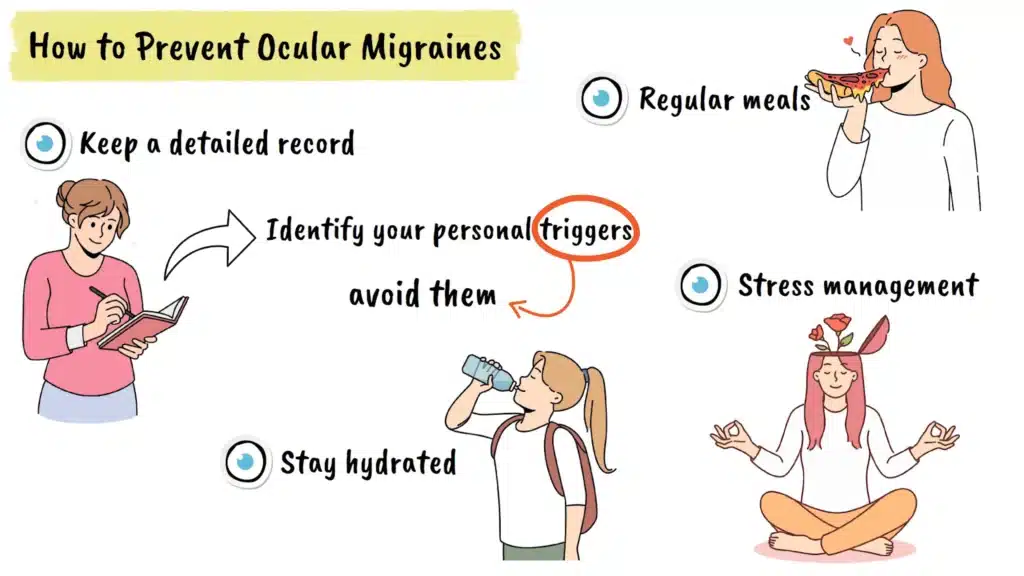
How can you manage an ocular migraine? The best approach is prevention. Keep a detailed record of when your attacks occur and what you were doing beforehand. This helps you identify your personal triggers. Once you know your triggers, try to avoid them whenever possible.
Stay hydrated throughout the day by drinking plenty of water. Maintain regular meals to keep your blood sugar stable. Practice stress management techniques such as meditation or deep breathing. If you smoke, quitting can significantly reduce your risk.
When an ocular migraine does occur, the best strategy is to remain calm and rest. Most attacks pass on their own without treatment. If the episodes become frequent or severe, consult with an eye doctor for a proper evaluation. Your eye doctor can rule out other conditions with similar symptoms and discuss prevention strategies specific to your situation.
Conclusion
Now you understand what an ocular migraine is, the symptoms to watch for, what triggers them, and how to prevent and manage them. If you found this information helpful, share it with others who may benefit from learning about ocular migraines.
