
Syphilis is a sexually transmitted infection caused by a bacterium called Treponema pallidum. Most people associate syphilis with skin rashes or other obvious body symptoms, but many do not realize that this infection can severely damage the eyes. When syphilis affects the eyes, doctors refer to this condition as ocular syphilis.
Understanding how syphilis can harm the eyes, what symptoms to watch for, and why early treatment is critical can help protect vision and prevent permanent damage.

How Syphilis Affects the Eyes
The eyes are particularly vulnerable to syphilis because the bacteria can directly attack the delicate structures inside them. Once syphilis spreads through the body, it can enter eye tissues and cause serious inflammation and damage.
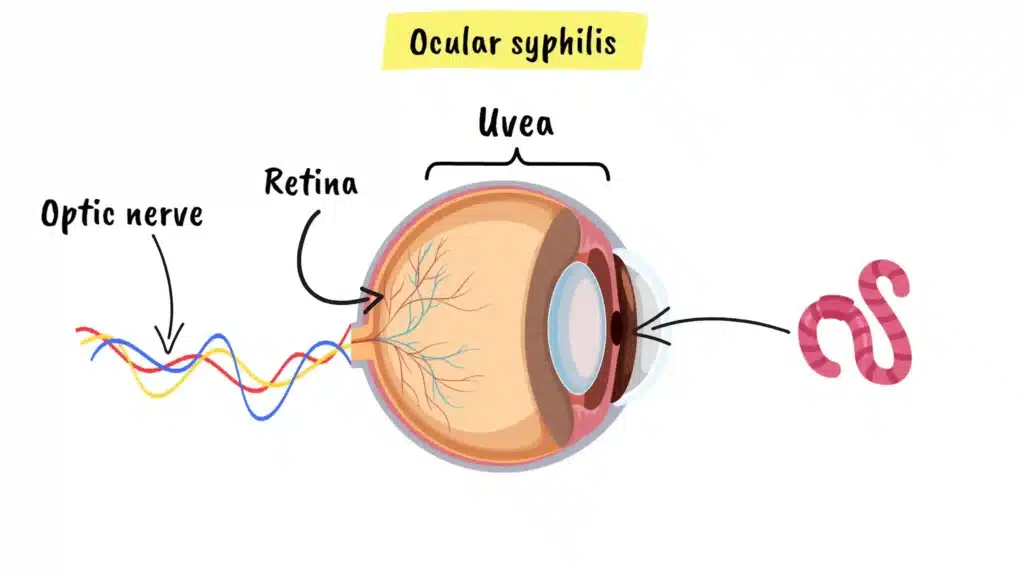
Syphilis can affect:
- The uvea: This is the middle layer of the eye that contains many blood vessels and supplies nutrients to other eye structures. When syphilis affects the uvea, it can cause uveitis, an inflammation of this layer, leading to pain, redness, and vision problems.
- The retina: This is the light-sensitive tissue at the back of the eye that captures images, similar to how film captures images in a camera. Damage to the retina can seriously affect how clearly you see, and in severe cases, it can lead to permanent vision loss.
- The optic nerve: This is the “cable” that transmits visual information from the eye to the brain. If syphilis damages the optic nerve, it can cause blurred vision, visual field defects, or even sudden, severe loss of sight.
Common Symptoms of Ocular Syphilis
Ocular syphilis can present with a variety of symptoms. Some may be subtle at first, while others can be sudden and alarming. Recognizing these warning signs and seeking prompt care is essential.
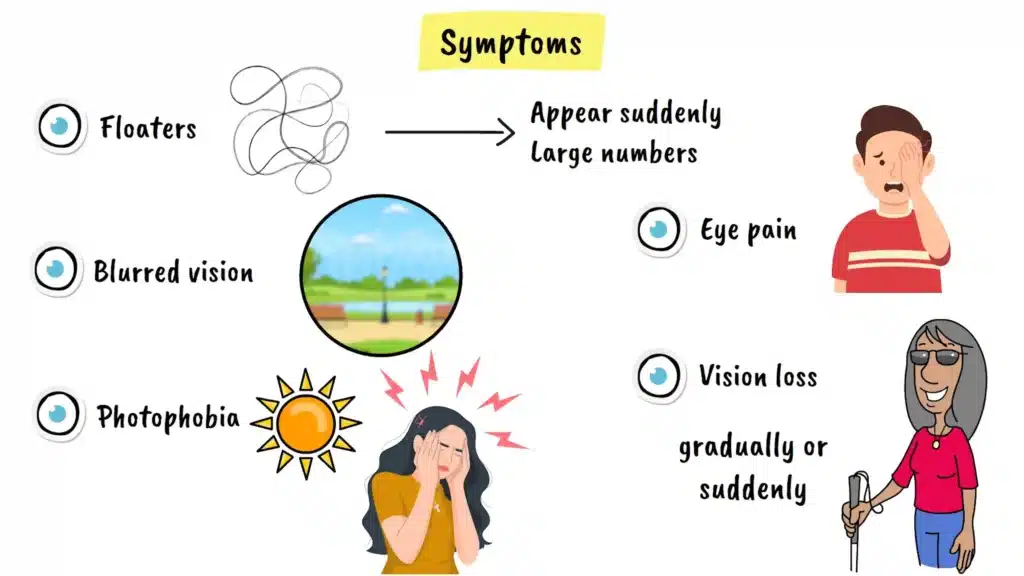
1. Floaters
Floaters are small spots, dots, or thread-like lines that drift across the field of vision. Many people naturally develop a few floaters as they age. However, syphilis-related floaters tend to appear suddenly and in larger numbers. A sudden increase in floaters, especially if combined with other symptoms, should not be ignored.
2. Blurred Vision
Blurred vision means that objects that were once clear become hazy or difficult to focus on. In ocular syphilis, this blurring may affect one eye or both eyes and can worsen over time if the infection and inflammation are not treated.
3. Photophobia (Light Sensitivity)
Photophobia is a medical term for sensitivity to light. Patients often describe it as discomfort or even pain when looking at bright lights, such as sunlight, car headlights, or illuminated screens. This symptom can be very bothersome and may cause people to squint, avoid light, or wear sunglasses indoors.
4. Eye Pain
Eye pain can occur with or without light sensitivity. It may feel like a deep ache inside the eye or a sharp pain when moving the eyes. Persistent or worsening eye pain is always a reason to see an eye doctor, especially if it is accompanied by changes in vision.
5. Vision Loss
Vision loss is one of the most serious symptoms of ocular syphilis. This loss can develop gradually, as ongoing inflammation slowly damages eye structures, or suddenly, if there is acute involvement of the retina or optic nerve. Any sudden change in vision should be treated as an emergency.
6. Eye Redness
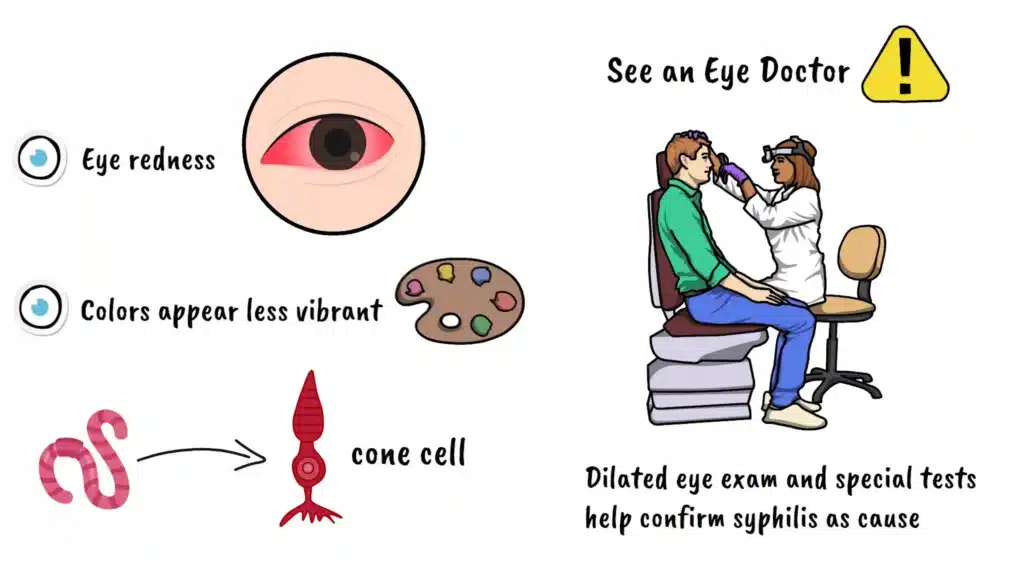
Some patients experience redness in the affected eye. This happens when the blood vessels in the white part of the eye (the sclera) become inflamed and dilated. Redness combined with pain, blurred vision, or light sensitivity is especially concerning.
7. Color Vision Changes
Another possible symptom is that colors appear less vibrant or washed out. This color vision defect occurs because syphilis can damage the cone cells in the retina, which are responsible for detecting color. Patients may notice that reds, greens, or other colors do not look as bright as they used to.
Why Prompt Evaluation Is Critical
If any of these symptoms appear, it is crucial to see an eye doctor immediately. These signs can be caused by ocular syphilis, but they can also be associated with many other eye conditions. Only a professional eye examination can determine the true cause.
An eye doctor can perform:
- A dilated eye examination, which allows detailed viewing of the retina, optic nerve, and other internal eye structures.
- Specialized tests, such as imaging and blood tests, to check for syphilis and rule out other diseases.
Getting a proper diagnosis as early as possible is essential, because delayed treatment increases the risk of permanent vision damage.
How Syphilis Reaches the Eyes
Syphilis progresses in stages when it is not treated. In the secondary stage, the bacteria can spread throughout the body, affecting various organs, including the eyes. This is often when ocular symptoms begin to appear.
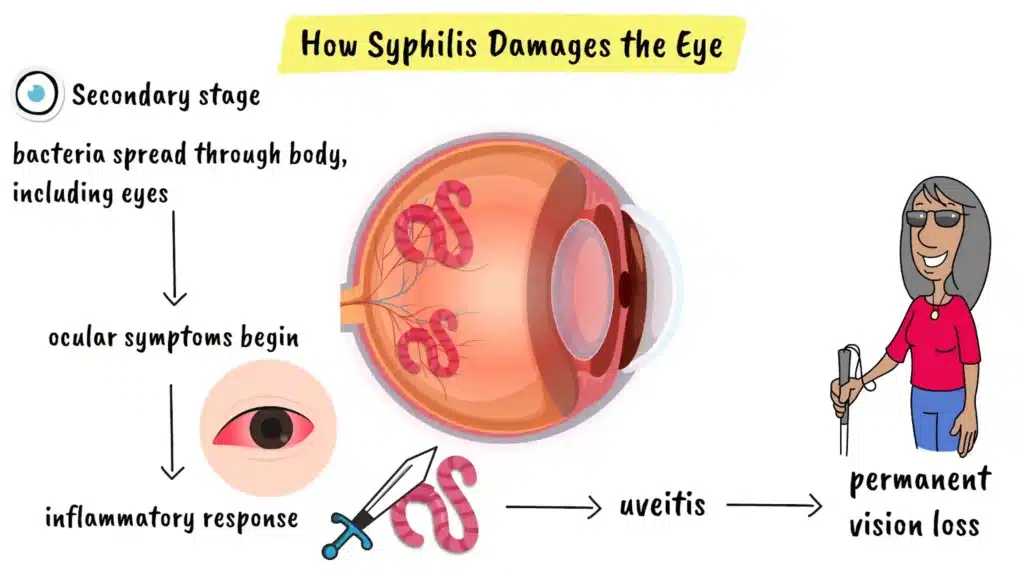
The infection triggers an inflammatory response. The immune system attempts to fight the bacteria, but this defense reaction also causes swelling and irritation in eye tissues. Over time, this inflammation can:
- Damage the uvea and lead to uveitis.
- Scar delicate structures inside the eye.
- Harm the retina and optic nerve, increasing the risk of permanent vision loss.
Without timely treatment, the inflammation can become chronic, and even if the infection is later controlled, the structural damage may not be fully reversible.
Treatment of Ocular Syphilis
The most effective treatment for ocular syphilis is antibiotic therapy, specifically penicillin injections. Early and adequate treatment can protect vision and prevent further damage.
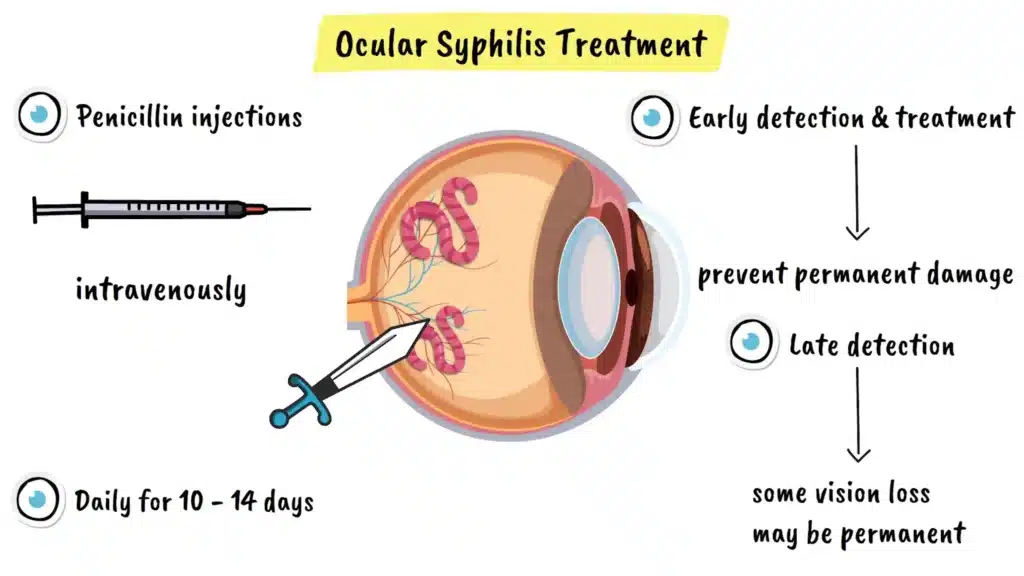
Key aspects of treatment include:
- Intravenous administration: The medication is almost always given directly into a vein. This method ensures that high enough concentrations of the antibiotic reach the eye tissues and other affected areas.
- Duration: Most patients receive daily injections for about 10 to 14 days. The exact duration and dosage depend on the stage of syphilis and the severity of the infection.
- Monitoring: During and after treatment, doctors carefully monitor vision and eye health. In some cases, additional medications may be used to help control inflammation.
The outcome of treatment largely depends on how early the infection is detected and managed. If treatment begins before significant damage has occurred, patients often have a much better chance of preserving their vision. However, if syphilis has already caused scarring or irreversible damage to the retina or optic nerve, some degree of vision loss may remain even after successful antibiotic therapy.
Long-Term Outlook and Importance of Early Detection
The long-term prognosis in ocular syphilis is closely tied to:
- Stage of disease at diagnosis
- Severity of eye involvement
- Speed of starting appropriate antibiotic treatment
Early detection and treatment can:
- Prevent progression to more severe stages
- Reduce the risk of permanent retinal or optic nerve damage
- Preserve as much vision as possible
On the other hand, delayed diagnosis increases the likelihood that inflammation will cause lasting structural changes, leading to chronic visual problems.
Preventing Ocular Syphilis
The best way to prevent ocular syphilis is to prevent syphilis itself. Eye involvement usually appears after the infection has already spread in the body, so reducing the risk of infection in the first place is critical.
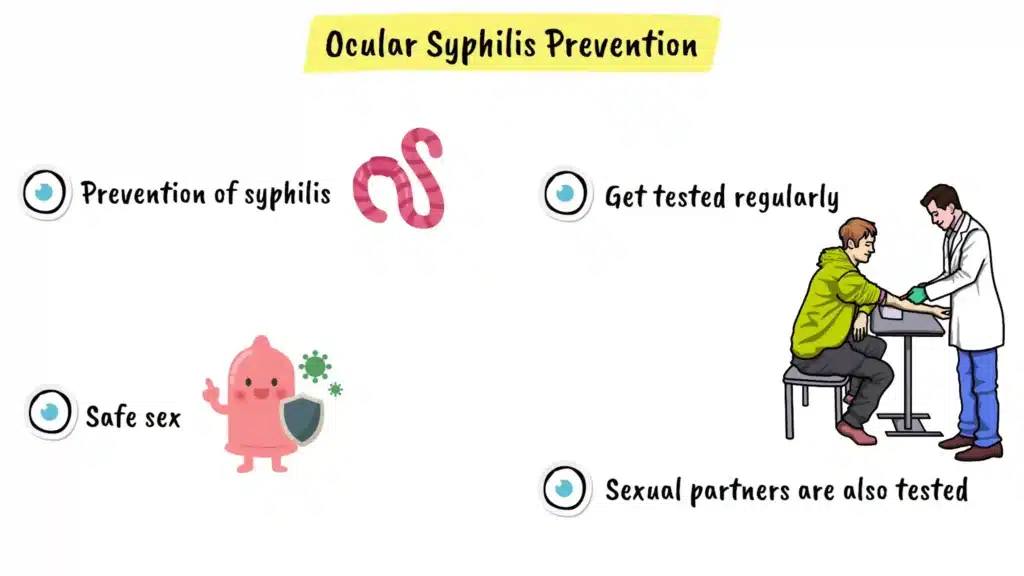
Important preventive steps include:
- Practicing safe sex: Consistent and correct condom use significantly lowers the risk of sexually transmitted infections, including syphilis.
- Regular testing: Individuals who are sexually active, especially those with multiple partners, should get tested regularly. Early detection allows for quick treatment before the infection spreads to the eyes or nervous system.
- Partner testing and treatment: Ensuring that sexual partners are also tested and treated when necessary is vital to prevent reinfection and further spread.
Public awareness of syphilis and its potential to affect the eyes plays an important role in prevention. Many people are unaware that a sexually transmitted infection can lead to serious eye disease and even blindness, so education is key.
Final Thoughts
Ocular syphilis is a serious but treatable condition. Syphilis, caused by Treponema pallidum, can spread through the body and attack critical eye structures such as the uvea, retina, and optic nerve, leading to symptoms like floaters, blurred vision, light sensitivity, eye pain, redness, color vision changes, and even sudden or gradual vision loss.
Prompt evaluation by an eye doctor, accurate diagnosis, and timely intravenous penicillin therapy are essential to stop the infection and protect vision. While treatment can be very effective, some damage may be permanent if the disease is advanced at the time of diagnosis.
Preventing syphilis through safe sexual practices, regular testing, and partner treatment remains the most effective way to avoid ocular complications. Recognizing the symptoms early and seeking immediate care can make the difference between full visual recovery and lasting vision loss.
