
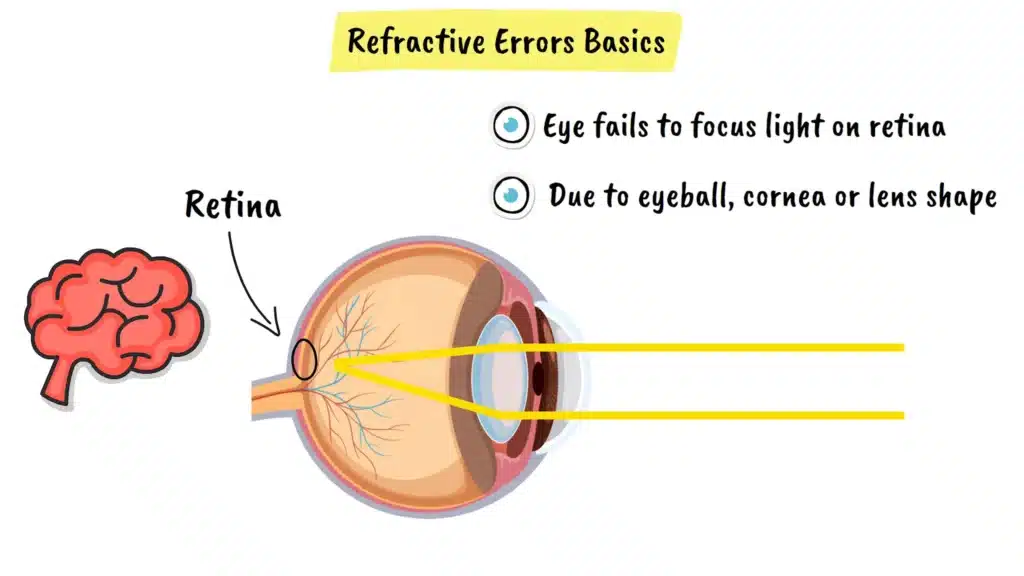
Refractive errors are common vision problems that occur when your eye cannot properly focus light onto the retina at the back of the eye. Think of your eye like a camera. For you to see clearly, light needs to focus exactly on the retina, which is the light-sensitive tissue that sends visual information to your brain.
When the shape of your eyeball, cornea, or lens prevents this precise focusing, you experience blurred vision. This is one of the most widespread eye conditions affecting millions of people worldwide, but the good news is that it can be easily corrected.
The Three Main Types of Refractive Errors
There are three main types of refractive errors that affect how light focuses in your eye. Understanding each type can help you recognize symptoms and seek appropriate treatment.
1. Myopia (Nearsightedness)
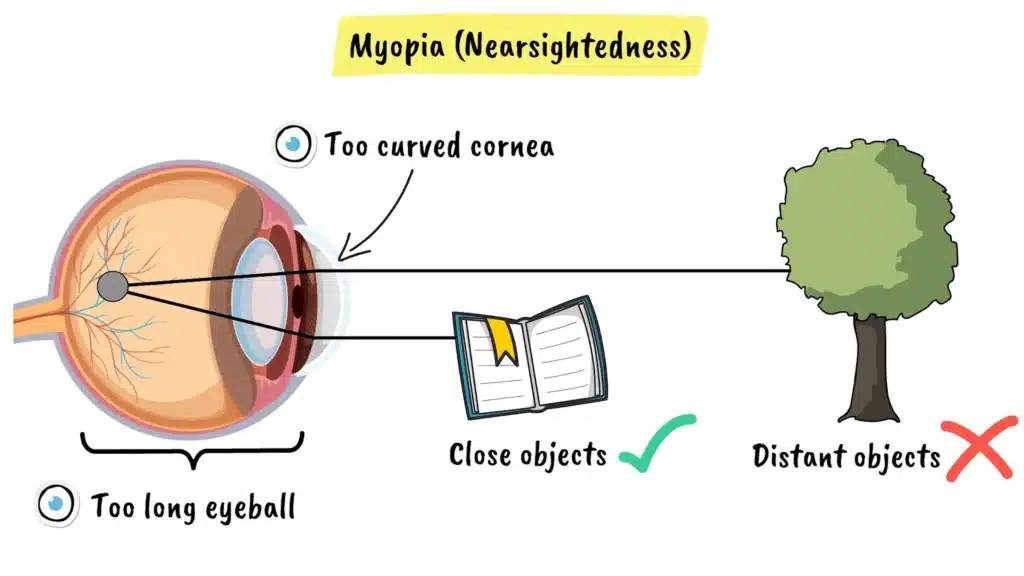
The first type of refractive error is myopia, also known as nearsightedness. If you have myopia, you can see objects that are close to you very clearly, like the text on your phone or a book in your hands. However, distant objects appear blurry and out of focus. You might struggle to read street signs while driving or see the board clearly in a classroom.
What Causes Myopia?
Myopia happens when your eyeball is too long from front to back, or when your cornea, the clear front surface of your eye, is too curved. Because of this shape, light entering your eye focuses in front of the retina instead of directly on it. The result is that faraway things look fuzzy and unclear.
2. Hyperopia (Farsightedness)
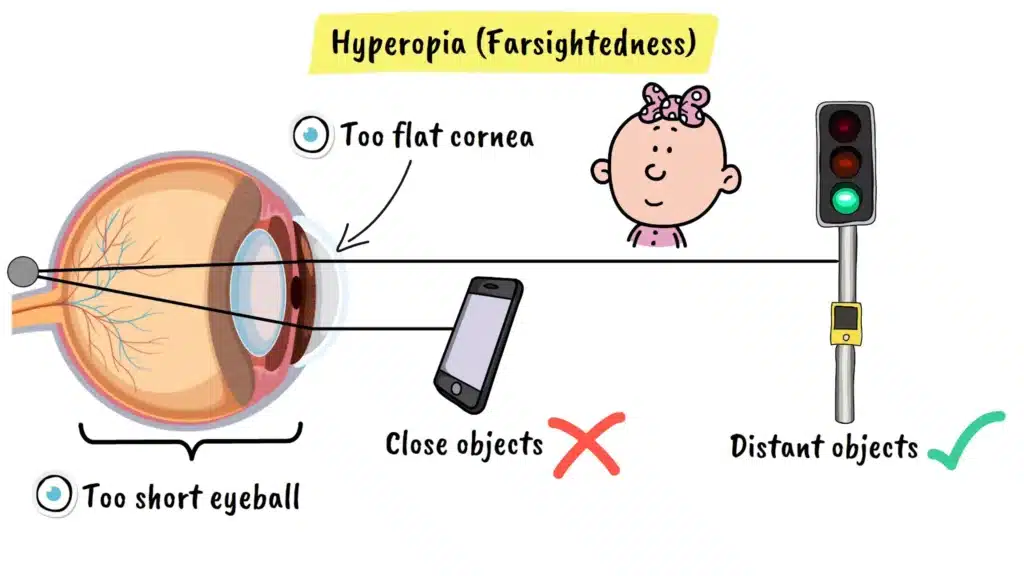
The second type is hyperopia, commonly called farsightedness. This condition is essentially the opposite of myopia. If you are farsighted, you can usually see distant objects more clearly, but things up close appear blurry. Reading a book, using your smartphone, or doing detailed work may cause eye strain and discomfort.
What Causes Hyperopia?
Hyperopia occurs when your eyeball is too short, or when your cornea is too flat. In this case, light rays entering the eye focus behind the retina instead of on it. Many children are born with mild hyperopia, and their eyes can often adjust naturally as they grow. However, adults with hyperopia typically need corrective lenses to see clearly up close.
3. Astigmatism
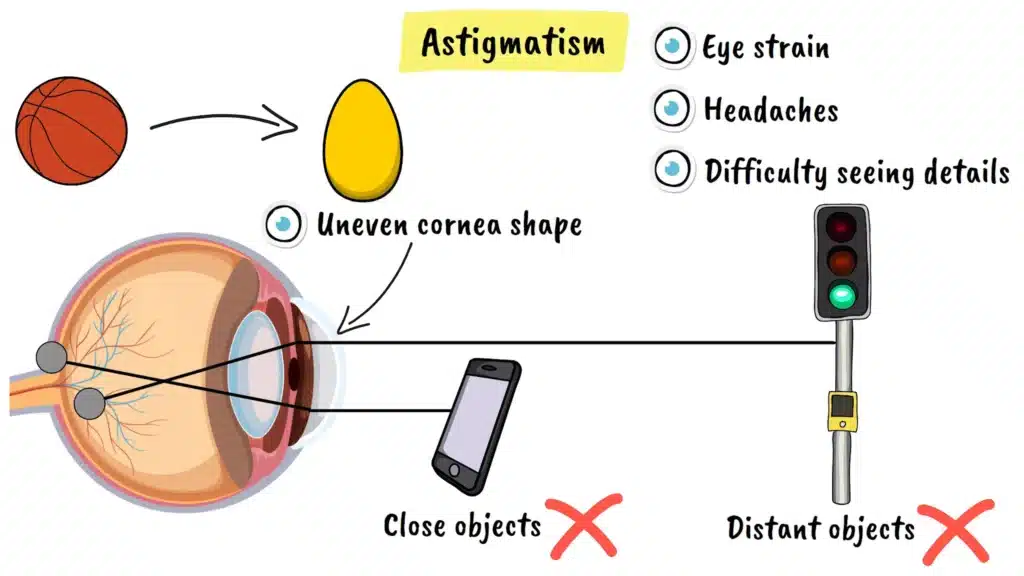
The third major type is astigmatism. Unlike myopia and hyperopia, astigmatism affects your vision at all distances. Both near and far objects can appear blurry or distorted.
What Causes Astigmatism?
Astigmatism happens when the cornea or lens has an irregular, uneven shape. Instead of being perfectly round like a basketball, the cornea is shaped more like an egg. This uneven curvature causes light to focus on multiple points instead of just one single point on the retina.
People with astigmatism often experience eye strain, headaches, and difficulty seeing fine details, especially at night. These symptoms can affect your daily activities and quality of life.
How to Correct Refractive Errors
The good news is that all three of these refractive errors can be easily corrected. There are several treatment options available, depending on your specific needs and preferences.
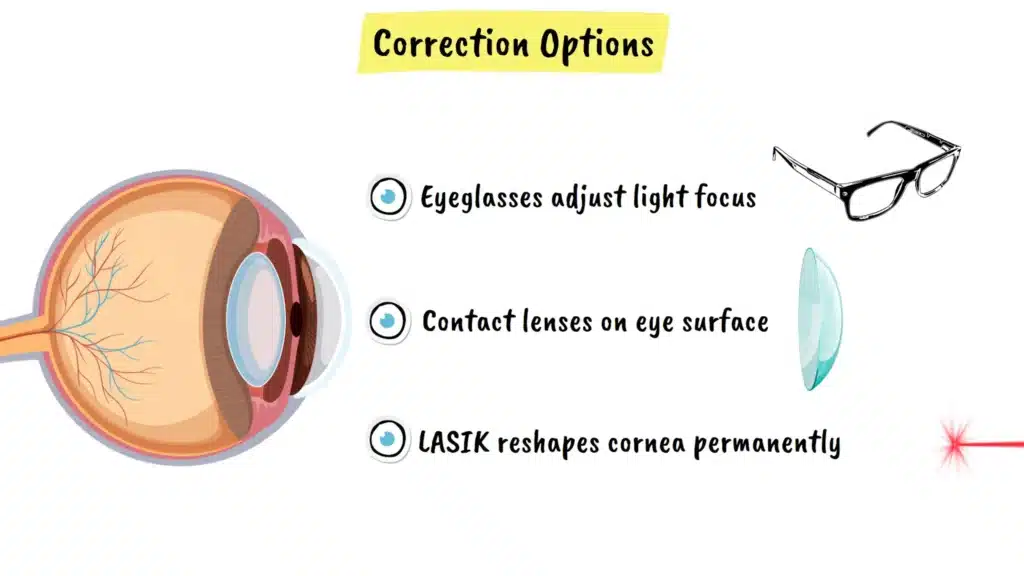
Eyeglasses
The most common and simplest treatment is wearing eyeglasses with prescription lenses that adjust how light enters your eye, ensuring it focuses correctly on the retina. Glasses are affordable, easy to use, and can be customized to your specific prescription.
Contact Lenses
Contact lenses are another popular option for correcting refractive errors. They sit directly on the surface of your eye and work similarly to glasses. Many people prefer contacts because they offer a wider field of vision and don’t have the appearance of frames.
Refractive Surgery
For those seeking a more permanent solution, refractive surgery procedures like LASIK can reshape the cornea to correct how light is focused. This option is ideal for people who want long-term vision correction without relying on glasses or contacts.
When Should You See an Eye Doctor?
If you experience blurry vision, frequent headaches, eye strain, or find yourself squinting often, it is important to visit an eye doctor for a comprehensive eye examination. Early detection and correction of refractive errors can significantly improve your quality of life and help you see clearly in all situations.
A professional eye doctor can determine your exact prescription and recommend the best treatment option for your specific needs. Don’t wait if you’re experiencing vision problems—the sooner you address them, the better your visual outcomes will be.
Final Thoughts
Refractive errors are incredibly common but easily treatable. Whether you have myopia, hyperopia, astigmatism, or a combination of these conditions, modern vision correction options can help you achieve clear, comfortable vision. Schedule an eye appointment today and take the first step towards better sight and a better quality of life.
