What is Macular degeneration?
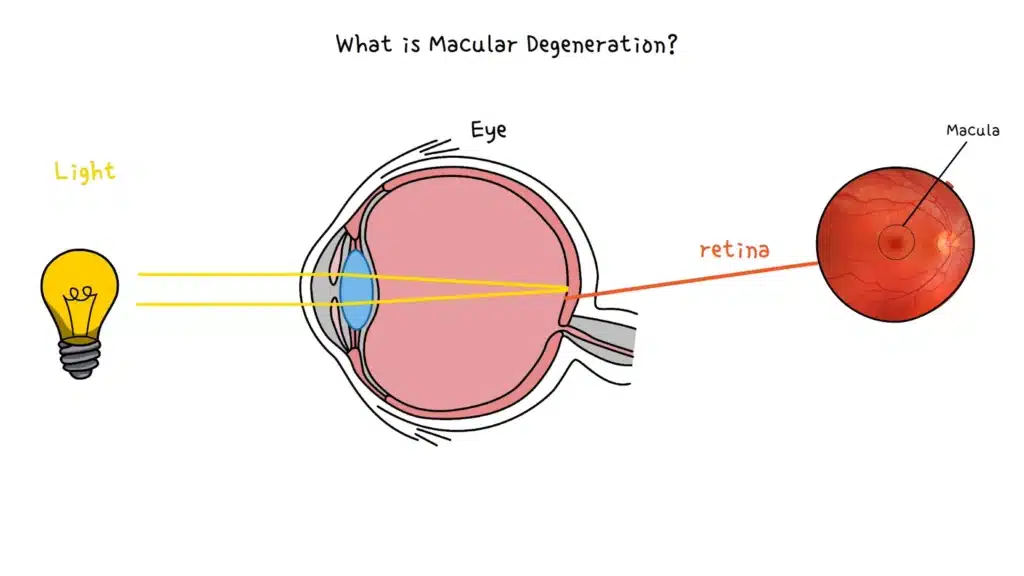
Macular degeneration or age-related macular degeneration, is a problem with your retina. It happens when a part of the retina, called the macula, is damaged which may result in blurred or no vision in the center of the visual field.
What are the signs and symptoms of Macular degeneration?
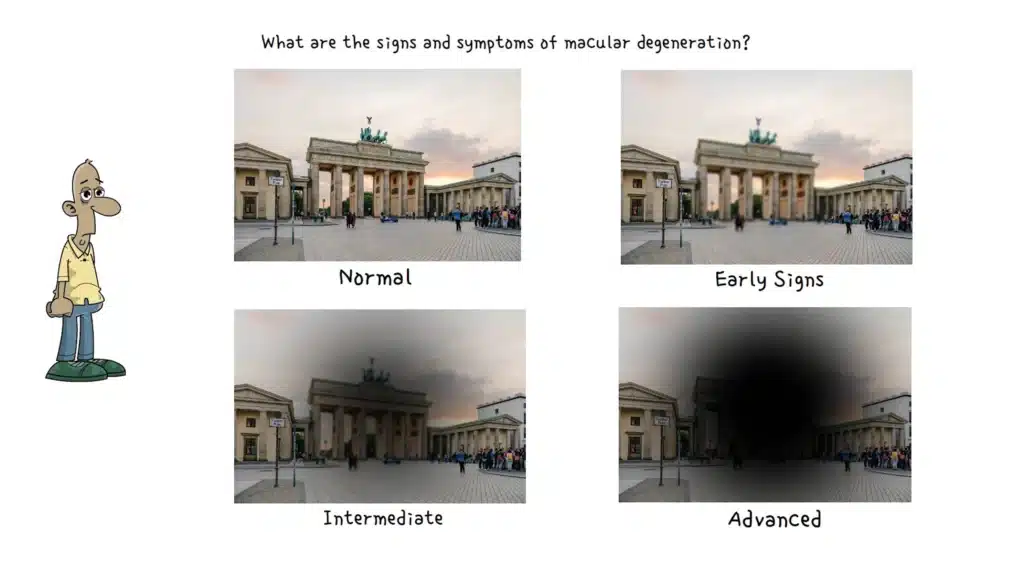
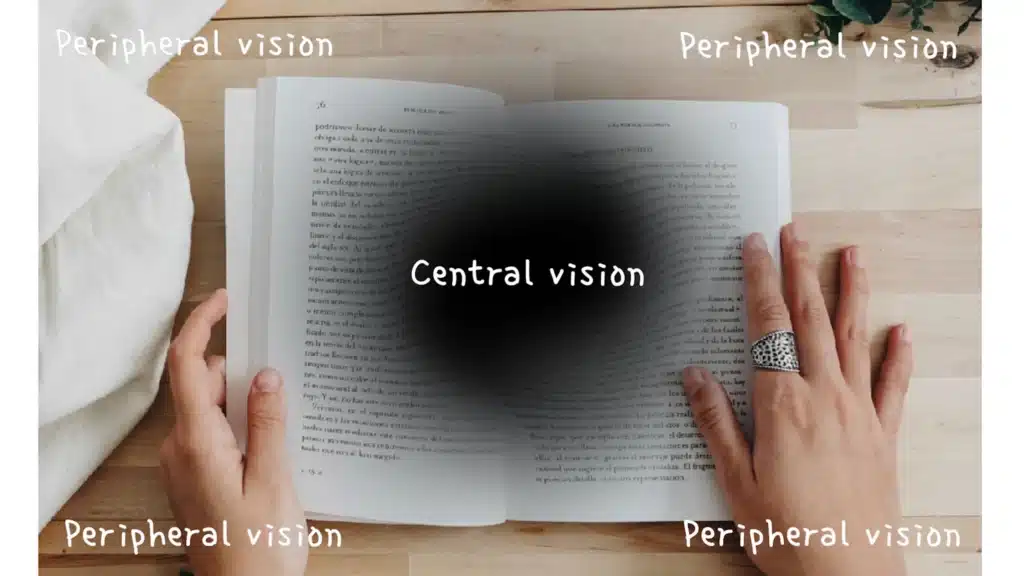
Early on there are often no symptoms. Over time, however, some people experience a gradual worsening of vision that may affect one or both eyes. With macular degeneration you lose your central vision. While it does not result in complete blindness, loss of central vision can make it hard to recognize faces, drive, read, or perform other activities of daily life. However, your peripheral vision will still be normal.
What causes Macular degeneration?
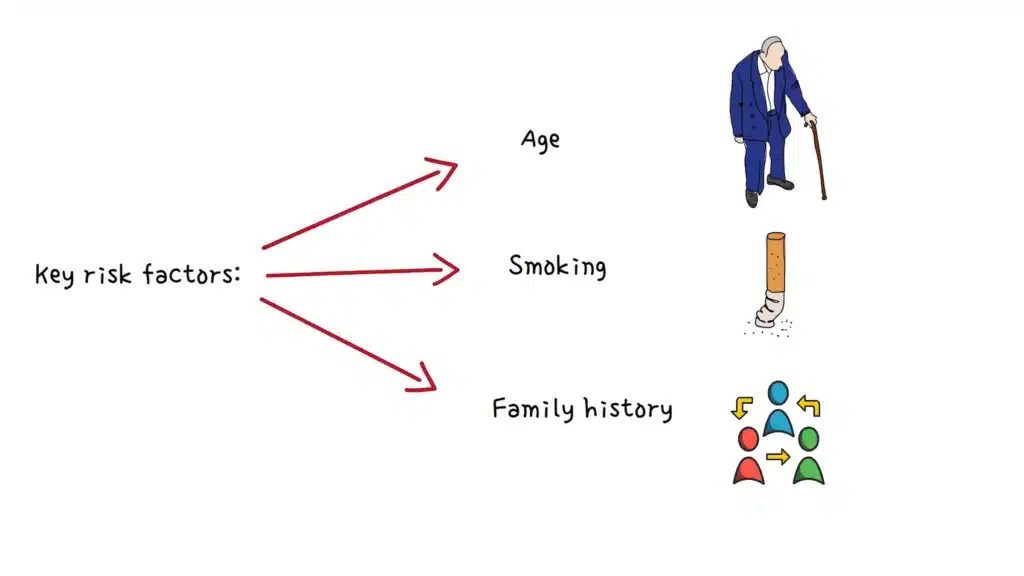
The specific factors that cause macular degeneration are not conclusively known, and research into this little understood disease is limited by insufficient funding. Key risk factors are age, smoking, and family history.
What is the treatment for Macular degeneration?
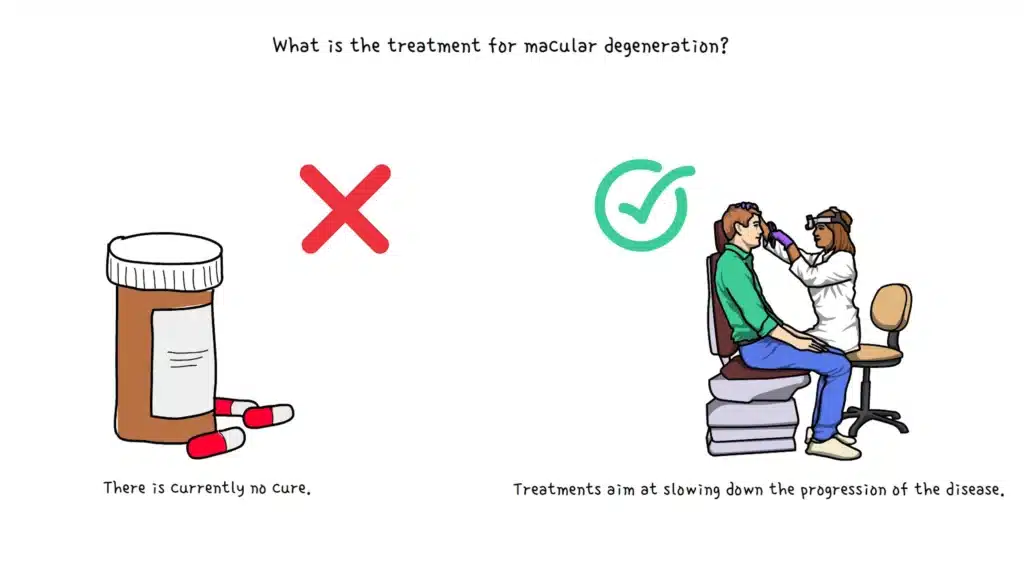
There is currently no cure for Macular Degeneration. Treatments aim at slowing down the progression of disease and keep you from losing too much of your vision.
How to prevent Macular degeneration?
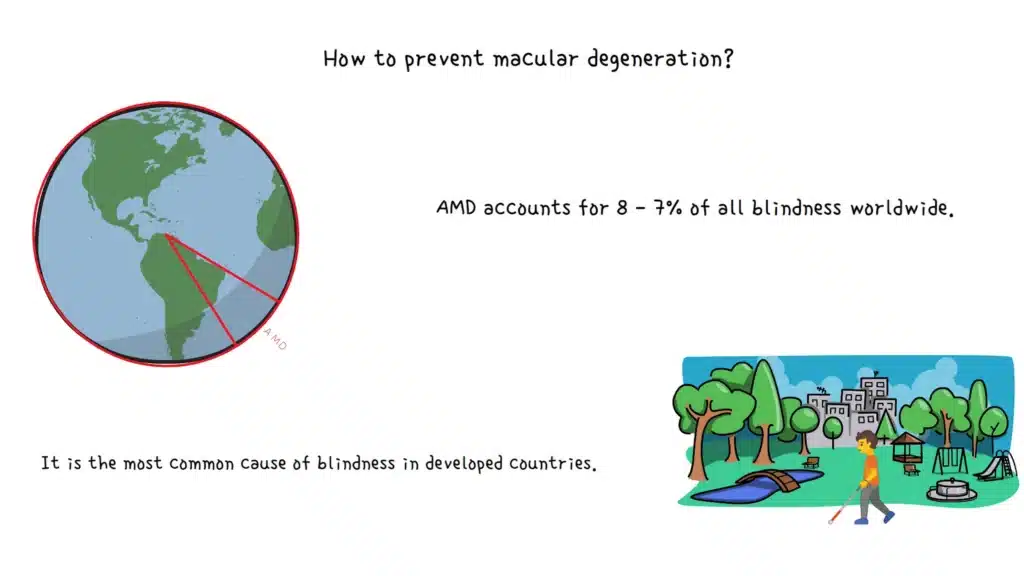
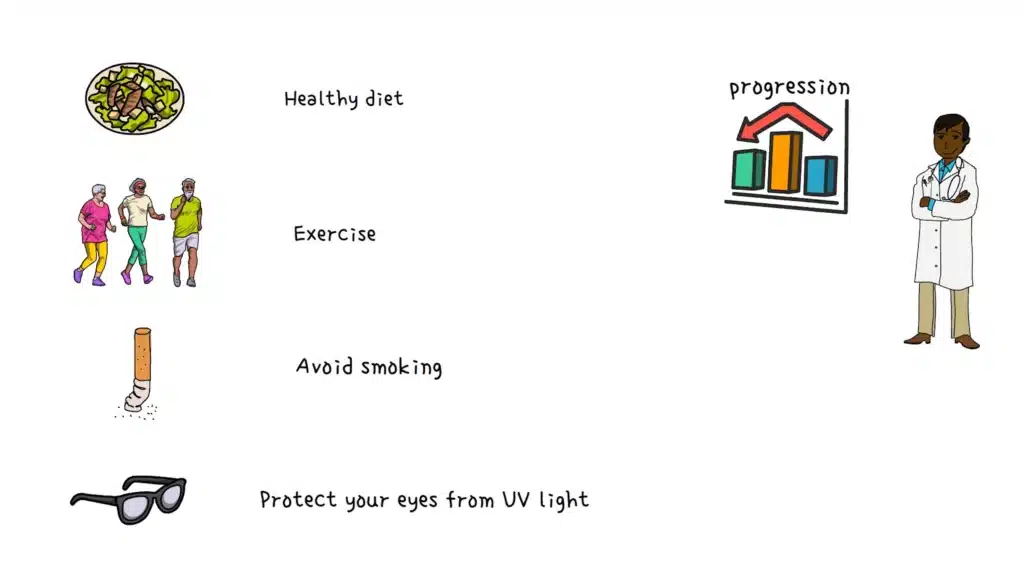
Age-related macular degeneration accounts for 8 to 7 of all blindness worldwide and is the most common cause of blindness in developed countries. There are things you can do to reduce your risk and possibly slow the progression once you’ve been diagnosed. For example, one can pursue lifestyle changes like dieting, exercise, avoiding smoking, and protecting your eyes from ultraviolet light.