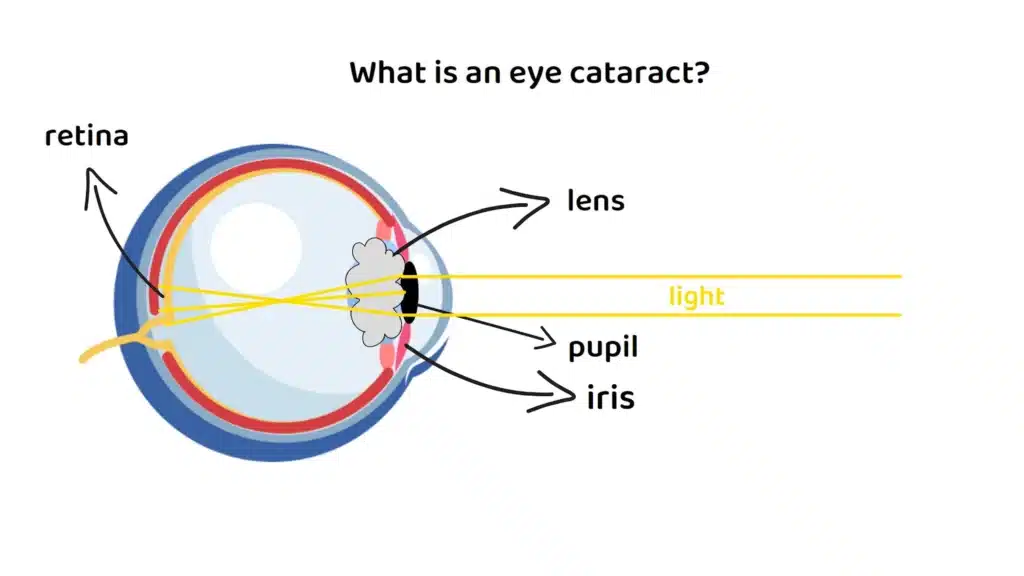
An eye cataract is a clouding of the lens in the eye. The lens is a clear structure located behind the iris (the colored part of the eye) and the pupil (the black hole in the center of the iris). The lens is responsible for focusing light onto the retina at the back of the eye, and it plays a crucial role in vision. When the lens becomes cloudy, it can interfere with the passage of light through the eye, leading to vision problems.
Common Symptoms of Eye Cataract
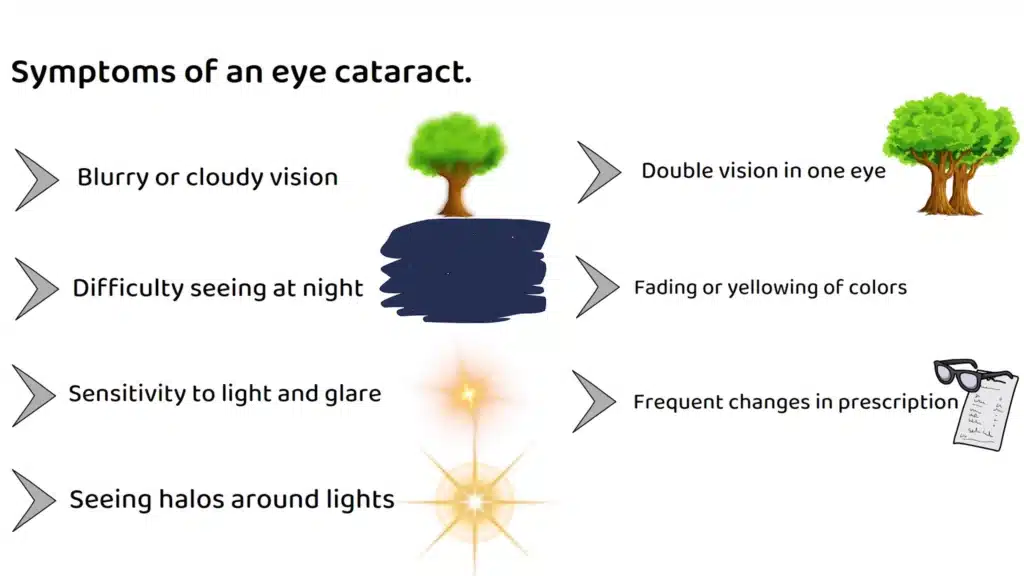
Blurry or cloudy vision
Difficulty seeing at night
Sensitivity to light and glare
Seeing halos around lights
Double vision in one eye
Fading or yellowing of colors
Frequent changes in eyeglass or contact lens prescriptions
If you are experiencing any of these symptoms, it is important to see an eye doctor for an evaluation. Keep in mind that these symptoms can also be caused by other conditions, so it is important to get a proper diagnosis.
Causes of Eye Cataract
Aging: Cataracts are most commonly associated with aging, and they are a natural part of the aging process. As we get older, the proteins in the lens of the eye can start to break down and clump together, causing the lens to become cloudy.
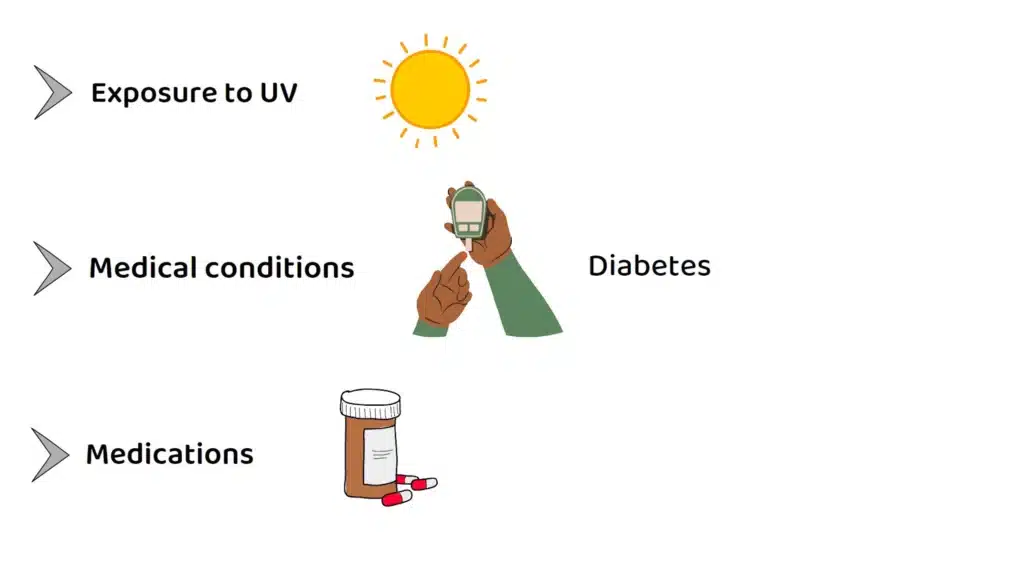
Exposure to UV radiation: Prolonged exposure to ultraviolet (UV) radiation from the sun or other sources can increase the risk of developing cataracts.
Medical conditions: Certain medical conditions, such as diabetes, can increase the risk of developing cataracts.
Medications: Some medications, such as corticosteroids, can increase the risk of developing cataracts.
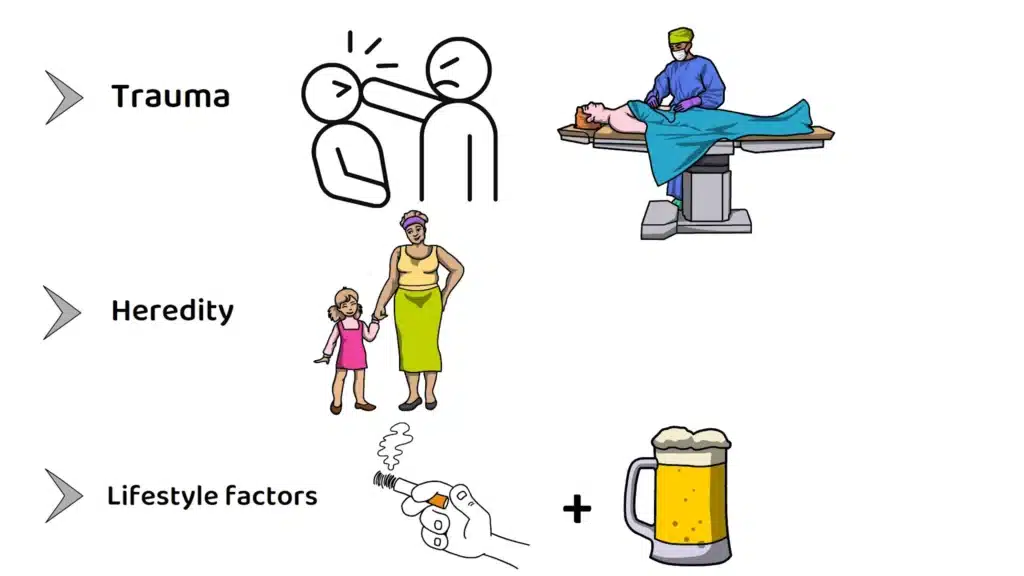
Trauma: Injuries to the eye, such as a blow to the head or eye surgery, can also lead to the development of cataracts.
Heredity: A family history of cataracts can increase the risk of developing the condition.
Lifestyle factors: Smoking and excessive alcohol consumption can also increase the risk of developing cataracts.
Treatment and Prevention of Eye Cataract
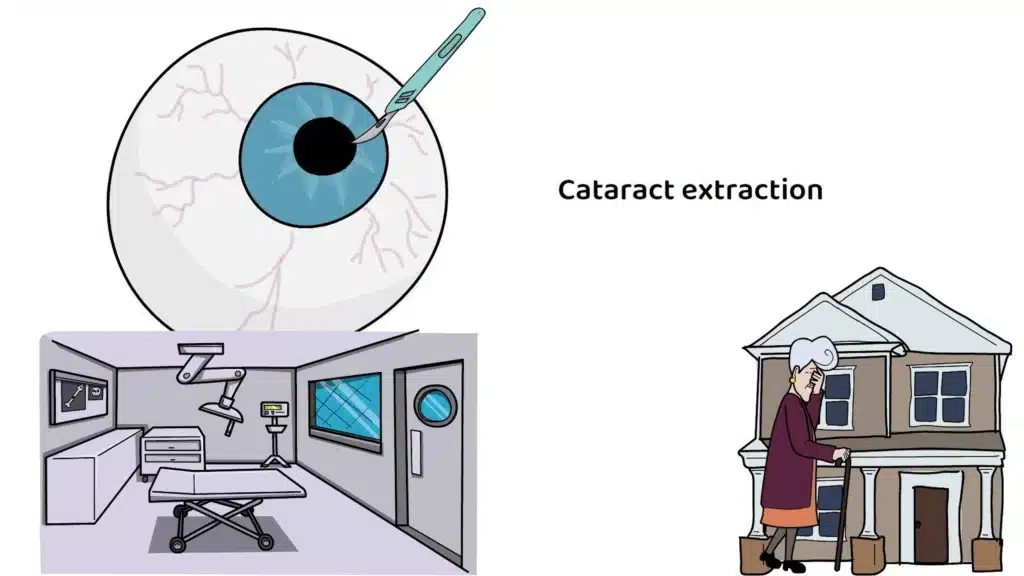
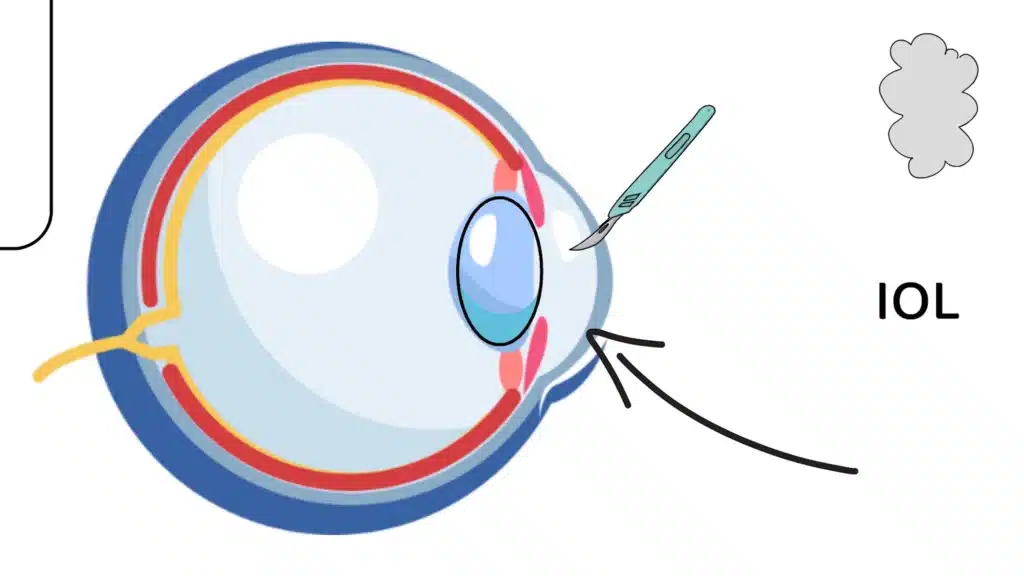
The most common treatment for an eye cataract is surgery to remove the cloudy lens and replace it with a clear artificial lens. This procedure is called a cataract extraction. The surgery is typically performed on an outpatient basis, which means that you can go home the same day. Before the surgery, your eye doctor will numb your eye with anesthetic drops to minimize any discomfort. During the procedure, your doctor will make a small incision in the front of your eye and use a special tool to remove the cloudy lens. The artificial lens, called an intraocular lens (IOL), will be placed in the same position as the natural lens. This will help restore clear vision and allow light to pass through the eye properly.