
Imagine gazing at a vibrant rainbow, but the reds blend into oranges, and blues blur with purples. For millions worldwide, this is what it is like to live with color blindness. Color blindness, or color vision deficiency, means you have trouble distinguishing certain colors. It is not about seeing the world in black and white – most people just mix up specific shades, like reds and greens or blues and yellows.
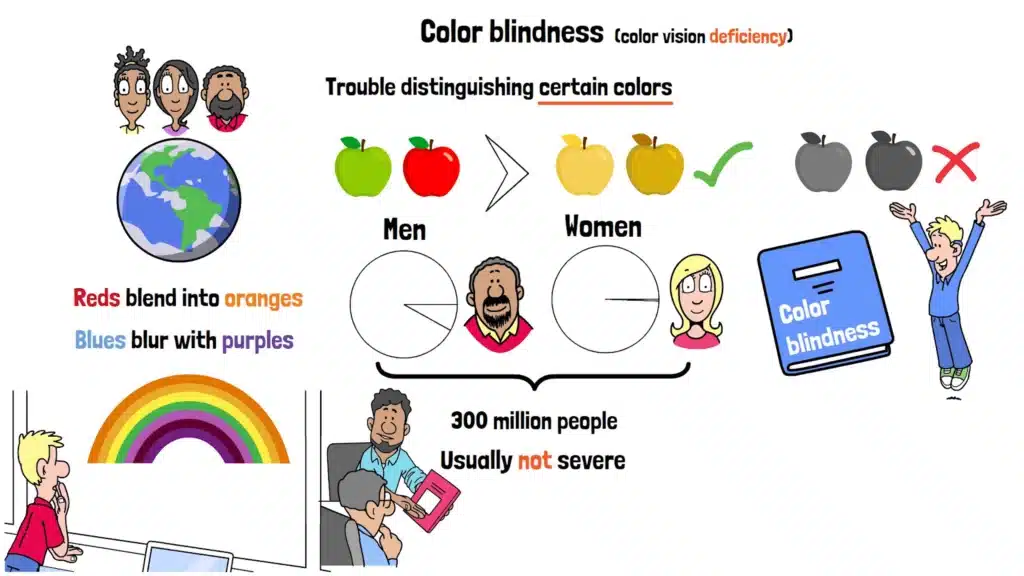
This condition touches about 8% of men and 0.5% of women globally – that is roughly 300 million people, nearly the population of the United States. While it is usually not severe, it can affect everyday tasks or even career paths. Understanding color blindness matters because it helps build a world where everyone can thrive, regardless of how they see color.
Today, this article explores what causes this condition, its symptoms, how it is diagnosed, and ways to manage it. The goal is to empower you with knowledge and spark curiosity about this common yet often misunderstood condition.
What Causes Color Blindness?
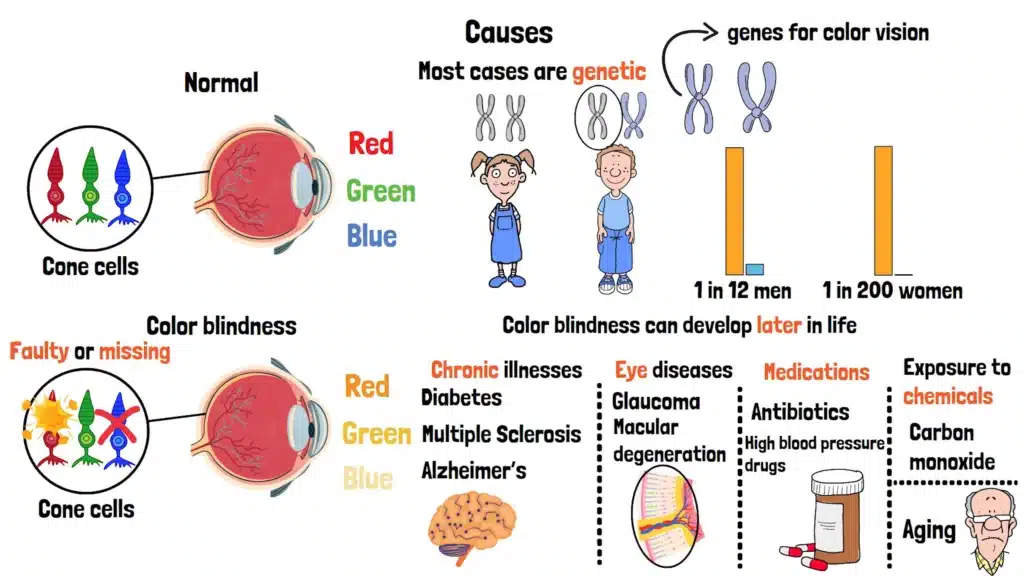
So, what causes color blindness? Picture your eyes as tiny cameras with special sensors called cone cells in the retina. These cones detect red, green, or blue light. In color blindness, some cones are faulty or missing, making certain colors hard to tell apart.
Most cases are genetic, passed down from parents. The genes for color vision sit on the X chromosome, which explains why men are more affected. Men have one X chromosome, so a single faulty gene means color blindness. Women, with two X chromosomes, need faults on both to be affected; otherwise, they are carriers. This is why about 1 in 12 men versus 1 in 200 women have color vision issues.
But it is not all in the genes. Color blindness can also develop later in life. Chronic illnesses like diabetes, multiple sclerosis, or Alzheimer’s can interfere with your eyes or brain’s color processing. Eye diseases such as glaucoma or macular degeneration may damage the retina. Some medications, like certain antibiotics or high blood pressure drugs, can alter color vision as a side effect. Even exposure to chemicals like carbon monoxide or aging can play a role.
Knowing these causes helps explain why color blindness varies so much from person to person.
Risk Factors for Color Blindness
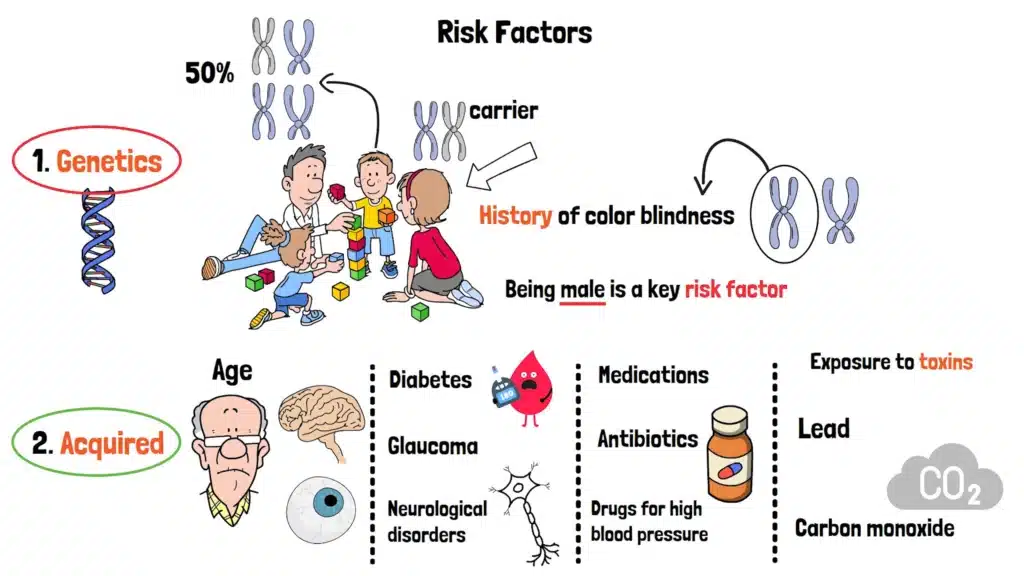
Who is at risk for color blindness? Genetics are the biggest player. If your family has a history of color blindness, especially on your mother’s side, your odds go up. Since the condition is tied to the X chromosome, being male is a key risk factor – men are far more likely to inherit it. If your mom carries the gene, there is a 50% chance you will have color blindness if you are male.
For acquired color blindness, other factors come into play. Age is one – as people get older, changes in the eyes or brain can affect color perception. Health conditions like diabetes, glaucoma, or neurological disorders increase the risk. Certain medications, including some antibiotics or drugs for high blood pressure, can also impact color vision. Exposure to toxins, like lead or carbon monoxide, is another culprit.
While you cannot change your genes, managing health conditions or avoiding harmful substances can lower the risk of acquired color blindness. Ever wondered if someone in your family might be at risk? Checking your family history is a great first step.
Symptoms: What Does Color Blindness Feel Like?
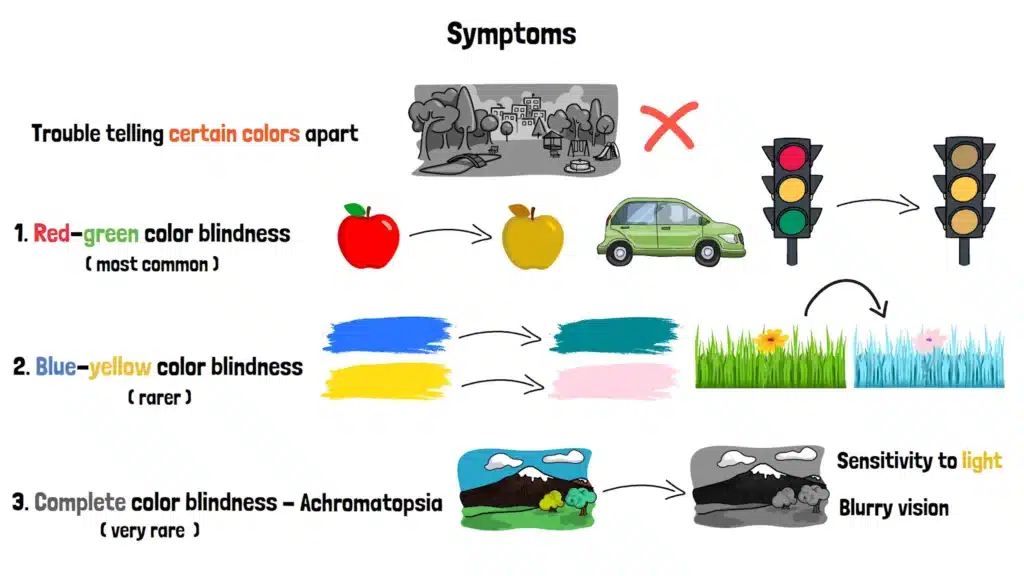
What does color blindness feel like? The main sign is trouble telling certain colors apart. It is not about seeing a gray world – most people just confuse specific shades. There are different types.
Red green color blindness is the most common. People with this type might see a red apple as brownish or struggle to spot the difference between red and green traffic lights. It is like some crayons in the box look identical, even though they are labeled differently.
Blue yellow color blindness is rarer. Here, blues and greens might blend, or yellows and pinks could look similar. Imagine trying to pick out a yellow flower in a green field – it is tricky.
In very rare cases, people have complete color blindness, called achromatopsia. They see the world in shades of gray, like an old black and white movie. This often comes with other issues, like sensitivity to light or blurry vision.
Symptoms vary from mild to severe. Some people do not even notice until they are tested, while others find tasks like reading colored charts frustrating. If you have ever mixed up colors and wondered why, it might be worth a check.
Diagnosis: How Doctors Test for Color Blindness
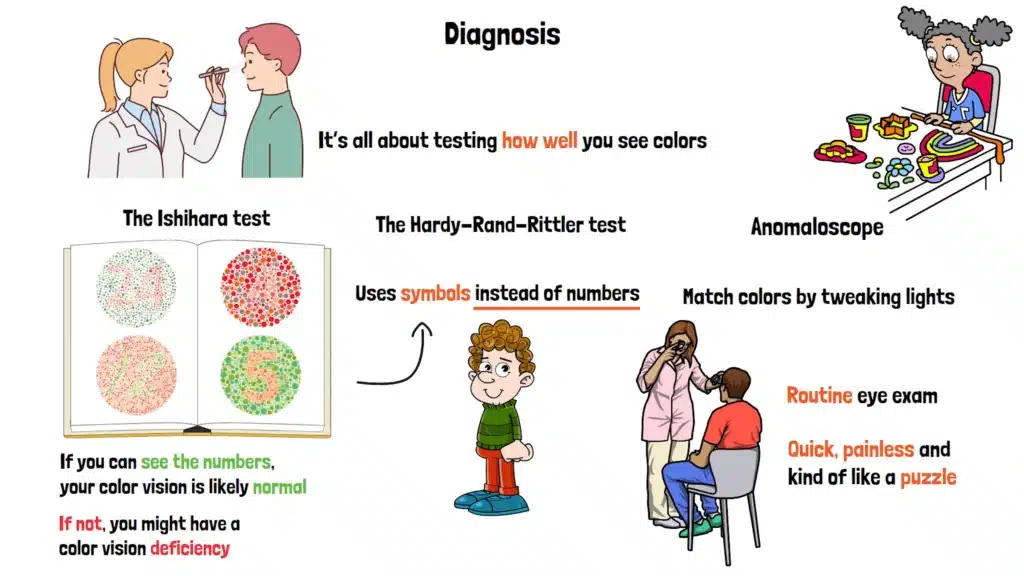
How do doctors spot color blindness? It is all about testing how well you see colors.
The go to method is the Ishihara test. Picture a book filled with circles of colored dots that form numbers or shapes. If you can see the numbers, your color vision is likely normal. If not, you might have a color vision deficiency.
There are other tests too. The Hardy Rand Rittler test uses symbols instead of numbers, making it great for kids or anyone who cannot read. For a deeper dive, an anomaloscope lets you match colors by tweaking lights, pinpointing the type and severity of color blindness.
These tests happen during a routine eye exam with an optometrist or ophthalmologist. They are quick, painless, and kind of like a puzzle – nothing to worry about. Catching color blindness early, especially in kids, helps tailor learning tools to avoid frustration in school.
If you have ever struggled with colors, a simple eye test could give you answers. Curious about your own vision? It is worth a visit to an eye doctor.
Treatment and Support Options
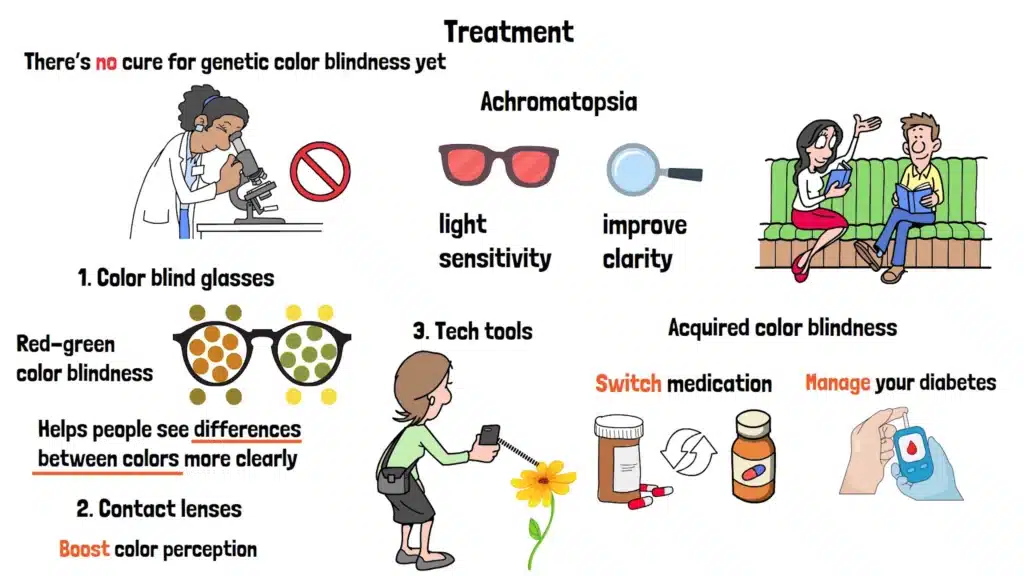
Here is the deal: there is no cure for genetic color blindness yet, but there are ways to make life easier.
One popular option is color blind glasses, like those from EnChroma. These use special lenses to filter light, helping some people, especially those with red green color blindness, see differences between colors more clearly. They are not a fix all, though. They enhance contrast but do not restore normal vision.
Contact lenses for color blindness work similarly, offering another way to boost color perception. Then there are tech tools – smartphone apps can snap a photo and tell you what color something is. It is like having a color savvy friend in your pocket.
For acquired color blindness, treating the root cause might help. If a medication is the culprit, switching drugs could improve things. If it is due to a condition like diabetes, managing that condition is key.
In severe cases, like achromatopsia, tinted lenses or magnifiers can ease light sensitivity or improve clarity. Looking ahead, gene therapy is showing promise. Trials are testing ways to fix faulty genes in the retina, with some patients regaining partial color vision. It is still experimental, but it is exciting.
No matter the approach, these tools and treatments help people navigate a colorful world with confidence.
Prevention and Everyday Management
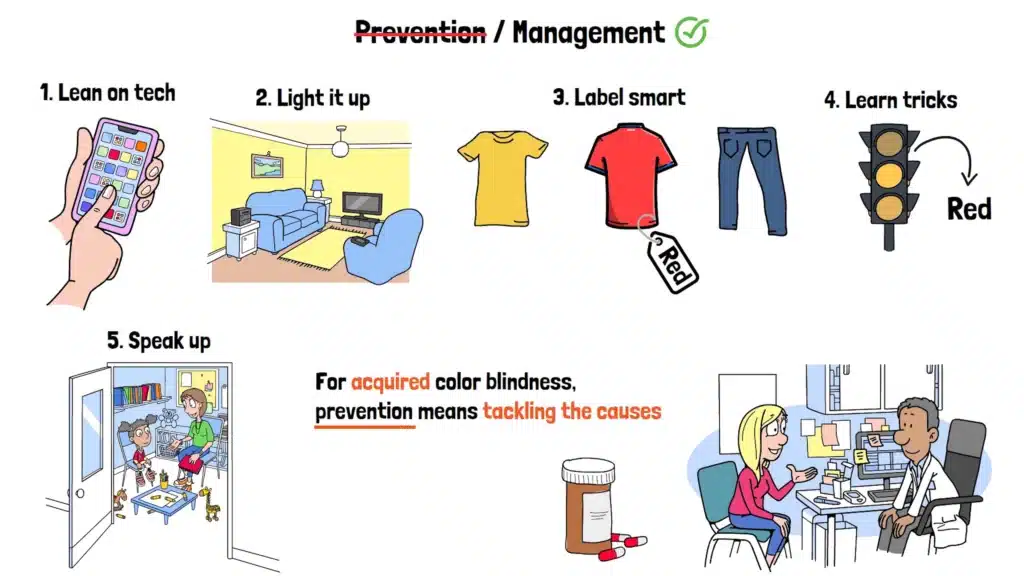
Since genetic color blindness is inherited, you cannot prevent it. But managing it is where you can shine. Here are some practical tips to make life smoother:
- Lean on tech. Apps can identify colors or tweak screen settings for better contrast.
- Light it up. Bright, natural light helps colors stand out, so keep your space well lit.
- Label smart. For clothes or tools, use tags or organize by pattern, not color.
- Learn tricks. Memorize that the red light is always on top at traffic signals.
- Speak up. Tell teachers or bosses about your color blindness to get accommodations.
- Plan careers wisely. Some jobs, like wiring or piloting, need perfect color vision, so explore other paths.
For acquired color blindness, prevention means tackling the causes. Regular checkups can catch health issues early. Talk to your doctor about medications that might affect vision. Steer clear of toxic chemicals when possible.
These steps are not just about coping – they are about taking control. Small changes can make a big difference in how you experience the world.
Impact of Color Blindness on Daily Life
Color blindness can sneak into everyday moments in surprising ways. Picture trying to pick a ripe banana. If yellow and green look alike, you might grab an unripe one. Or imagine getting dressed – matching a shirt and tie can feel like a guessing game, leading to some unintended fashion statements.
At school, kids might struggle with color coded lessons, like sorting blocks or reading charts. In the workplace, tasks like reading color coded graphs or wiring electronics can be tough. Some careers, like aviation or graphic design, might be off limits due to strict color vision requirements.
Even simple things, like spotting a sunburn or reading a map, can be challenging. Traffic lights become something you navigate by position, not color.
But here is the good news: most people adapt. They use apps, ask for help, or find workarounds. Society can help too – think signs with patterns, not just colors, or apps that make digital content accessible. It is about building a world where color blindness does not hold anyone back.
Current Research and Future Developments
Science is painting a hopeful picture for color blindness. The big buzz is around gene therapy, which aims to fix the genetic glitches causing color vision issues. Researchers are injecting healthy genes into the retina to restore cone cell function. Early trials, especially for achromatopsia, are exciting – some children have started seeing colors they never could before.
In 2022, a study showed two children with achromatopsia gained partial cone function after gene therapy. While it is not a full fix yet, it is a step toward treatments that could one day transform lives.
Beyond genes, technology is evolving. New apps and devices are making it easier to identify colors or adjust visuals for better accessibility. Scientists are also studying how the brain processes color, which could lead to smarter tools.
These advances are not just science – they are hope for a future where color blindness is less of a barrier.
Conclusion
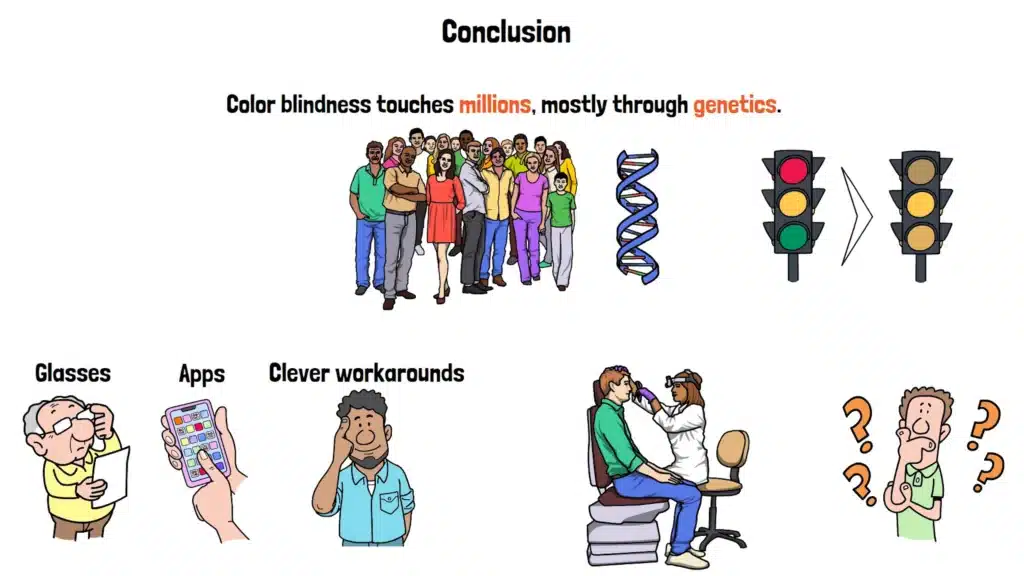
Color blindness touches millions, mostly through genetics, shaping how they see the world. From mixing up reds and greens to navigating daily tasks, it is a condition that varies widely but rarely stops people in their tracks. Tools like glasses, apps, and clever workarounds help most people live full, vibrant lives.
Research is pushing boundaries, with gene therapy offering a glimpse of future treatments. For now, awareness and small adjustments, like clear labeling or inclusive designs, make a huge difference.
If you suspect color blindness in yourself or a loved one, do not wait. A quick eye test can open the door to support and resources. The more that is learned, the easier it becomes to build a world where everyone’s vision is valued.

