
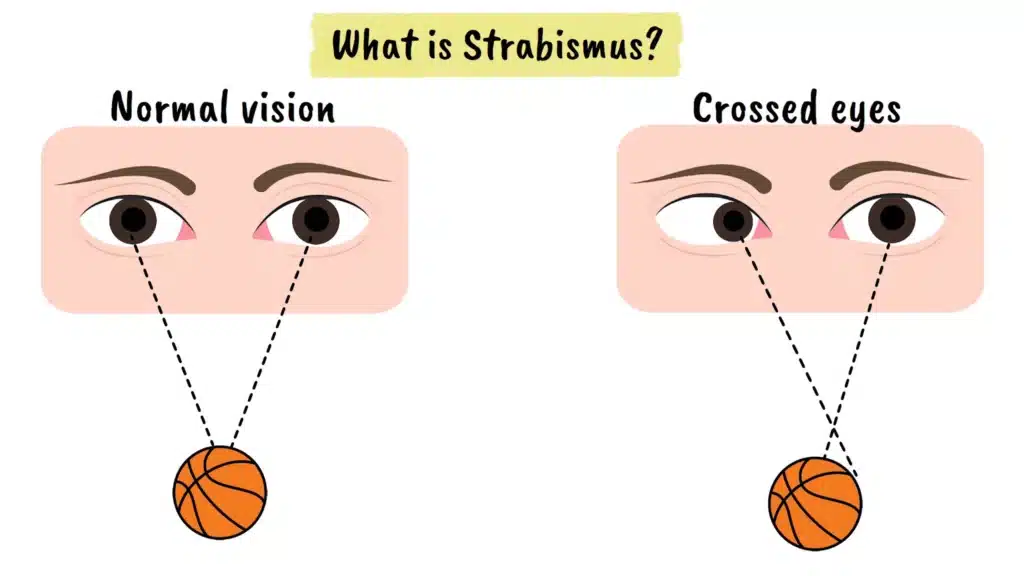
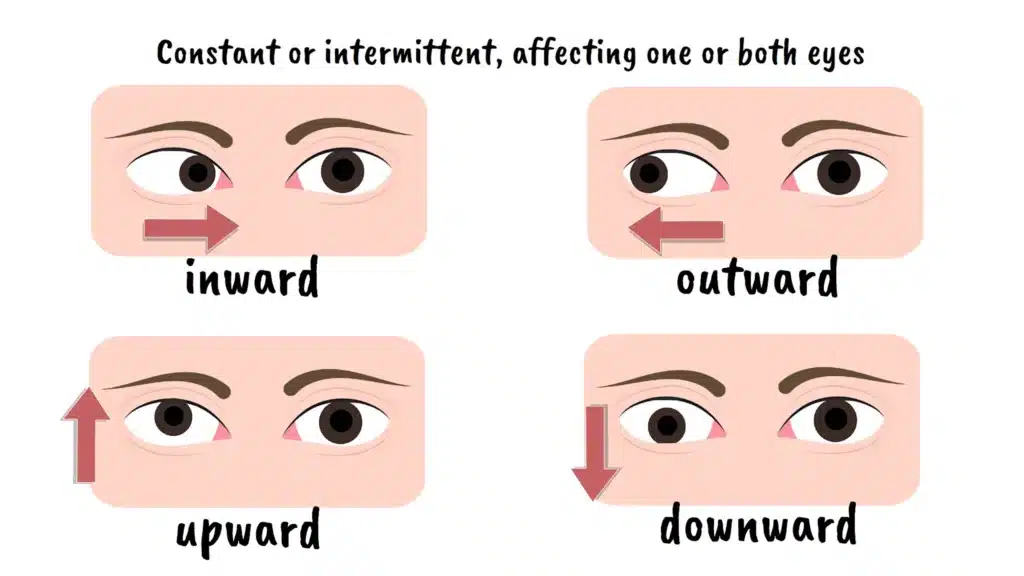
Strabismus, commonly known as crossed eyes, is a condition where the eyes do not align properly when looking at an object. In normal vision, both eyes work together to focus on the same point, creating a single, clear image. However, when someone has strabismus, one eye may turn inward, outward, upward, or downward while the other eye focuses straight ahead. This misalignment can be constant or intermittent, affecting one or both eyes.
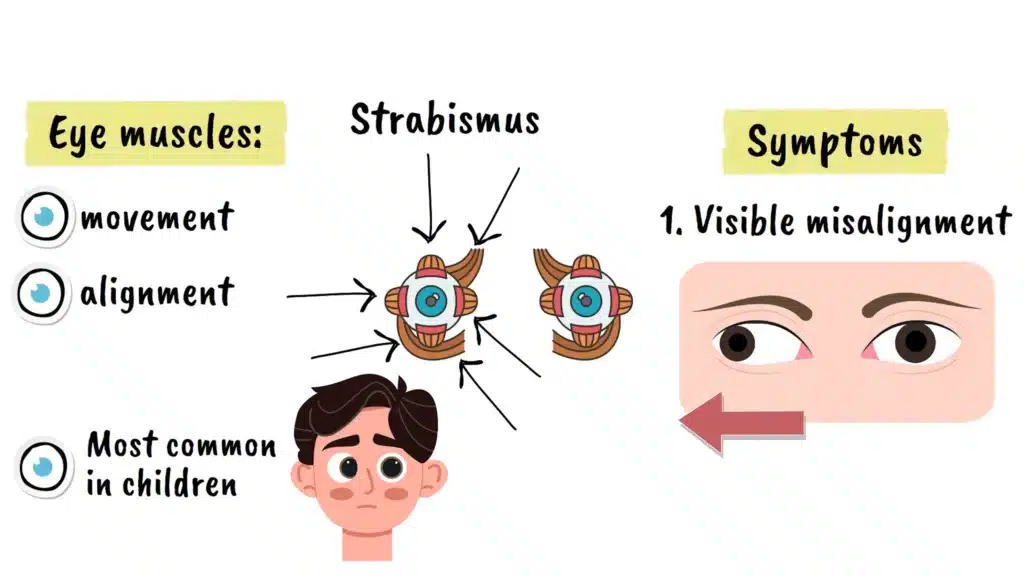
The eye muscles are responsible for controlling eye movement and maintaining proper alignment. When these muscles don’t work together correctly, strabismus occurs. This condition can affect people of all ages but is most commonly noticed in children during their early years when the visual system is still developing.
Common Symptoms of Strabismus
Understanding the signs of strabismus is essential for early detection and treatment. Here are the most common symptoms you should watch for:
The most obvious sign is the visible misalignment of the eyes, where one eye appears to look in a different direction than the other. People with strabismus may experience double vision, where they see two images of the same object. This happens because each eye is sending a different image to the brain.
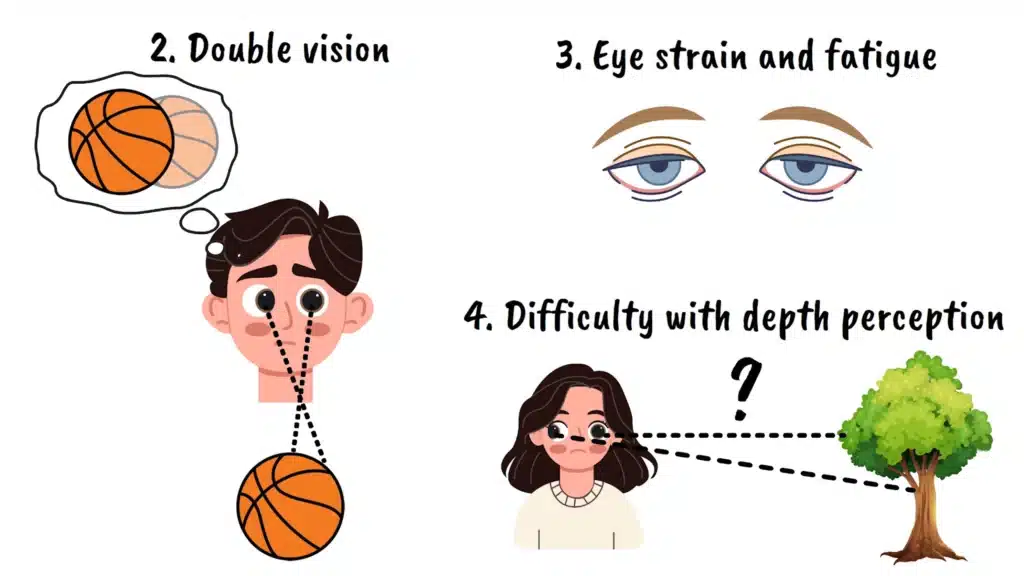
Eye strain and fatigue are also common, especially when trying to focus on objects for extended periods. Many individuals with strabismus have difficulty with depth perception, making it challenging to judge distances accurately.
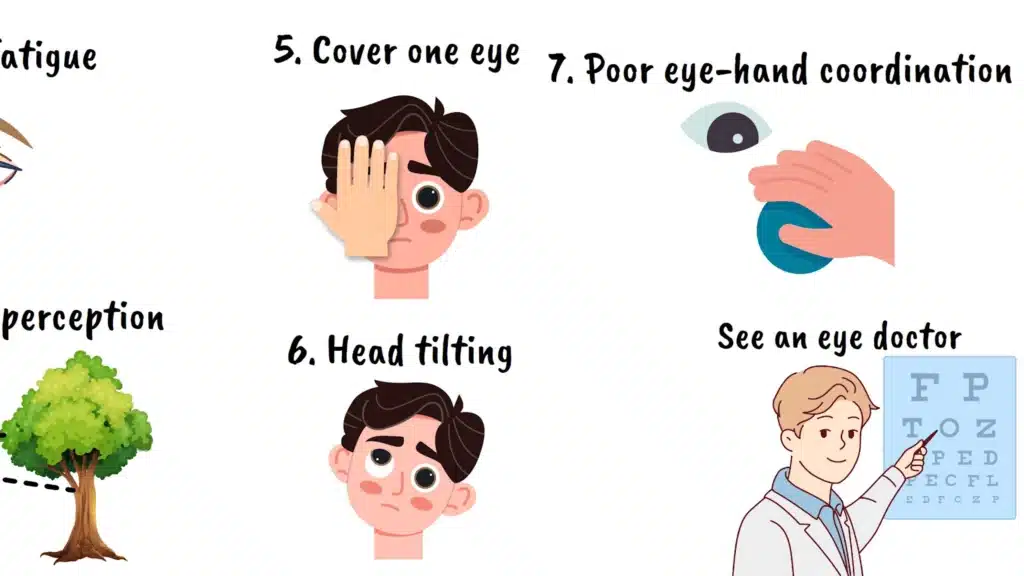
Children with this condition may frequently close or cover one eye to avoid seeing double. Head tilting is another symptom, as people may tilt their head to try to align their vision better. Poor eye-hand coordination can also develop, affecting activities that require precise visual guidance.
If you are experiencing any of these symptoms, it is important to see an eye doctor for an evaluation. Keep in mind that these symptoms can also be caused by other conditions, so it is important to get a proper diagnosis.
What Causes Strabismus?
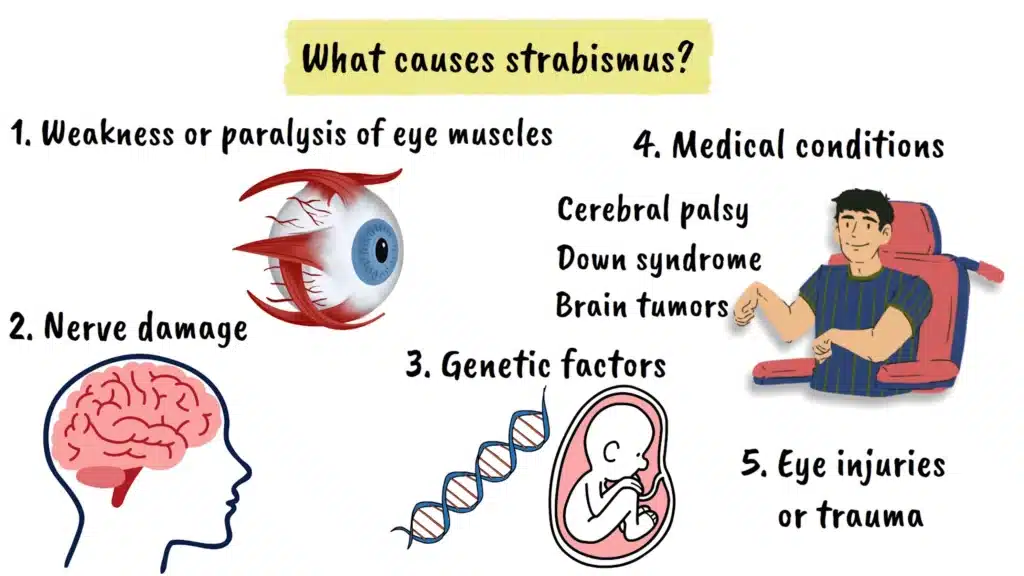
Strabismus can result from various underlying factors. The condition can stem from problems with the eye muscles themselves, where weakness or paralysis prevents proper eye movement. Nerve damage that controls eye muscles can also lead to misalignment.
Some people are born with strabismus due to genetic factors or developmental issues during pregnancy. Certain medical conditions such as cerebral palsy, Down syndrome, or brain tumors can cause strabismus. Eye injuries or trauma can damage the muscles or nerves responsible for eye movement.
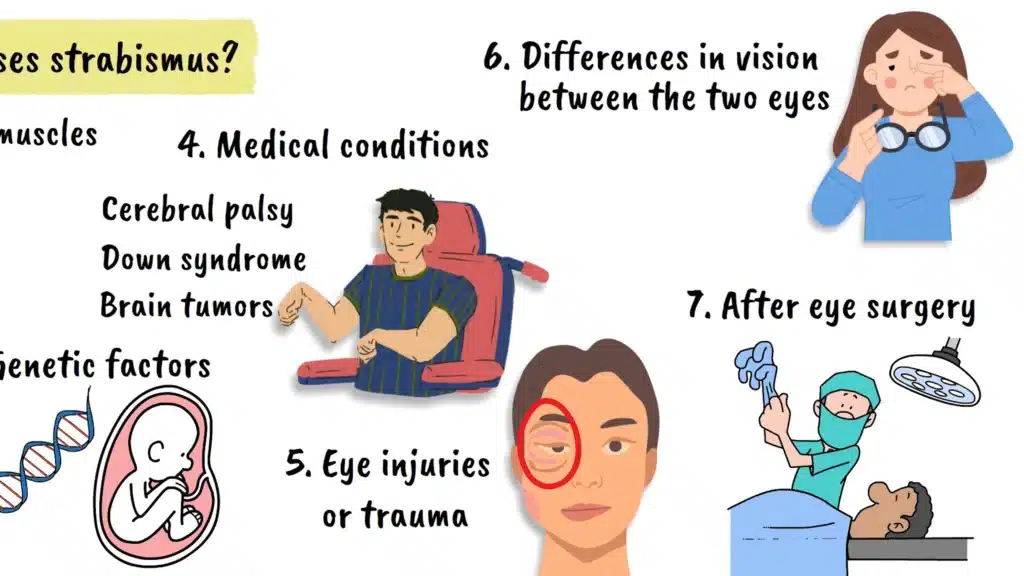
In some cases, significant differences in vision between the two eyes, such as severe nearsightedness or farsightedness in one eye, can lead to alignment problems. Occasionally, strabismus can develop after eye surgery or as a complication of other eye conditions.
Treatment Options for Strabismus
The treatment for strabismus depends on the severity and underlying cause of the condition. Several approaches can be effective:
Eye exercises and vision therapy can help strengthen weak eye muscles and improve coordination between the eyes. Corrective contact lenses or eyeglasses may be prescribed to address vision problems that contribute to misalignment.
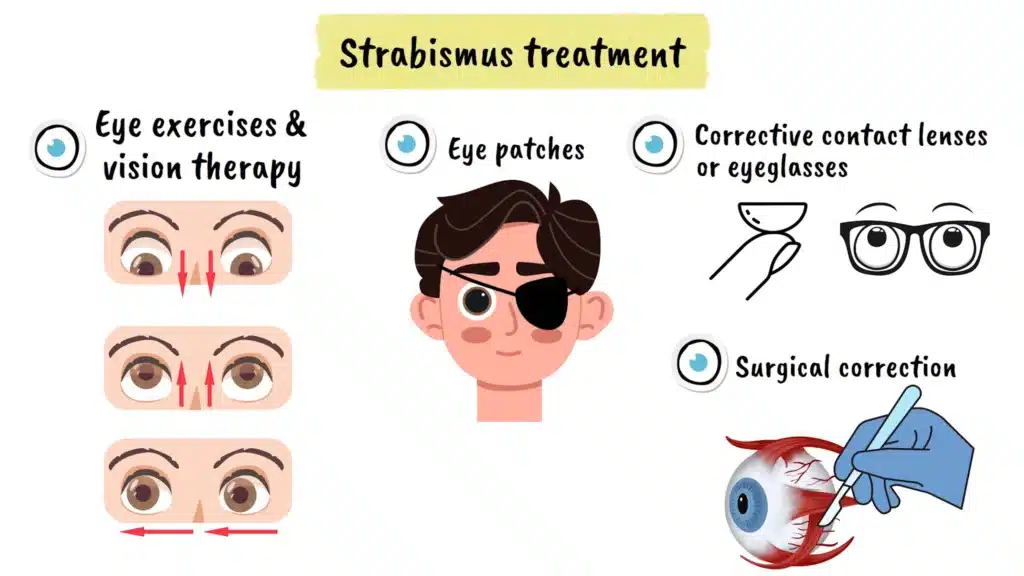
Eye patches are sometimes used to force the weaker eye to work harder, strengthening the visual connection to the brain. In more severe cases, surgical correction may be necessary to adjust the position or tension of the eye muscles. This outpatient procedure involves making small incisions in the eye muscles to realign them properly.
Why Early Detection Matters
Early detection and treatment of strabismus are crucial, especially in children, as the condition can lead to permanent vision problems if left untreated. If you suspect you or your child may have strabismus, scheduling an appointment with an eye care professional is the first step toward proper diagnosis and treatment.
