
Have you ever looked in the mirror and noticed those puffy areas under your eyes? You know, the ones that make you look tired even when you’re not? Those are eye bags, and they’re more common than you might think. Eye bags are the swelling or puffiness under the eyes, and they can pop up for all sorts of reasons – from getting older to staying up too late. While they’re usually harmless, they can be a real cosmetic concern for many folks.
In fact, according to the American Society of Plastic Surgeons, over 120,000 people had eyelid surgery in 2023 to tackle issues like eye bags. But you don’t always need surgery. Sometimes, small changes can make a big difference. Today, we’re diving into everything you need to know about eye bags: what causes them, how to prevent them, and what treatments are out there. Our goal is to inform and empower you to make the best choices for your eye health and appearance. Let’s get started!
What Causes Eye Bags?
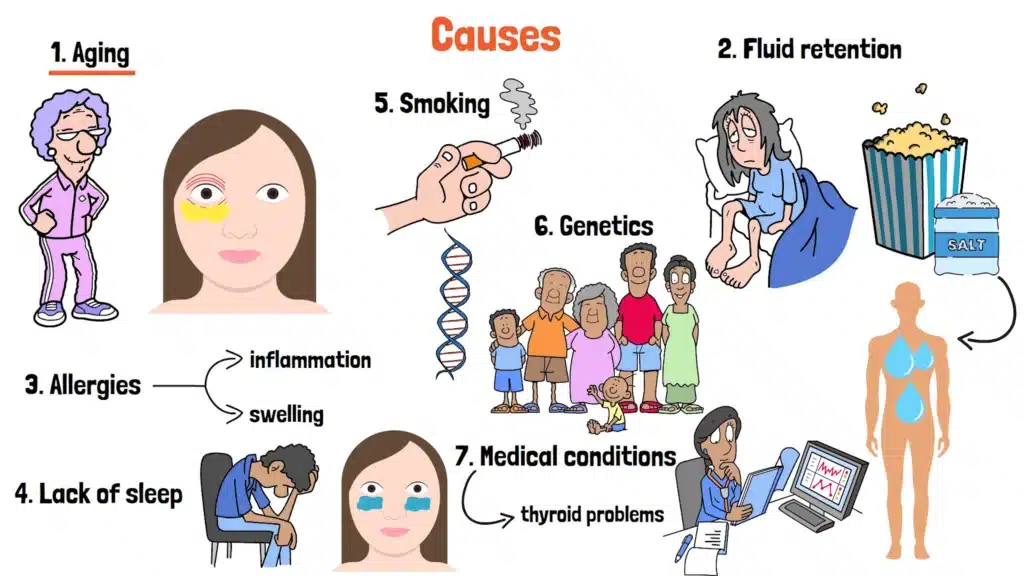
So, what’s behind those eye bags? Let’s break it down into bite-sized pieces.
First up, aging. It’s the big one. As we get older, the tissues around our eyes, including the muscles that hold up our eyelids, start to weaken. This lets the fat that normally supports the eyes shift into the lower eyelids, creating that puffy look. Plus, the skin itself can get looser, adding to the baggy effect.
But it’s not just about age. Fluid retention can also cause eye bags. Ever wake up puffy after a salty dinner? That’s because salt makes your body hold onto water, which can pool under your eyes.
Allergies can do this too, causing inflammation and swelling.
Lack of sleep is another common trigger. When you’re short on rest, fluid can build up under your eyes, making them look swollen.
Smoking doesn’t help either. It damages your skin and speeds up aging, making bags more likely.
Then there’s genetics. If your parents had eye bags, you might be more prone to them too.
Lastly, some medical conditions, like thyroid problems, can cause swelling around the eyes. If you suspect something serious, it’s worth checking with a doctor.
Risk Factors for Developing Eye Bags
Now, let’s talk about what makes you more likely to get eye bags. These are called risk factors, and they’re worth knowing.
Age is at the top of the list. The older you get, the more likely you are to see those bags pop up, thanks to that natural aging process we just talked about.
Family history is another big one. If eye bags run in your family, your odds might climb. It’s like getting your dad’s nose – sometimes these things are just in your genes.
Your lifestyle plays a role too. Smoking, for example, ages your skin faster, making eye bags more likely. Eating a lot of salty foods can lead to fluid retention, and skimping on sleep can make puffiness worse.
Allergies are another risk factor. They can cause inflammation and swelling around your eyes, which doesn’t help.
Finally, certain medical conditions, like thyroid disorders, can up your risk. If you’ve got a health condition, keep an eye on any unusual swelling and talk to your doctor.
Symptoms of Eye Bags
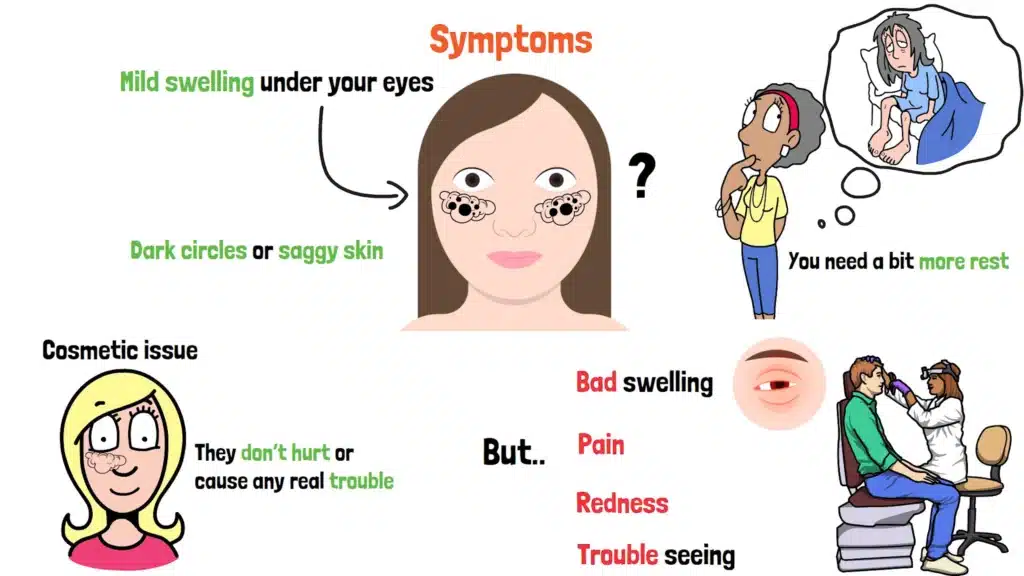
What do eye bags actually look like? Pretty straightforward. They show up as mild swelling or puffiness right under your eyes. Sometimes, you might also notice dark circles or saggy skin in the same spot. It’s like your eyes are carrying a little extra baggage.
For most people, eye bags are just a cosmetic issue. They don’t hurt or cause any real trouble. But if the swelling is really bad, or if you’ve got other symptoms like pain, redness, or trouble seeing, it could point to something more serious. In those cases, don’t wait. See a doctor to get it checked out.
Pay attention to what your body’s telling you, but no need to panic. Most of the time, eye bags are just a sign you might need a bit more rest or a tweak to your routine.
How to Diagnose Eye Bags

Good news: diagnosing eye bags is usually as simple as looking in the mirror. You can spot them without any fancy tests. They’re those puffy areas under your eyes, plain as day.
But if you’re wondering what’s causing them or you’re thinking about treatment options, it’s smart to chat with a healthcare professional. Here’s what that might look like. The doctor will probably ask about your medical history – things like allergies, sleep habits, or any medications you’re taking. They might also take a close look at your eyes and the skin around them to rule out other issues.
In some cases, they might refer you to a specialist, like an ophthalmologist (that’s an eye doctor) or a plastic surgeon, especially if you’re considering something like surgery. It’s all about figuring out what’s going on and what’s the best next step for you.
Treatment Options for Eye Bags
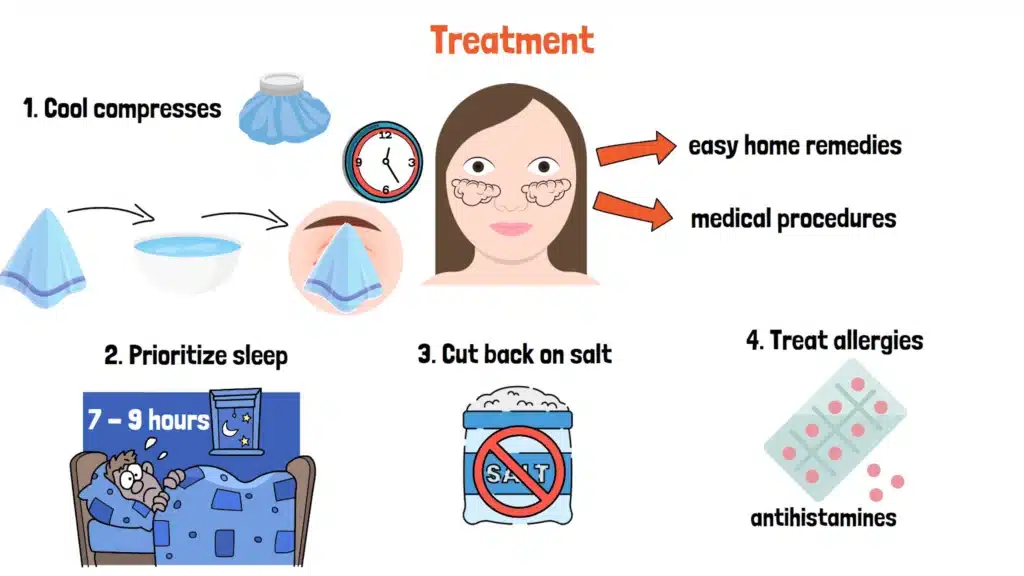
When it comes to treating eye bags, you’ve got options – from easy home remedies to high-tech medical procedures. Let’s walk through them.
Home Remedies and Self-Care
Starting with the simple stuff, try cool compresses. Grab a clean washcloth, soak it in cold water, and place it over your eyes for a few minutes. It’s like giving your eyes a refreshing nap – it can reduce swelling fast.
Next, prioritize sleep. Aim for 7 to 9 hours a night. It’s not just good for your eyes; it’s great for your whole body. Cutting back on salt in your diet can help too, since it reduces fluid retention.
If allergies are making your eyes puffy, over-the-counter antihistamines might do the trick. Check with your doctor to find the right one for you.
There are also creams and serums you can buy at the store. Look for ones with caffeine – it tightens blood vessels and can reduce puffiness – or retinol, which helps smooth out skin. Just know that results can vary, and some products work better than others.
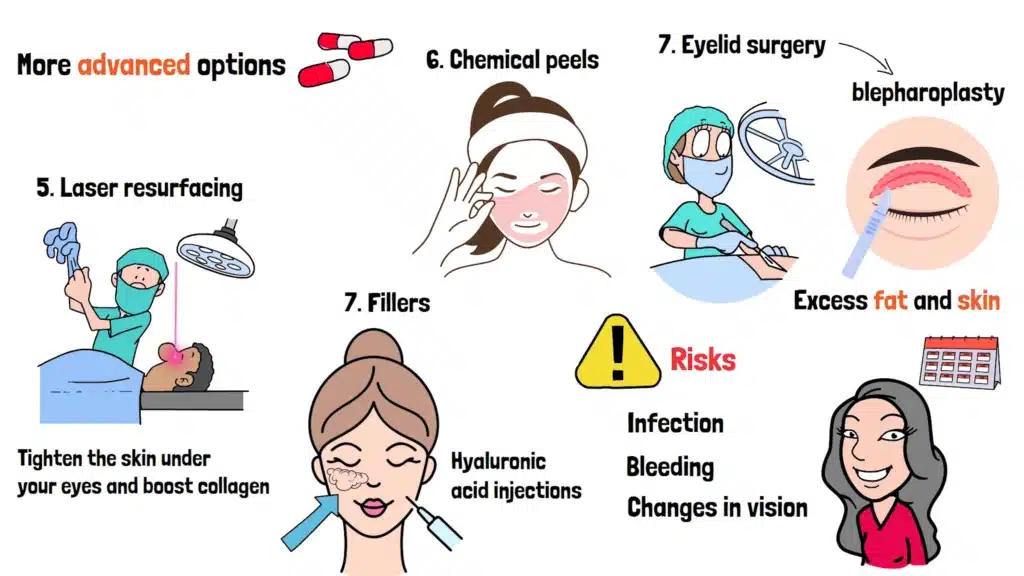
Medical and Professional Treatments
If you’re looking for more advanced options, medical treatments are out there. Laser resurfacing, for example, uses light to tighten the skin under your eyes and boost collagen – that’s the stuff that keeps your skin firm. Chemical peels are another option; they remove the top layer of skin to reveal smoother, tighter skin underneath.
Fillers, like hyaluronic acid injections, can add volume to hollow areas under your eyes, making bags less noticeable. It’s like filling in the dips to create a smoother look.
For more stubborn cases, there’s eyelid surgery, called blepharoplasty. This is where a surgeon removes excess fat and skin from your eyelids to give you a fresher, more youthful appearance. It’s usually done as an outpatient procedure, and the results can last for years. But, and this is important, surgery comes with risks, like infection, bleeding, or even changes in vision. So, talk it over carefully with a qualified surgeon.
Whatever route you choose, make sure it fits your needs and comfort level. There’s no one-size-fits-all here.
Prevention and Management Tips
Want to keep eye bags at bay? It’s all about healthy habits that support your skin and eyes. Here’s what you can do.
First, shield your eyes from the sun. UV rays can break down your skin and speed up aging, so slap on some sunscreen around your eyes and wear sunglasses when you’re outside.
Eat a balanced diet with less salt. Too much sodium can make your body hold onto water, which can lead to puffiness. Load up on fruits, veggies, and whole grains instead.
Stay hydrated. Drinking plenty of water keeps your skin healthy and can help prevent fluid buildup.
Kick smoking to the curb. It damages your skin and makes eye bags more likely, not to mention all the other health risks.
Get moving with regular exercise. It boosts circulation, which can help reduce fluid retention around your eyes.
Stress can mess with your sleep and health, so try relaxation techniques like deep breathing, yoga, or meditation.
If allergies are a problem, work with your doctor to manage them. Avoiding triggers or using the right meds can keep swelling down.
Finally, build a solid skincare routine. Gently cleanse and moisturize the skin around your eyes to keep it in tip-top shape.
Impact of Eye Bags on Daily Life
Eye bags might not be a health crisis, but they can still affect your day-to-day life, especially when it comes to how you feel about yourself.
Let’s be real. Those puffy areas can make you look tired or older than you are. That might dent your confidence, whether you’re at work, hanging out with friends, or snapping a selfie. People might even ask, “Are you okay? You look exhausted!” – even when you’re feeling fine.
The good news? There are ways to cope. Makeup can work wonders. A good concealer that matches your skin tone can hide eye bags, and a color corrector – like a peach or orange shade – can neutralize dark circles. It’s like a quick camouflage for your eyes.
Beyond that, the lifestyle changes and treatments we’ve talked about can help reduce their appearance. And if eye bags are really getting you down, talking to a dermatologist or plastic surgeon might open up new options.
At the end of the day, eye bags are super common – lots of people have them. If they bother you, there’s plenty you can do. But it’s also okay to embrace them as part of your unique look.
Current Research and Future Developments
Scientists and doctors are always looking for better ways to tackle eye bags, and there’s some exciting stuff happening.
Back in 2015, a study found that a serum with epidermal growth factor, or EGF, applied twice a day could reduce the appearance of under-eye bags after 12 weeks. People in the study noticed their eyes looked less puffy, and experts confirmed the improvement. It’s a sign that topical treatments might get even better.
More recently, in 2024, dermatologists have been buzzing about new laser and radiofrequency devices. These tools can tighten loose skin and reduce puffiness without the need for surgery. Treatments like Vbeam or Secret RF are making waves because they’re less invasive and have shorter recovery times.
Looking ahead, researchers are digging into the genetics of eye bags. If they can figure out why some people are more prone to them, we might see personalized treatments tailored to your DNA. Imagine a cream or procedure designed just for you!
The future’s bright for eye bag treatments. We’re likely to see more effective, less invasive options that make it easier to keep your eyes looking fresh.
Conclusion
Let’s wrap this up. Eye bags are a common part of life, especially as we age, but they don’t have to define your look. Whether it’s from getting older, not sleeping enough, or just your genes, those puffy areas under your eyes are something many of us deal with.
The good news? You’ve got options. Simple things like cool compresses, better sleep, and cutting back on salt can make a difference. If you want more, treatments like lasers, fillers, or even surgery can step things up. Over 120,000 people went for eyelid surgery in 2023, so you’re not alone if you’re considering it.
Start small with the tips we’ve shared, like protecting your skin and staying hydrated. If eye bags are still bugging you, talk to a doctor or dermatologist to explore what’s next. Taking care of your overall health – eating well, resting up, and managing stress – will keep your eyes looking their best.
Eye bags might be a small thing, but with the right knowledge, you can feel confident and in control. So, go out there and shine!


