
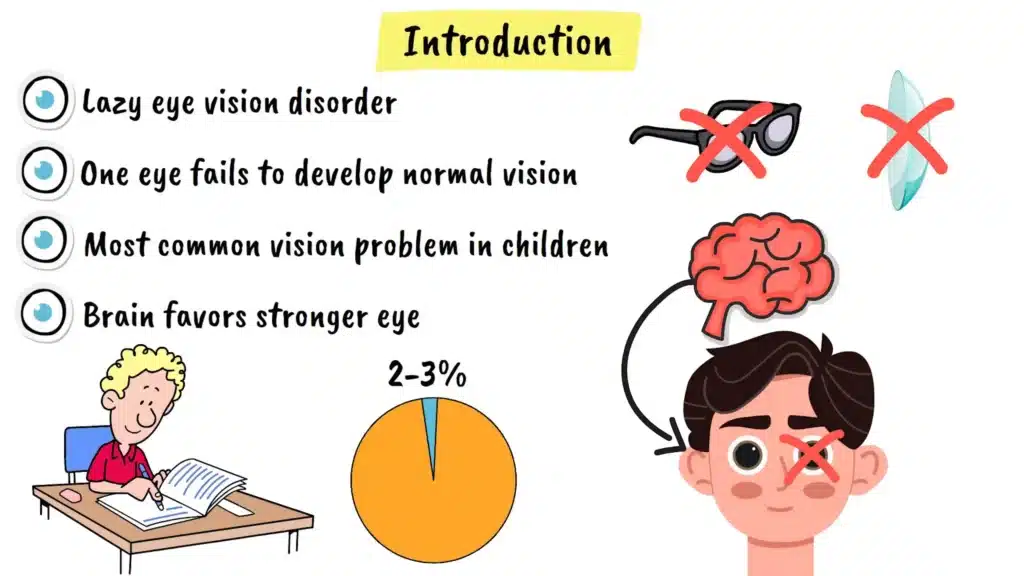
Amblyopia, commonly known as lazy eye, is a vision development disorder where one eye fails to achieve normal visual acuity, even with glasses or contact lenses. It is the most common cause of vision problems in children, affecting about two to three percent of kids in the United States.
Amblyopia occurs when the brain and one eye are not working together properly. The brain starts to favor the stronger eye and ignores the weaker eye, causing that eye’s vision to decline over time. This happens during critical periods of visual development in early childhood.
What Are the Signs of Amblyopia?
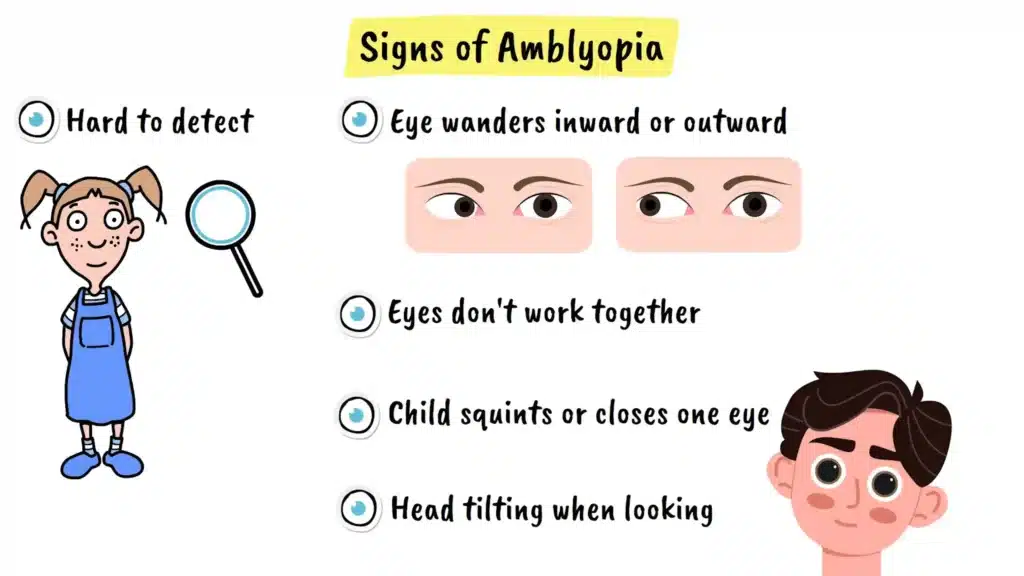
The tricky part about amblyopia is that it can be hard to detect, especially in young children who may not realize they have trouble seeing. However, there are several signs parents should watch for.
One common sign is when a child’s eye wanders inward or outward. You might also notice eyes that don’t work together as a team. Your child may squint or shut one eye to see better. Head tilting is another clue, where the child tilts their head when looking at objects.
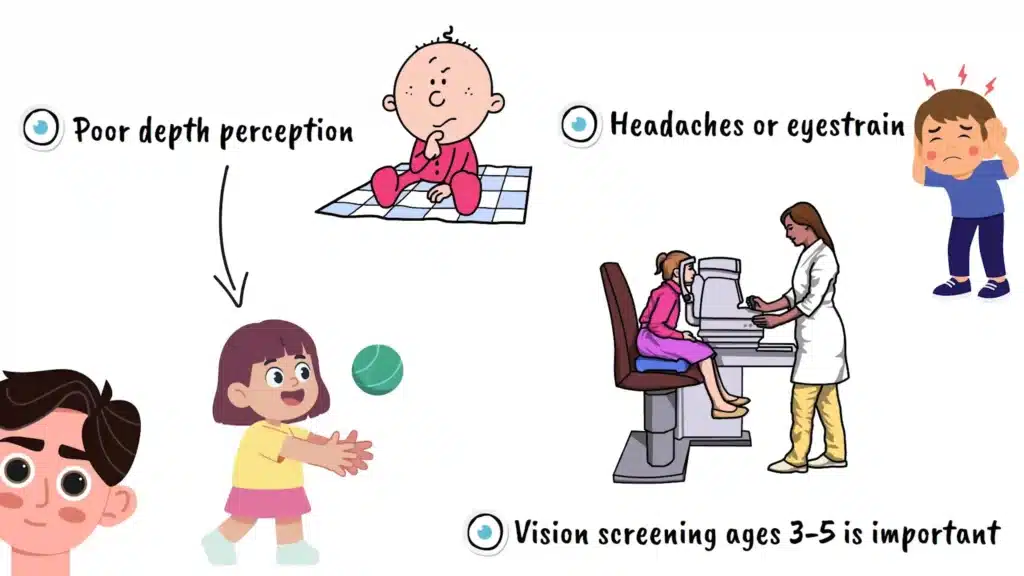
Poor depth perception is common too, meaning difficulty judging how near or far something is. This can lead to clumsiness or trouble catching a ball. Some children experience headaches or eyestrain.
In many cases, parents don’t notice symptoms, and amblyopia is discovered during a routine eye exam. That’s why vision screening is important for all children between ages three and five.
What Causes Amblyopia?
Amblyopia develops when there’s an imbalance in how the two eyes work during early childhood. There are three main causes.
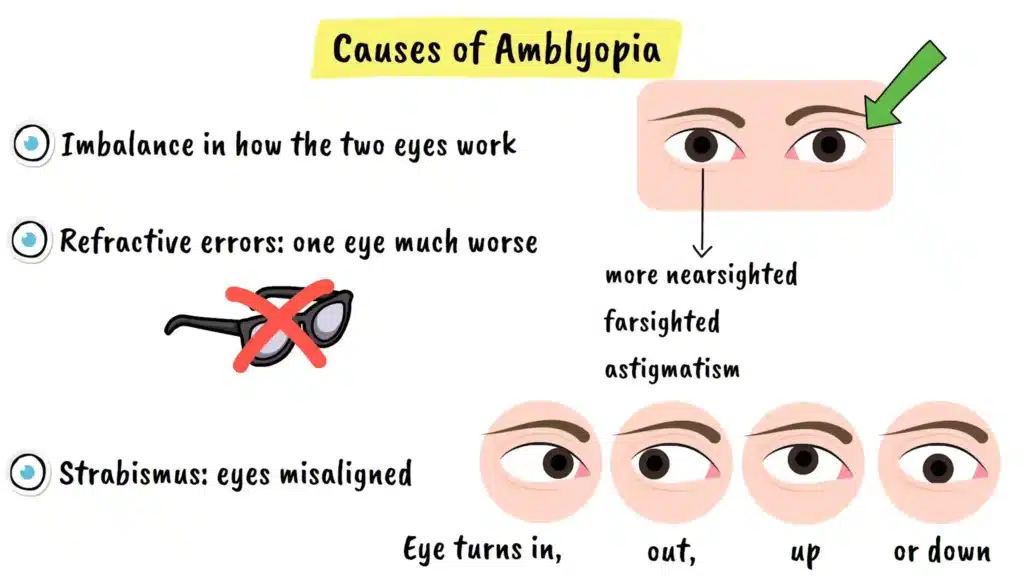
The first cause is refractive errors. This means one eye has much worse vision than the other. One eye might be more nearsighted, farsighted, or have astigmatism. If this isn’t corrected with glasses, the brain relies more on the eye with better vision.
The second major cause is strabismus, which is when the eyes don’t line up properly. One eye might turn in, out, up, or down while the other eye looks straight. When the eyes aren’t aligned, the brain receives two different images and suppresses the image from the misaligned eye.
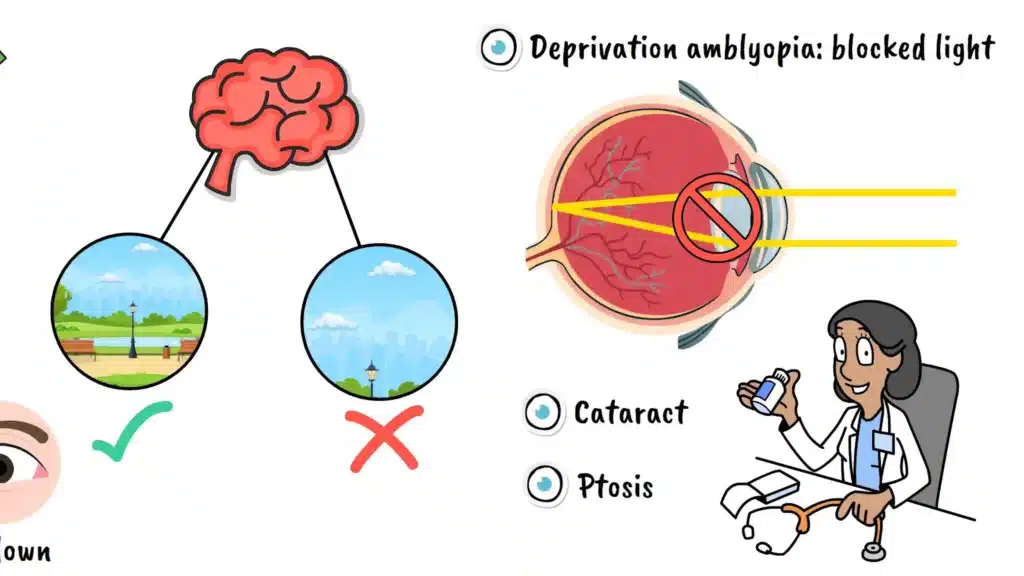
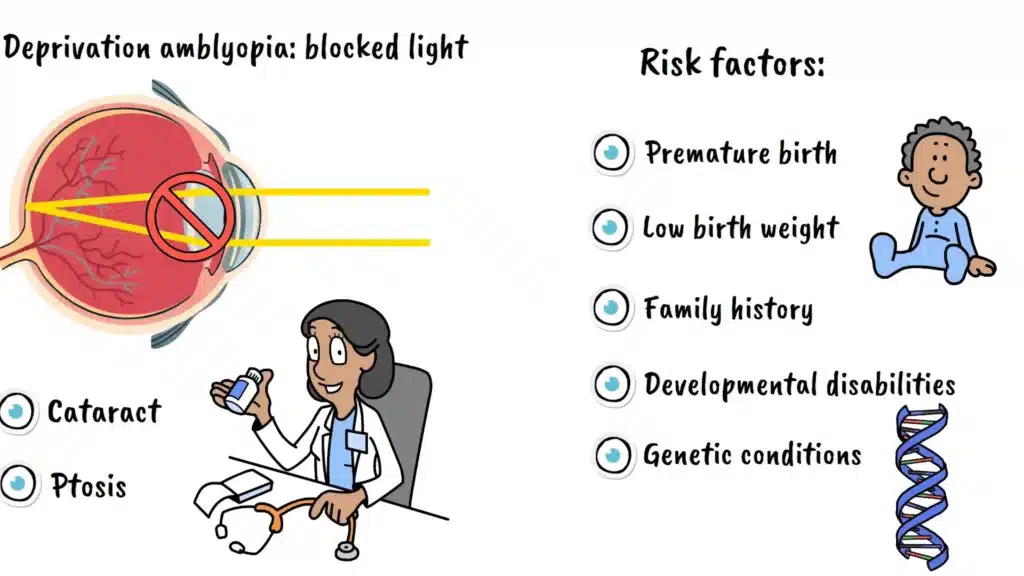
The third cause is deprivation amblyopia. This happens when something blocks light from entering the eye. Examples include a cloudy area in the lens called a cataract or a droopy eyelid called ptosis. This type requires urgent treatment.
Risk factors include being born prematurely, low birth weight, family history of lazy eye, developmental disabilities, or certain genetic conditions.
How Can Vision Be Improved in Amblyopia ?
The good news is that amblyopia can be treated, especially when caught early. The key is forcing the brain to use the weaker eye.
Eye Patching: The most common treatment is eye patching, where the stronger eye is covered for several hours each day. This forces the lazy eye to work harder. Many children wear the patch daily over several months.
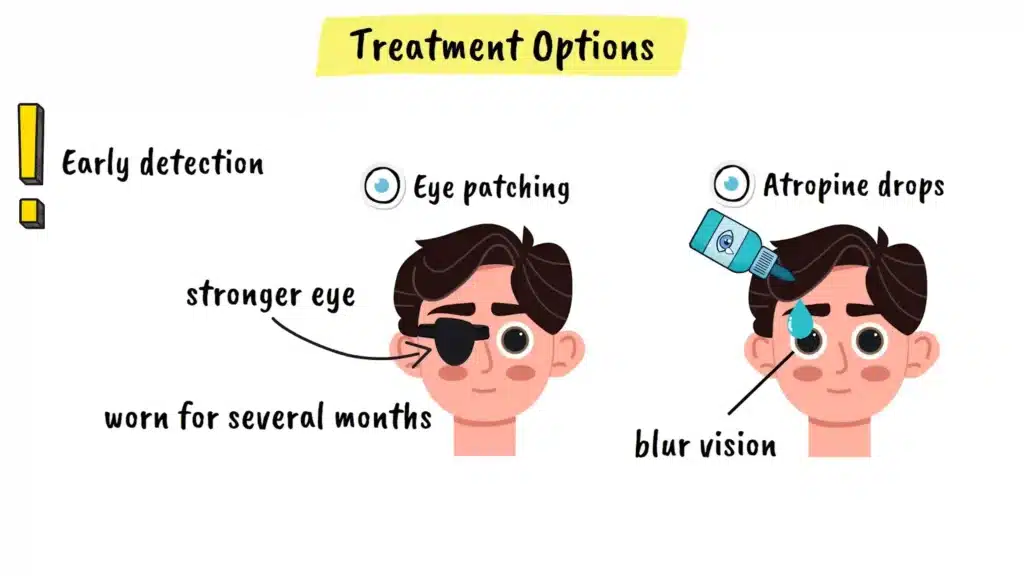
Atropine Eye Drops: Another option is atropine eye drops. These drops blur vision in the stronger eye, forcing the weaker eye to work. The drops are used once or twice a week.
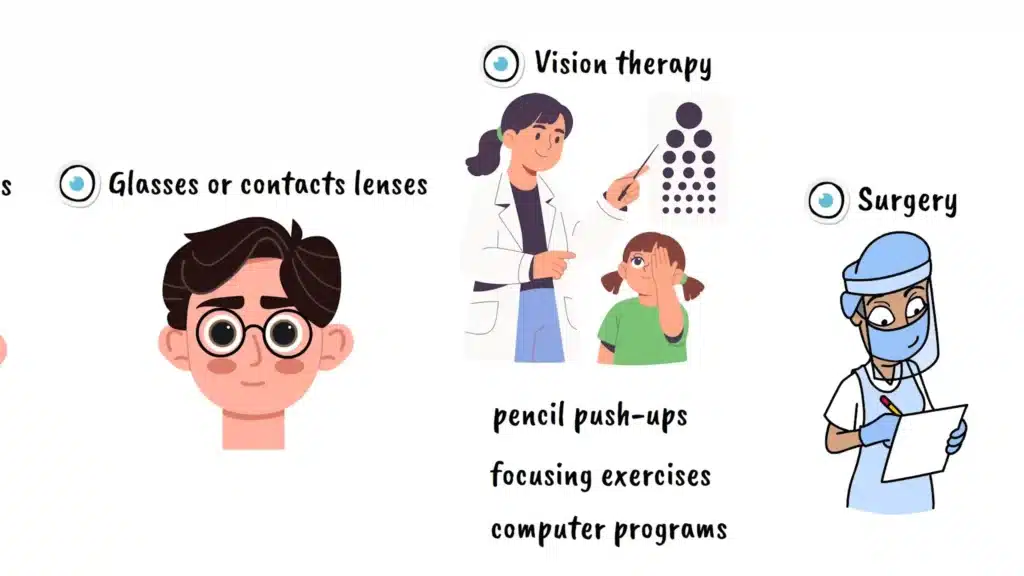
Corrective Lenses: Glasses or contact lenses are essential if the amblyopia is caused by refractive errors. Correcting the focus difference is the first step.
Vision Therapy: Vision therapy involves structured activities to improve eye coordination. These might include pencil push-ups, focusing exercises, or computer programs under supervision.
Surgical Intervention: In rare cases where something blocks the eye like a cataract, surgery may be needed before other treatments work.
Early Detection of Amblyopia Makes a Huge Difference
The visual system develops rapidly in the first years of life, and amblyopia is most treatable during this period. Studies show that sixty to eighty percent of children achieve significant vision improvement with treatment. Treatment can work in older children too, though it may take longer. The earlier treatment begins, the better the outcome.
By being aware of the signs and seeking professional eye care early, you can help ensure your child’s vision develops properly and prevent long-term vision problems.
