
Have you ever noticed your eyelids feeling itchy and irritated, with red, crusty buildup around your eyelashes that makes your eyes feel gritty and uncomfortable? If you’ve experienced these symptoms, you might have been dealing with something called blepharitis. This common eye condition affects millions of people worldwide, yet many don’t even know it has a name or that effective treatments are available.
What is Blepharitis?
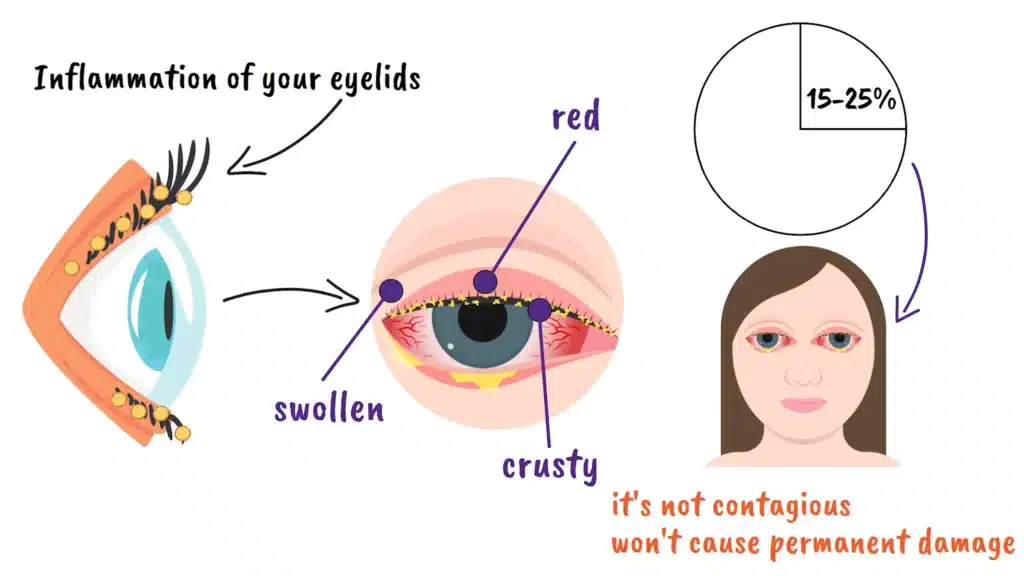
Blepharitis is basically inflammation of your eyelids, specifically along the edges where your eyelashes grow. Think of it like having dandruff on your scalp, except it’s happening on your eyelids. Just like dandruff can make your scalp itchy and flaky, blepharitis makes your eyelid margins red, swollen, and crusty.
The most important thing to understand right from the start is that blepharitis is incredibly common. Studies show that between fifteen and twenty-five percent of people will experience this condition at some point in their lives. The good news is that while blepharitis can be uncomfortable and annoying, it’s not contagious, and it won’t cause permanent damage to your vision if properly managed.
Understanding How Blepharitis Develops
Let’s start by understanding exactly what happens when you have blepharitis. Your eyelids have tiny oil glands called meibomian glands that produce oils to keep your eyes lubricated. When everything is working properly, these glands produce just the right amount of high-quality oil to keep your tears from evaporating too quickly.
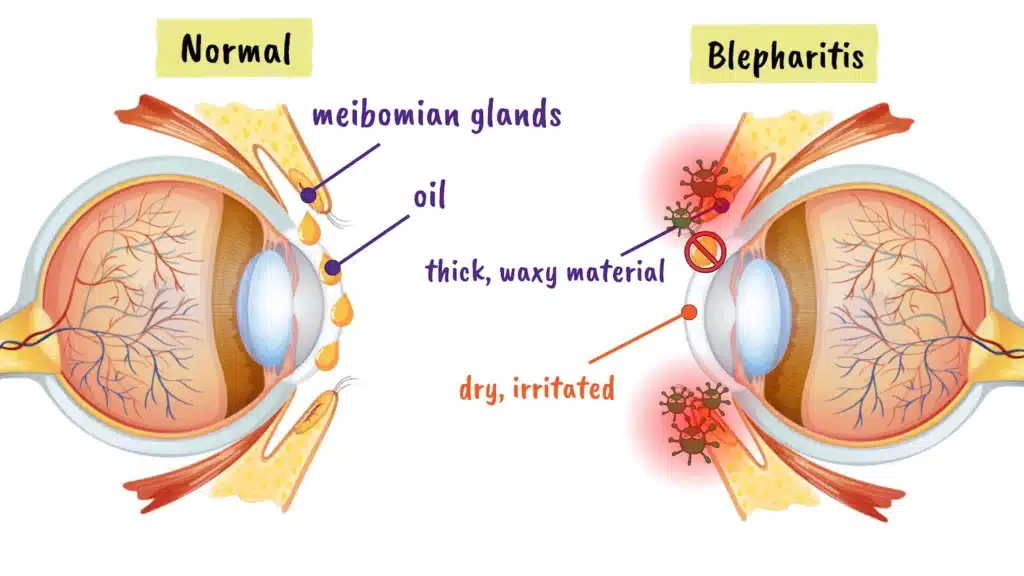
However, when blepharitis develops, several things can go wrong with this delicate system. The oil glands can become blocked with thick, waxy material, similar to how a drain in your sink might get clogged with hair and soap scum. When these glands are blocked, they can’t produce the quality oils your eyes need, leading to dry, irritated eyes that feel gritty and uncomfortable.
At the same time, bacteria that normally live harmlessly on your skin can start to overgrow around your eyelid margins. Imagine your eyelids as a garden where certain bacteria are supposed to live in balance with each other. When this balance is disrupted, some bacteria can multiply excessively, creating waste products and toxins that irritate your eyelids and cause inflammation.
Types of Blepharitis
Now that we understand the basic mechanism, let’s explore the different types of blepharitis you might encounter. Medical professionals typically classify blepharitis into two main categories based on which part of the eyelid is primarily affected.
Anterior Blepharitis
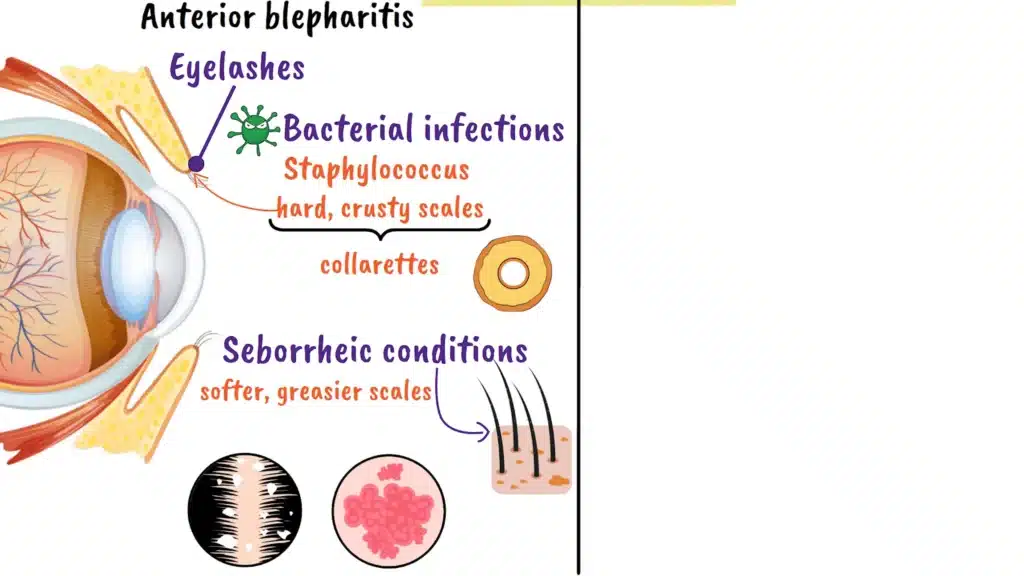
Anterior blepharitis affects the front part of your eyelid margin, specifically around the base of your eyelashes. The most common causes of anterior blepharitis are bacterial infections, particularly from staphylococcus bacteria, or seborrheic conditions that are similar to having dandruff on your scalp. When you have staphylococcal blepharitis, you’ll typically notice hard, crusty scales that form around the base of your eyelashes. These scales are called collarettes, and they look like tiny rings or collars wrapped around individual eyelashes.
Seborrheic blepharitis produces softer, greasier scales that are much easier to remove. The seborrheic type is often associated with other skin conditions like dandruff or facial rosacea, and the flakes you see are typically yellowish and oily rather than hard and white.
Posterior Blepharitis
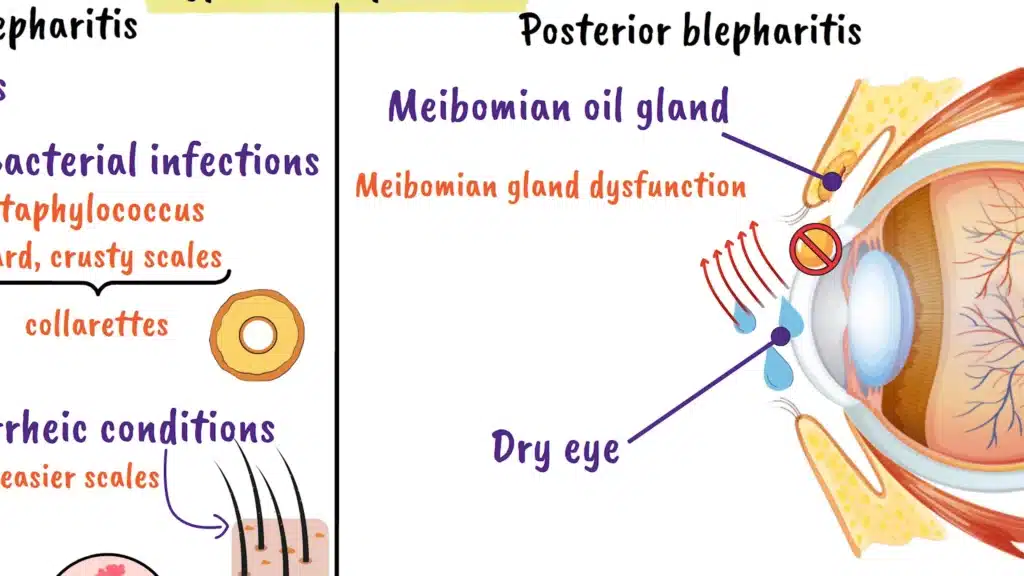
Posterior blepharitis affects the back part of your eyelid margin, closest to your eyeball. This is where those important meibomian oil glands are located, so posterior blepharitis is often called meibomian gland dysfunction. When you have this type of blepharitis, the oil glands become blocked or produce poor-quality oil that doesn’t spread properly over your eye surface.
The result is that your tear film becomes unstable and evaporates too quickly, leading to dry eye symptoms even though your eyes might be producing plenty of tears.
Demodex Blepharitis
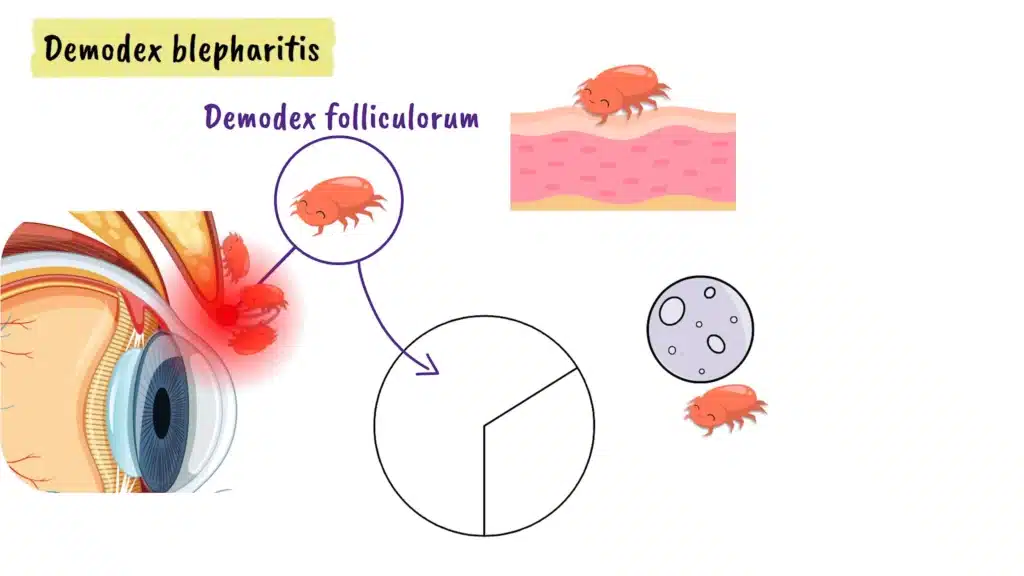
There’s also a special type of blepharitis that’s becoming increasingly recognized called demodex blepharitis. This condition is caused by tiny mites called demodex folliculorum that live in your eyelash follicles. These mites live on almost everyone’s skin in small numbers and usually don’t cause any problems.
Think of demodex mites like the bacteria in your gut. In small numbers, they’re actually normal and don’t cause issues. However, when their population explodes and they start overpopulating your eyelash follicles, they can cause significant irritation and inflammation. The interesting thing about demodex blepharitis is that it’s responsible for more than two-thirds of all blepharitis cases in the United States, yet many people don’t recognize it. The mites are most active at night, which is why people with demodex blepharitis often wake up with worse symptoms in the morning.
Symptoms of Blepharitis
Now let’s talk about the symptoms you might experience with blepharitis. The most obvious symptom is redness and swelling along your eyelid margins. This typically affects both eyes, though one eye might be worse than the other. Itching is another symptom of blepharitis that often makes you want to rub your eyes constantly. However, rubbing your eyes when you have blepharitis is like scratching a mosquito bite: it might feel good temporarily, but it actually makes the inflammation worse.
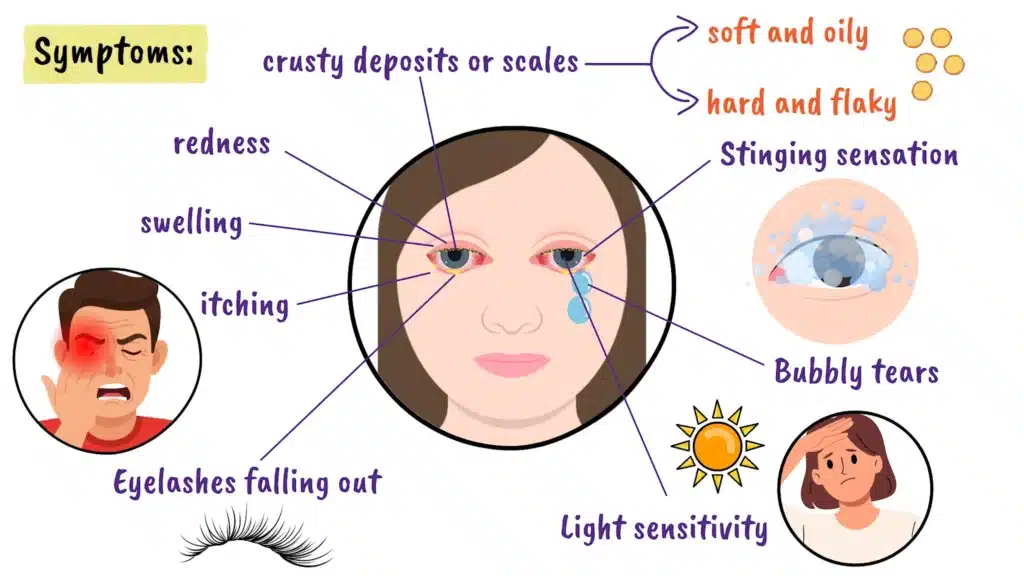
You’ll likely notice crusty deposits or scales around your eyelashes, especially when you first wake up in the morning. These deposits can range from soft and oily to hard and flaky, depending on the type of blepharitis you have. Many people describe feeling like they have sand or grit in their eyes, which is caused by these deposits irritating the eye surface.
Burning or stinging sensations in your eyes are also common with blepharitis. This feels similar to getting soap or shampoo in your eyes, and it can be particularly bothersome when you’re trying to concentrate on tasks like reading or computer work.
Your tears might look different when you have blepharitis. Instead of clear tears, you might notice foamy or bubbly tears, which occur because the disrupted oil layer can’t properly stabilize your tear film.
Light sensitivity is another symptom that many people with blepharitis experience. Bright lights might seem more uncomfortable than usual, and you might find yourself squinting more often or wanting to wear sunglasses indoors.
In more severe cases, you might notice that your eyelashes are falling out or growing in unusual directions due to chronic inflammation damaging the hair follicles.
Treatment Options for Blepharitis
Now that we’ve covered what blepharitis is and how to recognize it, let’s dive into the treatment options available. The good news is that blepharitis can almost always be successfully managed with the right combination of treatments, though it’s important to understand that this is typically a chronic condition that requires ongoing management rather than a quick fix.
Eyelid Hygiene
The foundation of blepharitis treatment is proper eyelid hygiene, which is like establishing a daily routine to keep your eyelids clean and healthy. Just as you brush your teeth every day to prevent dental problems, you need to clean your eyelids regularly to prevent blepharitis flare-ups.
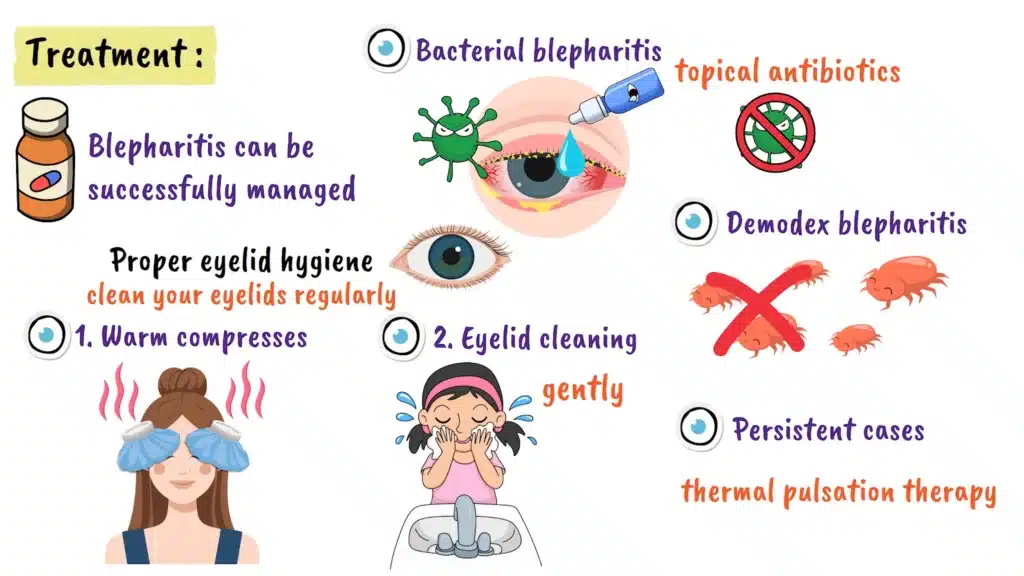
The basic eyelid cleaning routine starts with applying warm compresses to your closed eyelids. The warmth helps to melt the waxy deposits that block your oil glands and makes it easier to remove debris from your eyelashes.
After applying the warm compress, you need to gently clean your eyelid margins to remove loosened debris and oils. The key word here is gently: your eyelids are delicate, and aggressive scrubbing can cause more irritation and damage.
Medical Treatments
In addition to basic eyelid hygiene, there are several other treatment options that might be recommended depending on your specific type of blepharitis. For bacterial blepharitis, topical antibiotics in the form of ointments or drops might be prescribed to reduce bacterial overgrowth. These antibiotic treatments work like targeted pest control for your eyelids, reducing the number of harmful bacteria while allowing beneficial bacteria to reestablish a healthy balance.
For people with demodex blepharitis, treatment focuses on reducing the mite population to more normal levels.
In-Office Treatments
For severe or persistent cases of blepharitis, there are several in-office treatments that eye care professionals can perform. One option is called thermal pulsation therapy, which uses controlled heat and massage to unclog blocked meibomian glands.
Artificial tears and lubricating eye drops can provide symptomatic relief for the dry eye symptoms that often accompany blepharitis.
Prevention Strategies for Blepharitis
Prevention is just as important as treatment when it comes to managing blepharitis effectively. The most important preventive measure is maintaining good eyelid hygiene even when your symptoms are under control. Think of this like brushing your teeth: you don’t stop brushing just because you don’t currently have cavities.
Managing any underlying conditions that contribute to blepharitis is also crucial for prevention. If you have seborrheic dermatitis, using anti-dandruff shampoos and treating scalp flakiness can help prevent eyelid flare-ups. Similarly, if you have rosacea, working with a dermatologist to manage facial redness and inflammation can reduce your risk of posterior blepharitis.
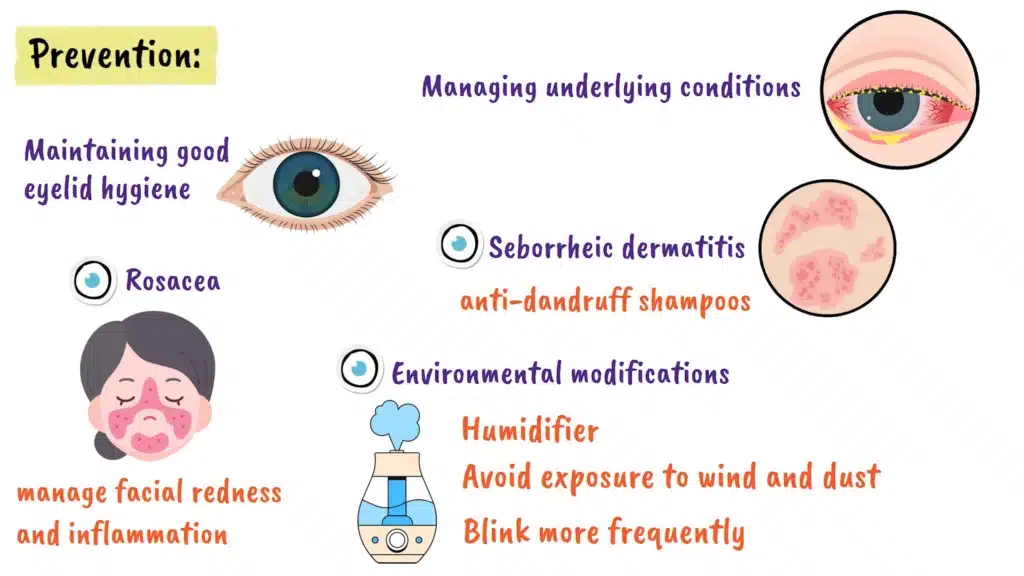
Environmental modifications can also help prevent blepharitis flare-ups. Using a humidifier in dry environments, avoiding excessive exposure to wind and dust, and taking breaks from computer work to blink more frequently can all help maintain healthier eyelids.
Be mindful of your eye makeup habits if you wear cosmetics regularly. Old or contaminated eye makeup can harbor bacteria that trigger blepharitis flare-ups. During active blepharitis flare-ups, it’s often best to avoid eye makeup entirely until symptoms resolve.
When to Seek Professional Help
If you’re dealing with persistent eyelid irritation, redness, or other symptoms that might suggest blepharitis, don’t hesitate to consult with an eye care professional. Early diagnosis and treatment can prevent the condition from becoming more severe and help you establish an effective management routine.
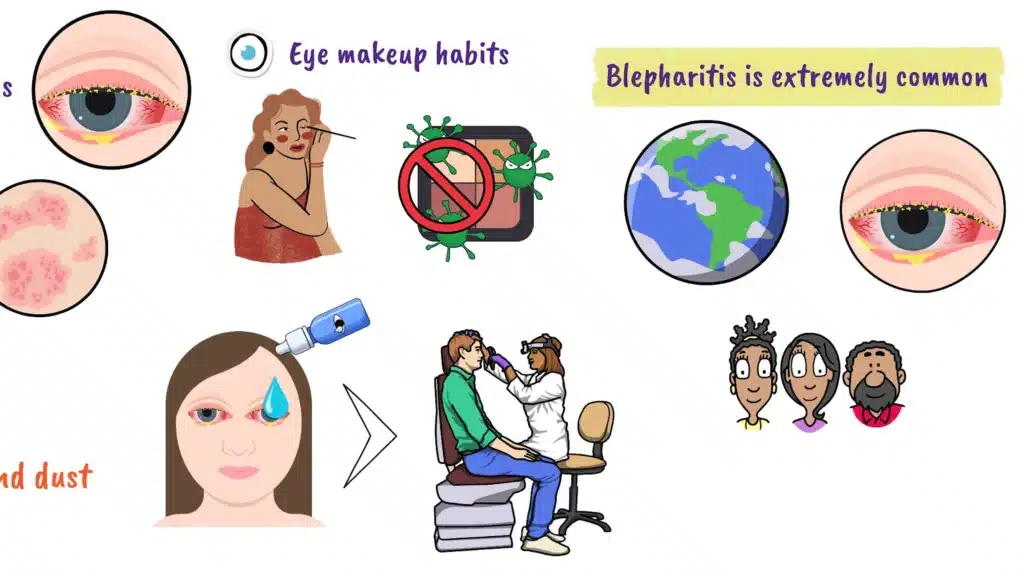
Remember that blepharitis is an extremely common condition that affects millions of people, so you’re definitely not alone if you’re dealing with this issue.
If you found this information helpful and want to learn more about eye health topics, consider checking out our other articles on related conditions like dry eyes and styes. Thank you for reading and we hope this guide helps you manage your eye health effectively.
