
Have you ever noticed someone with an unusual pupil shape, perhaps resembling a cat’s eye or a keyhole? You might be looking at a person with coloboma, a fascinating yet often misunderstood eye condition that affects how light enters and processes through the eye. This comprehensive guide will explain exactly what coloboma is, how it develops, and most importantly, how it affects vision and daily life.
Whether you’re a healthcare professional seeking detailed information, a patient recently diagnosed with this condition, or simply curious about rare eye disorders, this article provides everything you need to understand coloboma from its origins to modern treatment approaches.
Understanding Coloboma: A Simple Explanation
Let me start with an analogy that makes this condition easier to comprehend. Imagine you’re building a robot eye from scratch. You have all the different parts laid out before you: the retina, the iris, the optic nerve, and other essential components. During construction, there’s a tiny seam that needs to close completely before the eye is finished. If that seam doesn’t close all the way, you’re left with a gap or hole in one of those important parts.
That’s essentially what coloboma is. It’s a birth defect where parts of the eye didn’t fully develop, leaving behind a missing piece of tissue where it should have been whole. Rather than being a disease you contract later in life, coloboma is present from birth, making it a congenital condition that develops during fetal development in the womb.
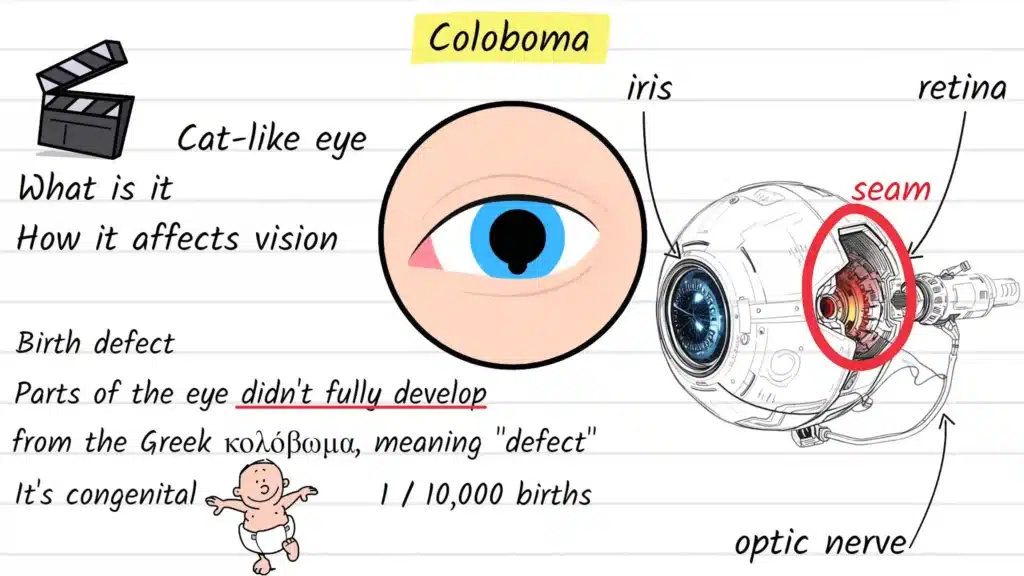
The term “coloboma” itself comes from ancient Greek and means “curtailed” or “defective,” accurately describing the incomplete development of eye structures. Understanding this fundamental concept helps explain why coloboma presents so differently depending on which part of the eye is affected.
What Does Coloboma Mean and How Common Is It?
Coloboma is classified as a congenital condition, which is a medical term meaning the condition is present at birth. It’s not something someone develops over time or due to external injury; rather, it results from incomplete eye development during the early stages of pregnancy.
In terms of prevalence, coloboma is quite rare, affecting fewer than one in ten thousand births. This rarity means many people have never heard of the condition, and even some eye care professionals may have limited experience treating it. However, when coloboma does occur, it can significantly impact how someone sees the world and their quality of life depending on severity and location.
The condition appears across all ethnic backgrounds and demographics, affecting males and females equally. Some cases of coloboma are inherited through families, while others occur spontaneously with no family history involved.
How Coloboma Develops During Pregnancy
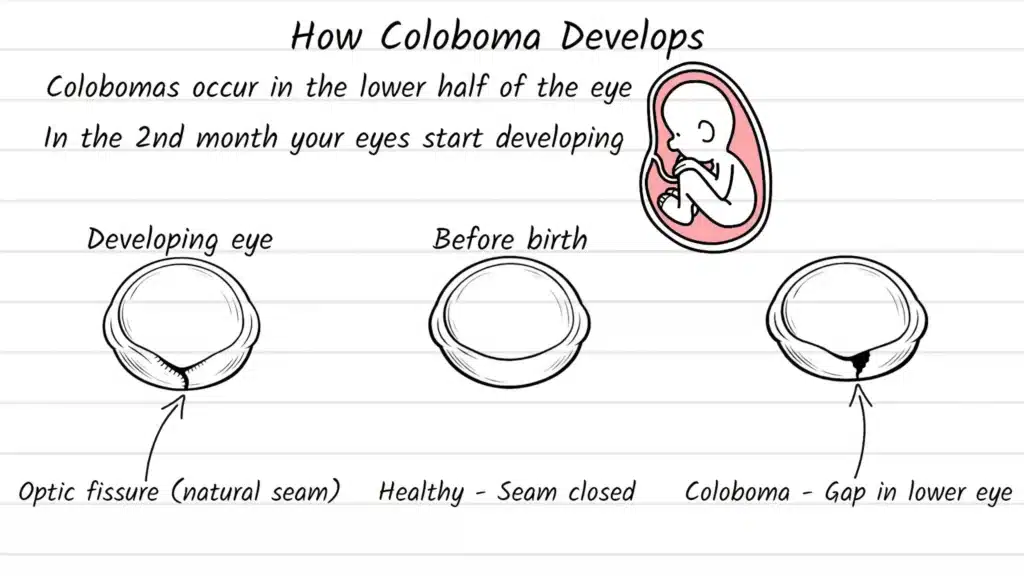
To understand coloboma, it’s essential to know how eyes develop during pregnancy. During the early stages of pregnancy, around the second month, your eyes begin developing inside the womb. At this critical stage, a structure called the optic fissure plays a crucial role in eye formation.
The optic fissure is essentially a natural seam running along the bottom of the developing eye. During normal development, this seam is supposed to close completely before birth, sealing shut to create a fully formed eyeball. However, if this seam doesn’t close properly during fetal development, a gap remains in whatever part of the eye was along that opening.
Since the optic fissure is located at the bottom of the eyeball, colobomas almost always occur in the lower half of the eye. This anatomical fact helps ophthalmologists identify and classify colobomas during examination. The incomplete closure typically occurs between weeks 5 and 7 of pregnancy, a critical window in eye development.
Types of Coloboma: Understanding the Variations
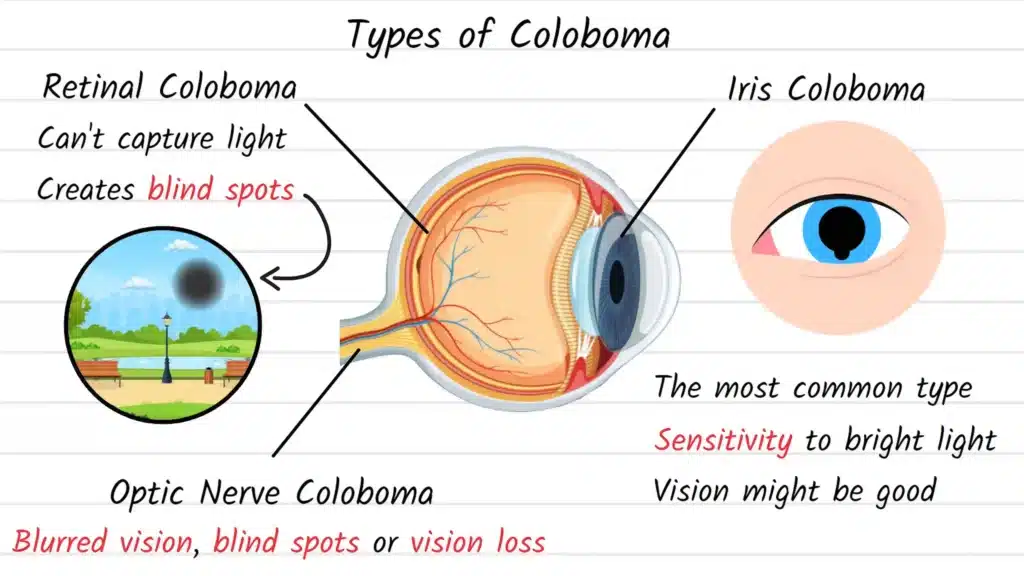
The type of coloboma depends on which part of the eye is affected by the incomplete development. Different locations of the gap create vastly different symptoms and vision outcomes.
Iris Coloboma: The Most Common Type
If the iris is affected, which is the colored part of your eye that controls pupil size, the pupil takes on an unusual appearance. Instead of being perfectly round, it might look like a keyhole, a cat’s eye, or a teardrop shape. This distinctive appearance is actually one of the first clues that someone might have coloboma.
Iris coloboma is the most common type of coloboma. People with this condition might only experience sensitivity to bright light because the iris controls how much light enters the eye. In many cases, their actual vision is quite good, and they may not realize they have the condition until someone points out their unusual pupil shape or they notice their heightened light sensitivity during sunny days.
Retinal Coloboma: Vision Impact and Complications
If the retina is affected, the situation becomes more serious from a vision perspective. The retina is like the camera film in the back of your eye, containing millions of light-sensitive cells that capture images and send them to the brain. A gap in the retina means that specific area can’t capture light properly, creating blind spots in your visual field.
The size and location of the gap in the retina determine how much vision is affected. A small coloboma in the peripheral retina might cause minimal vision problems, while a larger one affecting the central vision area can significantly impact daily activities. People with retinal coloboma often describe seeing blank spots or missing pieces in their visual field, as if someone erased part of their view.
Optic Nerve Coloboma: The Most Serious Form
Optic nerve coloboma is particularly serious because the optic nerve carries all visual information from your eye to your brain. If that nerve didn’t develop fully due to the incomplete closure of the optic fissure, the brain doesn’t receive clear signals from that eye, resulting in blurred vision, significant blind spots, or in severe cases, nearly complete vision loss in that eye.
Optic nerve coloboma requires careful monitoring and management, as it can affect a person’s ability to perform daily tasks and navigate their environment safely.
What Causes Coloboma: Genetic and Environmental Factors
The causes of coloboma involve a combination of genetic and environmental factors. Understanding these causes helps explain why coloboma occurs and why some families are more affected than others.
Genetic Factors and Gene Mutations
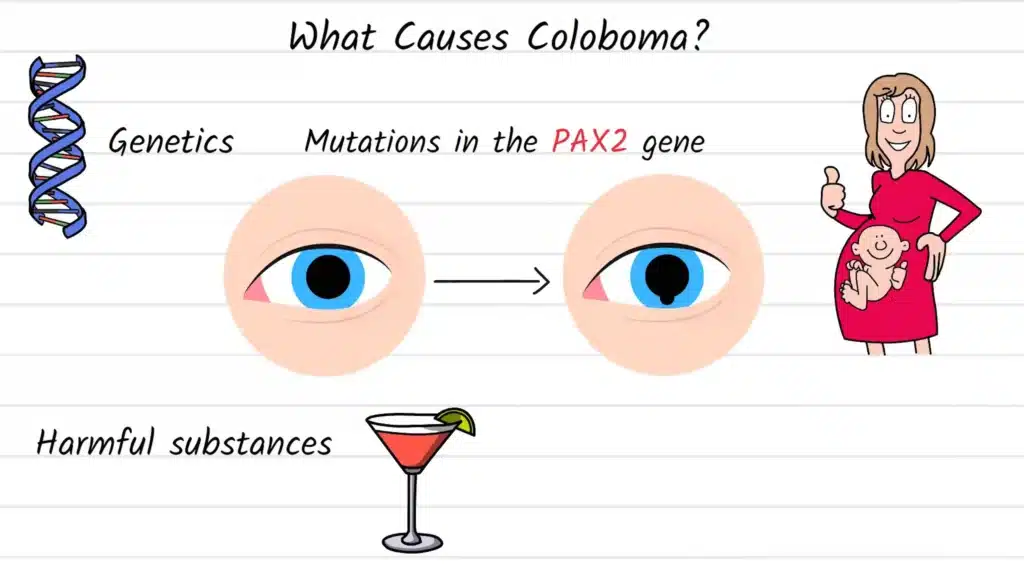
Coloboma can be associated with mutations in specific genes, particularly the PAX2 gene. This gene is crucial for eye development during the early stages of pregnancy. If something goes wrong with this gene, or if a mutation is inherited from a parent, the optic fissure doesn’t close properly, resulting in coloboma.
Genetic testing can sometimes identify these mutations in people with coloboma and their families, which is particularly important for family planning and genetic counseling.
Environmental and Prenatal Factors
Additionally, if a pregnant mother is exposed to certain harmful substances during critical periods of fetal development, coloboma becomes more likely. Research shows that children born to mothers who consumed alcohol during pregnancy, particularly during the first trimester, have a significantly higher risk of coloboma and other eye abnormalities. This connection between maternal alcohol consumption and coloboma is well-documented in medical literature.
Other environmental factors that might increase risk include maternal infections during pregnancy and exposure to certain medications classified as teratogenic during critical developmental windows.
Symptoms to Look For: Recognizing Coloboma
The symptoms of coloboma vary dramatically depending on the type and severity. Recognizing these symptoms is the first step toward proper diagnosis and management.
Someone with mild iris coloboma might only notice they’re extremely sensitive to bright light. They might need to squint in sunny weather, wear sunglasses frequently, or prefer indoor environments. They might choose to wear tinted glasses or colored contact lenses not just for appearance but for practical light management. Their actual vision could be perfect, and they might live their entire life without realizing they have a formal diagnosis.
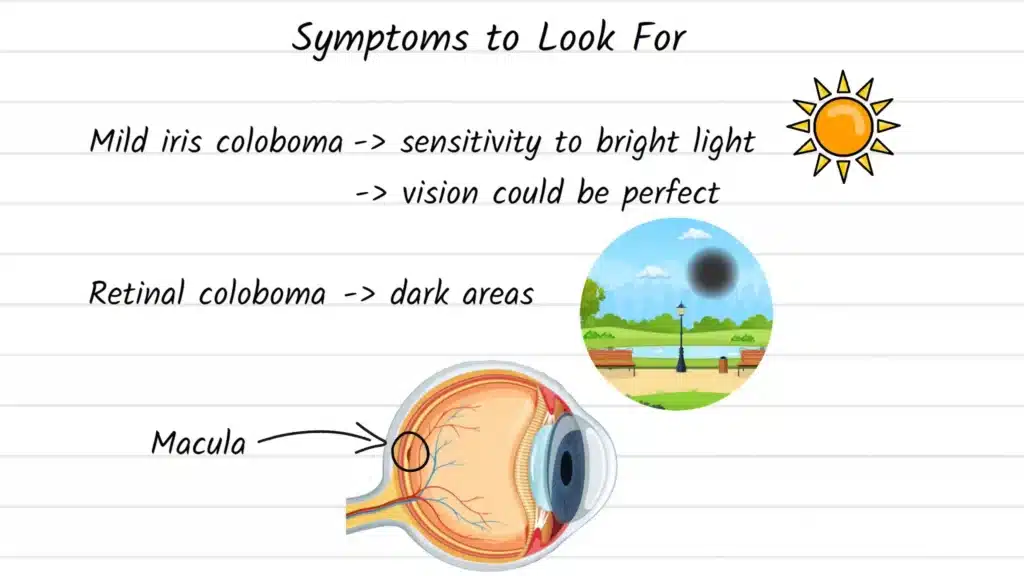
Someone with retinal coloboma might see blank spots or dark areas in their visual field. They might struggle to find objects in certain parts of their vision or bump into things on one side. If the coloboma is in the macula, which is the center of the retina controlling detailed vision, everyday tasks like reading, watching television, or recognizing faces become much more challenging.
Children with coloboma might exhibit poor visual tracking, difficulty with depth perception, or challenges in school-related visual tasks. Parents might notice their child tilting their head, turning their body to compensate for peripheral vision loss, or sitting closer to screens.
How Coloboma Is Diagnosed: Professional Examination
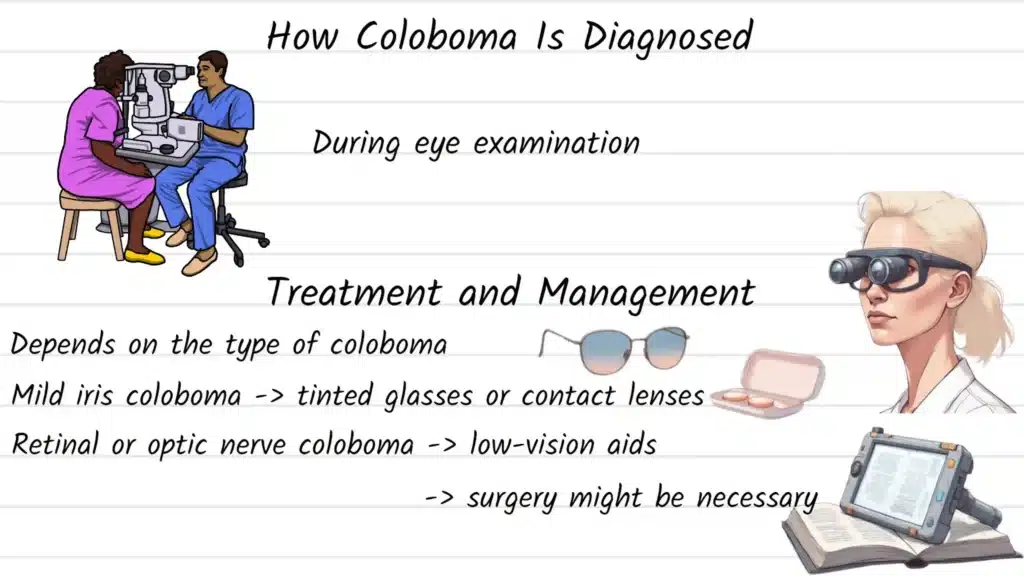
Diagnosing coloboma typically happens during a comprehensive eye examination by an ophthalmologist or optometrist. The characteristic appearance of coloboma, particularly the distinctive pupil shape in iris coloboma cases, often makes diagnosis relatively straightforward.
An eye doctor uses specialized equipment to look at the structures of your eye and can see the characteristic gaps or holes. Tools like the slit lamp, ophthalmoscope, and sometimes advanced imaging like optical coherence tomography (OCT) help identify the exact location and extent of the coloboma. Genetic testing might be recommended if family history suggests inherited coloboma.
Early diagnosis is particularly important for children, as it allows for timely intervention and management strategies to support their visual development and education.
Treatment and Management Strategies
The treatment approach depends on what type of coloboma someone has and how significantly it affects their vision and quality of life.
If someone only has mild iris coloboma causing light sensitivity, tinted glasses or contact lenses might be the only treatment needed. These simple interventions can dramatically improve comfort and quality of life. Colored or tinted contact lenses are particularly popular because they address both the functional issue (light control) and the cosmetic concern.
For people with vision loss from retinal or optic nerve coloboma, low-vision aids can be incredibly helpful and life-changing. These might include specialized glasses that magnify images, electronic magnifiers that enlarge text and objects, or computer software that enlarges text on screens. Adaptive technology continues to improve, offering more options for people with significant vision loss.
In rare cases where coloboma leads to complications such as retinal detachment or persistent inflammation, surgery might be necessary. However, surgery cannot restore the missing tissue or cure coloboma; rather, it addresses complications that arise.
Vision rehabilitation services, including training in adaptive techniques and lifestyle modifications, can help people with coloboma maintain independence and quality of life. Counseling and support groups also provide valuable emotional and practical support.
Conclusion: Living with Coloboma
Coloboma is a fascinating eye condition that results from incomplete eye development during pregnancy. While it’s rare, affecting fewer than one in ten thousand births, its impact on those who have it can be significant depending on the type and severity.
Understanding coloboma helps patients advocate for themselves, parents support their children, and healthcare professionals provide better care. Whether someone has mild iris coloboma with only light sensitivity or more serious retinal involvement, modern management strategies and adaptive technologies offer effective ways to maintain quality of life and visual function.
If you suspect you might have coloboma or notice unusual pupil shapes or vision changes, scheduling a comprehensive eye examination with an eye care professional is the first step toward proper diagnosis and management.
References
Centre for Sight. (2026). Coloboma Eye Disorder: Types, Symptoms, Causes & Diagnosis. https://www.centreforsight.net/blog/coloboma-eye-disorder
Patient.info. (2023). Coloboma: Causes, Symptoms, and Treatment. https://patient.info/doctor/congenital-disorders/coloboma
University of Utah Health. (2024). A Closer Look at Coloboma and How it Affects Vision. https://healthcare.utah.edu/healthfeed/2024/08/closer-look-coloboma-and-how-it-affects-vision
NW Eye Clinic. (2025). Understanding Coloboma Eye: Symptoms, Causes, and Treatments. https://nweyeclinic.com/understanding-coloboma-eye-symptoms-causes-and-treatments/
MedlinePlus Genetics. (2018). Coloboma. https://medlineplus.gov/genetics/condition/coloboma/
Wikipedia. (2005). Coloboma. https://en.wikipedia.org/wiki/Coloboma
