
Have you ever experienced a moment where everything you looked at suddenly appeared twice? Maybe you bumped your head, or perhaps you woke up one morning and the world seemed slightly off. That disorienting feeling is called double vision, or as doctors call it, diplopia. This common eye condition affects thousands of people each year and can range from temporary and harmless to a sign of a serious underlying medical issue. In this comprehensive guide, we’re going to explore exactly what double vision is, why it happens, how to identify which type you’re experiencing, and what you should know if you encounter it.
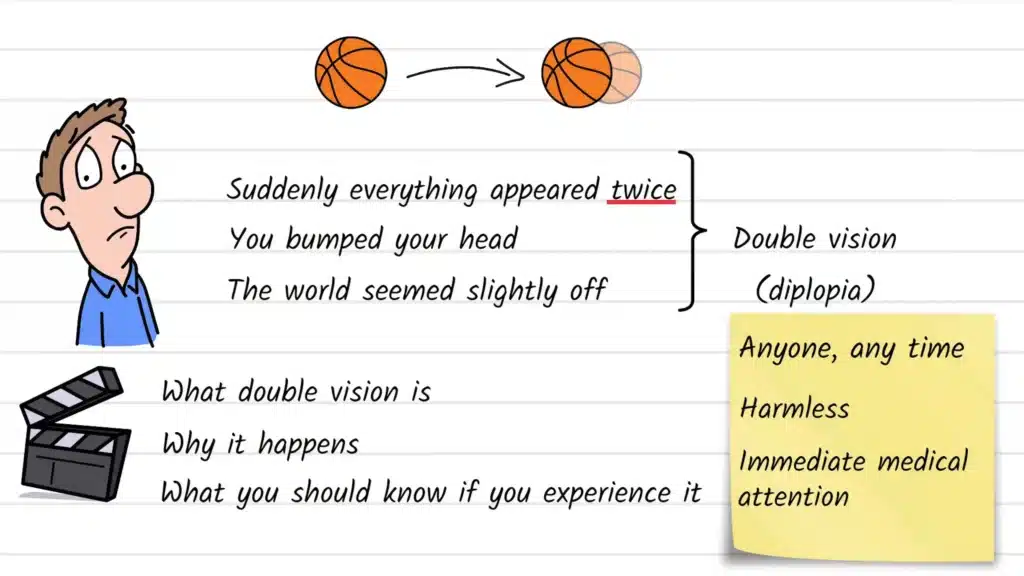
Before we dive deeper into the specifics, let me clarify something important. Double vision can happen to anyone at any time, regardless of age or previous eye health. While some causes are harmless and resolve on their own, others require immediate medical attention from a qualified eye care professional. The key to managing double vision effectively is understanding what’s causing it and seeking appropriate care promptly. So if you’re experiencing double vision right now, pay close attention to what we discuss here, and remember to consult with an eye care professional as soon as possible.
How Your Eyes Normally Work: Understanding Binocular Vision
Let’s start with the basics of how your visual system functions. Our eyes are remarkably sophisticated, working much like two high-definition cameras constantly capturing the world around us. Under normal circumstances, both cameras work in perfect harmony with each other. They both point at the same object simultaneously, capture the same image from slightly different angles, and send that visual information to our brain in real time.
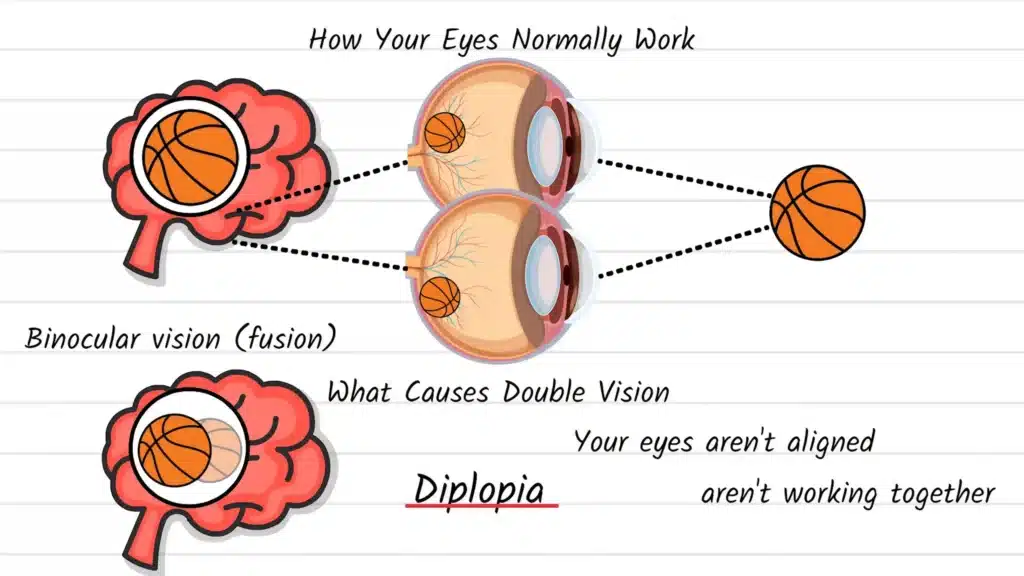
Our brain then performs an incredible feat. It combines these two slightly different images into one clear, three-dimensional picture that allows us to perceive depth and distance accurately. This seamless integration process is called binocular vision or fusion, and it’s fundamental to how we navigate and understand our environment. Think of it like two security cameras monitoring the same hallway from different positions. Both cameras see the hallway from their unique vantage point, and when you combine their footage, you get a complete understanding of what’s happening in that space. Your brain does this automatically thousands of times every day without you even thinking about it.
This remarkable coordination between your eyes is made possible by several components working together: your eye muscles, the nerves that control them, and the visual processing centers in your brain. When all these elements function properly, you experience clear, single vision. However, when any part of this complex system is disrupted, problems can arise, including the disorienting experience of seeing double.
What Causes Double Vision: The Breakdown in Eye Coordination
Double vision occurs when something disrupts this perfectly synchronized system that we just discussed. When your two eyes aren’t aligned correctly or aren’t working together properly, each eye sends a different image to your brain. Instead of your brain fusing these images into one unified picture, it receives two separate images and cannot merge them properly due to the misalignment. The result is that you see two versions of the same object, and that unsettling experience is what doctors call diplopia.
Understanding the mechanism behind double vision is important because it helps you recognize whether your situation requires immediate medical attention or can be managed with routine eye care. The severity and urgency of treatment often depends on which type of double vision you’re experiencing and what underlying cause is responsible for the misalignment.
The Two Types of Double Vision: Monocular vs. Binocular
There are actually two distinct types of double vision, and understanding the difference between them is crucial for proper diagnosis and treatment. Identifying which type you have is often the first step your eye care professional takes when evaluating your condition.
Monocular Diplopia
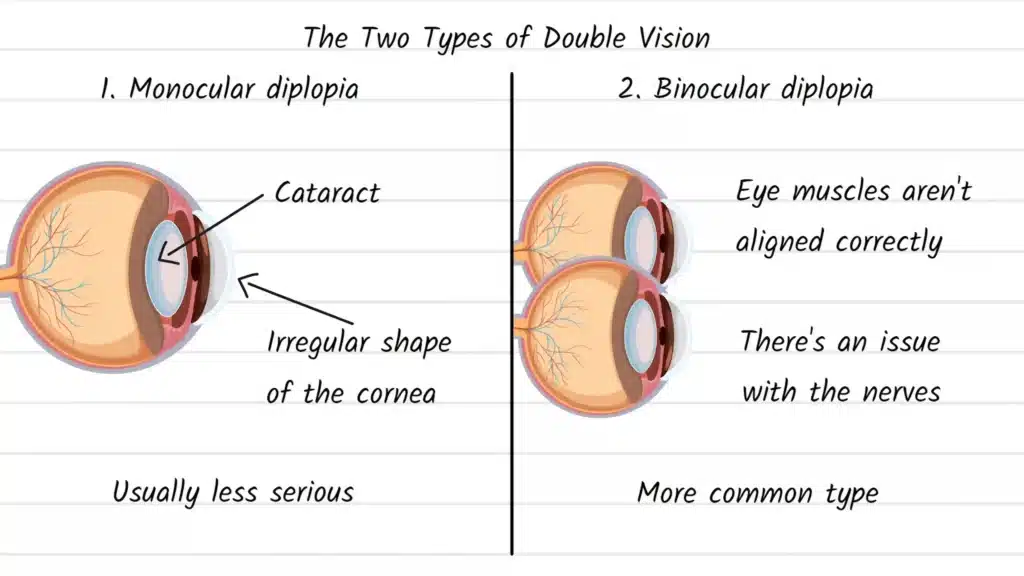
The first type is called monocular diplopia. This happens when the problem originates within a single eye. The key distinguishing feature of monocular diplopia is that it persists even when you close or cover one eye. For example, if you have a cataract, which is a clouding of your eye’s lens, or if your cornea has an irregular shape, you might see two images even when you’re looking with just one eye. This happens because the light rays passing through your affected eye are being distorted or split in multiple directions.
If you cover one eye and the double vision disappears, you can definitively say you have monocular diplopia. This is usually less serious than the other type because it involves structural problems within the eye itself rather than neurological or muscular issues. Monocular diplopia is often more manageable and frequently correctable with glasses, contact lenses, or other optical solutions.
Binocular Diplopia
The second type is called binocular diplopia. This occurs when your two eyes aren’t working together as a coordinated team. This happens because your eye muscles aren’t aligned correctly, or there’s an issue with the nerves that control those muscles. The critical test here is simple: if you cover one eye and the double vision disappears, you have binocular diplopia. With binocular diplopia, the double vision only occurs when both eyes are open and trying to focus on the same object.
Binocular diplopia is the more common type of double vision that people experience, and it typically indicates a problem with eye muscle coordination or the neurological signals controlling those muscles. This type of diplopia often requires more comprehensive medical evaluation because it can indicate systemic health issues or neurological problems that extend beyond the eyes.
What Triggers Double Vision: Common Causes
Now let’s talk about what specifically causes these two types of double vision. Understanding the potential causes can help you communicate more effectively with your eye care professional.
Causes of Binocular Diplopia
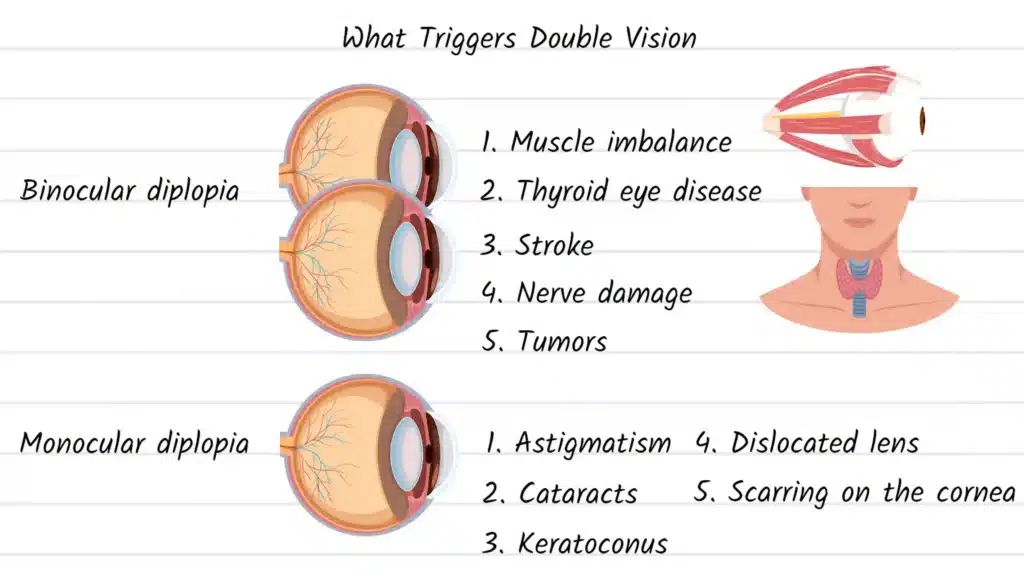
Binocular diplopia can result from several different issues affecting eye muscle coordination or control. Sometimes it’s caused by a muscle imbalance in your eyes, where one eye muscle is stronger than another, pulling your eye in a different direction than its partner eye. This creates a condition called strabismus or eye misalignment.
Thyroid eye disease, also known as Graves’ ophthalmopathy, can cause binocular diplopia where your thyroid gland overproduces hormones and inflames the eye muscles, causing them to become enlarged and restrictive. This inflammatory condition can severely compromise eye muscle function and coordination.
More serious causes include stroke, nerve damage, or tumors that can affect the nerves controlling your eye muscles. Diabetes can also lead to binocular diplopia by affecting the nerves that control eye movement. Myasthenia gravis, an autoimmune condition affecting muscle function, can cause binocular diplopia. Additionally, head injuries, brain infections, or multiple sclerosis can disrupt the neural pathways responsible for coordinating eye movement.
Causes of Monocular Diplopia
Monocular diplopia, on the other hand, often results from problems within the eye itself rather than neurological issues. Astigmatism, where your cornea is shaped irregularly rather than perfectly spherical, can cause monocular double vision. This irregular shape causes light rays to focus at multiple points instead of one precise point on your retina.
Cataracts, as we mentioned earlier, can also cause monocular double vision because the clouded lens distorts light passing through it, essentially breaking the light rays into multiple paths. Keratoconus, a condition where your cornea becomes progressively cone-shaped, can also create this effect. This condition is particularly concerning because it can worsen over time if not managed properly.
Additionally, issues like a dislocated lens, which might occur due to injury or genetic conditions like Marfan syndrome, can cause monocular diplopia. Scarring on your cornea from an injury, infection, or previous eye surgery might also cause monocular diplopia by distorting how light enters your eye.
Why Double Vision Matters: A Warning Sign from Your Body
It’s important to understand that double vision is your body’s way of telling you something isn’t right. Double vision is not actually a condition itself but rather a symptom of an underlying issue. It’s a signal that your visual system needs attention and evaluation by a qualified professional. Some causes of double vision are temporary and resolve on their own within days or weeks, while others require professional treatment or intervention by a healthcare provider to prevent permanent vision problems.
Never ignore persistent double vision or assume it will resolve without investigation. The sooner you identify the underlying cause, the sooner appropriate treatment can begin, and the better your prognosis is likely to be.
When to See a Doctor: Timing is Critical
If you’re experiencing double vision, especially if it came on suddenly without warning, you should see an eye care professional as soon as possible. Sudden onset double vision can indicate a serious problem like a stroke, and time is critical in these situations. Your eye doctor will perform several tests to determine whether you have monocular or binocular diplopia and from there investigate the underlying cause systematically.
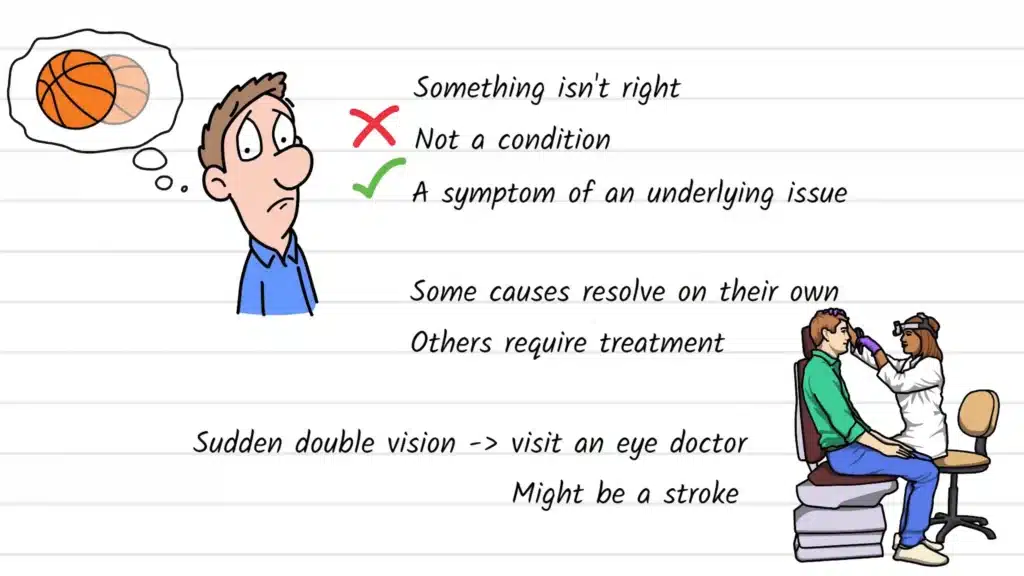
During your eye exam, your doctor will ask detailed questions about when the double vision started, whether it’s constant or intermittent, and what makes it better or worse. They’ll perform tests to determine your eye alignment, check your eye movements, and examine the internal and external structures of your eyes. In some cases, additional testing like imaging or blood work might be necessary to rule out serious systemic conditions.
Treatment Options: Hope for Recovery
The good news is that many causes of double vision are treatable and manageable. Depending on the specific cause your doctor identifies, treatment options might include prescription glasses with special lenses designed to correct alignment issues, eye patches to help your eyes work together, prisms in your lenses that bend light to help align images, medications to address underlying conditions, or in some cases, surgical intervention to reposition eye muscles or address structural problems.
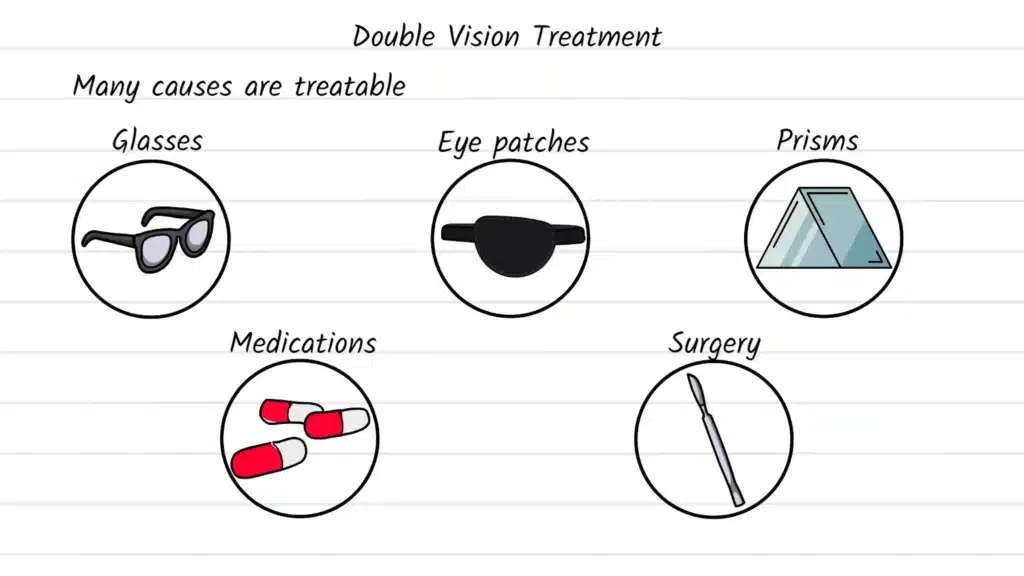
For example, if your double vision is caused by astigmatism, special glasses or contact lenses can often correct the problem completely. If thyroid disease is causing your diplopia, treating the thyroid condition might resolve the eye symptoms. If a muscle imbalance is responsible, eye exercises or surgery might help realign your eyes. The key is getting a proper diagnosis quickly so that appropriate treatment can begin promptly.
Conclusion
Double vision is a symptom that deserves proper medical evaluation and attention. Whether it’s monocular or binocular, temporary or persistent, the underlying cause needs to be identified to determine the best course of action. If you’re experiencing double vision, don’t delay in scheduling an appointment with an eye care professional. Early diagnosis and treatment can prevent complications and help you return to clear, comfortable vision quickly.
For more information about eye conditions and vision health, consult with your local eye care professional or refer to the authoritative sources listed below.
Sources and References
- American Academy of Ophthalmology: Double Vision (Diplopia) Overview
https://www.aao.org/eye-health/diseases/double-vision - National Eye Institute: Strabismus (Eye Misalignment)
https://www.nei.nih.gov/learn-and-research/eye-health-data-statistics/tables-of-eye-conditions - Mayo Clinic: Double Vision (Diplopia) Causes and Diagnosis
https://www.mayoclinic.org/diseases-conditions/double-vision/symptoms-causes/syc-20371974 - Medline Plus: Double Vision
https://medlineplus.gov/ency/article/003033.htm - American Optometric Association: Vision Problems and Eye Health
https://www.aoa.org/patients-and-public/eye-and-vision-problems/glossary-of-eye-and-vision-conditions
