
During allergy season, your eyes can become one of the most affected parts of your body. When allergens like pollen, dust, or pet dander come into contact with your eyes, they trigger an allergic reaction called allergic conjunctivitis. This is basically when the clear tissue covering the white part of your eye becomes inflamed and irritated.
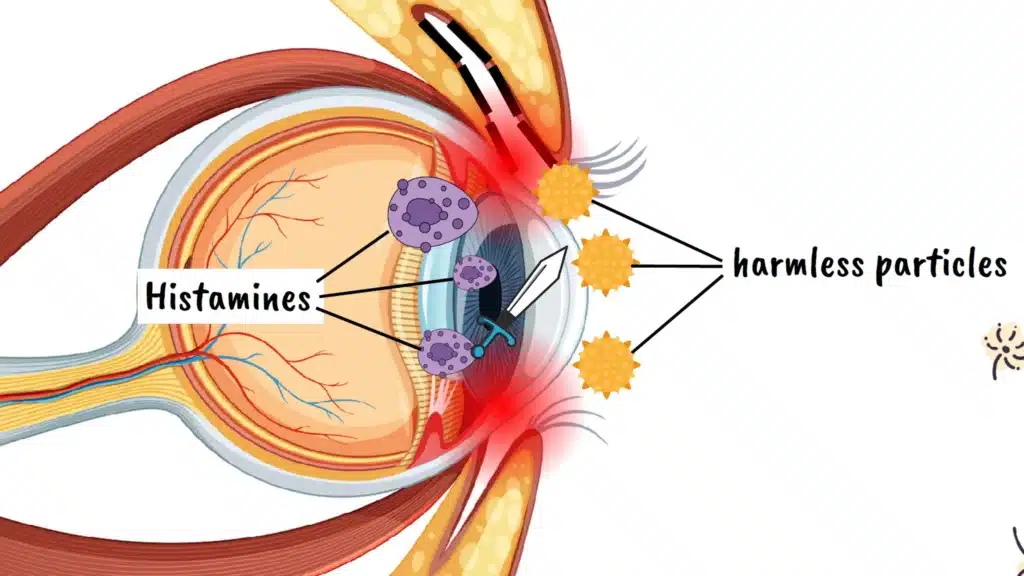
Your immune system sees these harmless particles as threats and releases chemicals called histamines to fight them off, which causes all those uncomfortable symptoms you experience.
Common Symptoms of Eye Allergies
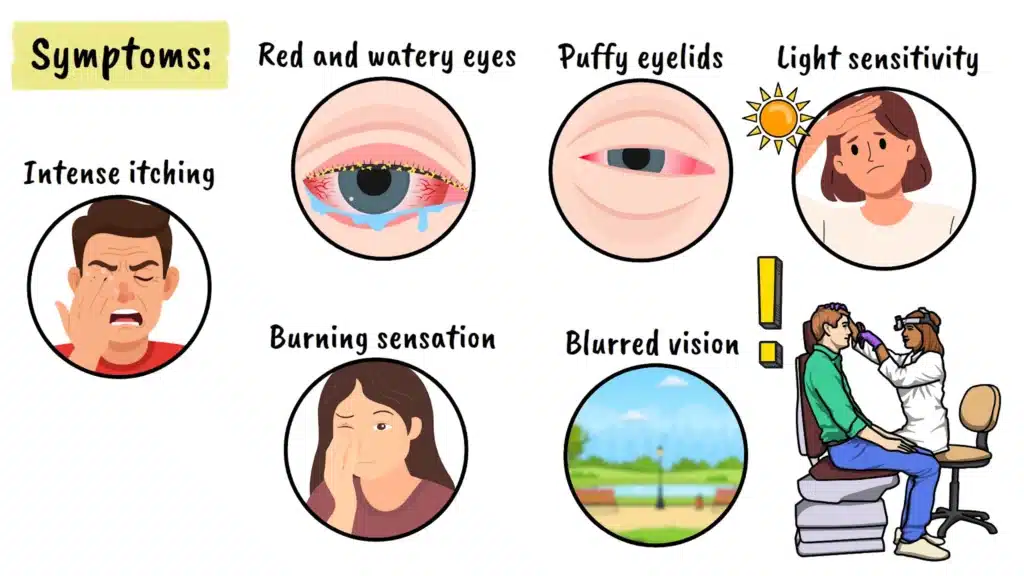
The most common symptom of eye allergies is intense itching. You might also notice your eyes becoming red and watery as your body tries to flush out the irritants. Many people experience puffy or swollen eyelids, especially when they wake up in the morning. Sensitivity to light and a burning sensation are also frequent complaints. Some people even see their vision become slightly blurry during severe allergy episodes because of the excessive tearing and inflammation.
If you experience these symptoms, it is important to see an eye doctor for proper evaluation. Keep in mind that similar symptoms can also be caused by other eye conditions, so getting an accurate diagnosis is essential.
Prevention Strategies for Eye Allergy Relief
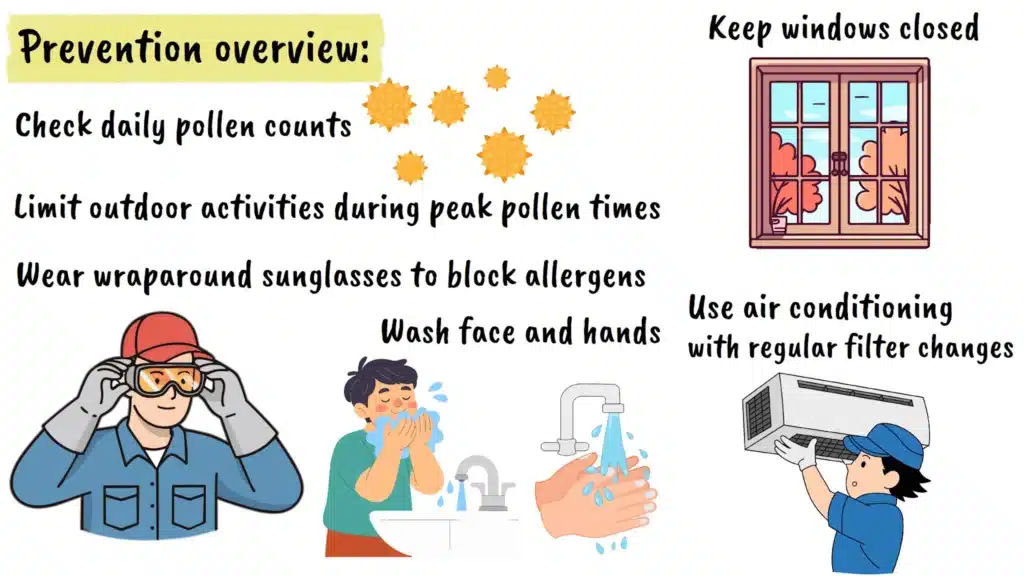
Now let’s talk about how to protect your eyes during allergy season. Prevention is always the best approach. Start by checking daily pollen counts in your area and limit outdoor activities when pollen levels are highest, which is usually during early morning and late afternoon. When you do go outside, wear wraparound sunglasses to create a barrier that blocks airborne allergens from reaching your eyes. This simple step can significantly reduce your exposure.
Once you come back indoors, wash your face and hands immediately. Allergens cling to your skin, hair, and even your eyelashes, so a quick rinse helps remove these particles before they can cause more irritation. Keep your windows closed during peak allergy season and use air conditioning instead to filter the air in your home. Make sure to change your air filters regularly to trap pollen and dust effectively.
Treatment and Relief Options
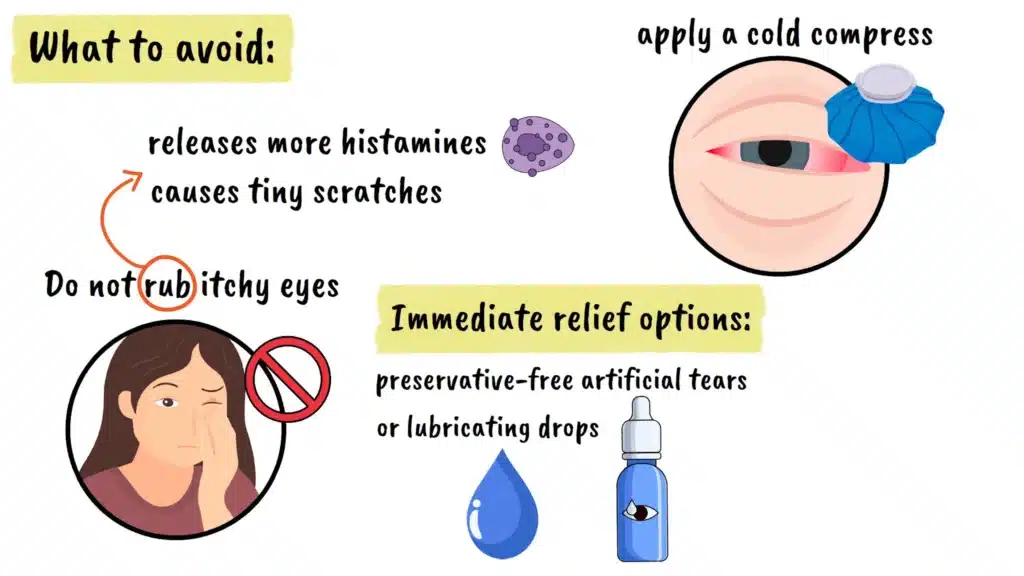
Here’s something crucial: avoid rubbing your eyes no matter how itchy they feel. Rubbing only makes things worse by releasing more histamines and can even cause tiny scratches on your eye’s surface. Instead, apply a cold compress over your closed eyes for five to ten minutes to reduce swelling and provide soothing relief.
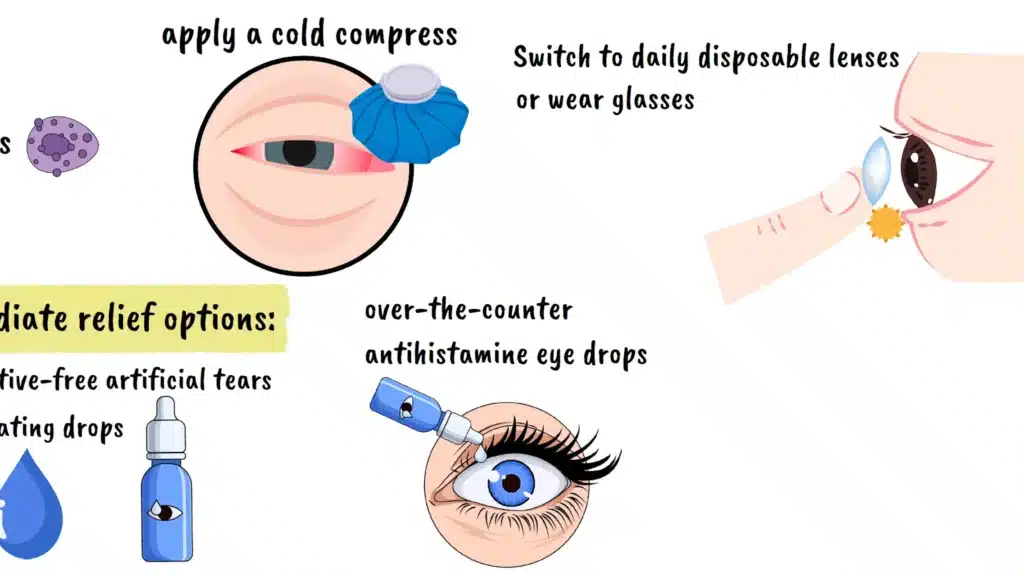
For immediate symptom relief, use preservative-free artificial tears or lubricating eye drops. These help flush out allergens from your eyes and provide moisture. Over-the-counter antihistamine eye drops can block the allergic reaction at its source and work faster than oral medications for eye-specific symptoms. If you wear contact lenses, consider switching to daily disposable lenses or wearing glasses during allergy season, because contacts can trap allergens between the lens and your eye, making irritation much worse.
Final Thoughts
By following these prevention and treatment strategies, you can significantly reduce the impact of allergies on your eyes during allergy season. Remember that if symptoms persist or worsen, consulting with an eye care professional is always the best course of action.
