
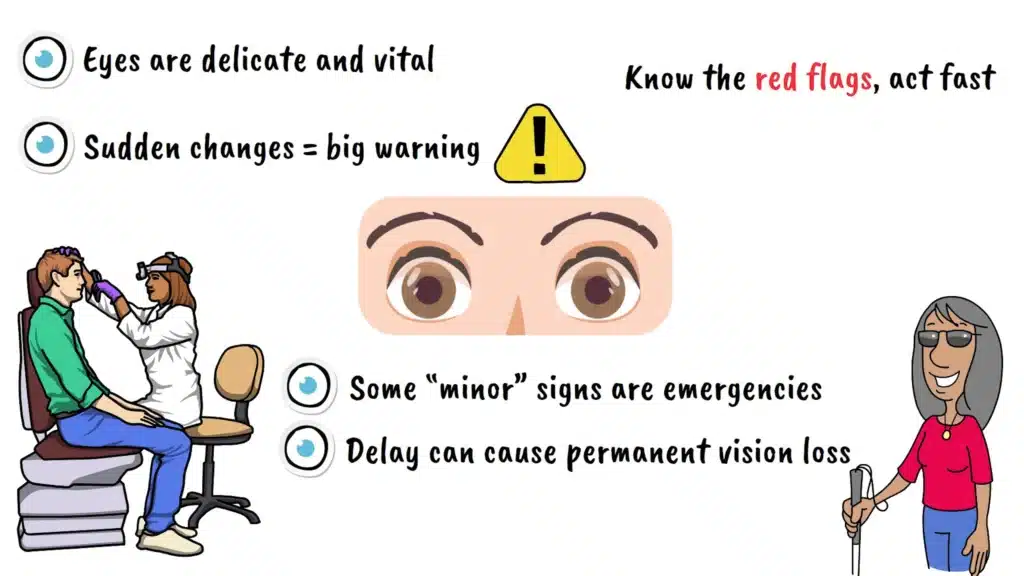
Your eyes are among the most delicate and vital organs in your body, yet many people tend to downplay sudden changes in their vision or discomfort. While some eye issues may seem minor and temporary, certain symptoms can signal serious emergencies that demand immediate medical attention. Ignoring these warning signs can lead to permanent vision loss or even blindness. Understanding which symptoms require urgent care is essential to protecting your sight and maintaining your overall eye health.
Symptom 1: Sudden Vision Loss
The first critical symptom you should never ignore is sudden vision loss. This occurs when you lose some or all of your vision rapidly, either within minutes or over a few days. The vision loss may affect one eye or both eyes, and it can involve your entire field of vision or just a portion of it.
Unlike blurry vision where things appear unclear, sudden vision loss means you literally cannot see parts of what you should normally see. This is a true medical emergency that requires you to go to the hospital right away.
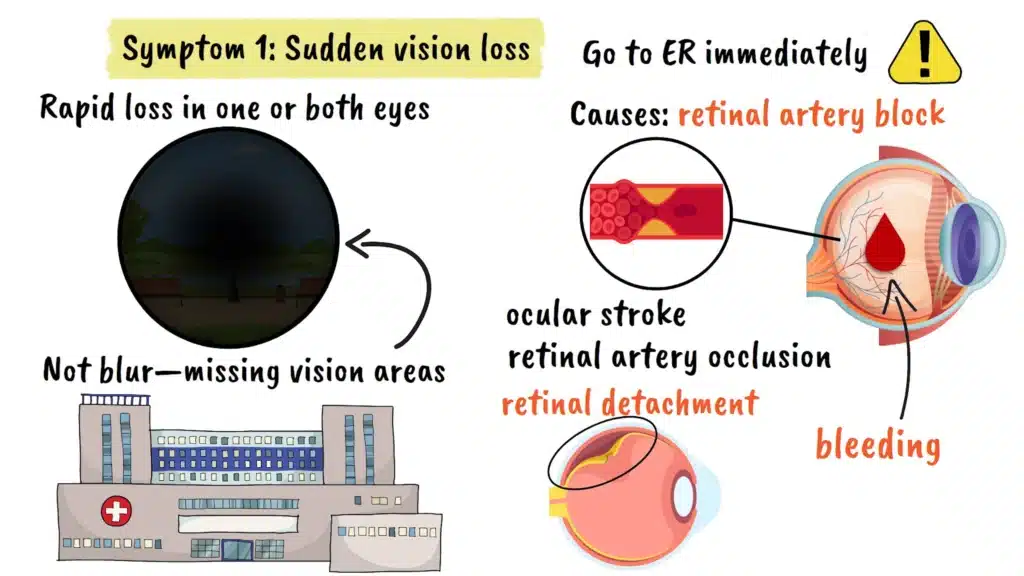
The most common causes include a blocked blood vessel in your eye, which happens when blood flow to the retina is suddenly cut off. This condition is sometimes called an ocular stroke or retinal artery occlusion, and your retina can only survive without blood supply for about sixty to ninety minutes. Other causes include retinal detachment, where the light-sensitive layer at the back of your eye pulls away from its normal position, or bleeding inside your eye, which people with diabetes are particularly at risk for experiencing.
Even if your vision returns quickly on its own, sudden vision loss can be a sign that you have had a mini-stroke, so seeking immediate medical evaluation is absolutely critical.
Symptom 2: Severe Eye Pain
The second dangerous symptom to watch for is severe eye pain. No amount of eye pain is normal in healthy eyes, so when your eye genuinely hurts, it deserves investigation.
There are two main types of eye pain that you should understand. Ocular pain describes uncomfortable sensations you feel on the surface of the eye, such as itching, burning, or a scratchy feeling like something is stuck in there. Common causes include trauma, infection, or foreign objects lodging in your eye. Orbital pain, on the other hand, is felt deeper within the eye itself and can be described as stabbing, throbbing, or aching. This type of pain usually requires a more thorough evaluation and treatment because it may indicate serious conditions.
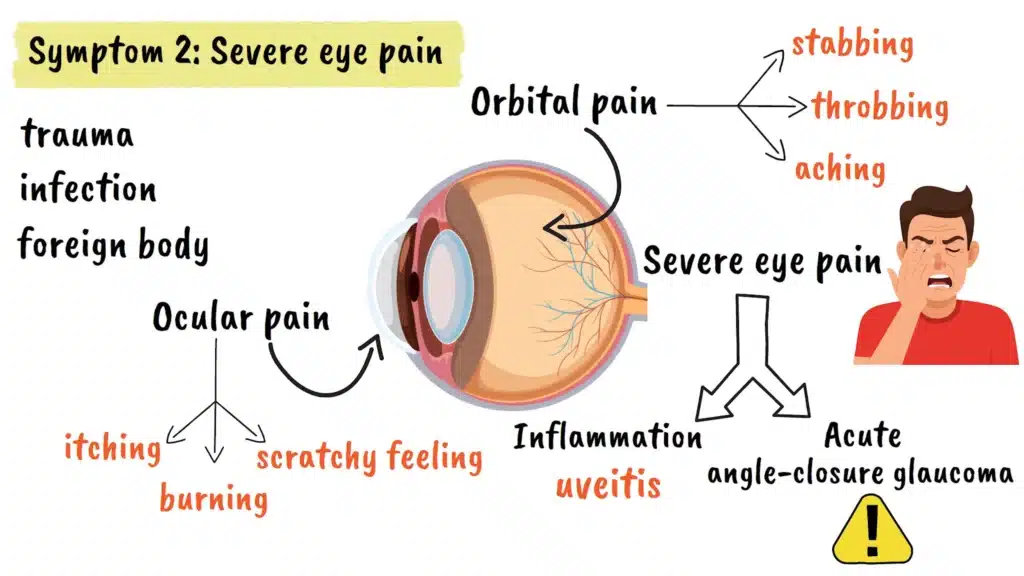
Severe eye pain can signal inflammation inside the eye, which doctors call uveitis, or it may indicate acute angle-closure glaucoma, which is a sight-threatening emergency. Angle-closure glaucoma happens when the drainage angle inside your eye becomes blocked, causing fluid to build up rapidly and eye pressure to skyrocket. This creates intense pain that can be accompanied by severe headaches, nausea, vomiting, and blurred vision. The discomfort can vary from a dull ache to extreme throbbing pressure, with some people describing it as feeling like their eye might burst or as if something is pushing outward from behind it.
If you experience vision loss or sudden changes along with your eye pain, you must contact your eye doctor or go to the emergency room immediately, because permanent damage can occur quickly without prompt treatment.
Symptom 3: Sudden Increase in Floaters or Flashes of Light
The third symptom that requires immediate attention is a sudden increase in floaters or flashes of light. Floaters are those small dark spots, squiggly lines, or cobweb-like shapes that drift across your field of vision. Many people experience occasional floaters as they age, and these are usually harmless.
However, if you suddenly notice a dramatic increase in the number of floaters, especially when accompanied by bright flashes of light, this could indicate a retinal tear or retinal detachment. The flashes, which doctors call photopsias, typically appear as lightning-like streaks, camera flashes, or shooting stars in your peripheral vision. They are often white or yellow in color and become more noticeable in darker environments.
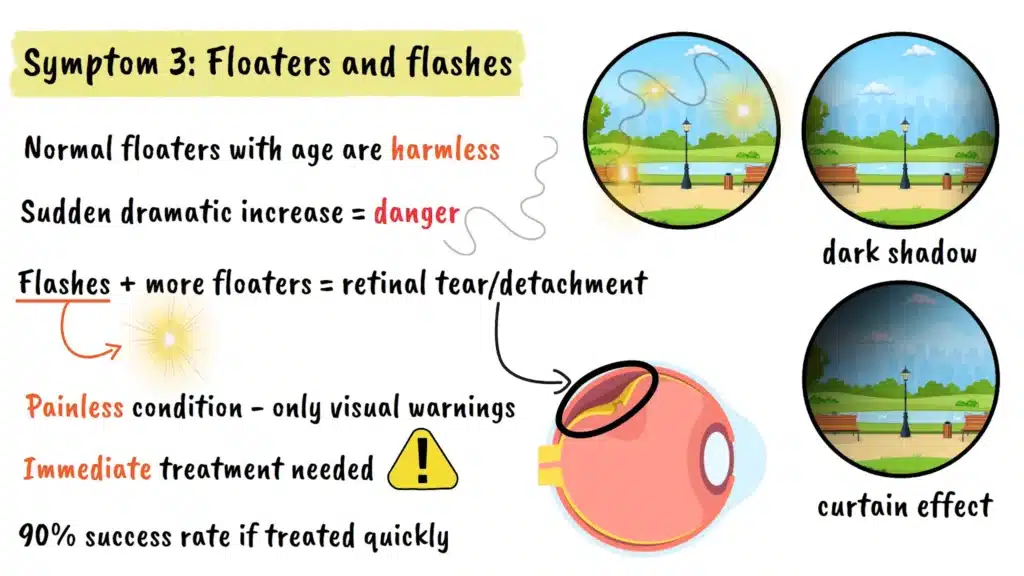
These warning signs occur because your retina is being pulled or tugged, and the condition can progress rapidly. You may also notice a dark shadow or curtain-like effect moving across your vision, which typically starts in your peripheral vision and gradually spreads toward the center. This curtain effect might descend from above, appear from below, or emerge from either side, and many people describe it as a transparent veil covering parts of their sight.
Retinal detachment is painless, which makes these visual symptoms your only warning signs. The condition requires immediate treatment because if the retina remains detached, the affected cells are deprived of oxygen and nutrients, leading to permanent vision loss. With prompt medical intervention, approximately ninety percent of retinal detachments can be successfully repaired, which is why recognizing these symptoms early and seeking emergency care is so crucial for preserving your sight.
Symptom 4: Double Vision
The fourth critical symptom is double vision, which doctors call diplopia. This means you see two images of a single object, and it can occur in either one eye or both eyes. While the cause could sometimes be as simple as needing an updated eyeglass prescription, double vision can also signal much more serious problems.
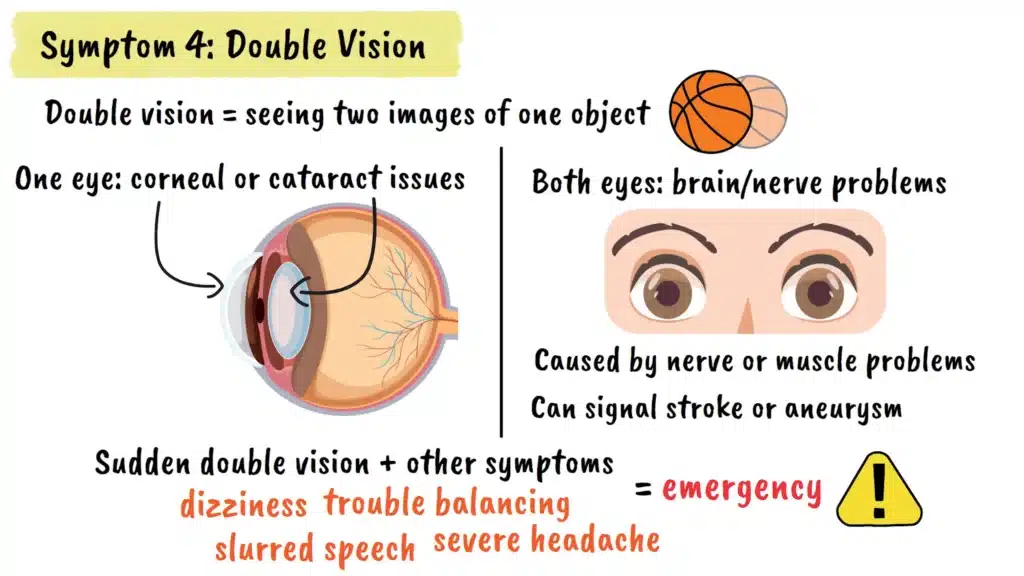
Double vision affecting only one eye, which is called monocular diplopia, may indicate a corneal problem or a cataract that is distorting incoming light. Double vision affecting both eyes together, known as binocular diplopia, can be a sign of neurological issues such as problems with the brain or nervous system. It may result from conditions affecting the nerves or muscles that control eye movement, and it can stem from nerve dysfunction or even serious conditions like stroke or aneurysm.
If your double vision comes on suddenly, especially if it is accompanied by other symptoms such as dizziness, trouble balancing, slurred speech, or severe headache, you should seek emergency medical attention immediately. Even if the double vision seems mild, it should always be evaluated by a healthcare professional because only a comprehensive eye examination can determine the underlying reason and guide appropriate treatment.
Symptom 5: Severe Redness and Swelling
The fifth and final symptom you must never ignore is severe redness and swelling accompanied by other concerning signs. Not every red eye is just allergies or simple irritation. While eye redness alone from fatigue or mild allergies may not be an emergency, redness that does not resolve with artificial tears or comes with additional symptoms requires immediate attention.
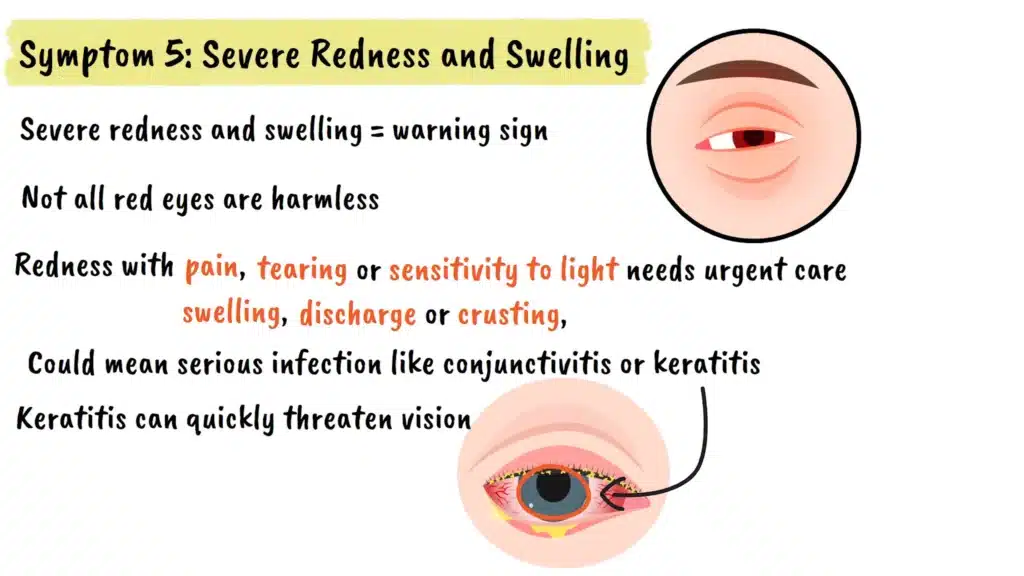
Warning signs include eye redness accompanied by severe pain, swelling around the eye or eyelids, thick discharge or crusting, excessive tearing, or significant sensitivity to light. These symptoms together can indicate serious conditions such as severe eye infections like bacterial conjunctivitis or keratitis, which is an infection of the cornea. Keratitis can progress rapidly and threaten your vision if left untreated.
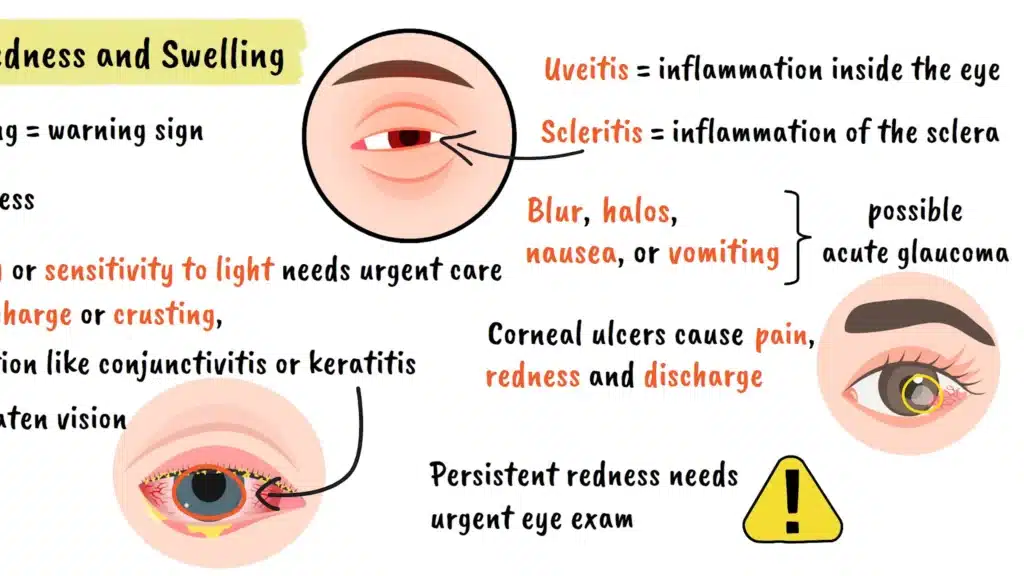
Other serious conditions that cause redness and swelling include uveitis, which is inflammation inside the eye, or scleritis, which is inflammation of the white outer coating of the eyeball. If redness is accompanied by blurred vision, halos around lights, nausea, or vomiting, it may indicate an acute glaucoma attack, which demands emergency treatment to prevent permanent optic nerve damage. Corneal ulcers, which are open sores on the cornea, can also cause severe redness, pain, and discharge.
Any time eye redness persists, worsens rapidly, or is accompanied by vision changes or discharge, it is essential to have it examined by an eye care professional right away rather than trying to self-diagnose or wait for it to improve on its own.
