
LASIK stands for Laser-Assisted in Situ Keratomileusis, which is a type of laser eye surgery designed to correct vision problems like nearsightedness, farsightedness, and astigmatism. The goal of LASIK is to help you see clearly without needing glasses or contact lenses.
How Does LASIK Actually Work?
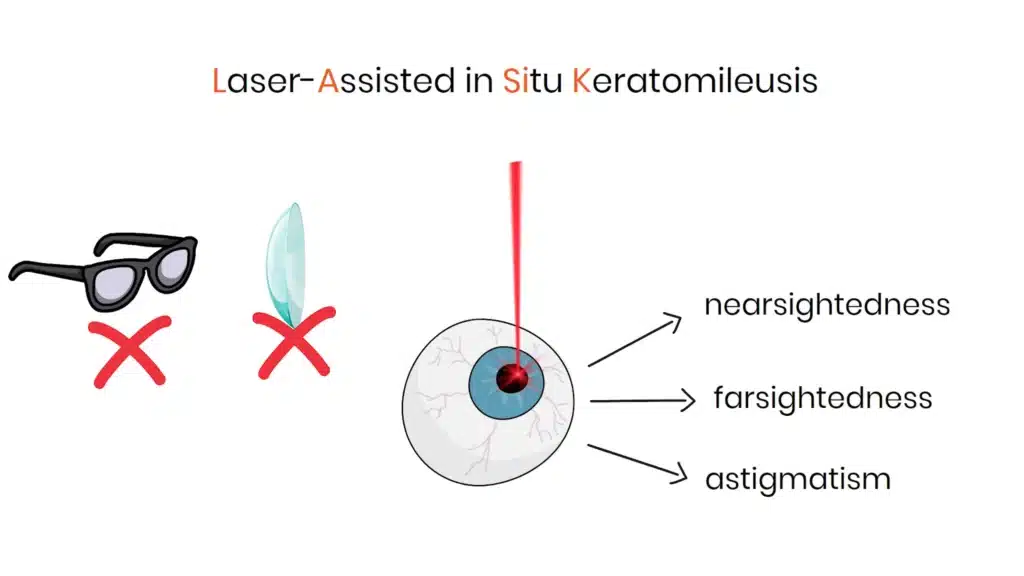
Your cornea is the clear, dome-shaped front surface of your eye that helps focus light. In people with vision problems, the cornea doesn’t bend light correctly, which causes blurry vision. LASIK works by reshaping your cornea so that light can focus properly on the retina at the back of your eye.
The LASIK Procedure Step-by-Step
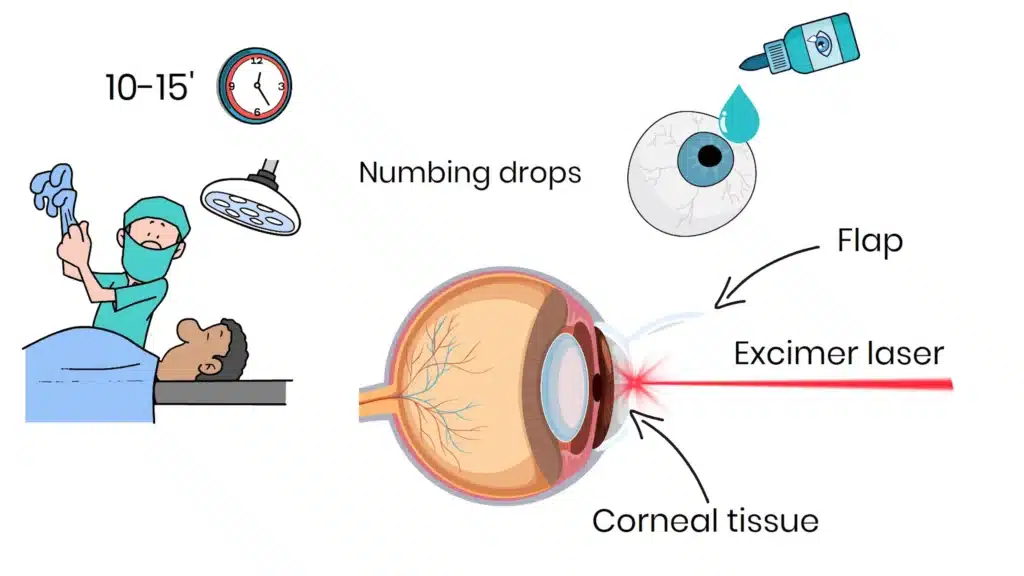
The procedure itself is quite straightforward and takes only about ten to fifteen minutes per eye.
Step 1: Numbing Drops
First, your eye doctor will apply numbing drops to your eyes so you won’t feel any pain during the surgery. You’ll be awake the entire time, and a small device will gently hold your eyelids open so you don’t have to worry about blinking.
Step 2: Creating the Corneal Flap
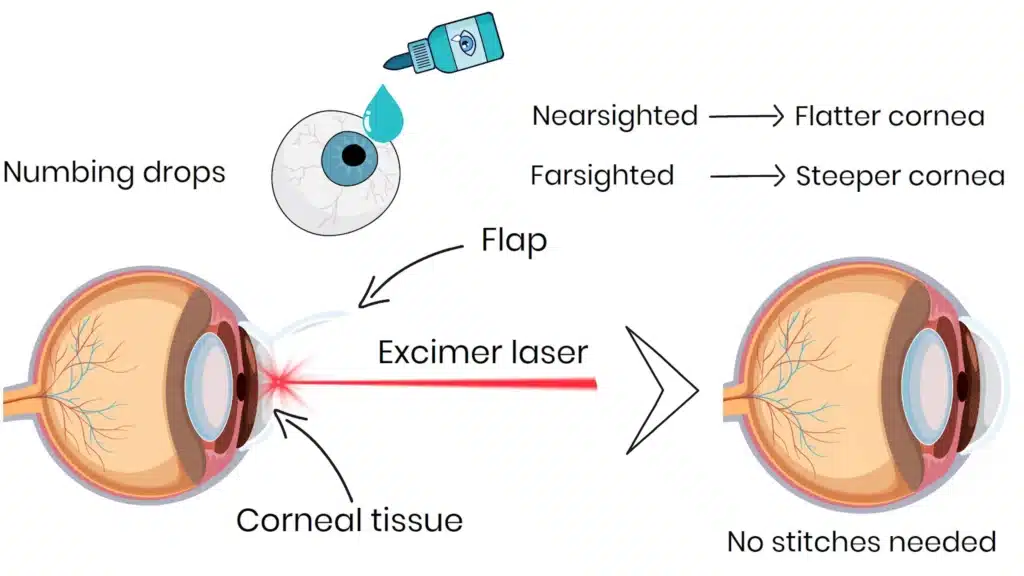
Next, the surgeon uses a special laser to create a thin flap in your cornea. This flap is like a tiny hinged door on the surface of your eye. The surgeon then carefully lifts this flap to expose the underlying corneal tissue.
Step 3: Reshaping with the Excimer Laser
Once the flap is lifted, a second laser called an excimer laser reshapes your cornea by removing microscopic amounts of tissue. This reshaping process is guided by precise measurements taken before your surgery. If you’re nearsighted, your cornea will be made flatter. If you’re farsighted, it will be made steeper. The entire laser reshaping typically takes less than one minute.
Step 4: Flap Replacement
After the cornea is reshaped, the surgeon places the flap back into position where it naturally seals without needing any stitches. The flap acts like a natural bandage and begins healing immediately.
Is LASIK Surgery Safe?
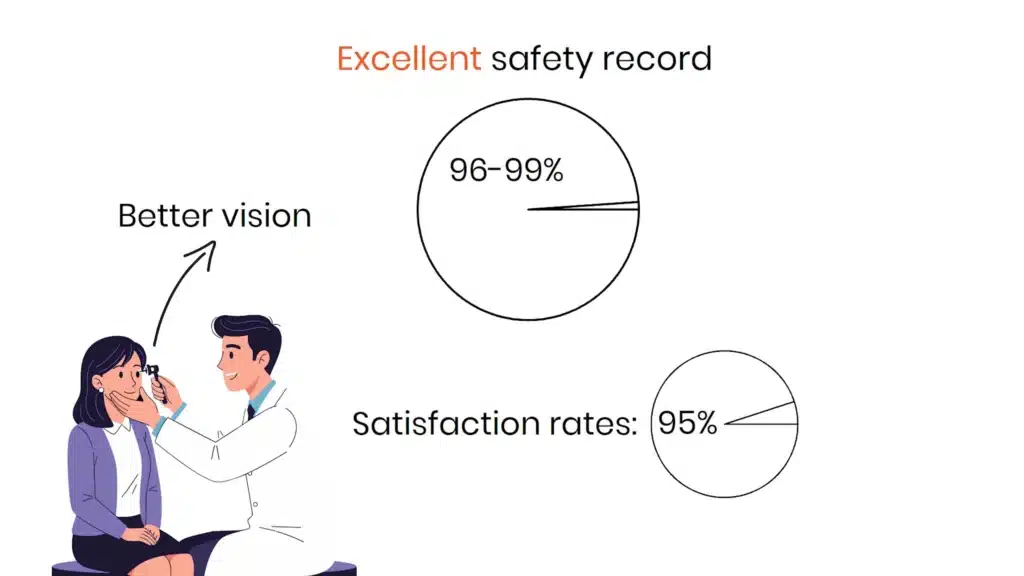
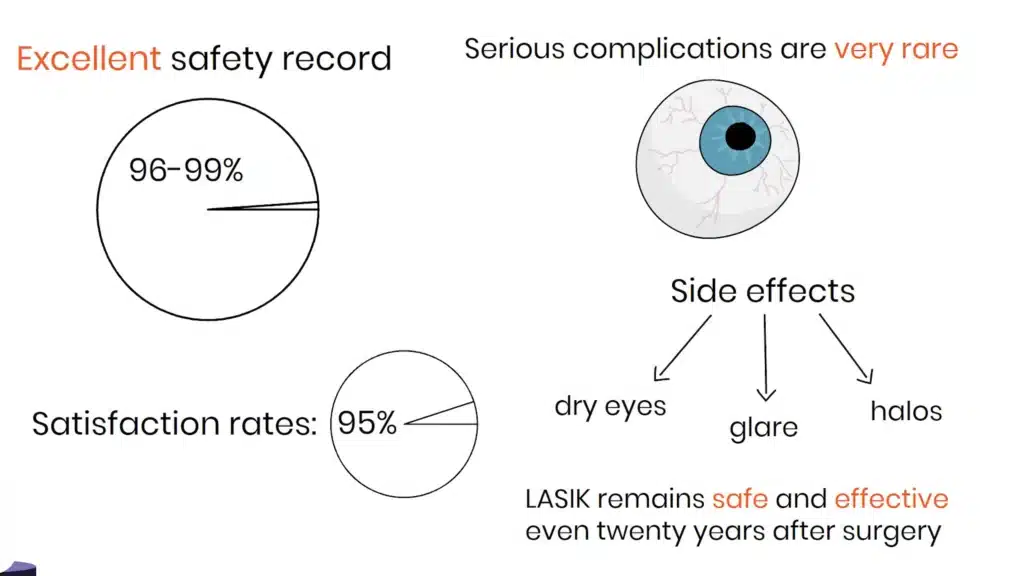
LASIK has an excellent safety record with success rates between ninety-six and ninety-nine percent. More than ninety percent of patients achieve twenty-twenty vision or better after the procedure. Patient satisfaction rates exceed ninety-five percent, making it one of the most successful elective surgeries available.
While serious complications are very rare, some people may experience temporary side effects like dry eyes, glare, or halos around lights. These symptoms usually clear up within a few weeks or months. Long-term studies show that LASIK remains safe and effective even twenty years after surgery.
Conclusion
LASIK is a proven and safe surgical option for correcting vision problems without the need for glasses or contact lenses. With high success rates and minimal complications, it continues to be one of the most popular elective surgeries available today.
