Sign Up

Sign up to Eye Conditions Explained to ask questions, solve cases, and expand your knowledge. Create a profile and connect with eye-care professionals from all over the world. 🌎

Have an account? Sign In
Continue with Google
or use

Captcha Click on image to update the captcha.

Have an account? Sign In Now

Sign In

We want to empower everyone to share their knowledge for the benefit of the entire community. Let people who need your help find you.

Sign Up Here
Continue with Google
or use

Captcha Click on image to update the captcha.

Forgot Password?

Don't have account, Sign Up Here

Forgot Password

Lost your password? Please enter your email address and we will send a new Password at your email. You can change your Password any time from your profile.

Have an account? Sign In Now

Please briefly explain why you feel this question should be reported.

Please briefly explain why you feel this answer should be reported.

Please briefly explain why you feel this user should be reported.

Eye Conditions Explained Logo Eye Conditions Explained Logo
Sign InSign Up

Eye Conditions Explained

Eye Conditions Explained Navigation

Search
Ask A Question

Mobile menu

Close
  • Ask Questions
  • Read Articles
  • Explore Groups
  • View Categories
  • Login
What's your question?
  • Recent Questions
  • Most Answered
  • No Answers
  • Answers
  • Most Visited
  • Most Voted

Eye Conditions Explained Latest Questions

Vasilis Inglezis
  • 4
Poll
Vasilis Inglezis
Asked: February 12, 2019In: MCQs

How would you diagnose this based on the image?

  • 4

Poll Results

18.89%Torpedo maculopathy ( 123 voters )
9.06%Retinal coloboma ( 59 voters )
15.51%Myelinated nerve fiber layer ( 101 voters )
56.53%Ocular albinism ( 368 voters )
Based On 651 Votes

Participate in Poll, Choose Your Answer.
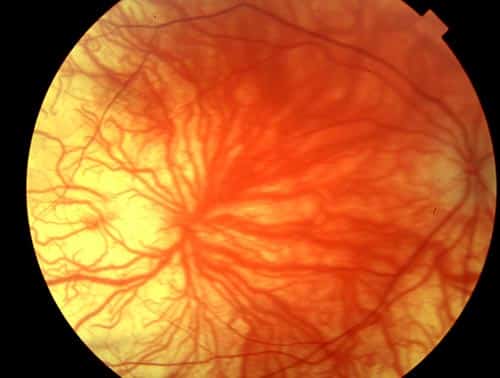
How would you diagnose this based on the image?

myelinated nerve fiber layerocular albinismretinal colobomatorpedo maculopathy
0
  • 0
  • 0
Vasilis Inglezis
  • 2
Poll
Vasilis Inglezis
Asked: February 11, 2019In: MCQs

How would you diagnose this based on the image?

  • 2

Poll Results

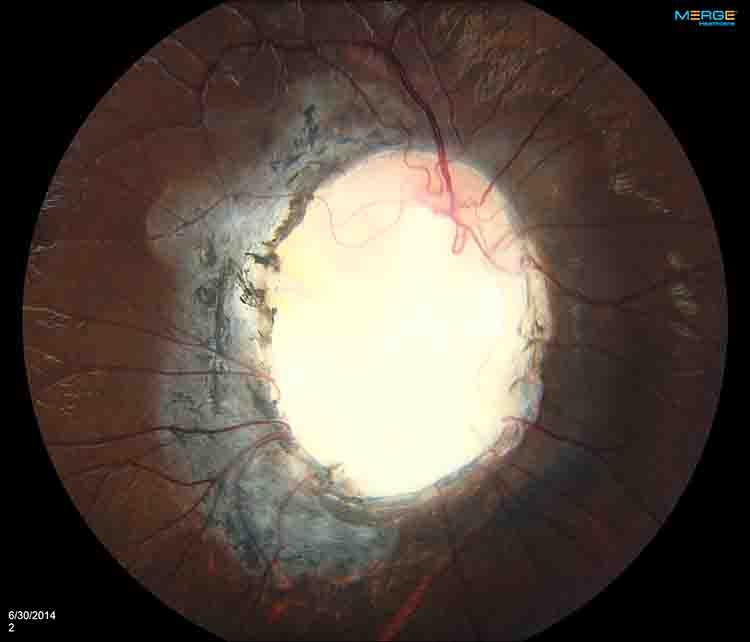
75.3%Retinal coloboma ( 634 voters )
12.95%Choroideremia ( 109 voters )
6.77%Cone dystrophy ( 57 voters )
4.99%Drusen ( 42 voters )
Based On 842 Votes

Participate in Poll, Choose Your Answer.

How would you diagnose this based on the image?

Similar question: Which one of the following diagnostic tests is NOT useful in evaluating a patient with a retained ...Read more

choroideremiacone dystrophydrusenretinal coloboma
0
  • 0
  • 0
Vasilis Inglezis
  • 5
Poll
Vasilis Inglezis
Asked: January 12, 2019In: MCQs

In which case do we meet a shallow anterior chamber?

  • 5

Poll Results

16.14%In case of high myopia ( 82 voters )
8.27%In case of aphakia ( 42 voters )
61.02%In case of high hypermetropia ( 310 voters )
8.86%In all of the cases ( 45 voters )
Based On 508 Votes

Participate in Poll, Choose Your Answer.

Related question: Which of the statement below is correct about Myopia?

shallow anterior chamber
0
  • 0
  • 0
Vasilis Inglezis
  • 0
Poll
Vasilis Inglezis
Asked: January 30, 2019In: MCQs

Lagophthalmos can arise from a malfunction of the:

  • 0

Poll Results

2.38%Optic nerve (II) ( 15 voters )
42.63%Oculomotor (III) ( 269 voters )
53.72%Facial nerve (VII) ( 339 voters )
1.27%Hypoglossal (XII) ( 8 voters )
Based On 631 Votes

Participate in Poll, Choose Your Answer.

Answer: Lagophthalmos is the condition in which the patient cannot close the eyelids completely and it arises from a malfunction ...Read more

lagophthalmos
0
  • 0
  • 0
Vasilis Inglezis
  • 1
Poll
Vasilis Inglezis
Asked: January 21, 2019In: MCQs

What is the examination distance in Indirect ophthalmoscopy ?

  • 1

Poll Results

52.84%At an arm's length ( 298 voters )
16.31%As close to patient's eye as possible ( 92 voters )
18.26%At 20 centimeters ( 103 voters )
12.59%None of the above ( 71 voters )
Based On 564 Votes

Participate in Poll, Choose Your Answer.

indirect ophthalmoscopy
0
  • 0
  • 0
Vasilis Inglezis
  • 0
Poll
Vasilis Inglezis
Asked: February 1, 2019In: MCQs

Factors that increase the risk of cataract include:

  • 0

Poll Results

2.84%Prolonged use of corticosteroid medications ( 17 voters )
4.68%Previous eye injury or inflammation ( 28 voters )
9.7%Excessive exposure to sunlight ( 58 voters )
82.78%All of the above ( 495 voters )
Based On 598 Votes

Participate in Poll, Choose Your Answer.

Related question: In which case do we meet a shallow anterior chamber?   Answer: All of the above factors increase ...Read more

cataract
0
  • 0
  • 0
Vasilis Inglezis
  • 0
Poll
Vasilis Inglezis
Asked: February 1, 2019In: MCQs

Which of the following intraocular lenses (IOLs) material is non-foldable?

  • 0

Poll Results

7.75%Silicone ( 49 voters )
60.28%Polymethylmethacrylate (PMMA) ( 381 voters )
21.36%Acrylic ( 135 voters )
10.6%All of them ( 67 voters )
Based On 632 Votes

Participate in Poll, Choose Your Answer.

Related question: Which technique do we use to calculate the power of the IOL? Answer: Polymethylmethacrylate (PMMA) was the first ...Read more

intraocular lens
0
  • 0
  • 0

Sidebar

Stats

Recent Posts

  • Central Retinal Vein Occlusion: Symptoms & Treatment

  • Homonymous Hemianopia: Causes, Symptoms & Treatment

  • Iris Freckles: Causes, Diagnosis & When to See a Doctor

  • Papilledema: Optic Disc Swelling From High ICP

  • Iritis (Anterior Uveitis): Symptoms, Causes & Treatment

Top Groups

  • Eye Conditions MCQ Discussion Group
    • Public group

    Eye Conditions MCQ Discussion Group

Explore

  • Ask Questions
  • Read Articles
  • Explore Groups
  • View Categories
  • Login

© 2018-2026 Eye Conditions Explained. All Rights Reserved
Terms of Use.