Sign Up

Sign up to Eye Conditions Explained to ask questions, solve cases, and expand your knowledge. Create a profile and connect with eye-care professionals from all over the world. 🌎

Have an account? Sign In
Continue with Google
or use

Captcha Click on image to update the captcha.

Have an account? Sign In Now

Sign In

We want to empower everyone to share their knowledge for the benefit of the entire community. Let people who need your help find you.

Sign Up Here
Continue with Google
or use

Captcha Click on image to update the captcha.

Forgot Password?

Don't have account, Sign Up Here

Forgot Password

Lost your password? Please enter your email address and we will send a new Password at your email. You can change your Password any time from your profile.

Have an account? Sign In Now

Please briefly explain why you feel this question should be reported.

Please briefly explain why you feel this answer should be reported.

Please briefly explain why you feel this user should be reported.

Eye Conditions Explained Logo Eye Conditions Explained Logo
Sign InSign Up

Eye Conditions Explained

Eye Conditions Explained Navigation

Search
Ask A Question

Mobile menu

Close
  • Ask Questions
  • Read Articles
  • Explore Groups
  • View Categories
  • Login
What's your question?
  • Recent Questions
  • Most Answered
  • No Answers
  • Answers
  • Most Visited
  • Most Voted

Eye Conditions Explained Latest Questions

Vasilis Inglezis
  • 7
Poll
Vasilis Inglezis
Asked: January 4, 2019In: MCQs

Which is the least common cause of sudden vision loss?

  • 7

Poll Results

24.46%Vitreous hemorrhage ( 170 voters )
28.63%Optic neuritis ( 199 voters )
12.52%Central retinal vein occlusion (CRVO) ( 87 voters )
18.85%Central retinal artery occlusion (CRAO) ( 131 voters )
15.54%Retinal detachment ( 108 voters )
Based On 695 Votes

Participate in Poll, Choose Your Answer.

Suggested question: What is the most common cause of vitreous hemorrhage in adults?

central retinal artery occlusion (crao)central retinal vein occlusion (crvo)optic neuritisretinal detachmentvision lossvitreous hemorrhage
1
  • 1
  • 0
Vasilis Inglezis
  • 0
Poll
Vasilis Inglezis
Asked: February 5, 2019In: MCQs

Signs and symptoms of uveitis do NOT include:

  • 0

Poll Results

3.75%Blurred vision ( 30 voters )
58.93%Scotoma ( 472 voters )
20.47%Headaches ( 164 voters )
16.85%Irregular pupil ( 135 voters )
Based On 801 Votes

Participate in Poll, Choose Your Answer.

Related question: How shall we treat acute anterior uveitis?
uveitis
3
  • 3
  • 0
Vasilis Inglezis
  • 1
Poll
Vasilis Inglezis
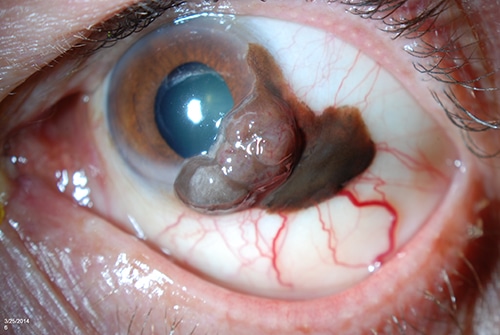
Asked: March 2, 2019In: MCQs

How would you diagnose this based on the image?

  • 1

Poll Results

3.92%Band keratopathy ( 37 voters )
90.35%Conjunctival melanoma ( 852 voters )
2.12%Endophthalmitis ( 20 voters )
3.61%Intraocular foreign body ( 34 voters )
Based On 943 Votes

Participate in Poll, Choose Your Answer.

How would you diagnose this based on the image?

Similar question: How would you diagnose this based on the image?

band keratopathyconjunctival melanomaendophthalmitisintraocular foreign body
0
  • 0
  • 0
Vasilis Inglezis
  • 0
Poll
Vasilis Inglezis
Asked: January 18, 2019In: MCQs

An adult has -8.00D on his spectacles and wants to wear contact lenses for the first time. Which sentence is NOT correct?

  • 0

Poll Results

8.65%He will get no reflections with CLs ( 61 voters )
72.2%He should buy -8.00D CLs as well ( 509 voters )
12.2%He will have a wider field of view ( 86 voters )
6.95%He will have a more natural vision ( 49 voters )
Based On 705 Votes

Participate in Poll, Choose Your Answer.

contact lenses
1
  • 1
  • 0
Vasilis Inglezis
  • 0
Poll
Vasilis Inglezis
Asked: March 12, 2019In: MCQs

Esotropia is a form of strabismus in which one or both eyes turns:

  • 0

Poll Results

1.06%Upward ( 10 voters )
0.74%Downward ( 7 voters )
93.64%Inward ( 883 voters )
4.56%Outward ( 43 voters )
Based On 943 Votes

Participate in Poll, Choose Your Answer.

Suggested question: What is the primary action of the superior oblique muscle ?
esotropiastrabismus
1
  • 1
  • 0
Vasilis Inglezis
  • 2
Poll
Vasilis Inglezis
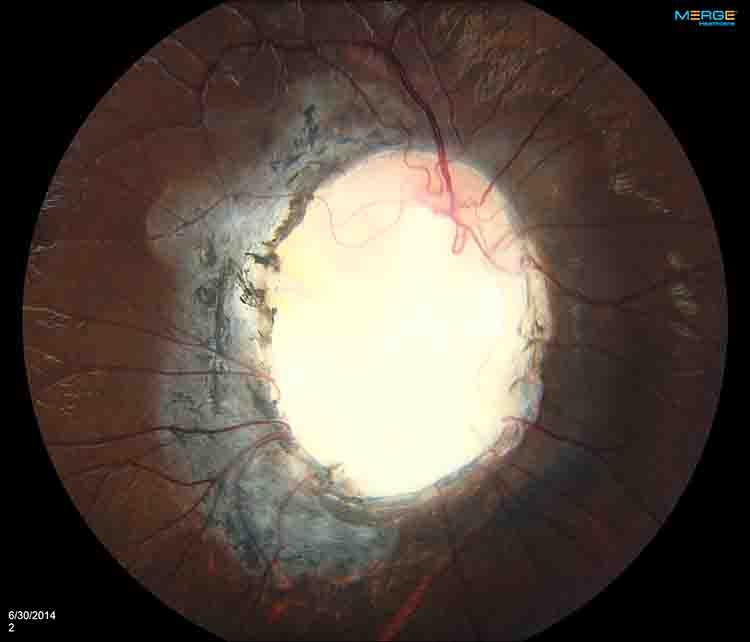
Asked: February 11, 2019In: MCQs

How would you diagnose this based on the image?

  • 2

Poll Results

75.3%Retinal coloboma ( 634 voters )
12.95%Choroideremia ( 109 voters )
6.77%Cone dystrophy ( 57 voters )
4.99%Drusen ( 42 voters )
Based On 842 Votes

Participate in Poll, Choose Your Answer.

How would you diagnose this based on the image?

Similar question: Which one of the following diagnostic tests is NOT useful in evaluating a patient with a retained ...Read more

choroideremiacone dystrophydrusenretinal coloboma
0
  • 0
  • 0
Vasilis Inglezis
  • 1
Poll
Vasilis Inglezis
Asked: January 6, 2019In: MCQs

Which of the signs below we do NOT meet in Oculomotor nerve palsy?

  • 1

Poll Results

10.38%We don't meet ptosis ( 71 voters )
13.89%We don't meet diplopia ( 95 voters )
55.41%We don't meet miosis ( 379 voters )
20.32%We don't meet an outwards deviation of the eye ( 139 voters )
Based On 684 Votes

Participate in Poll, Choose Your Answer.

third nerve palsy
1
  • 1
  • 0

Sidebar

Stats

Recent Posts

  • Central Retinal Vein Occlusion: Symptoms & Treatment

  • Homonymous Hemianopia: Causes, Symptoms & Treatment

  • Iris Freckles: Causes, Diagnosis & When to See a Doctor

  • Papilledema: Optic Disc Swelling From High ICP

  • Iritis (Anterior Uveitis): Symptoms, Causes & Treatment

Top Groups

  • Eye Conditions MCQ Discussion Group
    • Public group

    Eye Conditions MCQ Discussion Group

Explore

  • Ask Questions
  • Read Articles
  • Explore Groups
  • View Categories
  • Login

© 2018-2026 Eye Conditions Explained. All Rights Reserved
Terms of Use.