
In this article we explore a condition that affects millions of people worldwide, but many do not even realize they have it. We are talking about photophobia, which is simply a fancy medical term for light sensitivity. But before you get worried, let me be clear: photophobia is not a disease or condition on its own. Rather, it is a symptom that points to something else going on in your body, whether that is an eye problem or something happening in your nervous system.
How Photophobia Feels
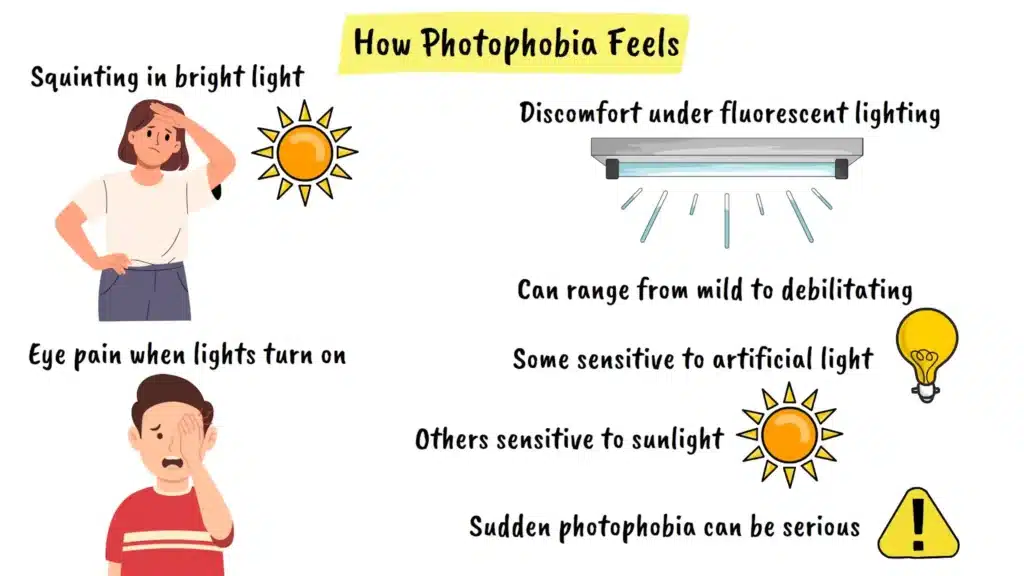
If you have ever found yourself squinting in bright sunlight, experiencing eye pain when the lights suddenly turn on, or feeling like your eyes are screaming at you when you are sitting under fluorescent lights, then you might have photophobia. The experience ranges from mild discomfort to absolutely debilitating pain that affects your daily life. Some people can tolerate bright light just fine but experience severe sensitivity to artificial lights like those found in office buildings or retail stores. Others find that even natural sunlight becomes unbearable.
When Photophobia Is a Medical Warning
Now, let me tell you something important right from the start. Sudden onset photophobia can sometimes indicate a serious medical condition, so if you develop light sensitivity all of a sudden, you should contact your doctor right away. With that said, let us dive into understanding what is happening inside your eyes and brain when photophobia occurs.
How the Eyes Normally Handle Light
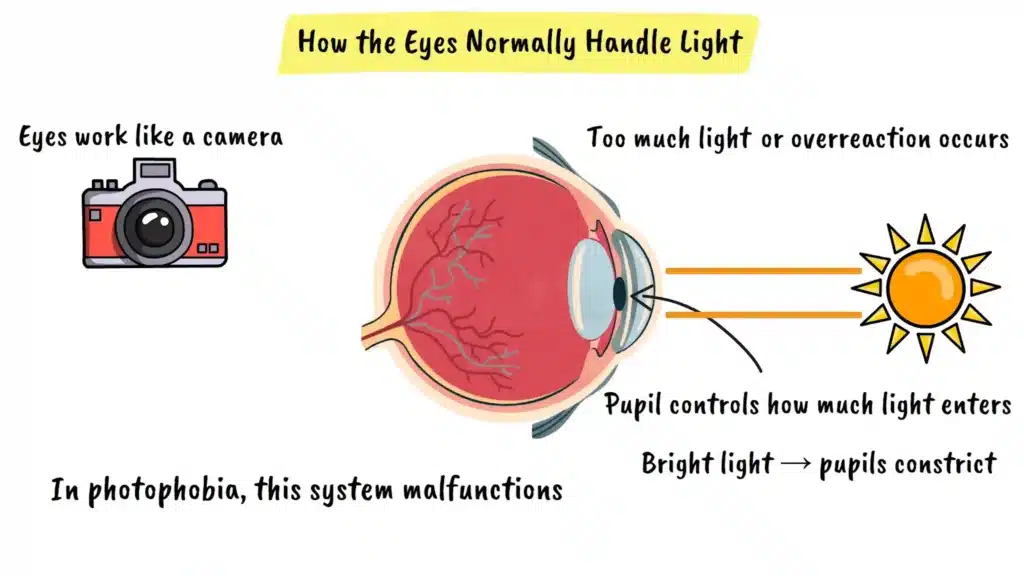
Think of your eyes as a camera. Just like a camera has an aperture that opens and closes to control how much light enters the lens, your eyes have a pupil that does the same thing. When light is too bright, your pupils should constrict automatically to let less light through to the back of your eye. But in people with photophobia, something goes wrong with this system. Either too much light is getting in, the light-sensitive cells in the back of your eye are overstimulated, or your nervous system is overreacting to normal light levels.
The Role of Photoreceptors and the Brain
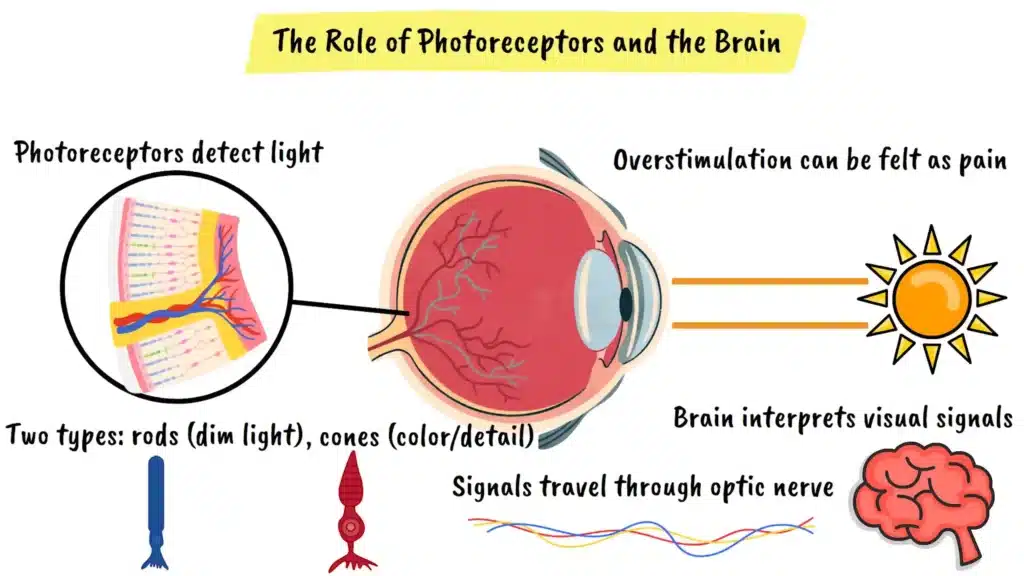
The back of your eye contains cells called photoreceptors, and these cells are incredibly important for how you see the world. These photoreceptors come in two main types: rods and cones. Rods help you see in dim lighting, while cones help you see colors and fine details. When light hits these cells, they send electrical signals to your optic nerve, which then carries this information to your brain. The brain then interprets these signals and tells you what you are seeing. But here is where photophobia comes in. If these photoreceptors are being overstimulated, or if the signals traveling along the optic nerve are too intense, your brain can perceive this as pain.
Ocular Causes of Photophobia
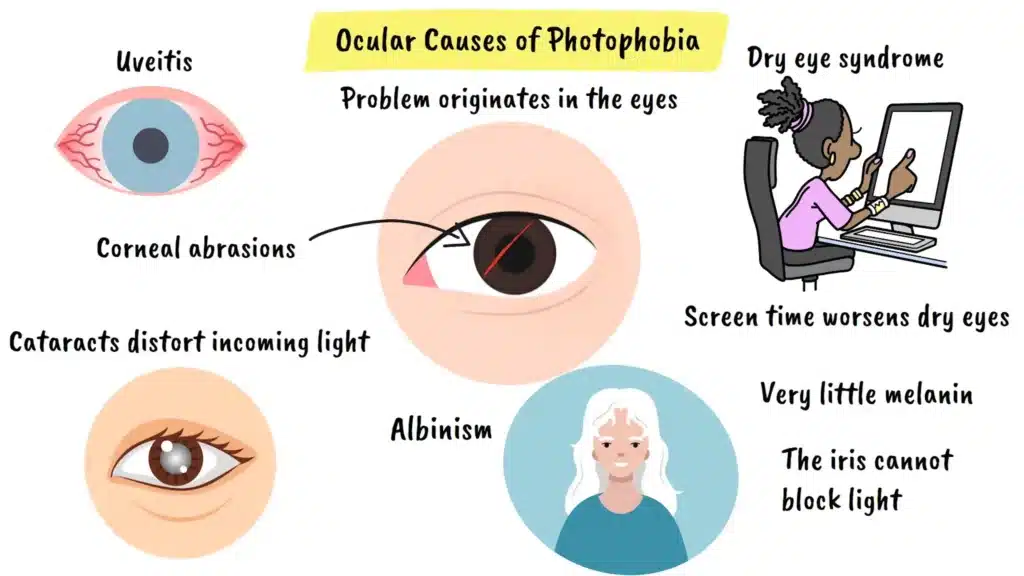
The causes of photophobia are incredibly diverse, and this is why it is so important to understand the different categories. First, we have ocular causes, which means the problem is actually in your eyes themselves.
If you have a corneal abrasion, which is basically a scratch on the clear front part of your eye, that damaged tissue becomes hypersensitive to light. Cataracts, which are cloudy patches that form in your eye lens, can cause photophobia because they change how light enters your eye. Uveitis, which is inflammation inside the eye, is another common cause.
Dry eye syndrome is also a major culprit, and this one is incredibly common in today’s world where we spend so much time staring at screens. When your tear film is insufficient or of poor quality, the cornea becomes more exposed to light and becomes hypersensitive.
Even conditions like albinism can cause photophobia. People with albinism have very little melanin, which is the pigment that colors your eyes. Without this protective pigment, the iris cannot effectively block light from entering the eye, so people with albinism experience significant light sensitivity.
Neurological Causes of Photophobia
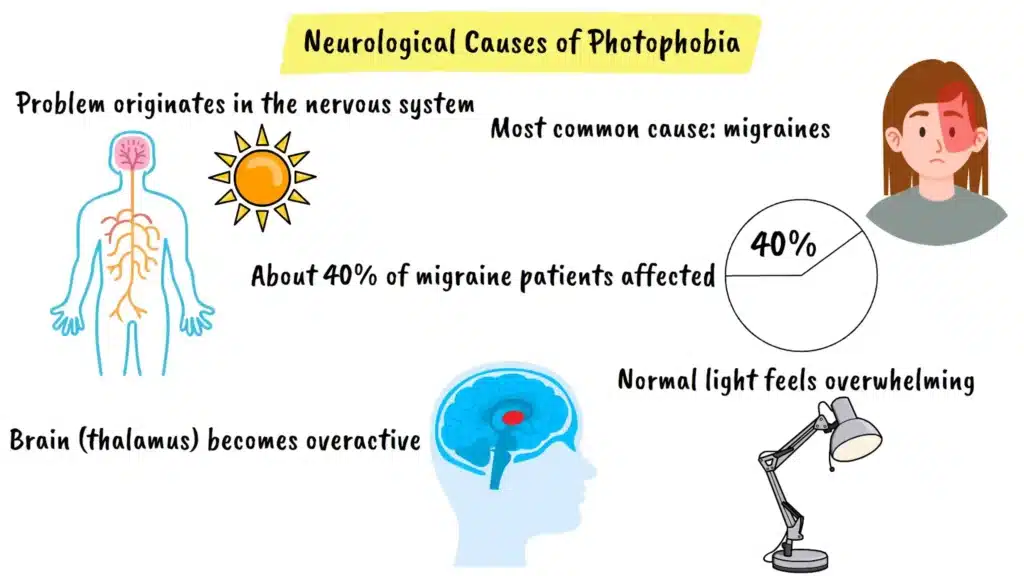
Now let us move to the second major category: neurological causes. This is where things get really interesting because the problem is not really in your eyes. Instead, something is happening in your nervous system that makes you hypersensitive to light.
The most common neurological cause of photophobia is migraine headaches. If you have ever had a migraine, you probably know that bright light makes it worse. In fact, studies show that about forty percent of migraine patients report photophobia. But here is the fascinating part: the photophobia in migraine is not just an ocular reaction. Instead, it involves the central nervous system. The thalamus, which is the part of your brain that processes sensory information including light, becomes hyperactive in migraine patients. This means that even moderate lighting conditions can feel like an assault on your senses when you are having a migraine.
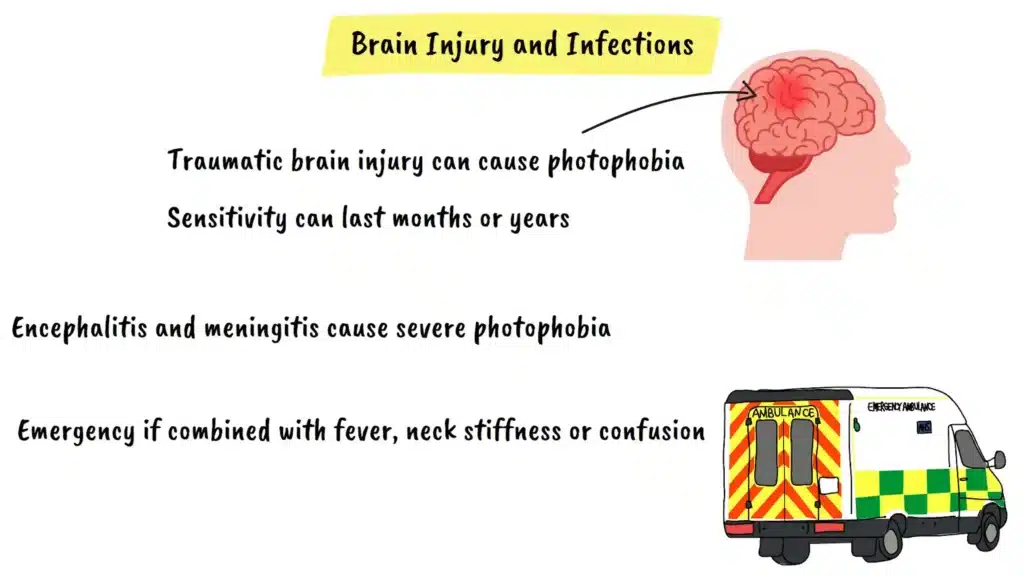
Traumatic brain injury can also cause photophobia. When your brain is injured in an accident or impact, the pathways that process visual information can become damaged or hypersensitive. Some people develop persistent photophobia after a head injury that can last for months or even years.
Encephalitis, which is inflammation of the brain, and meningitis, which is inflammation of the membranes around the brain and spinal cord, are serious neurological conditions that cause severe photophobia. If you develop sudden photophobia along with fever, neck stiffness, or confusion, you need to go to the emergency room immediately because these are medical emergencies.
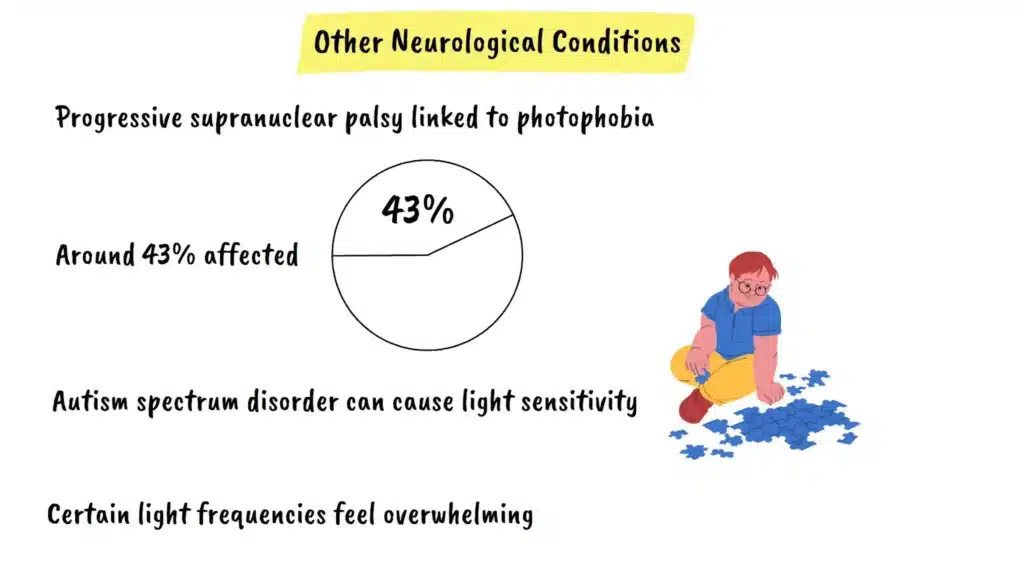
Progressive supranuclear palsy is a rare neurological disorder, and studies show that around forty-three percent of patients with this condition experience photophobia. Even conditions like autism spectrum disorder can cause light sensitivity. Many people on the autism spectrum report that certain light frequencies are overwhelming and uncomfortable to be around.
Psychiatric and Medication-Related Causes
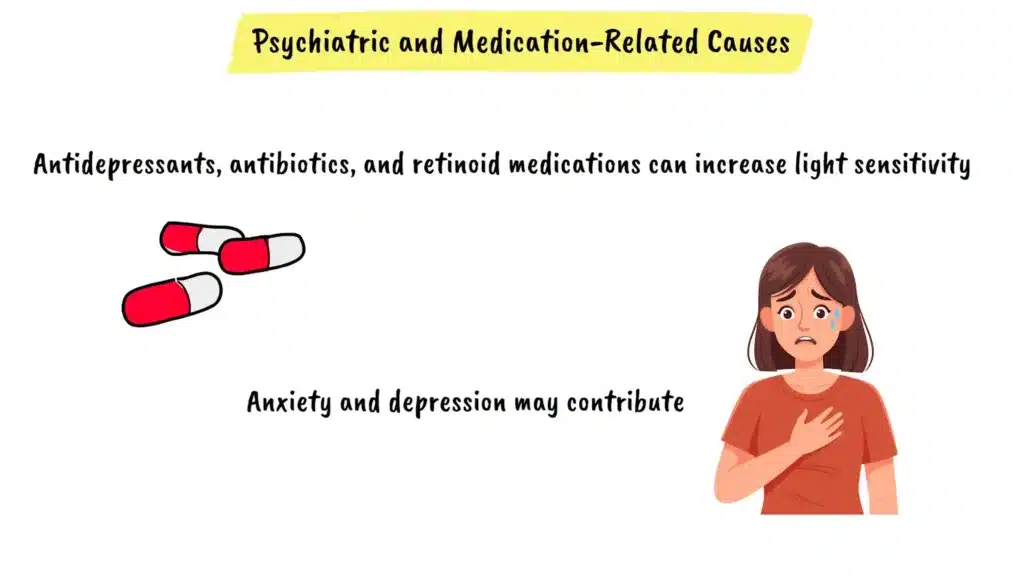
Beyond these major categories, there are also psychiatric causes and medication-related causes. Some antidepressants, antibiotics, and retinoid medications can increase your sensitivity to light. Additionally, anxiety disorders and depression can sometimes be accompanied by increased light sensitivity.
Symptoms of Photophobia
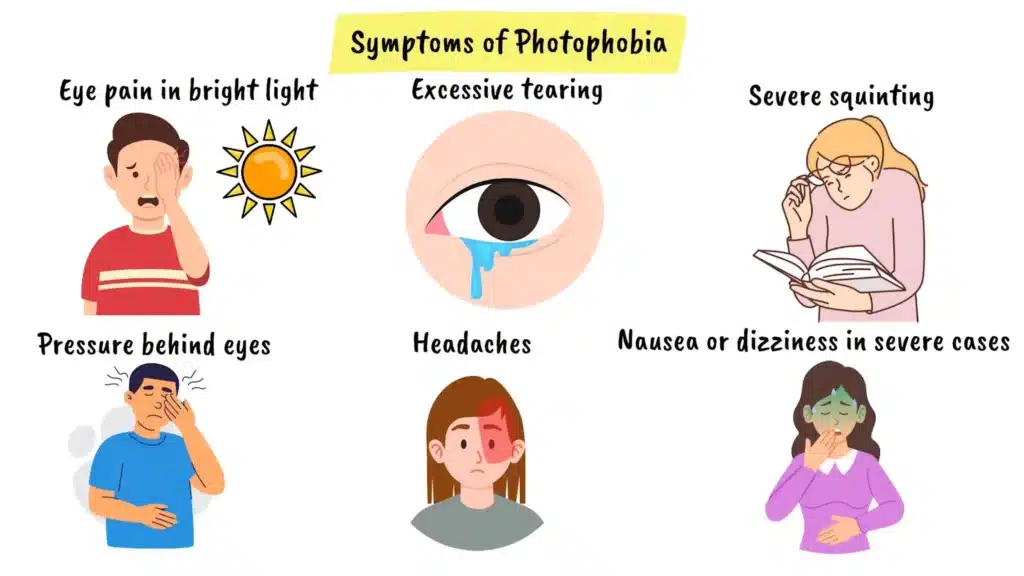
Let us talk about the symptoms and how you can recognize if you have photophobia. The most obvious symptom is eye pain or discomfort when exposed to bright light. You might experience excessive tearing or watering of the eyes because your body is trying to protect itself from the light. You might find yourself squinting severely even in moderately bright conditions. Some people experience a sensation of pressure behind the eyes. Headaches often accompany photophobia, especially when it is related to migraines. In severe cases, people report nausea, dizziness, or even difficulty keeping their eyes open.
How Severe Can Photophobia Be?
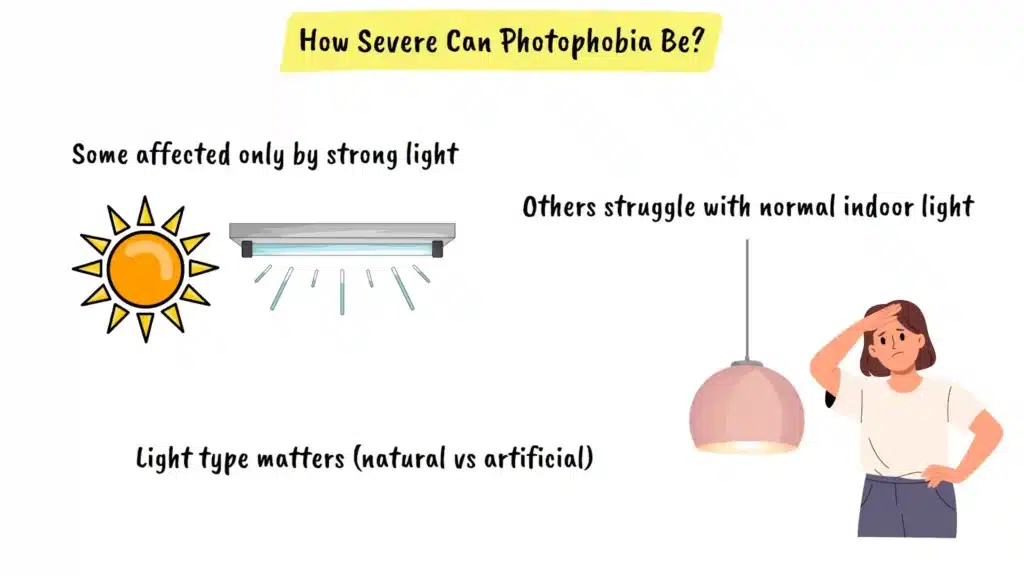
The severity of photophobia varies tremendously from person to person. Some people are only bothered by intense sunlight or bright fluorescent lights, while others might struggle with even normal indoor lighting. The type of light also matters. Some people find natural sunlight easier to tolerate than artificial lights, while others experience the opposite.
Managing Photophobia
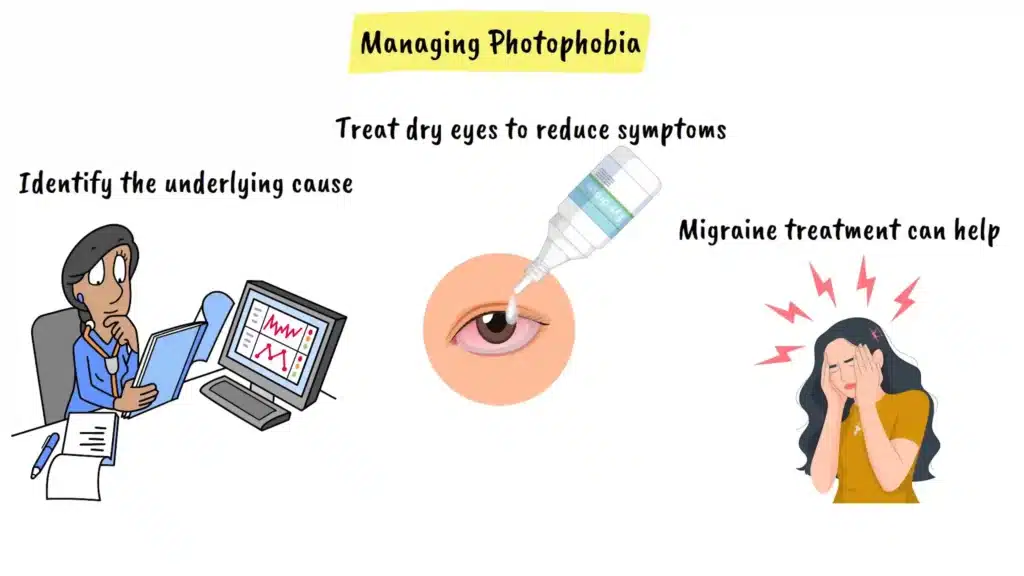
Now that we understand what causes photophobia, let us talk about how to manage it. The first step is always to identify the underlying cause. If your photophobia is caused by dry eyes, then treating the dry eyes with lubricating drops or other therapies can significantly reduce your symptoms. If you have a migraine, working with a neurologist to find effective migraine treatment might also resolve your photophobia.
Environmental Adjustments
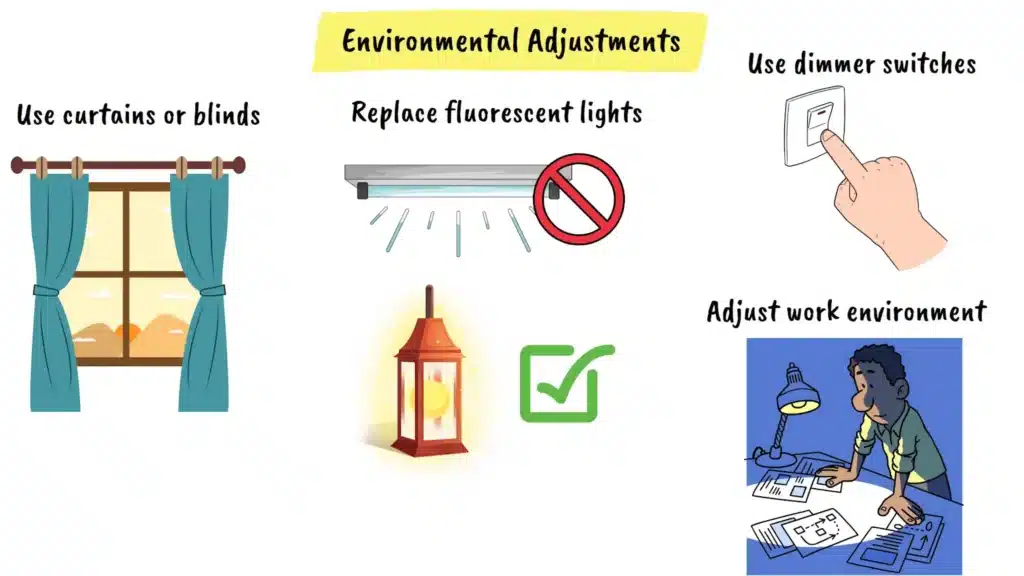
Environmental modifications are incredibly effective for managing photophobia. You can dim indoor lighting by using curtains or blinds to block out sunlight. You can replace harsh fluorescent bulbs with warm, soft lighting that is easier on the eyes. Many people find that dimmer switches are helpful so they can adjust the lighting to their comfort level. If you work in a bright office, you might request to work in a different location or negotiate flexible hours to avoid peak brightness.
Protective Eyewear
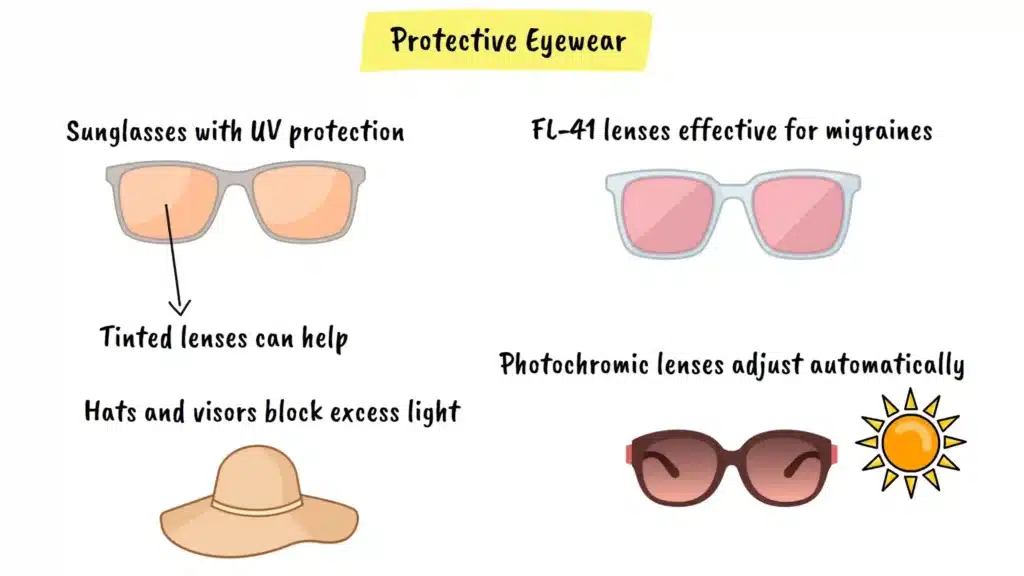
Protective eyewear is probably the single most effective tool for managing photophobia. Regular sunglasses with UV protection are essential, but specialized tinted lenses can be even more helpful. FL-41 tinted lenses have been shown to be particularly effective for reducing light sensitivity, especially in people with migraines. Some people benefit from photochromic lenses that automatically darken in bright light. Wide-brimmed hats or visors can also provide additional protection by blocking light before it even reaches your eyes.
Managing Screen Time
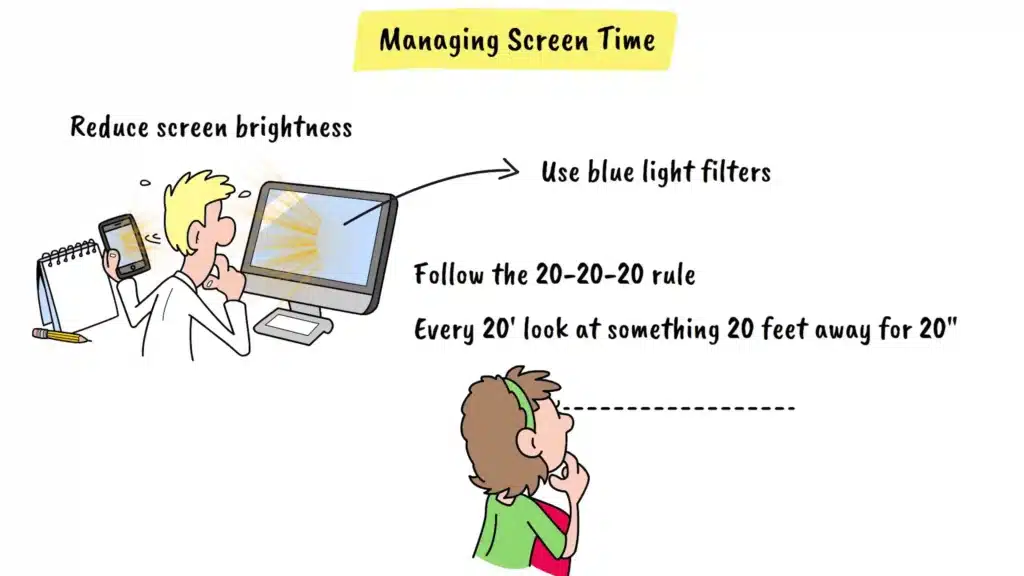
Screen time management is crucial in the modern world. If you spend a lot of time looking at computers, smartphones, or tablets, try using blue light filters and adjusting the brightness settings. Many people benefit from the twenty-twenty-twenty rule, which means every twenty minutes, look at something twenty feet away for twenty seconds. This gives your eyes a break and can reduce strain and sensitivity.
Medical Treatments
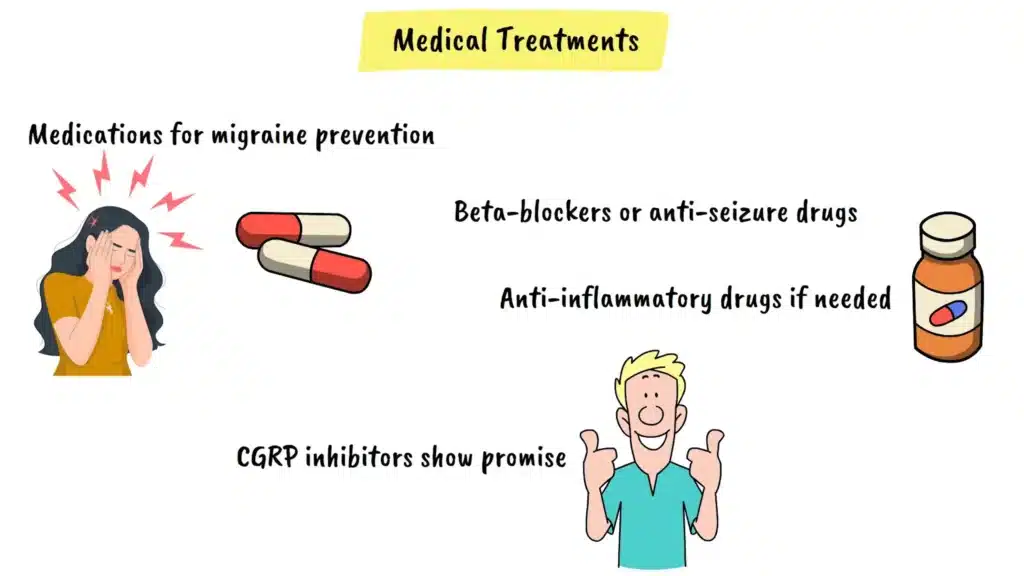
For more severe cases, your eye doctor might prescribe medications to help manage photophobia. Some medications used for migraine prevention, like beta-blockers or anti-seizure drugs, can also reduce light sensitivity. If your photophobia is related to inflammation, anti-inflammatory medications might be prescribed. Some newer medications called CGRP inhibitors have shown promise in treating migraine-related photophobia.
Light Therapy and Surgery
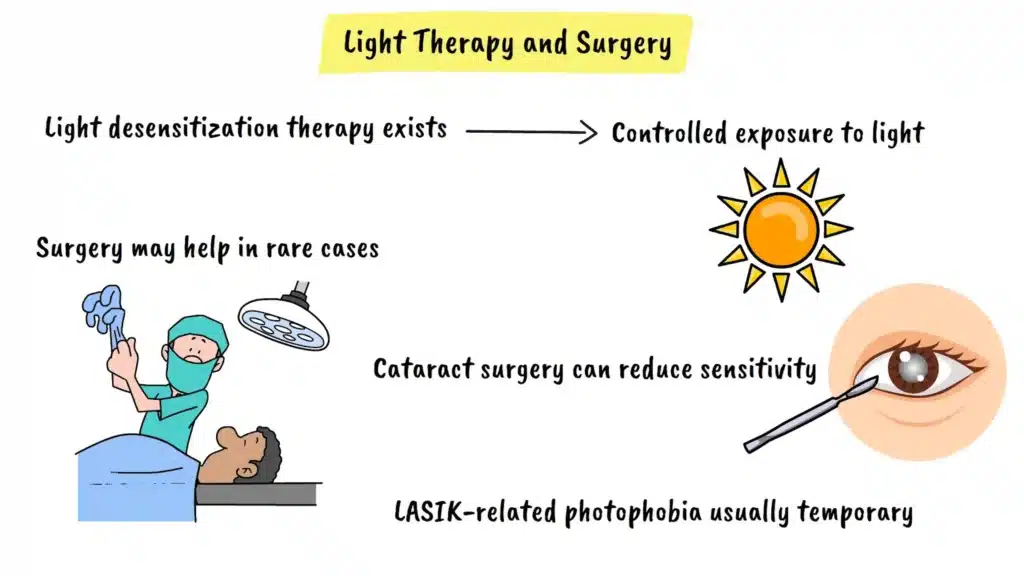
Light therapy and desensitization therapy are also options for some people. This involves gradual, controlled exposure to light to help your eyes and nervous system become less reactive over time. This type of therapy should only be done under professional supervision.
In rare cases where photophobia is caused by structural eye problems like severe cataracts or corneal scarring, surgical interventions might be necessary. For example, cataract surgery can remove the cloudy lens and improve your ability to tolerate light. LASIK surgery can sometimes cause temporary photophobia, but this typically resolves within a few weeks or months as your cornea heals.
Prevention Tips for Long-Term Eye Health
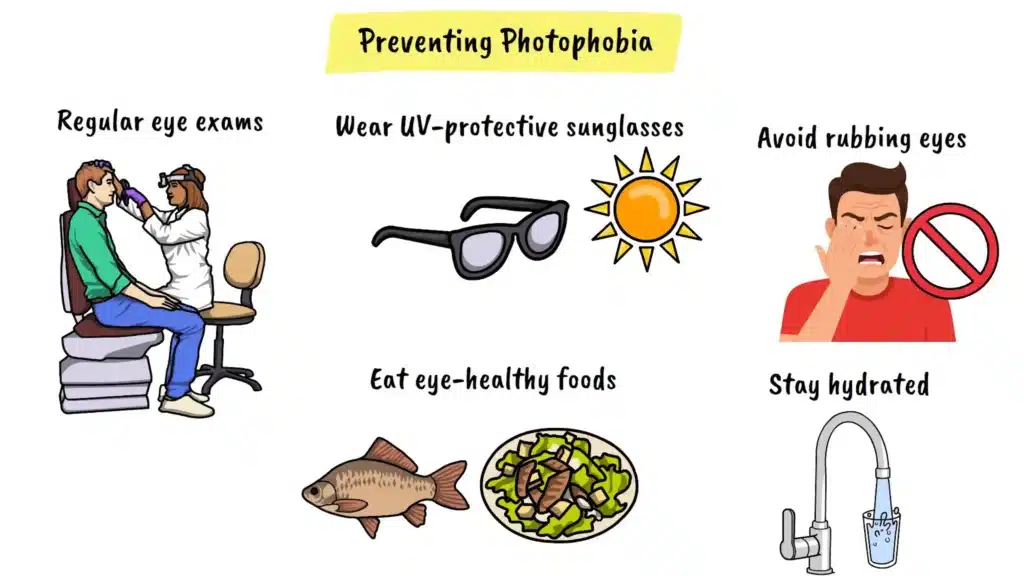
Prevention is also important for maintaining your eye health and reducing the risk of developing photophobia. Regular eye exams help catch problems early before they develop into light sensitivity. Wearing sunglasses with one hundred percent UV protection whenever you are outdoors is essential. Maintaining good eye hygiene and avoiding rubbing your eyes aggressively can prevent injuries. Eating a diet rich in vitamin A, omega-three fatty acids, and antioxidants supports overall eye health. Staying hydrated is also important because dehydration can contribute to dry eye syndrome, which as we discussed, is a common cause of photophobia.
Living With Photophobia
If you have photophobia, it is important to remember that you are not alone. Millions of people experience light sensitivity, and there are many effective strategies and treatments available. The key is to work with your eye doctor or neurologist to identify the underlying cause and develop a treatment plan that works for you.
Closing Thoughts
The information provided in this article is designed to help you understand photophobia and take steps toward managing it effectively. Remember that while photophobia can be challenging, there are numerous treatment options and lifestyle adjustments available to improve your quality of life. If you found this article helpful, please consider sharing it with others who may benefit from this information. Thank you for reading, and we hope you gained valuable insights about light sensitivity and eye health.
