
Picture this: you wake up, rub your eyes, and… ouch! They’re red, itchy, and crusted shut. Sound familiar? You might be dealing with Pink Eye, or conjunctivitis—a common eye condition that can make your mornings miserable. But don’t worry, we’re here to break it all down for you.
Pink Eye happens when the conjunctiva, that thin, clear layer covering the white of your eye and the inside of your eyelids, gets inflamed. The result? Eyes that look pink or red, feel gritty, and might even tear up or ooze discharge. It can strike anyone—babies, kids, adults, you name it. In fact, conjunctivitis accounts for about 1% of all primary care visits in the United States, and allergic conjunctivitis alone affects up to 40% of people.
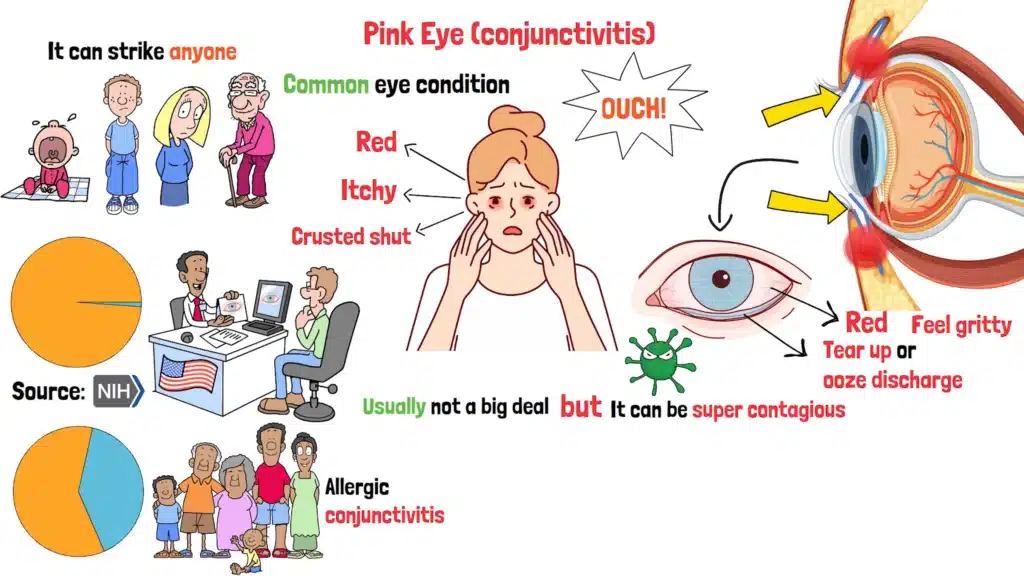
While Pink Eye is usually not a big deal and often clears up on its own, it can be super contagious—think of it like the common cold of eye conditions. That’s why understanding it matters. Whether it’s keeping your family safe or knowing when to see a doctor, this guide is your go-to resource. We’ll walk you through what causes Pink Eye, who’s at risk, how to spot it, and what you can do about it—all in a way that feels like a chat with a friendly eye doctor. Ready? Let’s dive in.
What Causes Pink Eye?
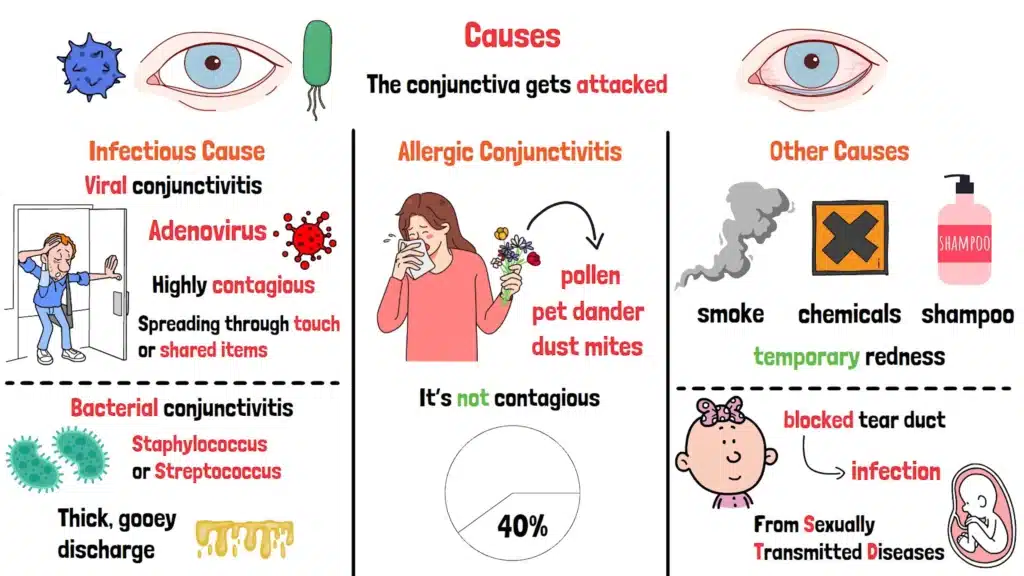
So, what sparks Pink Eye? It’s like your eye’s protective shield—the conjunctiva—gets attacked, and the culprits vary. Let’s break it down into clear categories.
Infectious Causes
Infectious Causes are the heavy hitters. First, there’s viral conjunctivitis, often caused by the same viruses behind colds, like adenovirus. It’s highly contagious, spreading through touch or shared items. Think of it as your eye catching a cold that makes it red and weepy.
Then, there’s bacterial conjunctivitis, triggered by bacteria like Staphylococcus or Streptococcus. This one’s also contagious and often comes with thick, gooey discharge.
Allergic Conjunctivitis
Allergic Conjunctivitis is another big player, especially if you’re sneezing through spring. It’s caused by allergens—pollen, pet dander, dust mites—that make your eyes itch like crazy. Unlike infectious types, it’s not contagious and usually hits both eyes. Up to 40% of people deal with this, especially in allergy season.
Other Causes
Other Causes include irritants like smoke, chemicals, or even shampoo in your eyes. These are like a one-time punch to the conjunctiva, causing temporary redness. In newborns, a blocked tear duct can lead to Pink Eye, trapping tears and inviting infection. Rarely, serious infections from sexually transmitted diseases can cause it in babies during birth, which needs urgent care.
Imagine the conjunctiva as a camera lens. When viruses, bacteria, or allergens scratch or smudge it, you get the blurry, red picture of Pink Eye. Knowing the cause helps point to the right fix.
Risk Factors for Pink Eye
Ever wonder why some people get Pink Eye more than others? Certain factors make you more likely to deal with it. Let’s look at what ups your odds.
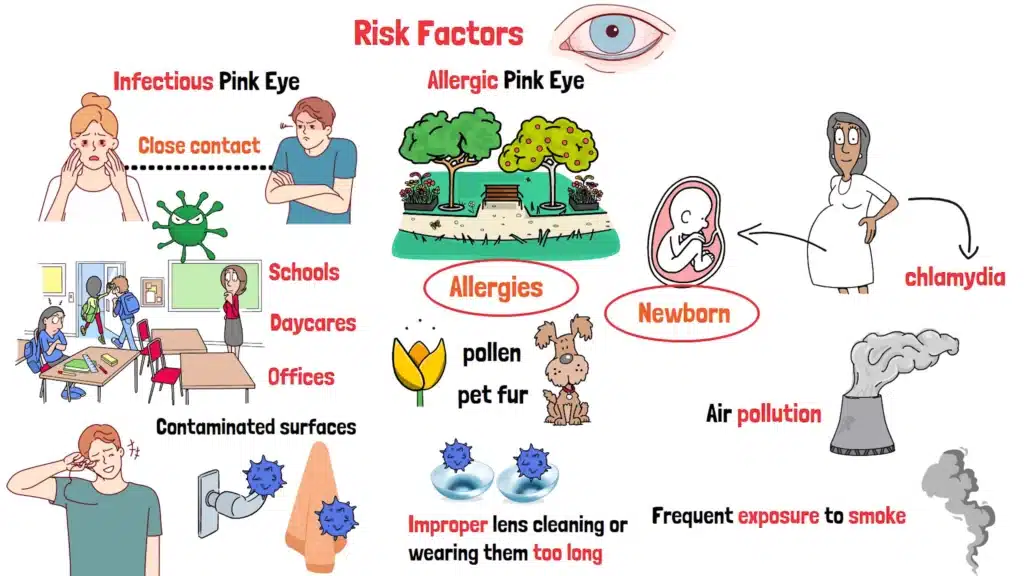
For infectious Pink Eye, close contact with someone who’s got it is a big risk. Schools, daycares, and crowded offices are like playgrounds for viruses and bacteria. If your coworker’s rubbing their red eyes, steer clear! Touching contaminated surfaces—like doorknobs or shared towels—can also bring it on.
Allergic Pink Eye hinges on your environment. If you’ve got allergies, pollen or pet fur can set off a reaction. Living in a pollen-heavy area? Your risk climbs. Contact lens wearers, listen up: improper lens cleaning or wearing them too long can irritate your eyes or trap bacteria, making both infectious and irritant Pink Eye more likely.
For newborns, the risk comes from the birth process. If mom has an infection like chlamydia, the baby might pick up a serious form of Pink Eye during delivery. Environmental factors, like air pollution or frequent exposure to smoke, can also irritate eyes and invite trouble.
Some risks, like allergies or being a newborn, you can’t change. But others, like hygiene or lens care, are in your control. Knowing these helps you stay one step ahead.
Pink Eye Symptoms: What to Look Out For
What does Pink Eye feel like? It’s not just about red eyes—there’s a whole range of signs that can clue you in. Let’s paint a picture with what you might notice.
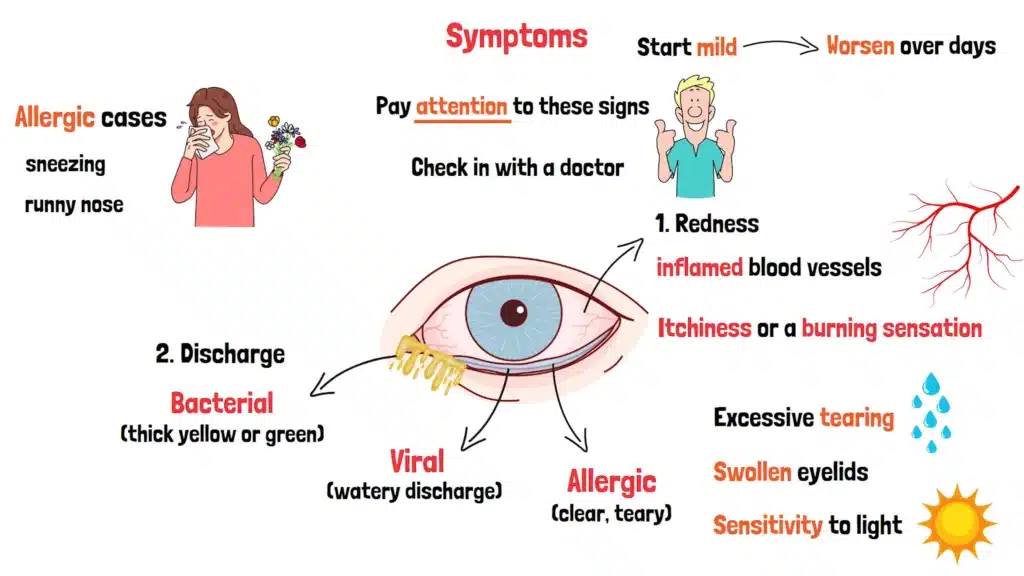
The classic sign is redness in one or both eyes, as inflamed blood vessels give your eyes that pinkish glow. You might also feel itchiness or a burning sensation, like your eyes are begging for a scratch. A gritty feeling—think sand stuck under your eyelids—is super common, making every blink uncomfortable.
Discharge is another telltale sign. In bacterial Pink Eye, it’s often thick, yellow, or green, crusting your eyes shut overnight. Viral cases tend to have watery discharge, while allergic Pink Eye brings clear, teary eyes. Speaking of tears, excessive tearing can make your eyes feel like they’re overflowing. Swollen eyelids and, in some cases, sensitivity to light (photophobia) can add to the mix.
Symptoms often start mild—a slight itch or redness—and can worsen over days. Allergic cases might come with sneezing or a runny nose, tying it to your allergies. Ever noticed your eyes feeling off after a cold or allergy flare-up? That could be Pink Eye knocking.
Pay attention to these signs, but don’t panic. They’re your body’s way of saying, “Hey, something’s up!” If they stick around or get intense, it’s time to check in with a doctor.
How Doctors Diagnose Pink Eye
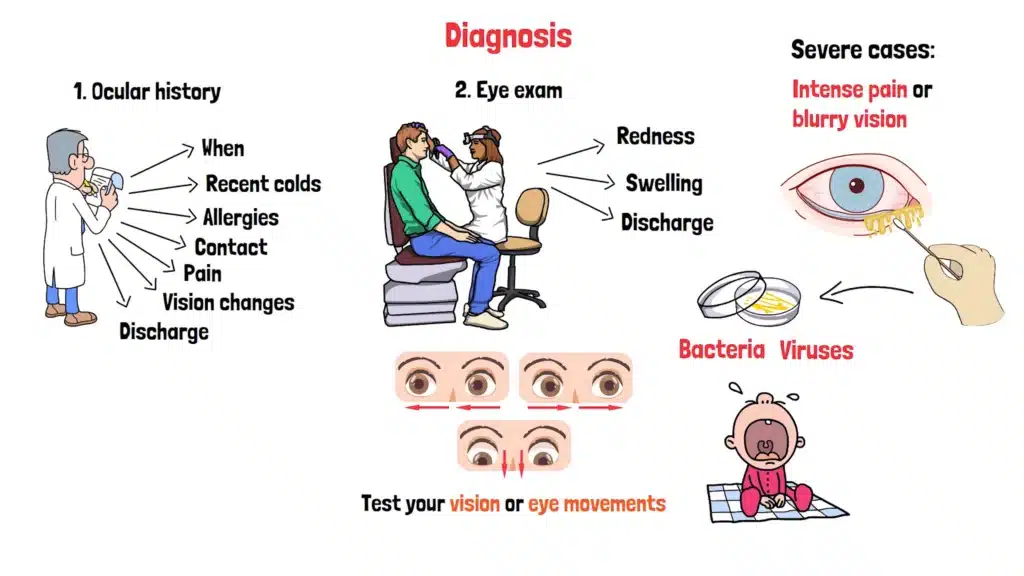
How do doctors figure out if you’ve got Pink Eye? It’s usually a straightforward process, like solving a puzzle with a few key pieces.
Your doctor starts with your story—when did your eyes start acting up? Any recent colds, allergies, or contact with someone with red eyes? They’ll ask about pain, vision changes, or discharge.
Next comes the eye exam. They’ll look at your eyes, checking for redness, swelling, or discharge, sometimes using a light to see the conjunctiva up close. They might test your vision or eye movements to rule out other issues.
For most cases, this is enough to confirm Pink Eye. But if things look severe—say, you’ve got intense pain or blurry vision—they might take a sample of your eye discharge. This swab goes to a lab to pinpoint whether bacteria, viruses, or something else is to blame. In newborns, especially if symptoms don’t improve, tests for infections like chlamydia might be needed.
The process is quick and painless—think of it as a snapshot of your eye’s health. You’ll walk out knowing what’s going on and how to tackle it.
Pink Eye Treatment: What Actually Works
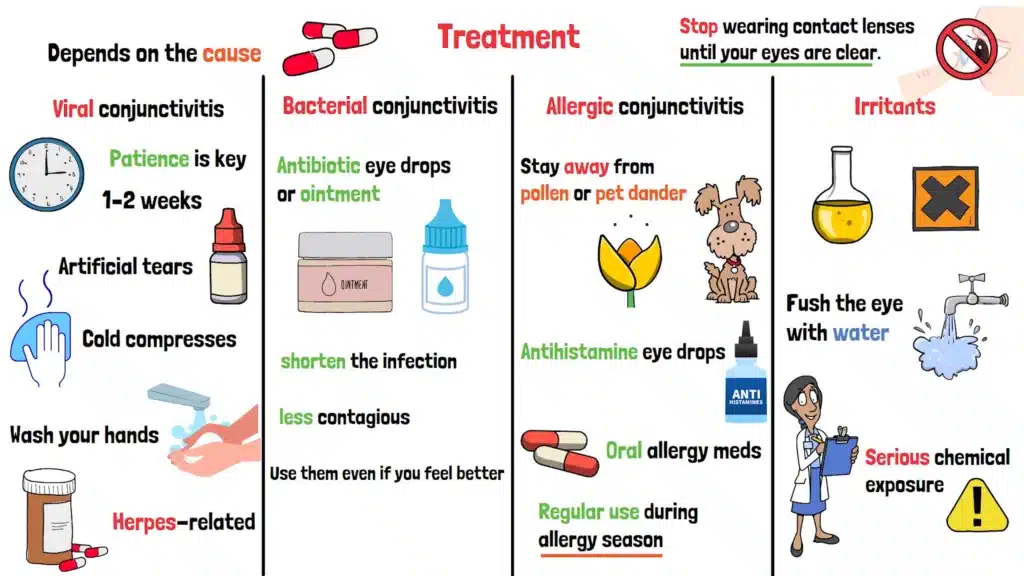
Treating Pink Eye depends on what’s causing it, but the good news? Most cases clear up with the right approach. Here’s how it works.
Treating Viral Conjunctivitis
For viral conjunctivitis, patience is key. Like a cold, it usually runs its course in 1–2 weeks. To ease discomfort, try artificial tears to lubricate your eyes or cold compresses to calm swelling. Keep things clean—wash your hands often to avoid spreading it. In rare cases, like herpes-related Pink Eye, antiviral meds might be prescribed.
Treating Bacterial Conjunctivitis
Bacterial conjunctivitis often calls for antibiotic eye drops or ointment. These can shorten the infection and make you less contagious, but you’ve got to use them for the full course, even if you feel better. Think of it like finishing a round of antibiotics for a sore throat.
Treating Allergic Conjunctivitis
Allergic conjunctivitis is all about dodging triggers. Stay away from pollen or pet dander if you can. Antihistamine eye drops—over-the-counter or prescribed—can tame itching and redness. Oral allergy meds might help, too. These treatments work fast but need regular use during allergy season.
Treating Irritant-Induced Pink Eye
If irritants like chemicals are the cause, flushing the eye with water or saline helps. For serious chemical exposure, get to a doctor ASAP. Newborns with blocked tear ducts might need gentle massage, while infections require antibiotics.
No matter the cause, stop wearing contact lenses until your eyes are clear, and toss any disposable lenses you wore while infected. It’s a small hassle for a big payoff—healthy eyes.
Prevention and Management Tips
Want to keep Pink Eye at bay or manage it like a pro? It’s all about smart habits and quick action. Here’s your game plan.
Preventing Infectious Pink Eye
For infectious Pink Eye, hygiene is your best friend. Wash your hands with soap and water, especially after touching your eyes or face. Don’t share towels, pillowcases, or makeup—think of them as germ taxis. Clean surfaces like doorknobs or phones regularly. If you’ve got Pink Eye, stay home from work or school until your eyes aren’t red or oozy to avoid spreading it.
Preventing Allergic Pink Eye
For allergic Pink Eye, avoid triggers like pollen by keeping windows closed or using air purifiers. Over-the-counter antihistamines can help prevent flare-ups. Contact lens wearers, be diligent: clean lenses properly, replace them as directed, and never sleep in them during an infection.
Protecting Newborns
New parents, take note: hospitals often use antibiotic ointment on newborns to prevent serious Pink Eye from birth-related infections. Follow your doctor’s advice to keep your baby’s eyes safe.
Managing Current Pink Eye
If you’re managing Pink Eye, cool or warm compresses can soothe discomfort. Toss out old eye makeup or lens cases used during the infection—they’re not worth the risk. These steps aren’t just about prevention; they empower you to take control and keep your eyes happy.
Pink Eye’s Impact on Daily Life
Pink Eye might seem like a minor nuisance, but it can throw a wrench into your daily routine. Let’s explore how it shakes things up.
If you’ve got infectious Pink Eye, you might need to stay home from work, school, or daycare until your eyes stop oozing—usually a few days. Picture missing a big meeting or your kid’s soccer game. It’s a bummer, but it keeps others safe. The discomfort—itchy, gritty eyes or crusty lids—can make reading, driving, or staring at screens tough. Imagine struggling to read the fine print on a label or squinting through a Zoom call.
Appearance matters, too. Red, swollen eyes can make you feel self-conscious, maybe even skipping social plans. If you wear contact lenses, you’ll need to switch to glasses, which can be a hassle if your prescription isn’t up to date. Eye makeup? Off-limits until you’re healed, and you’ll need to toss anything used during the infection.
For parents, a child with Pink Eye means extra care—washing bedding, keeping them home, and soothing their discomfort. But here’s the bright side: tools like magnifying apps or audiobooks can help with tasks, and good hygiene gets you back to normal fast. Pink Eye’s a speed bump, not a roadblock.
Current Research and Future Developments in Pink Eye Treatment
Pink Eye might be common, but researchers are working hard to make it easier to prevent and treat. What’s on the horizon?
One exciting area is drug-eluting contact lenses. Scientists are developing lenses that slowly release antihistamines to treat allergic conjunctivitis, reducing the need for frequent eye drops. This could be a game-changer for people who struggle with daily meds, offering relief that lasts. Studies, like one from 2023, are testing lenses that deliver drugs like olopatadine, showing promise for better comfort and compliance.
Researchers are also digging into the immunology of allergic Pink Eye. By understanding how cytokines and immune pathways drive inflammation, they’re paving the way for targeted therapies that could be more effective with fewer side effects. This is especially hopeful for chronic cases that don’t respond well to current treatments.
On the epidemiology front, studies are tracking Pink Eye outbreaks to understand how environment, like air pollution, affects its spread. This could lead to better public health strategies, especially in high-risk areas.
While Pink Eye is manageable now, these advancements suggest a future where it’s less disruptive. It’s a reminder that science is always looking out for your eyes.
Conclusion
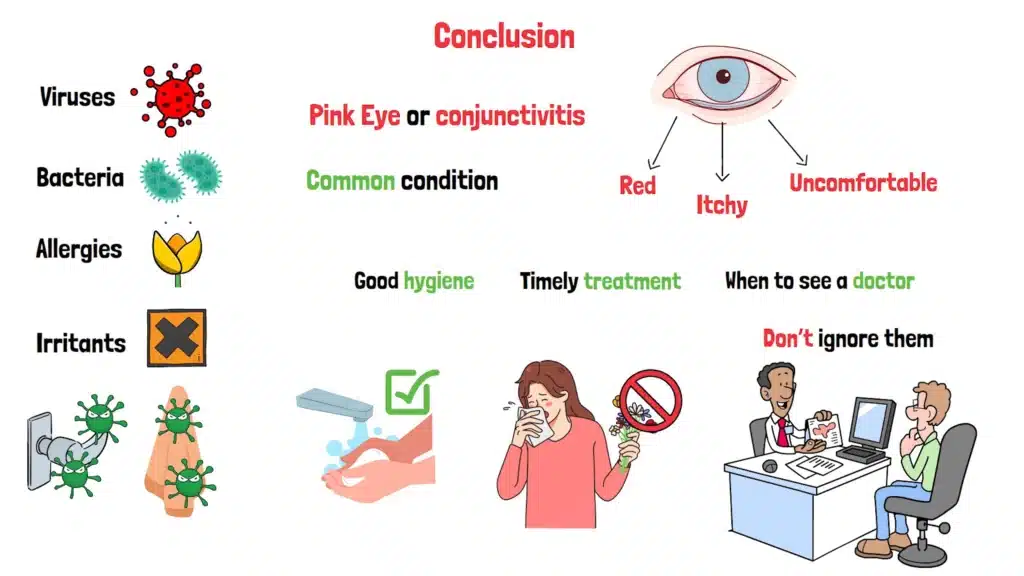
Let’s wrap this up. Pink Eye, or conjunctivitis, is a common condition that turns your eyes red, itchy, and uncomfortable. Whether it’s caused by viruses, bacteria, allergies, or irritants, it’s usually not serious but can spread like wildfire if you’re not careful. Good hygiene, timely treatment, and knowing when to see a doctor are your best tools for managing it.
From washing your hands to avoiding allergens, you’ve got the power to prevent Pink Eye or keep it in check. And with researchers exploring cool new treatments—like contact lenses that double as medicine—help is only getting better.
If your eyes are acting up, don’t ignore them. Talk to a healthcare provider to get the right care. Your eyes do so much for you—let’s keep them shining bright.


