
HIV stands for Human Immunodeficiency Virus, which is a virus that attacks the body’s immune system. AIDS stands for Acquired Immunodeficiency Syndrome, which is the most advanced stage of HIV infection.
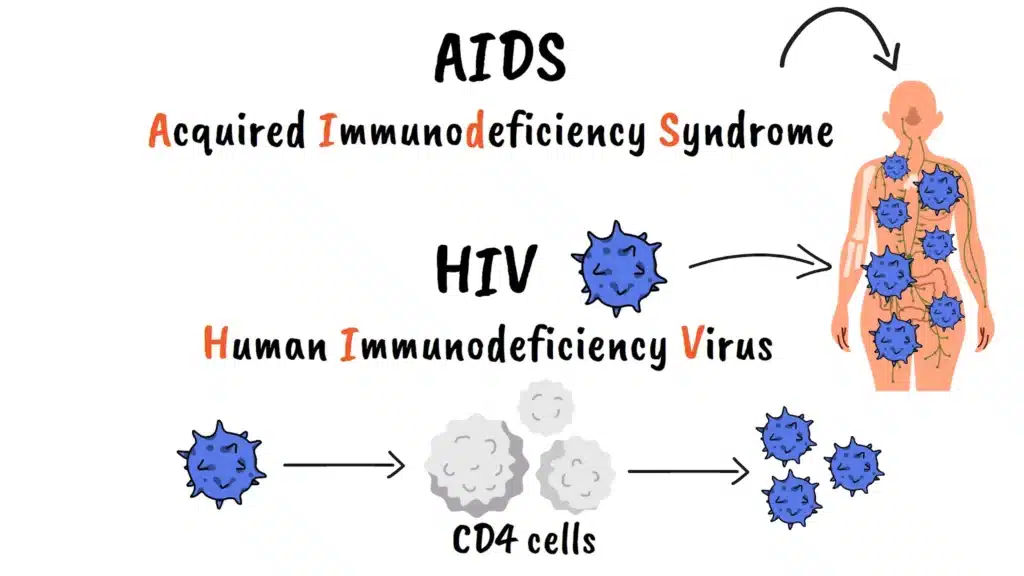
When someone has HIV, the virus specifically targets special white blood cells called CD4 cells, which are the cells that help your body fight infections. HIV uses these CD4 cells as factories to make more copies of itself. The more CD4 cells that get destroyed, the weaker your immune system becomes.
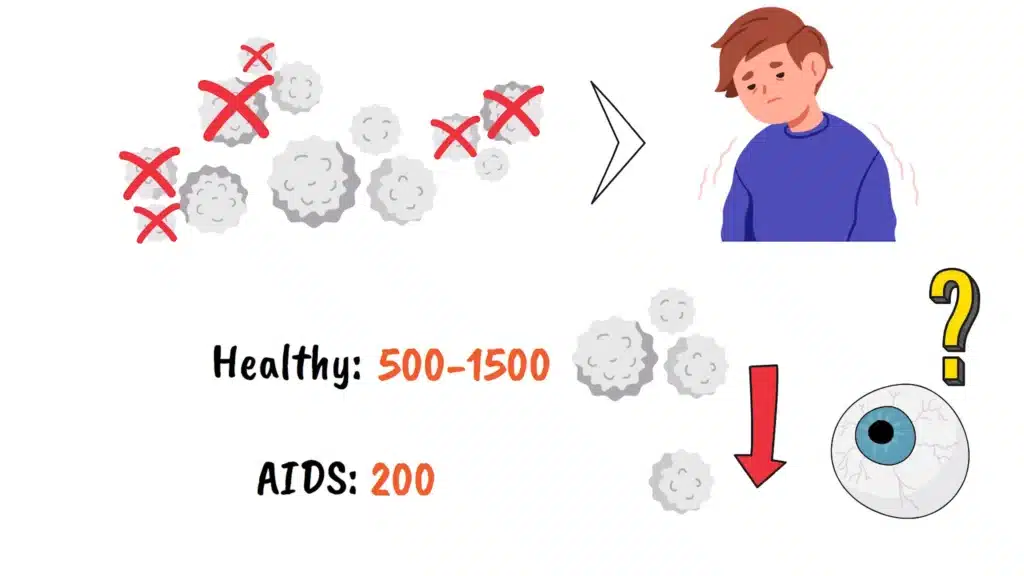
A healthy person normally has between five hundred and fifteen hundred CD4 cells in every cubic millimeter of blood. When HIV is not treated, the CD4 count steadily drops over time. When the CD4 count falls below two hundred cells, the person’s immune system is severely weakened, and they are diagnosed with AIDS. At this point, the body can no longer fight off infections that would normally be harmless.
How HIV Affects Your Vision
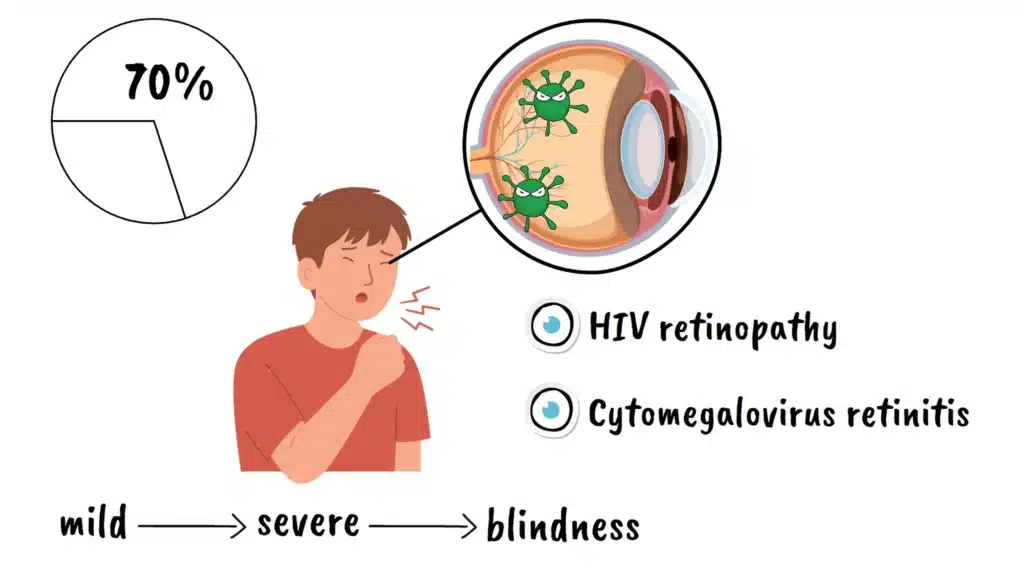
So how does this affect your eyes? When your immune system is weak, your eyes become vulnerable to infections and diseases that wouldn’t normally cause problems. About seventy percent of people living with HIV will develop some kind of eye problem during their lifetime.
The most common eye conditions in people with HIV and AIDS are HIV retinopathy and cytomegalovirus retinitis, but there are several other eye problems that can occur as well. These eye problems can range from mild to severe, and some can even lead to blindness if left untreated.
HIV Retinopathy: The Most Common Eye Condition
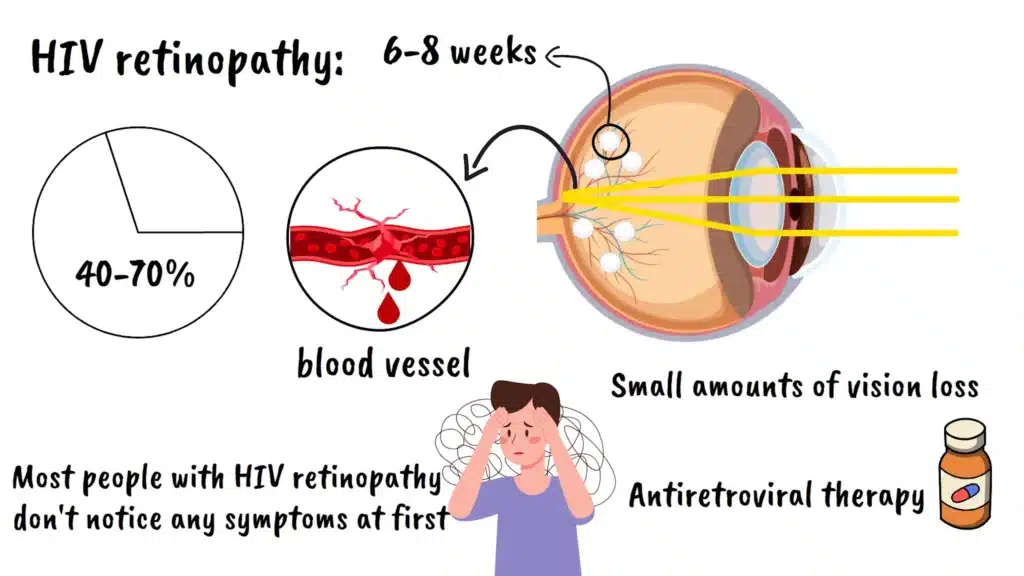
Let’s now see the most common eye condition, which is HIV retinopathy. HIV retinopathy is a condition where the small blood vessels in your retina become damaged. The retina is the light-sensitive layer at the back of your eye. HIV retinopathy affects between forty and seventy percent of people with HIV, making it the most common eye problem in this population.
Most people with HIV retinopathy don’t notice any symptoms at first. The condition causes tiny spots on the retina called cotton wool spots, which are fluffy white areas that appear because blood flow has been blocked to small blood vessels. The blood vessels can also develop small hemorrhages, which means they start bleeding.
HIV retinopathy usually causes only small amounts of vision loss, but it can be a warning sign that more serious eye problems might develop. These cotton wool spots typically disappear on their own within six to eight weeks. However, there is no specific treatment needed for HIV retinopathy itself, and starting antiretroviral therapy can help prevent it from getting worse.
Cytomegalovirus Retinitis: A Serious Threat to Vision
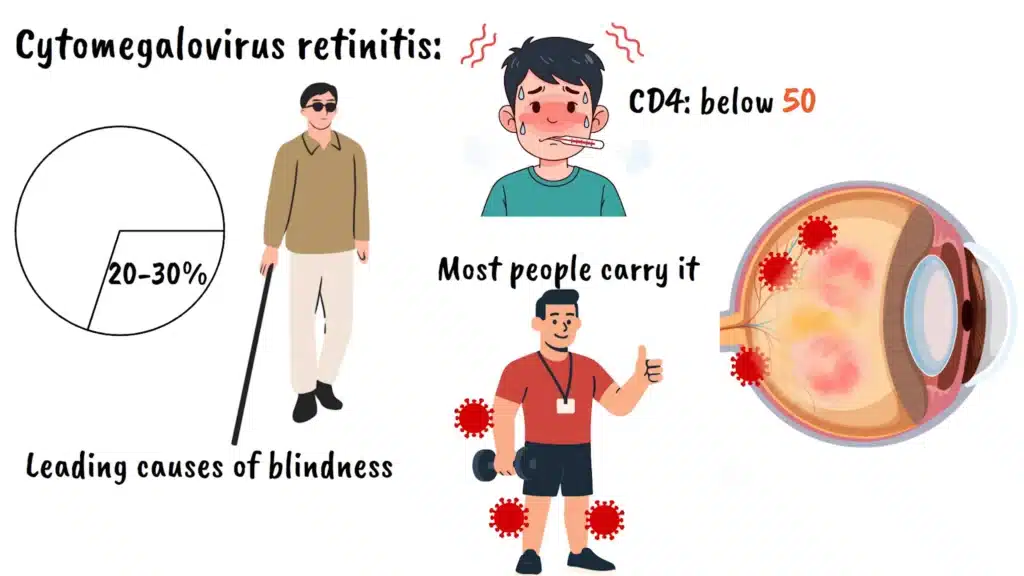
The most serious eye infection that people with AIDS can develop is called cytomegalovirus retinitis, or CMV retinitis for short. CMV retinitis affects between twenty and thirty percent of people with AIDS, and it is one of the leading causes of blindness in this population.
This infection only happens when the immune system is very weak, usually when the CD4 count drops below fifty cells per microliter. Cytomegalovirus is a type of herpes virus that most people carry in their bodies without knowing it. In healthy people, the immune system keeps this virus under control. But when HIV has severely weakened the immune system, the cytomegalovirus can reactivate and attack the retina.
CMV retinitis causes full-thickness damage to the retina, with areas of white or yellow cloudy patches mixed with bleeding. This creates what doctors call a pizza pie appearance because of how it looks during an eye exam.
Other Eye Problems Associated with HIV
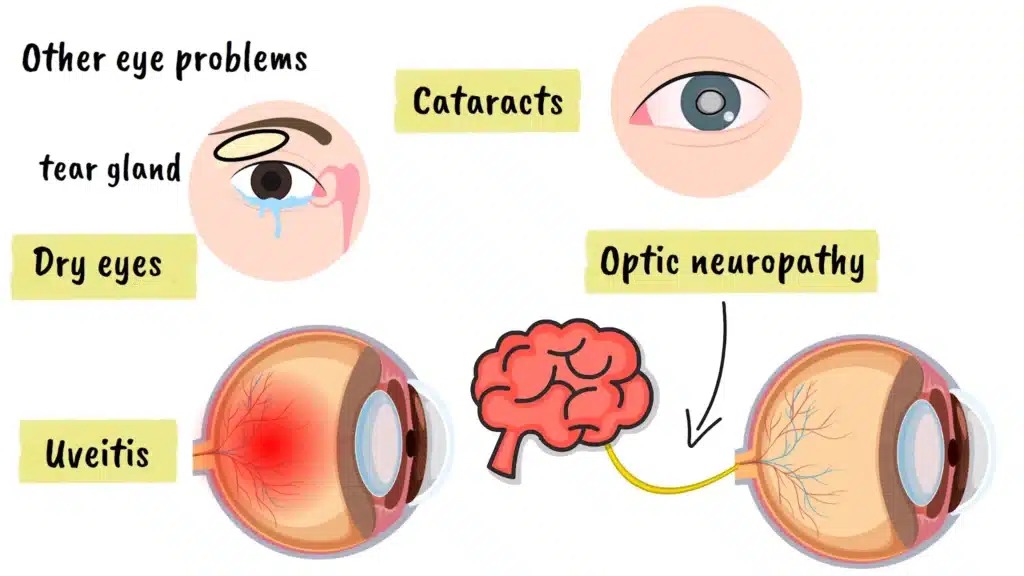
People with HIV and AIDS can also develop other eye problems. These include dry eyes, which happen when the tear glands become inflamed, and cataracts, which are cloudy patches on the lens that occur more frequently in people with HIV.
Uveitis is another condition that causes inflammation inside the eyeball, leading to redness, pain, sensitivity to light, and blurred vision. Some people with HIV can develop optic neuropathy, which is damage to the optic nerve that sends visual signals from your eye to your brain.
Protecting Your Vision with Antiretroviral Therapy
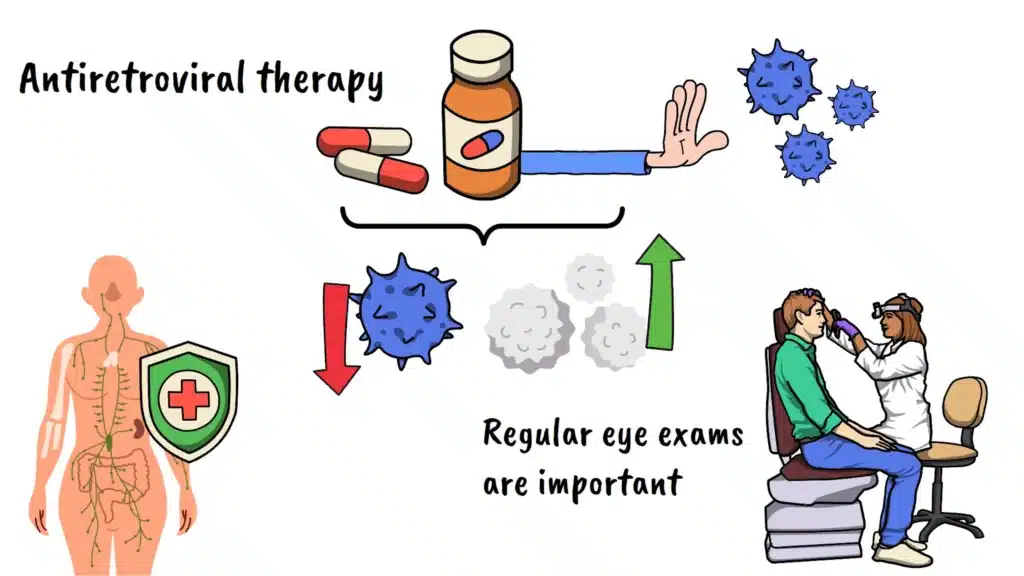
The best way to protect your vision if you have HIV is to take antiretroviral therapy.
Antiretroviral therapy involves taking a combination of medications that stop HIV from reproducing in your body. When you take these medications consistently, they reduce the amount of virus in your blood and allow your CD4 count to increase. This strengthens your immune system and dramatically reduces your risk of developing serious eye infections like CMV retinitis.
It’s also very important to get regular comprehensive eye exams, especially if your CD4 count is low.
