
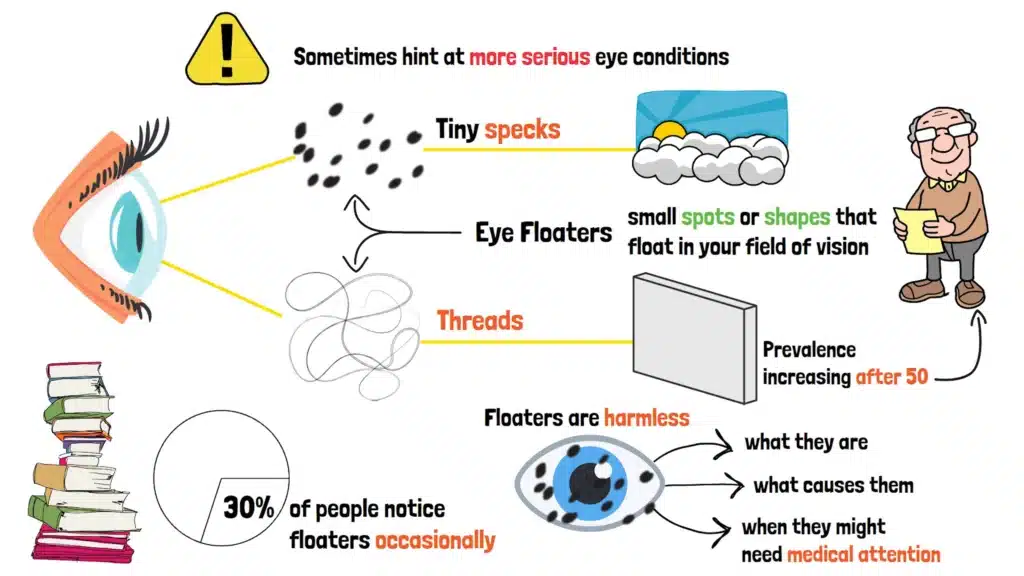
Have you ever noticed tiny specks or threads drifting across your vision, especially when staring at a bright sky or a blank wall? These are eye floaters, and while they might seem like a minor annoyance, they can sometimes hint at more serious eye conditions. Eye floaters are small spots or shapes that float in your field of vision, and they’re incredibly common, especially as we age.
Research suggests that around 30% of people notice floaters occasionally, with prevalence increasing after age 50. Most of the time, floaters are harmless, but it’s crucial to understand what they are, what causes them, and when they might need medical attention.
What Causes Eye Floaters?
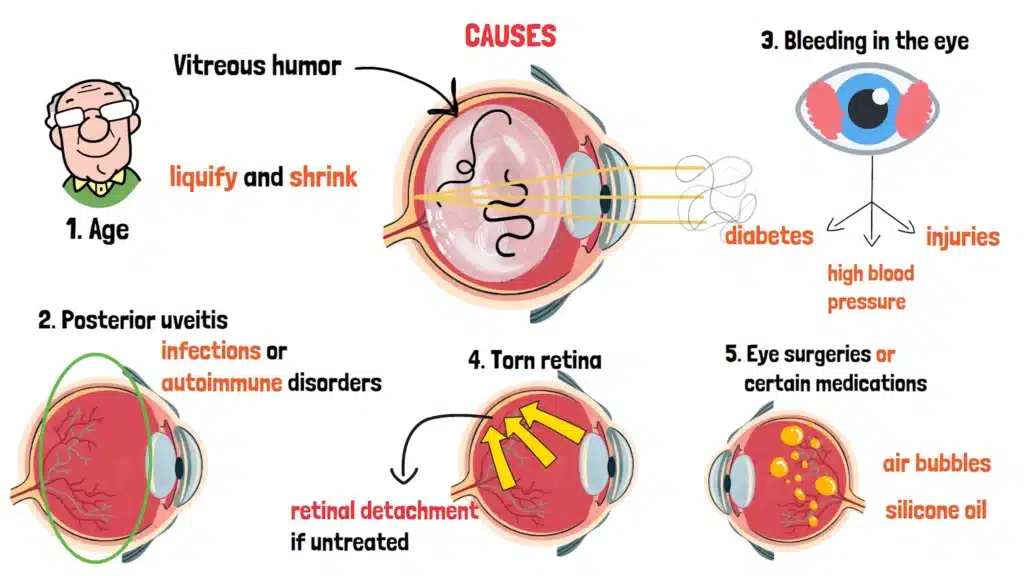
So, what causes these little drifters in your vision?
The main culprit is changes in the vitreous humor—the gel-like substance filling your eye. As we age, this gel starts to liquefy and shrink, causing tiny fibers to clump together. These clumps cast shadows on your retina, creating the floaters you see.
But aging isn’t the only cause. Inflammation at the back of the eye, called posterior uveitis, can trigger floaters, often due to infections or autoimmune disorders.
Bleeding in the eye—from conditions like diabetes, high blood pressure, or injuries—can also lead to floaters as blood cells drift in the vitreous.
A more serious cause is a torn retina, which happens when the vitreous pulls too hard, potentially leading to retinal detachment if untreated.
Even eye surgeries or certain medications can introduce air bubbles or silicone oil, appearing as floaters.
Knowing these causes helps you understand when floaters are just a quirk or a sign to see a doctor.
Risk Factors for Eye Floaters
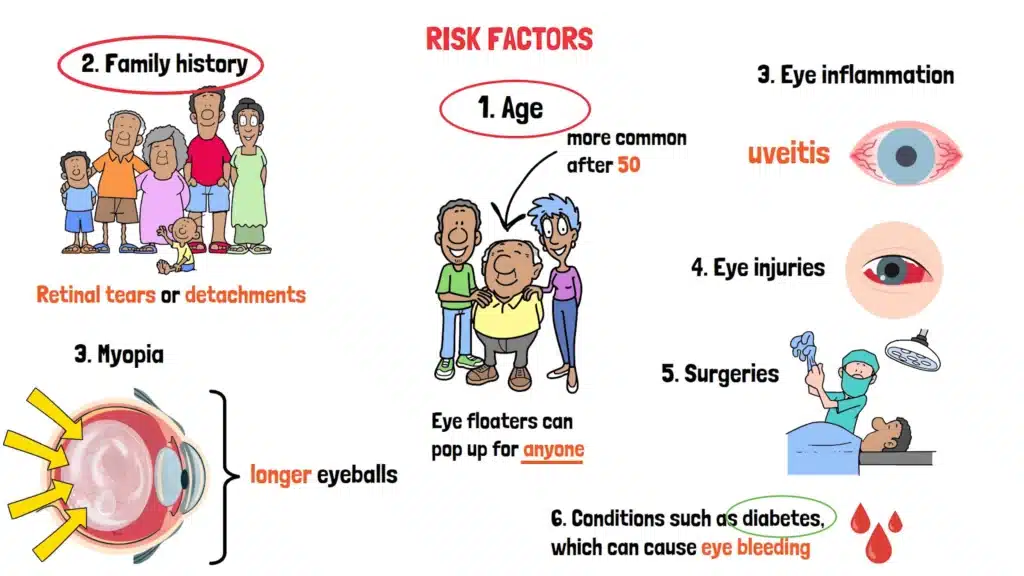
Eye floaters can pop up for anyone, but some factors make them more likely. Age is the biggest player—floaters are far more common after 50 as the vitreous naturally changes.
If your parents or siblings have had retinal tears or detachments, your risk might be higher too.
Nearsightedness, or myopia, also ups the odds. People with myopia have longer eyeballs, making the vitreous more prone to clumping.
A history of eye inflammation, like uveitis, or previous eye injuries or surgeries can increase your risk as well. Conditions such as diabetes, which can cause eye bleeding, are another factor.
While you can’t change your age or family history, managing diabetes or protecting your eyes from injury—like wearing safety glasses during sports—can help lower your risk. Understanding these factors lets you take charge of your eye health.
Eye Floaters Symptoms: What Do They Look Like?
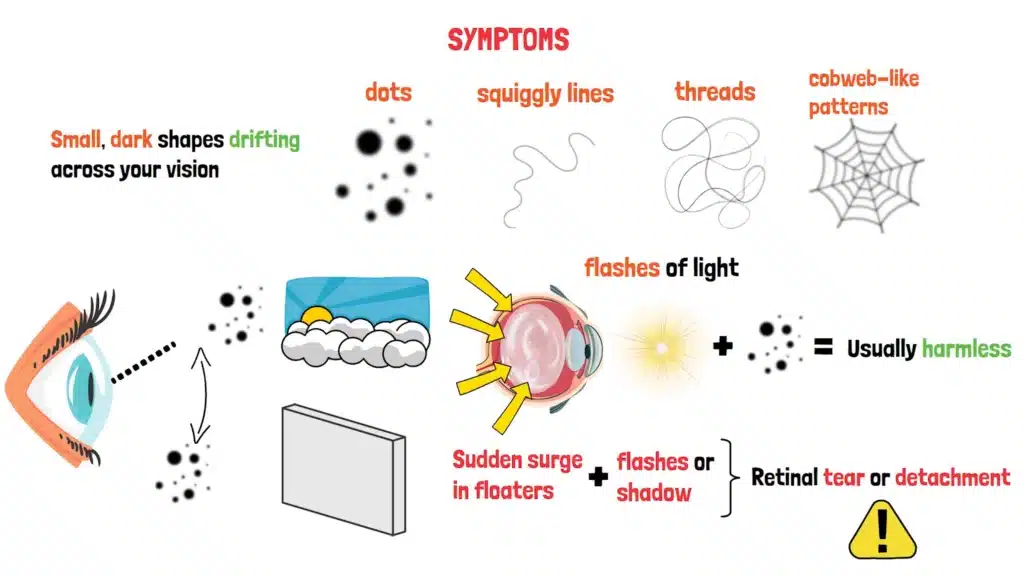
What do eye floaters actually look like?
They show up as small, dark shapes drifting across your vision—dots, squiggly lines, threads, or even cobweb-like patterns. They move with your eyes and often dart away when you try to focus on them. They’re most noticeable against bright backgrounds, like a clear sky or a white wall.
Some people also see flashes of light—like lightning streaks or camera flashes—caused by the vitreous tugging on the retina. While floaters and occasional flashes are usually harmless, a sudden surge in floaters, especially with flashes or a shadow in your peripheral vision, could signal a retinal tear or detachment. This is a medical emergency that needs immediate attention to avoid vision loss.
How Are Eye Floaters Diagnosed?
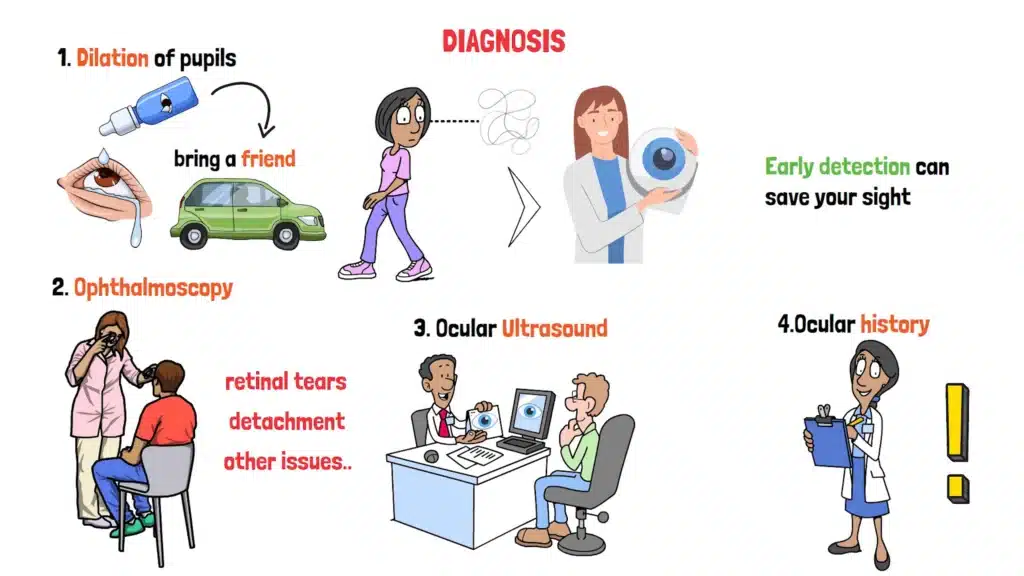
If you notice new or changing floaters, visit an eye care professional. They’ll perform a comprehensive eye exam, starting with dilating your pupils using eye drops. This widens your pupils, giving the doctor a clear view of your retina and vitreous.
The doctor will use special lenses or instruments to check for retinal tears, detachment, or other issues.
If the view is cloudy, they might use ultrasound imaging to get a better picture.
Expect questions about your symptoms—when they started, what they look like, and if you see flashes or shadows.
Note: The dilation might blur your vision for a few hours, so bring a friend to drive you home.
Sharing accurate details helps your doctor pinpoint the cause and decide if treatment is needed. Early detection can save your sight, so don’t wait if you’re concerned.
Eye Floaters Treatment Options
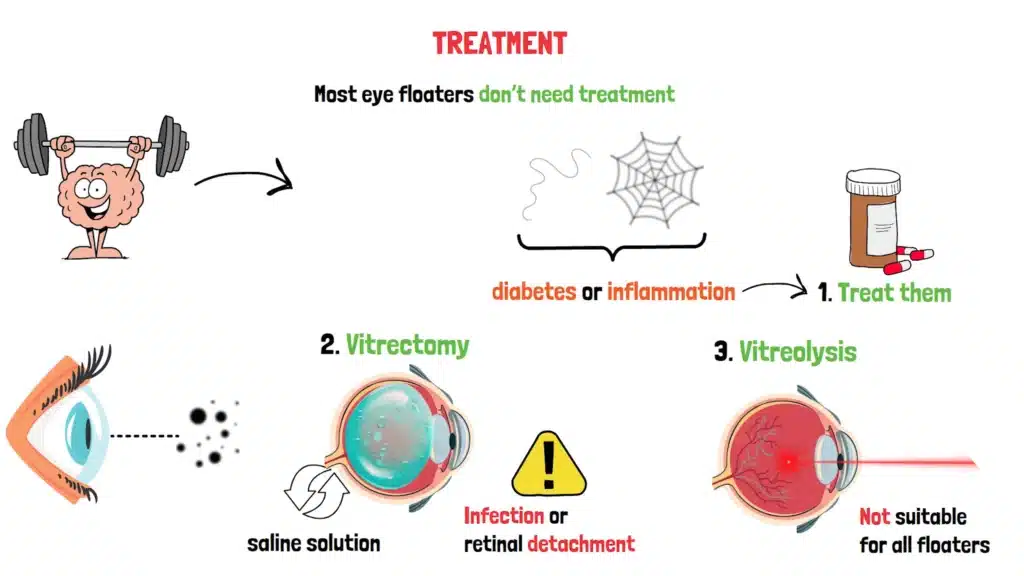
Most eye floaters don’t need treatment. Your brain often learns to ignore them, and they may settle out of sight over time. If floaters stem from conditions like diabetes or inflammation, treating those can reduce symptoms.
But in rare cases—when floaters severely impair vision—treatment options exist.
Vitrectomy Surgery
One option is vitrectomy, a surgery that removes the vitreous gel and replaces it with a saline solution. It’s effective, with studies suggesting most patients see improvement, but it carries risks like infection or retinal detachment, so it’s reserved for serious cases.
Laser Therapy (Vitreolysis)
Another approach is laser therapy, or vitreolysis, where a laser breaks up floaters to make them less noticeable. It’s less invasive but may require multiple sessions and isn’t suitable for all floaters.
Prevention and Management of Eye Floaters
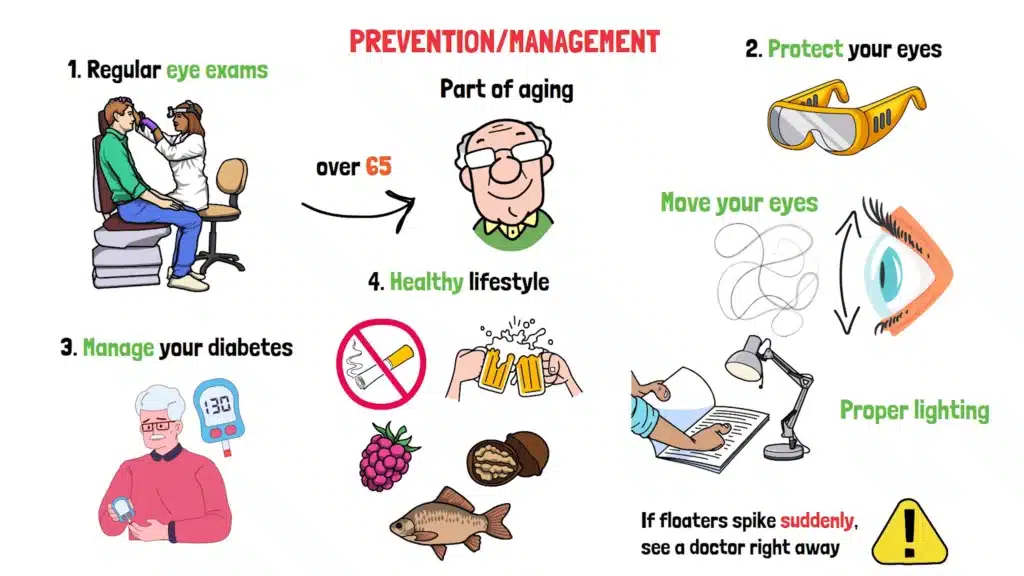
Can you prevent eye floaters? Since they’re often part of aging, not entirely. Regular eye exams catch problems early, so schedule checkups every couple of years—or yearly if you’re over 65.
Protect your eyes with safety glasses during activities like sports or DIY projects. Managing conditions like diabetes or high blood pressure also helps.
For a healthy lifestyle, skip smoking and limit alcohol, as they can harm your eyes. Eat foods rich in antioxidants—think berries, nuts, and leafy greens—or omega-3s, like salmon.
To manage existing floaters, try moving your eyes up and down to shift them out of view. Proper lighting when reading or working can make them less noticeable.
If floaters spike suddenly, see a doctor right away.
Impact of Eye Floaters on Daily Life
Eye floaters can be a real nuisance, especially when they first appear. Imagine trying to read a book, but dark spots keep floating across the page. Or picture driving and being distracted by flashes that aren’t there. For some, like graphic designers needing sharp vision, floaters can disrupt work. They might even spark anxiety or frustration.
Thankfully, most people adapt over time. Your brain can filter out floaters, making them less bothersome. To cope, use brighter lighting for tasks like reading, or take breaks to rest your eyes during screen time. Magnifying apps or glasses can help if floaters make fine print tricky. Mindfulness or relaxation can ease stress tied to floaters. If they significantly affect your quality of life—like making driving unsafe—talk to your eye doctor about treatment options. You’re not alone, and there are ways to manage the impact.
Current Research and Future Developments in Floater Treatment
Scientists are working on better ways to tackle eye floaters, especially for those with severe symptoms. One exciting area is laser floater treatment (LFT), or YAG laser vitreolysis, which uses lasers to break up floaters. Studies show it can help some patients, but more research is needed to confirm its safety and effectiveness.
Another breakthrough comes from a recent trial showing that a dietary supplement—containing L-lysine, vitamin C, grape extract, zinc, and citrus—reduced floater symptoms after six months. This non-invasive option is promising but needs further study.
Researchers are also exploring nanotechnology to dissolve floaters without surgery, though it’s still early days. These advances offer hope, but always consult your doctor before trying new treatments. The future looks brighter for clearer vision.
Conclusion
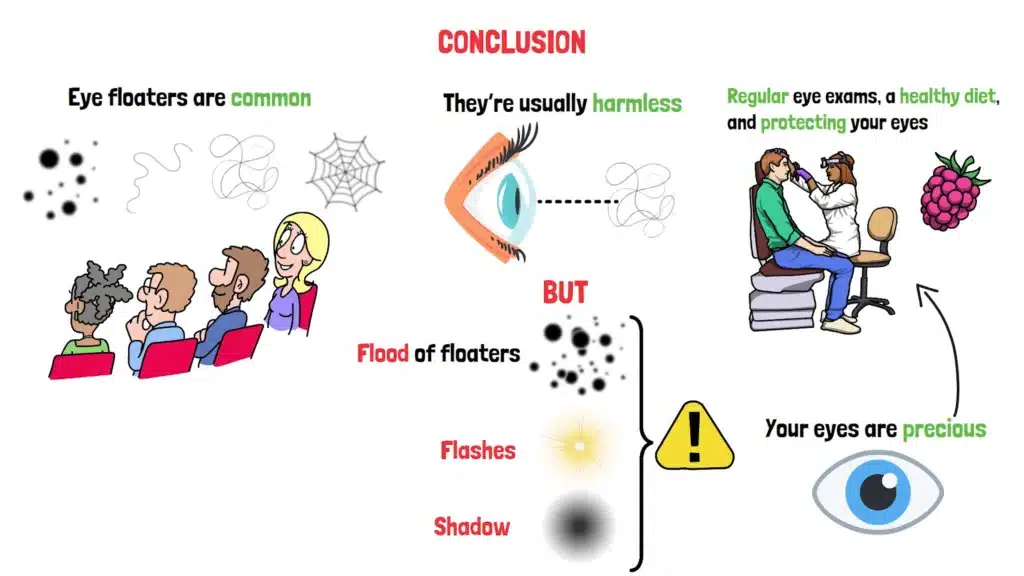
Eye floaters are a common part of life, especially as we age, with many noticing them after 50. They’re usually harmless, drifting away from your focus over time. But sudden changes—like a flood of floaters, flashes, or a shadow in your vision—could signal a serious issue like retinal detachment. Don’t ignore these signs; see an eye doctor immediately.
Regular eye exams, a healthy diet, and protecting your eyes can keep your vision sharp. Your eyes are precious, so if something feels off, reach out to an eye care professional..


Very useful information, am happy Optometrist practising in Kenya.
Welcome, Jael!