
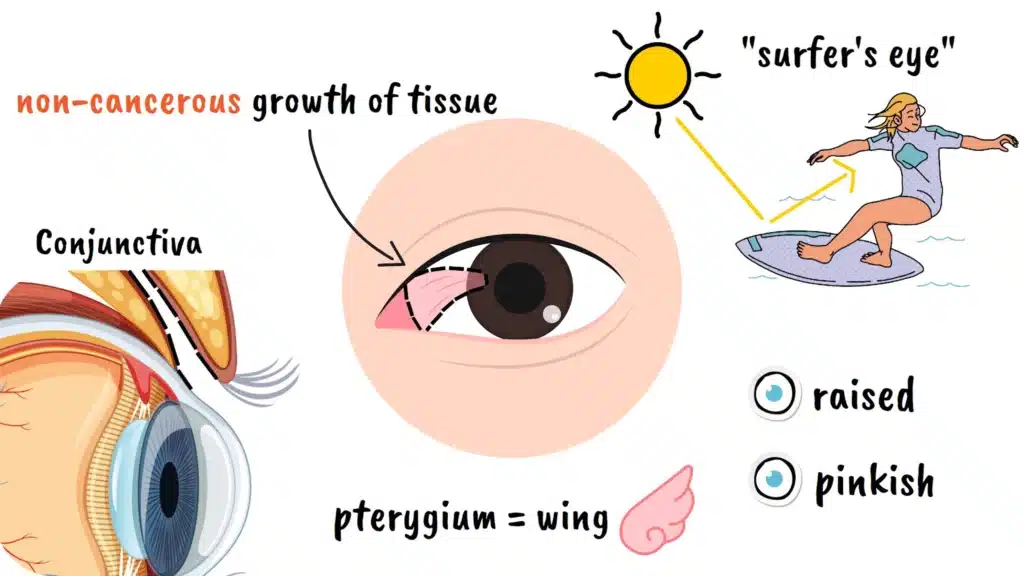
Pterygium is a non-cancerous growth of tissue that develops on the conjunctiva, which is the clear membrane that covers the white part of your eye. This fleshy, triangular-shaped growth typically starts from the inner corner of the eye and slowly spreads across the cornea, the clear front surface of your eye.
The word pterygium comes from the Greek word meaning wing, because the growth often looks like a small wing extending across the eye. This condition is also commonly known as surfer’s eye because it frequently affects people who spend a lot of time outdoors, especially near water where UV rays are reflected.
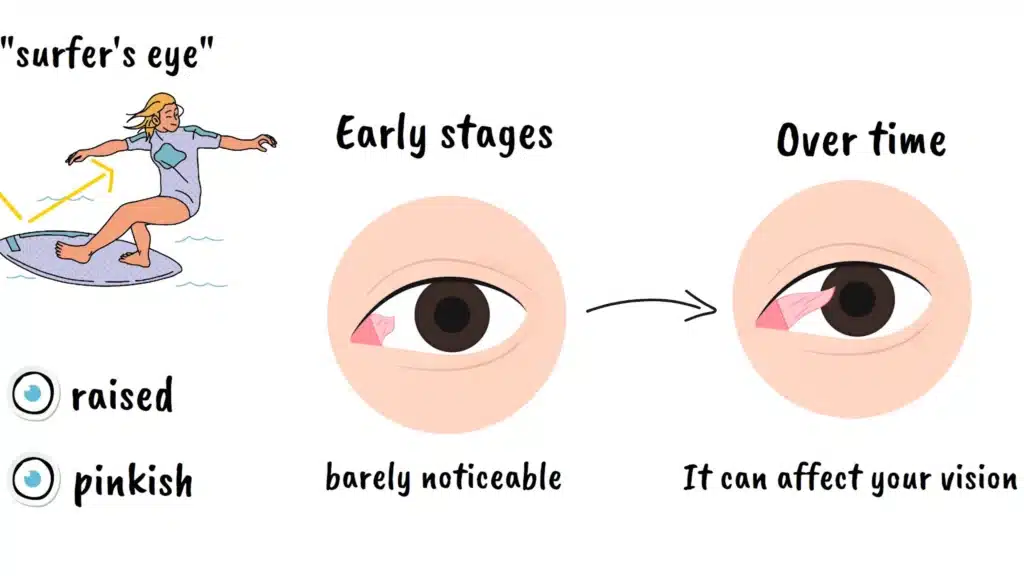
The pterygium appears as a raised, pinkish or reddish patch of tissue that can vary in size. In the early stages, it may be barely noticeable, but as it grows, it becomes more prominent and can eventually affect your vision if it spreads far enough across the cornea.
Common Symptoms of Pterygium
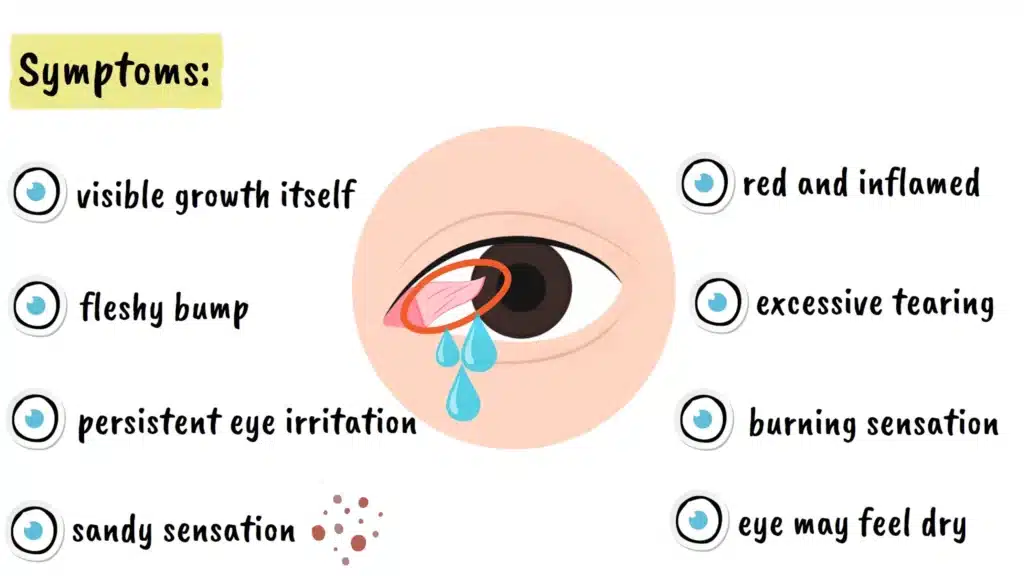
The most noticeable symptom is the visible growth itself, which appears as a fleshy bump on the white part of your eye. You may experience persistent eye irritation, making it feel like there’s something stuck in your eye that you can’t remove.
Many people with pterygium report a gritty or sandy sensation, especially when blinking. The affected eye often appears red and inflamed, particularly around the growth area. You might also notice excessive tearing as your eye tries to wash away what it perceives as a foreign object. Some people experience burning or stinging sensations, and the eye may feel dry despite the increased tearing.
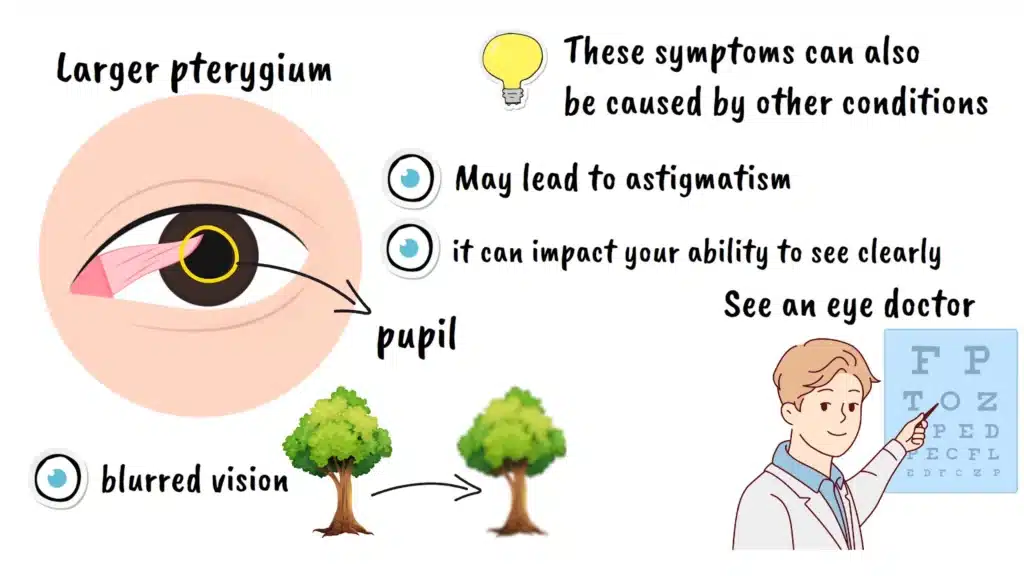
As the pterygium grows larger, it can cause blurred vision and may even change the shape of your cornea, leading to astigmatism. In severe cases, if the growth covers part of the pupil, it can significantly impact your ability to see clearly.
If you are experiencing any of these symptoms, it is important to see an eye doctor for an evaluation. Keep in mind that these symptoms can also be caused by other conditions, so it is important to get a proper diagnosis.
What Causes Pterygium?
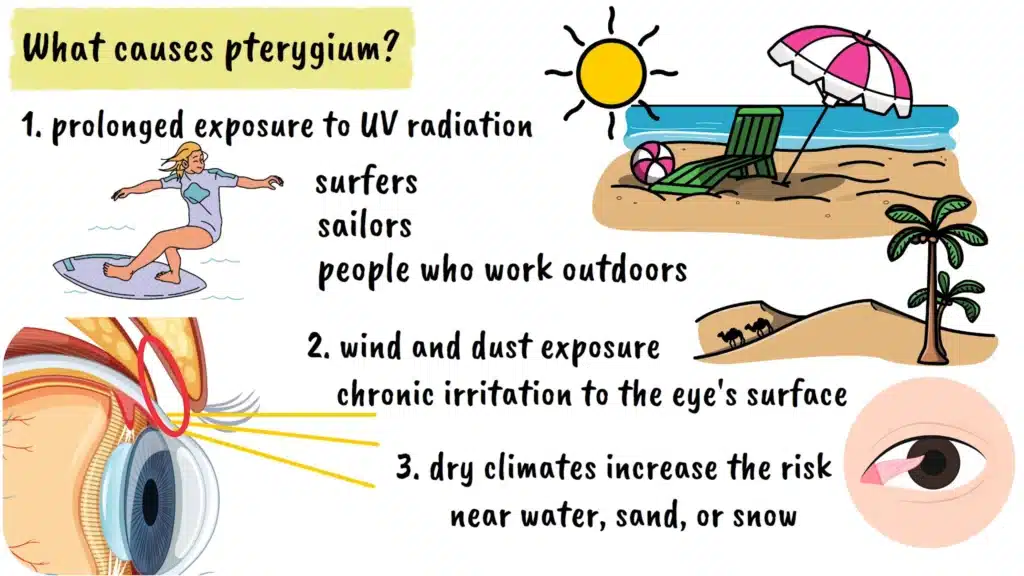
The primary cause is prolonged exposure to ultraviolet radiation from the sun. This is why the condition is so common among surfers, sailors, and people who work outdoors. The UV rays cause damage to the conjunctiva, leading to abnormal tissue growth.
Wind and dust exposure also contribute to the development of pterygium by causing chronic irritation to the eye’s surface. Dry climates increase the risk, as does living in areas with high levels of reflected sunlight, such as near water, sand, or snow.
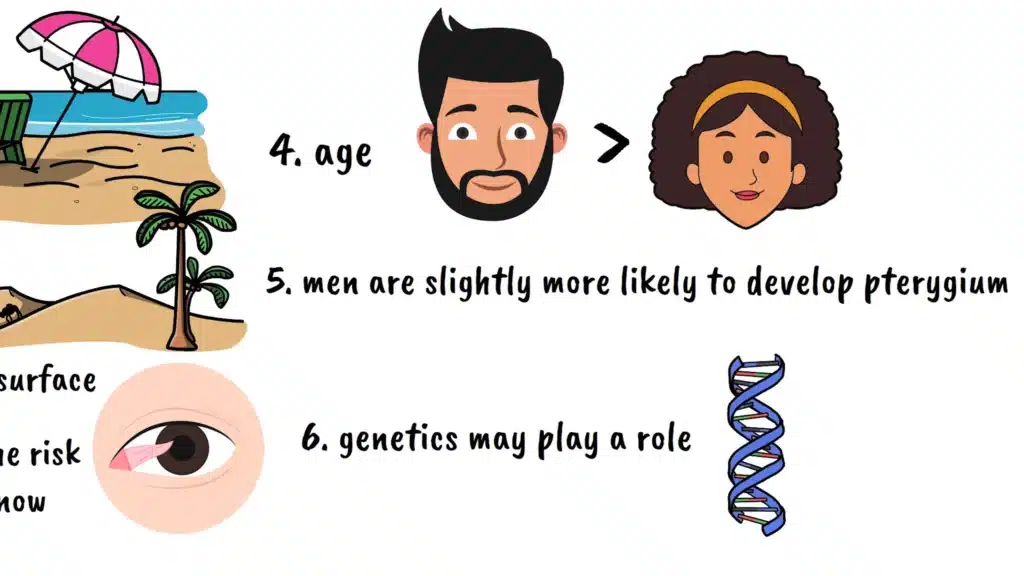
Age is another factor, as pterygium is more common in adults over thirty. Men are slightly more likely to develop this condition than women, and genetics may play a role, as some people appear to be more susceptible than others.
Treatment Options for Pterygium
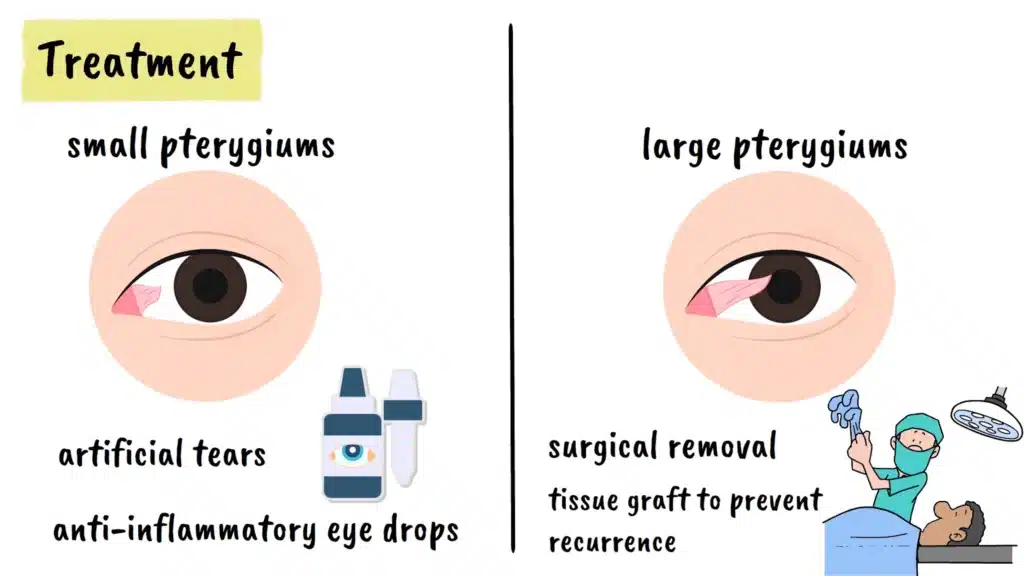
The treatment for pterygium depends on the size and severity of the growth. For small pterygiums that don’t affect vision, your eye doctor may recommend artificial tears to reduce irritation and anti-inflammatory eye drops to control inflammation.
However, if the pterygium is large enough to affect your vision or causes persistent discomfort, surgical removal may be necessary. This outpatient procedure involves carefully removing the growth and may include a tissue graft to prevent recurrence.


