
Imagine waking up with a painful red bump on your eyelid that just won’t go away. Chances are, you’ve experienced a stye.
Styes are one of the most common eye conditions, affecting millions of people each year across all ages, from children to seniors. They appear as small, red, and often painful lumps on the edge of your eyelid, caused by a bacterial infection in the oil glands or hair follicles. While styes are usually not serious and tend to heal on their own within a week or two, they can be quite uncomfortable, making everyday tasks like blinking or reading a challenge.
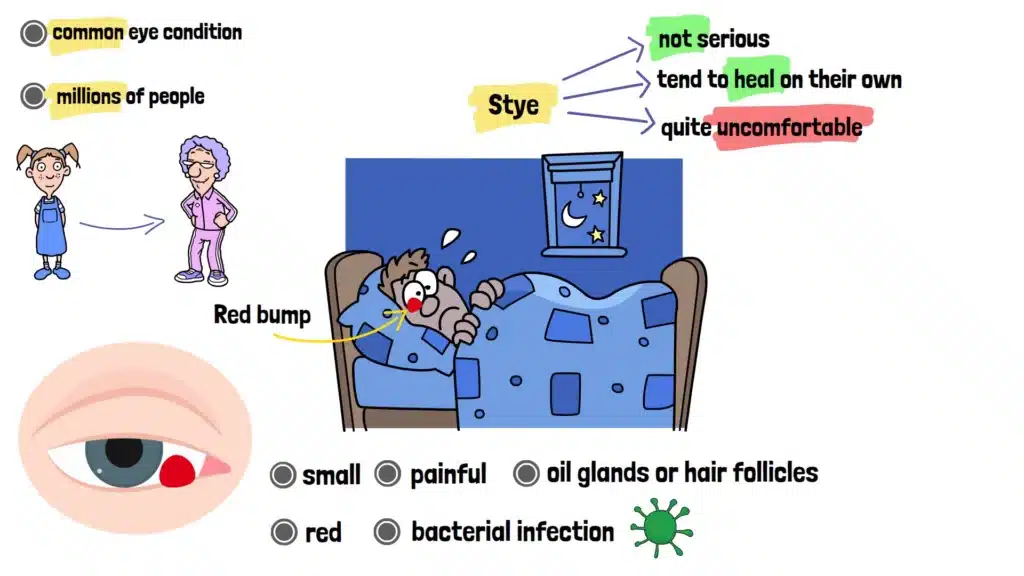
In this comprehensive guide, we’ll explore everything you need to know about styes: what causes them, how to spot the symptoms, effective treatments, and practical ways to prevent them. Our goal is to empower you with clear, actionable knowledge to take better care of your eye health. So, let’s dive in and shed light on this pesky eyelid issue.
What Causes a Stye
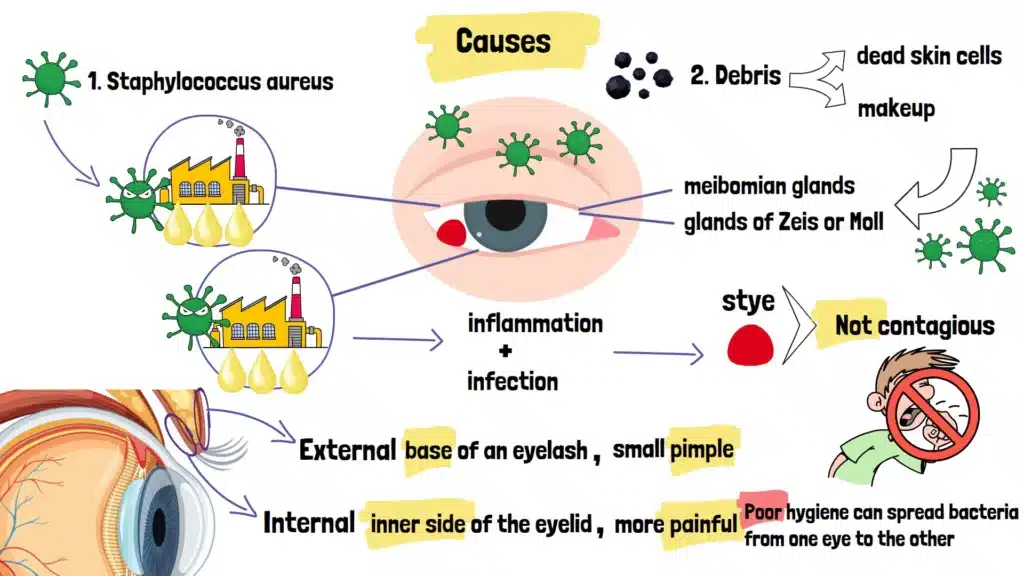
What sparks a stye? At its core, a stye is caused by a bacterial infection, most commonly by Staphylococcus aureus, a bacterium that lives harmlessly on your skin most of the time. Picture your eyelid’s oil glands as tiny factories producing oil to keep your eyes lubricated. When bacteria sneak into these factories, either the meibomian glands inside the eyelid or the glands of Zeis or Moll near the eyelashes, they can cause inflammation and infection, forming a stye.
There are two types of styes: external and internal. External styes pop up on the outside of the eyelid, often at the base of an eyelash, looking like a small pimple. Internal styes form on the inner side of the eyelid, affecting the deeper meibomian glands, and can be more painful. A lesser-known cause is debris, like dead skin cells or makeup, clogging these glands, creating a breeding ground for bacteria.
Importantly, styes aren’t contagious, so you can’t catch one from someone else, but poor hygiene can spread bacteria from one eye to the other.
Stye Risk Factors
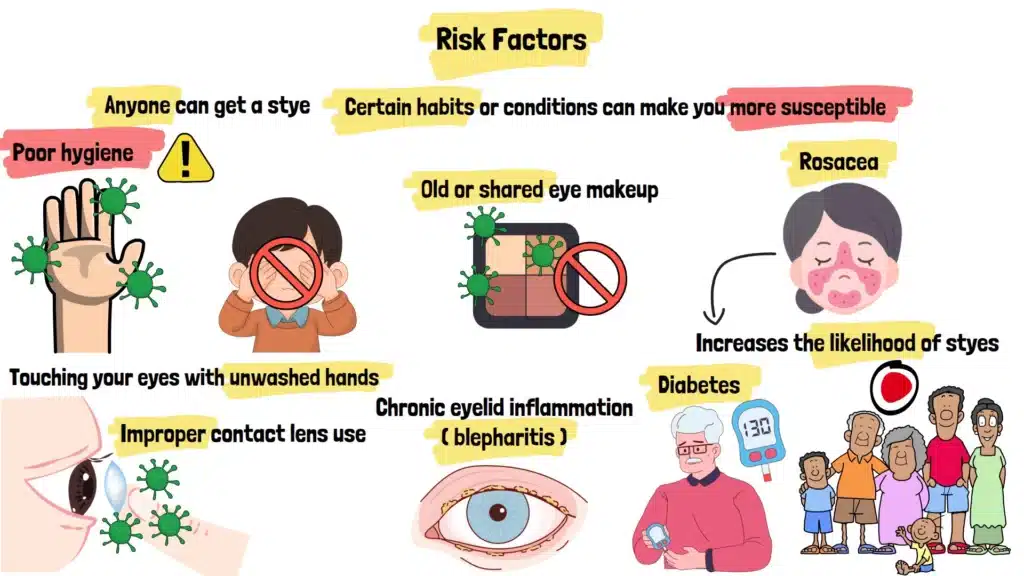
Anyone can get a stye, but certain habits or conditions can make you more susceptible. Poor hygiene is a big player. For example, imagine rubbing your eyes after handling your phone without washing your hands first; that’s an easy way for bacteria to hitch a ride to your eyelids.
Here’s a breakdown of key stye risk factors:
| Risk Factor | How It Increases Risk |
|---|---|
| Poor hygiene | Touching eyes with dirty hands transfers bacteria |
| Improper contact lens use | Inserting lenses without clean hands or disinfecting them can introduce bacteria |
| Old or shared makeup | Expired or contaminated eye makeup can harbor bacteria, clogging glands |
| Leaving makeup on overnight | Blocks oil glands, creating a breeding ground for infection |
| Blepharitis | Chronic eyelid inflammation makes glands more prone to infection |
| Rosacea | This skin condition, marked by facial redness, affects oil gland function |
| Diabetes | A weakened immune system increases susceptibility to infections |
If your parents or siblings frequently get styes, you might be more prone due to shared skin conditions or hygiene habits. By addressing modifiable factors like hygiene, you can lower your risk significantly.
Stye Symptoms: How to Identify One
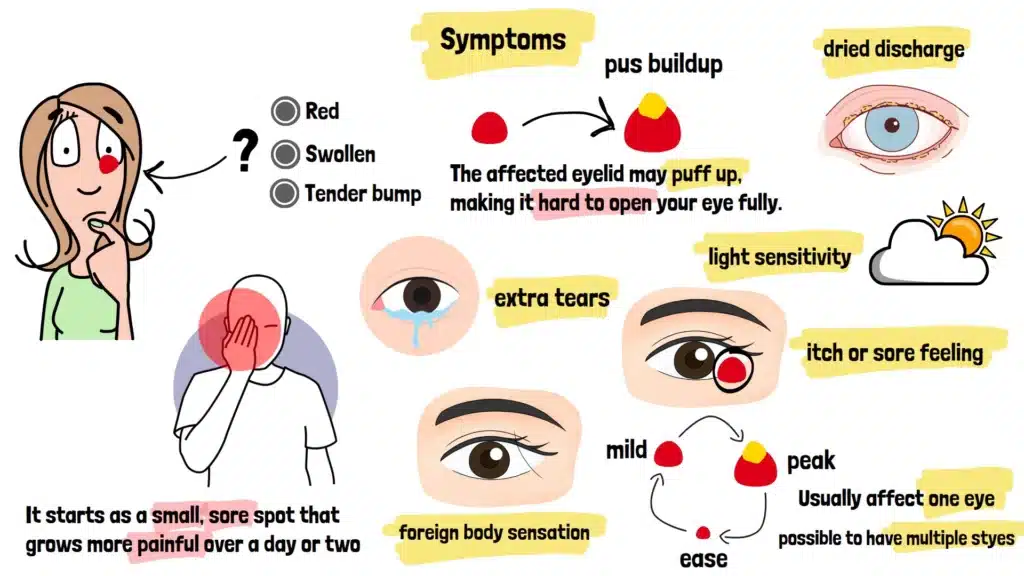
How do you know it’s a stye? The telltale sign is a red, swollen, and tender bump on your eyelid, often looking like a pimple. It starts as a small, sore spot that grows more painful over a day or two, especially when you blink or touch it. As the stye develops, you might notice a yellow or white center, indicating pus buildup. Here’s what else to watch for:
- Eyelid swelling: The affected eyelid may puff up, sometimes making it hard to open your eye fully.
- Tearing or watery eyes: Your eye might produce extra tears, giving it a watery look.
- Foreign body sensation: It can feel like something’s stuck in your eye, like an eyelash.
- Crusting: Dried discharge may form along the eyelid, especially after sleeping.
- Light sensitivity: Bright lights might feel uncomfortable.
- Itching or soreness: The area around the stye may itch or feel sore.
Symptoms typically start mild and progress as the infection peaks, then gradually ease as the stye drains. Styes usually affect one eye, but it’s possible to have multiple styes or ones in both eyes simultaneously.
Stye Diagnosis
Diagnosing a stye is usually a breeze for your doctor or eye specialist. They’ll take one look at that red, tender bump on your eyelid and likely know it’s a stye. They may ask about your symptoms, like how long the bump’s been there or how painful it is, to confirm the diagnosis. No fancy tests are typically needed; it’s all about what they see and what you describe.
However, doctors also check to rule out other conditions, like a chalazion, which is a painless lump caused by a blocked gland without infection. If the stye is unusually persistent or severe, or if there’s swelling beyond the eyelid, they might examine further to ensure it’s not something more serious, like preseptal cellulitis. Expect a quick, painless visit; your doctor’s goal is to confirm the stye and guide you on next steps.
Stye Treatment Options
Most styes resolve on their own within one to two weeks, but you don’t have to just wait it out. Several treatments can ease the pain and speed up healing. The star of the show is the warm compress. Soak a clean washcloth in warm (not hot) water, wring it out, and place it over your closed eye for 10 to 15 minutes, three to five times a day. The warmth softens the clogged gland, helping it drain naturally. Gently massaging the area after can encourage this process, but don’t squeeze or pop the stye; that could spread the infection or cause scarring.
Here’s a breakdown of treatment options and their pros and cons:
| Treatment | Description | Pros | Cons |
|---|---|---|---|
| Warm compresses | Apply warm, damp cloth to eyelid | Easy, effective, promotes drainage | Requires multiple daily applications |
| Eyelid hygiene | Clean eyelids with mild soap or wipes | Prevents further infection | Can be time-consuming |
| Pain relievers | Over-the-counter drugs like ibuprofen | Reduces pain | Doesn’t treat the infection |
| Antibiotic ointment/drops | Prescribed for persistent styes | Fights infection | Requires prescription; may cause mild irritation |
| Surgical drainage | Minor procedure to drain pus | Quick relief for large styes | Invasive; requires doctor visit |
Keeping the eyelid clean is also key. Use a mild soap, like baby shampoo diluted in water, or over-the-counter eyelid wipes to gently scrub the base of your eyelashes. If the stye doesn’t improve after 48 hours or worsens, your doctor might prescribe antibiotic ointments or drops. In rare cases, a large or stubborn stye may need surgical drainage, a quick procedure done under local anesthesia. Avoid wearing makeup or contact lenses until the stye heals to prevent irritation or reinfection.
How to Prevent Styes
Preventing styes is all about good hygiene. Think of your eyelids as a clean canvas; keeping them free of bacteria and debris is your best defense. Here are practical tips to prevent styes:
- Wash hands regularly: Always clean your hands before touching your eyes or face.
- Remove makeup nightly: Use a gentle makeup remover to clear away residue that can clog glands.
- Replace eye makeup: Toss out mascara, eyeliner, and eyeshadow every 2-3 months, and never share them.
- Proper contact lens care: Disinfect lenses thoroughly and wash hands before handling them.
- Avoid eye rubbing: This can transfer bacteria from your hands to your eyelids.
For daily eyelid hygiene, gently scrub the base of your eyelashes with a clean cloth or cotton swab dipped in a mild cleanser. If you get a stye, start warm compresses right away and keep the area clean to avoid complications. Recurrent styes might signal an underlying issue like blepharitis, so check with your doctor if they keep coming back.
How a Stye Can Impact Your Daily Life
A stye can be more than a minor nuisance; it can throw a wrench into your daily routine. Imagine trying to focus on a work email while every blink sends a sharp sting through your eyelid. The pain and swelling can make reading, driving, or using a computer uncomfortable. If the stye is large, it might cause your eyelid to droop, temporarily affecting your vision or making you feel self-conscious about your appearance.
Socially, a noticeable stye might make you hesitant to attend meetings or events, especially if it’s red and prominent. Sleep can also be disrupted if the pain worsens at night. Thankfully, simple tools like warm compresses or over-the-counter pain relievers can help you manage until the stye heals, letting you get back to your routine with confidence.
Current Research and Future Developments in Stye Treatment
While styes are well-understood, researchers are exploring ways to improve treatment, especially for those who get them frequently. Studies are investigating new antibiotic formulations, like topical erythromycin or bacitracin, to better target the bacteria causing styes while minimizing side effects. Research also suggests that antibiotics may not always add significant benefits to conservative treatments like warm compresses, prompting scientists to refine guidelines.
There’s also interest in medicated eyelid wipes and cleansers to prevent styes in people prone to them, particularly those with conditions like blepharitis or rosacea. Scientists are studying the link between these conditions and styes to develop comprehensive treatment plans. While no major breakthroughs have emerged, these efforts aim to reduce recurrence and improve quality of life for those affected.
Conclusion
To wrap up, styes are common but manageable eye conditions caused by bacterial infections in the eyelid’s oil glands or hair follicles. They bring pain and swelling but typically resolve within a couple of weeks with proper care. Warm compresses and good hygiene are your first line of defense, while antibiotics or minor surgery may be needed for stubborn cases.
By practicing simple prevention strategies, like washing your hands and keeping your eyelids clean, you can lower your risk. If you notice a stye that doesn’t improve or affects your vision, reach out to an eye doctor for guidance. Your eyes are precious, so stay informed and take care of them.


