
Sinus infection eye pain happens when inflammation and pressure in the sinuses make the area around your eyes feel sore, heavy, or tender. Because your sinuses sit right next to your eye sockets, it is common for sinus problems to “radiate” toward the eyes, even when the eyes themselves are healthy.
This type of pain matters because, in most cases, it is uncomfortable but not dangerous. However, in rare situations a sinus infection can spread toward the eye socket (orbit) and even the brain, causing serious complications such as orbital cellulitis and vision loss if not treated promptly. Understanding what is normal and what is a red flag can help you decide when to stay home and manage symptoms, and when to seek urgent medical care.
Introduction
Waking up with a pounding pressure in your face, a blocked nose, and sore, heavy eyes is a familiar story for many people with sinus infections. The tightness and ache may feel as if something is pushing from behind your eyes.
This article explains how sinus infections can cause eye pain, which symptoms are typical, which signs need urgent attention, and how doctors usually approach diagnosis and treatment. The information is based on current medical sources and is designed to support—not replace—the advice of your own healthcare professionals.
What Is Sinus Infection Eye Pain?
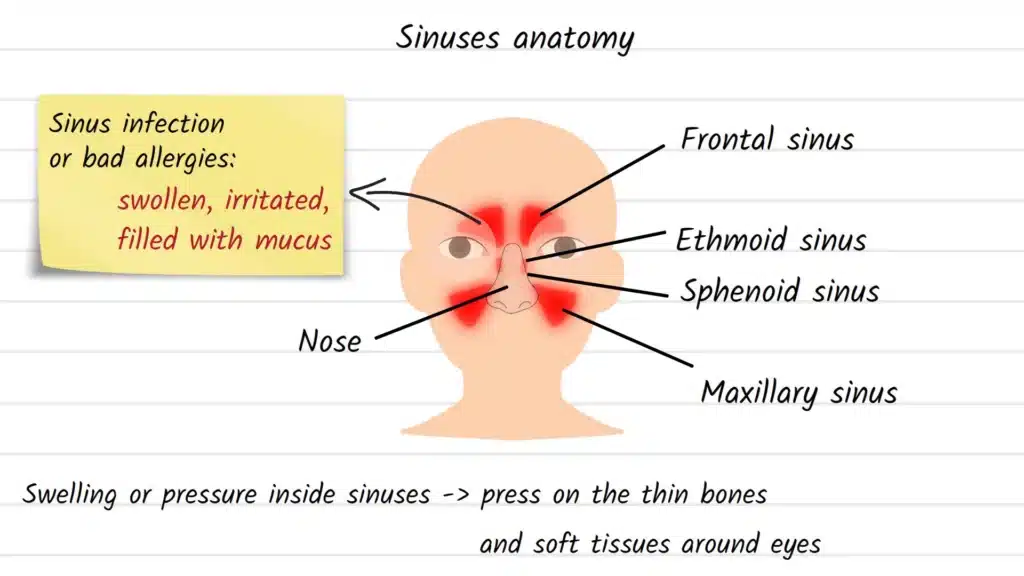
Sinusitis (sinus infection) is inflammation of the air‑filled spaces in the skull around your nose, cheeks, forehead, and behind your eyes. When these spaces become swollen and filled with mucus, pressure can build in the thin bony walls that lie right next to your eye sockets.
Sinus infection eye pain refers to discomfort, pressure, or aching felt:
- Behind or around the eyes
- In the brow, temples, or upper cheeks
- That often worsens when bending forward, coughing, or lying down
In many cases, the surface of the eye is normal, and vision is only mildly affected or not at all. The pain is usually due to pressure in the nearby sinuses, not a primary eye disease. However, because the sinuses and the orbit are closely connected, severe or untreated sinus infections can occasionally spread to the tissues around the eye and cause true eye emergencies such as orbital cellulitis.
Causes and Risk Factors
What causes sinus infections?
Sinusitis is most often triggered by:
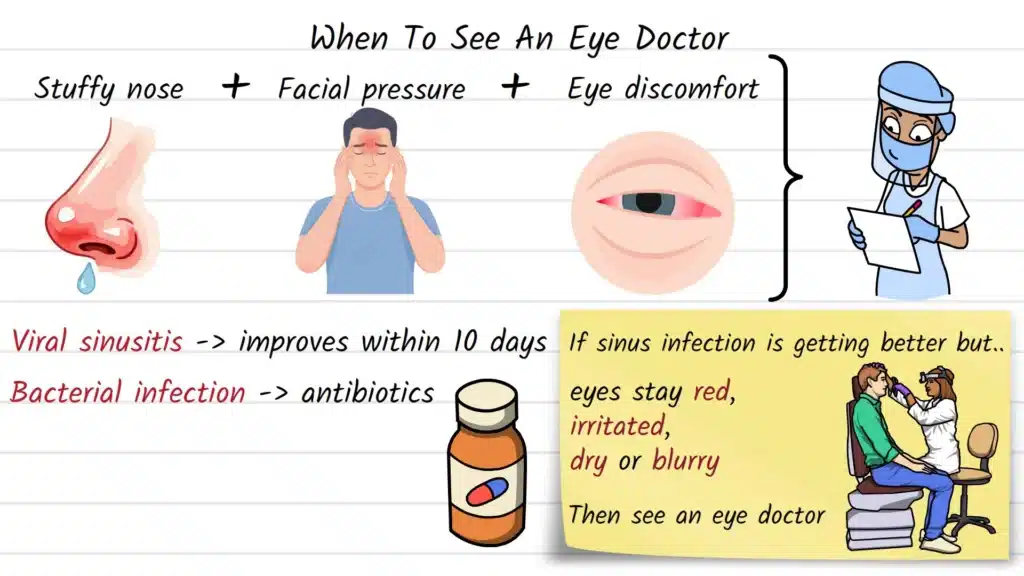
- Viral infections – such as the common cold or flu; these are the most frequent causes and usually resolve on their own within 7–10 days.
- Bacterial infections – can occur when swelling blocks normal drainage and bacteria overgrow in trapped mucus.
- Allergies (allergic rhinitis) – ongoing nasal inflammation from allergies can keep the sinus passages swollen and prone to infection.
- Structural issues – such as a deviated nasal septum, nasal polyps, or very narrow sinus openings, which make drainage more difficult.
Why does this lead to eye pain?
Some of the key sinus groups sit right next to or behind the eyes:
- Ethmoid sinuses: between the eyes
- Frontal sinuses: above the eyebrows
- Sphenoid sinuses: deep behind the eyes
When these sinuses become inflamed, the pressure can be felt as:
- A dull ache behind the eyes
- Tenderness when you press around the brow or inner corners of the eyes
- A sense of heaviness or fullness around the eye sockets
Risk factors for sinus‑related eye pain
You may be more likely to develop sinus infection eye pain if you have:
- Frequent colds or upper respiratory infections
- Seasonal or year‑round allergies
- Asthma
- Smoking or exposure to secondhand smoke
- A history of chronic sinusitis (lasting more than 12 weeks)
- Nasal polyps or structural nasal problems
- Weakened immune system from medical conditions or certain medications
Common Signs and Symptoms
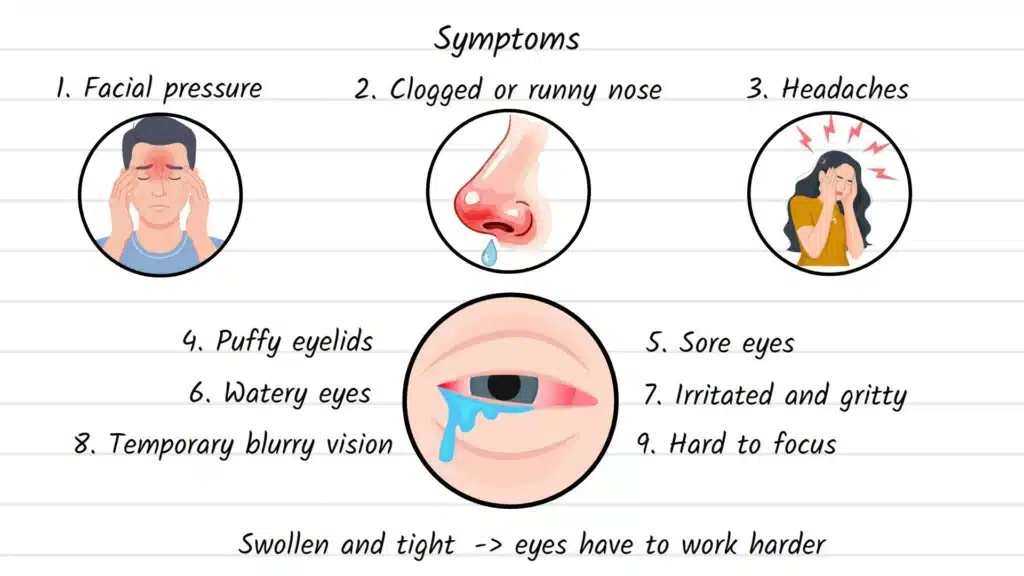
Typical sinus infection symptoms often appear first, followed by eye‑related discomfort. Common symptoms include:
General sinus symptoms
- Stuffy or blocked nose
- Thick nasal mucus (often yellow or green)
- Postnasal drip (mucus running down the back of the throat)
- Facial pressure or pain (forehead, cheeks, bridge of the nose)
- Headache, especially when bending forward
- Reduced sense of smell or taste
- Feeling tired or “run down”
Eye‑related symptoms that can come with sinusitis
- Pressure or pain around or behind one or both eyes
- Puffy or swollen eyelids
- Tenderness when gently pressing around the eyes or brow
- Watery or teary eyes
- Gritty, irritated eye sensation (like sand in the eyes)
- Mild, fluctuating blurry vision or difficulty focusing, especially when congestion is severe
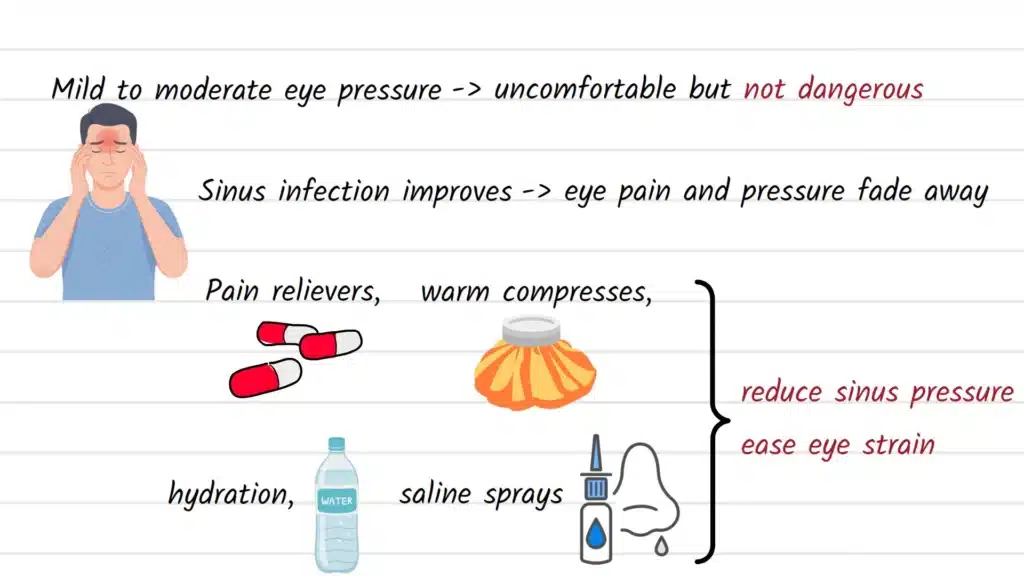
These symptoms are usually uncomfortable but not dangerous in otherwise healthy adults. As the sinus infection improves, the pressure and eye discomfort generally ease as well.
How the Condition Is Diagnosed
For most people, the first evaluation is done by a primary care clinician, ENT (ear, nose, and throat) specialist, or urgent care provider.
Medical history and physical examination
The doctor will typically ask about:
- Duration and pattern of symptoms (sudden or gradual onset)
- Nasal congestion, discharge, facial pressure, headaches
- Any eye pain, swelling, double vision, or vision changes
- Past sinus infections, allergies, or surgeries
They may then:
- Examine your nose and throat
- Press gently over the sinuses and around the eyes to check for tenderness
- Look at your eye movements, eyelids, and pupils for signs of orbital involvement
Additional tests (when needed)
In straightforward, mild cases, further testing is often not required. If symptoms are severe, persistent, or unusual, your doctor may recommend:
- Nasal endoscopy – a thin camera inserted into the nose to view the sinus openings.
- Imaging (CT or MRI) – to look for blocked sinuses, abscesses, or spread toward the orbit or brain.
- Eye examination by an optometrist or ophthalmologist – checking visual acuity, eye movements, eye pressure, and the optic nerve.
- Blood tests or cultures – in more serious or complicated infections.
If the eye appears red, very swollen, painful with movement, or vision is affected, doctors are often concerned about orbital cellulitis and may arrange urgent imaging and specialist review.
Treatment Options Explained (Informational Only)
Treatment plans are individualized. The following options are commonly used but should only be undertaken under the guidance of a qualified healthcare professional.
Home and over‑the‑counter measures
These are often recommended to help ease sinus pressure and eye discomfort:
- Pain relievers (such as paracetamol/acetaminophen or ibuprofen), when safe for you
- Warm compresses on the face to loosen mucus and reduce discomfort
- Saline nasal sprays or rinses to help clear mucus and improve drainage
- Humidifier or steam inhalation to keep nasal passages moist
- Plenty of fluids and rest to support recovery
Always follow product instructions and your doctor’s advice, especially if you have other medical conditions or take regular medications.
Prescription treatments
Depending on the cause and severity, a doctor may consider:
- Intranasal steroid sprays to reduce inflammation in the nasal passages
- Short‑term decongestants (oral or nasal), used cautiously and not for prolonged periods
- Allergy treatments (such as antihistamines or allergy shots) if allergies are a trigger
- Antibiotics only when a bacterial infection is likely—for example, symptoms lasting more than 10 days without improvement, or worsening after initial improvement
If sinus infections keep recurring or become chronic, ENT specialists may discuss procedures such as endoscopic sinus surgery to improve drainage and reduce future infections.
Eye‑specific care
If eye irritation, dryness, or watering linger after the sinus infection improves, an eye doctor may recommend:
- Lubricating eye drops
- Treatment for dry eye disease or blepharitis
- Further tests to rule out other eye conditions
In confirmed orbital cellulitis or other serious complications, hospital treatment with intravenous antibiotics and sometimes surgery is usually required.
Possible Complications if Left Untreated
Most sinus infections remain limited to the sinuses and resolve without long‑term harm. However, because the sinuses sit close to the eyes and brain, severe or untreated infections can occasionally spread and cause serious problems, including:
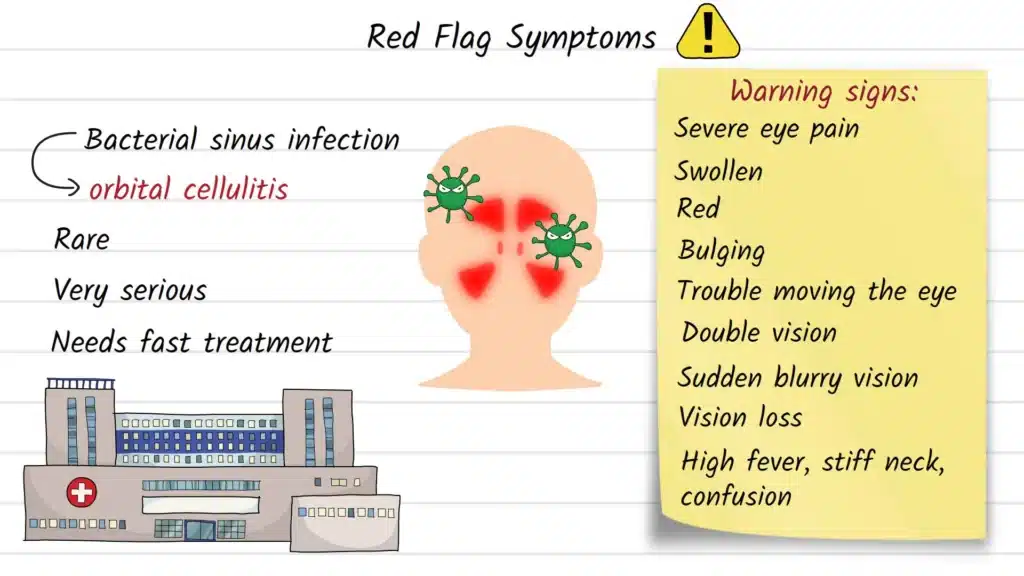
- Orbital cellulitis – infection of the tissues within the eye socket, causing severe pain, swelling, proptosis (bulging eye), and restricted eye movements.
- Subperiosteal or orbital abscess – pockets of pus around or within the orbit.
- Dacryocystitis – infection of the tear sac near the inner corner of the eye.
- Cavernous sinus thrombosis – a rare blood clot in a major vein at the base of the skull.
- Meningitis or brain abscess – infection spreading to the coverings or tissues of the brain.
These complications are uncommon but can threaten vision and even life. Early recognition of warning signs and prompt hospital care greatly improves outcomes.
Typical vs emergency symptoms
| Symptoms | Common with sinusitis | Emergency warning sign |
|---|---|---|
| Mild pressure around eyes | Yes | No |
| Puffy eyelids, both sides | Sometimes | No, if mild and improving |
| Pain when bending forward | Yes | No |
| Severe eye pain, especially one side | No | Yes – seek urgent care |
| Bulging eye or eye pushed forward | No | Yes – emergency |
| Double vision or trouble moving eye | No | Yes – emergency |
| Sudden drop in vision in either eye | No | Yes – emergency |
| High fever, confusion, stiff neck | No | Yes – emergency |
Prevention and Risk Reduction
Not all sinus infections can be prevented, but some steps may reduce your risk of sinus‑related eye pain and complications:
- Manage allergies – follow your allergy treatment plan and discuss options such as nasal steroids or immunotherapy with your doctor.
- Avoid tobacco smoke – smoking irritates and inflames the nasal passages.
- Practice good hand hygiene – helps lower the risk of colds and respiratory infections that can lead to sinusitis.
- Use saline sprays or rinses (if advised) – especially during cold and allergy seasons to keep nasal passages clear.
- Treat nasal structural problems – such as severe septal deviation or nasal polyps, if your ENT specialist recommends it.
- Stay up to date on recommended vaccines – for example, influenza, to reduce respiratory infection risk (where appropriate).
When to See an Eye Doctor
Routine or non‑urgent situations
Consider seeing an eye doctor (optometrist or ophthalmologist) if:
- Your sinus symptoms are improving, but your eyes remain red, dry, or irritated
- You have ongoing blurry vision or difficulty focusing after the infection clears
- You have a history of eye disease and develop new eye discomfort with a sinus infection
An eye examination can help rule out other conditions such as dry eye disease, conjunctivitis, uveitis, or optic nerve problems that may be masked by sinus symptoms.
Urgent and emergency signs
Seek urgent medical care (emergency department or urgent care, depending on availability) if you have a sinus infection and notice any of the following:
- Severe eye pain, particularly on one side
- A swollen, red, or bulging eye
- Pain when moving the eye or difficulty moving the eye in any direction
- Double vision or sudden blurry vision
- Loss of vision or a dark curtain/shadow in your vision
- High fever, severe headache, stiff neck, confusion, or feeling very unwell
These symptoms may indicate spread of the infection into the eye socket or toward the brain. This situation is rare but serious and usually needs immediate hospital‑based treatment.
Frequently Asked Questions (FAQ)
Yes, although it is less common. Some people notice eye pressure or pain and facial tenderness even when nasal congestion is mild. Chronic or low‑grade sinus inflammation, or infection deeper in the sphenoid or ethmoid sinuses, can sometimes present more as head or eye pressure than as obvious nasal blockage. Other causes of eye pain (migraine, glaucoma, eye inflammation) can feel similar, so persistent or unexplained pain should be evaluated by a doctor.
Sinus‑related pain often comes with nasal symptoms such as congestion, thick mucus, and facial pressure. It tends to worsen when you bend over, cough, or lie flat, and usually feels more like pressure around or behind the eyes rather than sharp pain in the eyeball.
By contrast, eye‑origin pain is more likely if you experience significant light sensitivity, redness, or a sensation of something in the eye. It may also be associated with a sudden drop in vision, halos around lights, or pain felt directly in the eye rather than around it. Since these patterns can overlap, a clinician’s examination is the safest way to tell the difference.
Yes. Strong sinus pressure around the orbit can make it harder to focus, especially when inflammation affects the muscles and nerves that control eye movements or when eyelids are very swollen. This blurring is usually mild and improves as the sinus infection settles. Sudden, severe, or one‑sided vision changes, however, are not typical and require urgent medical attention.
In acute viral sinusitis, symptoms often peak within the first few days and improve over 7–10 days. Eye pressure and discomfort generally follow the same pattern. In bacterial or chronic sinusitis, pain can last longer, especially if drainage remains blocked. If pain or swelling persists beyond a couple of weeks, worsens, or keeps coming back, it is important to be evaluated by a healthcare professional.
This is uncommon, but possible when complications develop. Orbital cellulitis, subperiosteal or orbital abscess, and cavernous sinus thrombosis can lead to permanent vision loss if not diagnosed and treated quickly. Fortunately, with modern antibiotics and imaging, these complications are relatively rare. Recognizing and acting on warning signs early is key to protecting vision.
No. Many sinus infections are viral and get better on their own with supportive care such as pain relief, saline rinses, and time. Antibiotics are generally reserved for cases where a bacterial infection is likely—for example, symptoms lasting more than about 10 days without improvement, severe symptoms from the beginning, or “double‑worsening” after an initial improvement. Only a clinician who has assessed you can decide whether antibiotics are appropriate.
Key Takeaways
- Sinus infection eye pain is usually caused by pressure and inflammation in the sinuses that sit next to and behind the eyes.
- Typical symptoms include facial pressure, nasal congestion, and a heavy or aching feeling around the eyes, which often improve as the sinus infection clears.
- Mild eye symptoms with sinusitis are common and usually not dangerous, but certain signs—such as severe one‑sided pain, bulging eye, double vision, or sudden vision loss—require urgent medical attention.
- Most sinus infections are viral; treatment often focuses on symptom relief, with antibiotics used only when a bacterial infection is likely.
- Early evaluation and treatment of sinus complications can prevent rare but serious problems such as orbital cellulitis and vision loss.
Medically Reviewed / Educational Disclaimer
This article is for general educational purposes only. It does not provide medical diagnosis, treatment, or individualized advice. Sinus infections and eye conditions can present in many different ways, and the safest course of action is to discuss your specific symptoms and concerns with a qualified healthcare professional (such as your primary care doctor, ENT specialist, optometrist, or ophthalmologist).
Never ignore or delay seeking professional medical advice because of information you have read online. In an emergency, contact your local emergency number or go to the nearest emergency department.
Sources and References
- Cleveland Clinic. “Sinus Infection (Sinusitis): Causes, Symptoms & Treatment.”
https://my.clevelandclinic.org/health/diseases/17701-sinusitis - Cleveland Clinic. “Chronic Sinusitis: Symptoms, Causes & Treatment.”
https://my.clevelandclinic.org/health/diseases/17700-chronic-sinusitis - Cleveland Clinic. “Sinus Infections That Don’t Quit: When You Should Worry.”
https://health.clevelandclinic.org/sinus-infections-that-dont-quit-when-you-should-worry - Mayo Clinic Health System. “Chronic sinusitis: More than a stuffy nose.”
https://sncs-prod-external.mayo.edu/hometown-health/speaking-of-health/chronic-sinusitis-more-than-a-stuffy-nose - Mayo Clinic Health System – Sinusitis (nose conditions and treatments).
https://www.mayoclinichealthsystem.org/locations/mankato/services-and-treatments/otorhinolaryngology/nose-conditions-and-treatments/sinusitis - WebMD. “How Do Doctors Diagnose a Sinus Infection?”
https://www.webmd.com/allergies/sinusitus-test - InformedHealth.org (NCBI Bookshelf). “Overview: Sinusitis.”
https://www.ncbi.nlm.nih.gov/books/NBK279485/ - StatPearls (NCBI Bookshelf). “Orbital Cellulitis.”
https://www.ncbi.nlm.nih.gov/books/NBK507901/ - EyeWiki, American Academy of Ophthalmology. “Orbital Cellulitis.”
https://eyewiki.org/Orbital_Cellulitis - Bhatti Z, et al. “Orbital complications of sinusitis.” PubMed.
https://pubmed.ncbi.nlm.nih.gov/25207092/ - McKinley SH, et al. “The Hot Orbit: Orbital Cellulitis.” PMC.
https://pmc.ncbi.nlm.nih.gov/articles/PMC3277022/ - Preseptal and orbital cellulitis: how to identify and treat. PMC.
https://pmc.ncbi.nlm.nih.gov/articles/PMC11146277/ - “Blindness resulting from orbital complications of sinusitis.”
https://aao-hnsfjournals.onlinelibrary.wiley.com/doi/pdf/10.1177/019459989110400604 - Discover Eyecare. “Can a Sinus Infection Affect Your Eyes?”
https://discovereyecare.com/can-a-sinus-infection-affect-your-eyes/ - InVision Eyecare. “Can a Sinus Infection Affect Your Eyes?”
https://invision-eyecare.ca/can-a-sinus-infection-affect-your-eyes/ - Stoney Creek Eye Care. “Can a Sinus Infection Affect Your Eyes?”
https://stoneycreekeyecare.com/can-a-sinus-infection-affect-your-eyes/ - ENTicare. “Sinus Infection Eye Pain, Blurred Vision, and When to Seek Help.”
https://enticare.com/2025/12/18/understanding-the-impact-of-sinus-infection-eye-symptoms-on-vision/ - University of Ottawa Eye Institute. “Sinus Infections and Vision: The Unexpected Connection.”
https://www.uoosd.com/sinus-infections-and-vision
